
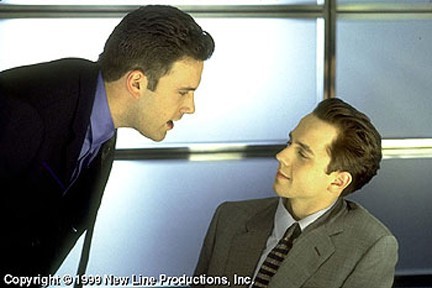
Ben Younger walked into a boiler room on Long Island because a friend with a new sports car told him you work there for a year, make your million, and go to the Bahamas. The friend was serious. The firm was real. It offered Younger a job.
However, the twenty-four-year-old political science graduate from Queens College understood systems. He also understood incentives. Within thirty minutes of watching young men in cheap suits scream into telephones, he recognized what he was looking at. Essentially, not a brokerage firm. A crime scene that hadn’t been processed yet.
Consequently, he declined the job and spent the next two years interviewing brokers at shops just like it. He wrote a screenplay. He sold it on the condition that he direct it. At twenty-six, he called action on a set with Ben Affleck and Vin Diesel. The firm his film depicted was a fictionalized version of Stratton Oakmont. Thirteen years later, Martin Scorsese would tell the same story. Same crime. Different verdict.
The Real Stratton Oakmont: Where the Money Came From and Where It Went
Jordan Belfort co-founded Stratton Oakmont in 1989 as a franchise of Stratton Securities on Long Island. Subsequently, he bought out the original founder and rebuilt the operation as a pure pump-and-dump machine. Brokers cold-called retail investors — typically middle-class Americans with savings and no securities experience — and pitched them on penny stocks in tiny, often nonexistent companies.
How the Pump-and-Dump Worked
As hundreds of brokers worked the phones simultaneously, artificial demand inflated each stock’s price. Once a target level hit, Stratton’s principals dumped their own positions. Prices collapsed. In fact, investors lost everything. Meanwhile, brokers kept their commissions. Furthermore, at its peak the firm employed over 1,000 people and cleared $50 million a month. FINRA barred Stratton in 1996 as a result. Investigators estimated the total theft at $200 million. Belfort landed in federal custody in 1998 and served 22 months.
Boiler Room’s J.T. Marlin — a name deliberately chosen to echo J.P. Morgan — is essentially Stratton with the serial numbers filed off. Tom Everett Scott’s Michael Brantley, the firm’s founder, drifts through scenes with an executive detachment that suggests he already knows the FBI is watching. In effect, Brantley is Belfort before Scorsese and DiCaprio turned him into a three-hour cinematic event.
Furthermore, the film depicts the same culture of forced spending that kept real brokers trapped. For instance, luxury cars purchased on commission income meant that walking away also meant defaulting on payments. The golden handcuffs. The lifestyle as the pitch deck. Paul Bettany would later articulate the same mechanism in Margin Call’s bonus speech — earning so much that you can’t afford to stop.
The Director: A Waiter, a Customer, and the Script That Demanded He Direct
Ben Younger did not attend film school. Instead, he studied political science at Queens College, worked in city government, managed a political campaign, grew disillusioned with politics, and taught himself filmmaking. The transition sounds romantic. It wasn’t. Moreover, he waited tables at a steak restaurant while writing the screenplay between shifts.
The Lucky Break at the Steak Restaurant

One night, Younger struck up a conversation with a customer who turned out to be Steve Kerper, a television writer-producer. Eventually, Kerper helped Younger land an agent. The agent sent the script to Ben Affleck. Affleck said yes. Suddenly, a first-time director with no film school credentials stood on a set running an ensemble cast that included Affleck, Vin Diesel, Giovanni Ribisi, Nicky Katt, Scott Caan, Nia Long, and Ron Rifkin.
Regardless, Younger has since said he should have been more anxious. The confidence, he suspects, came from working enough bad jobs to know that the worst day on set still beat the best day at the steak restaurant. Additionally, his Orthodox Jewish upbringing in Brooklyn had given him discipline, even if his father’s death when Younger was nineteen had temporarily derailed it.
The Deal and the Deauville Prize
Younger sold the script on one condition: he would direct. Studios rarely hand debut features to twenty-six-year-olds with no credentials and no connections beyond a restaurant customer. But the script was undeniable, and Younger was willing to walk away. Artisan Entertainment initially backed the production, then dropped out. New Line Cinema picked it up with a $7 million budget. The film grossed $28.8 million worldwide and won the Special Jury Prize at Deauville, shared with Christopher Nolan’s Memento — two debut directors, two films about men trapped inside systems designed to exploit their intelligence.
The Scene That Defines Everything: Brokers Watching Wall Street
In turn, the most self-aware moment in any finance film occurs midway through Boiler Room. J.T. Marlin brokers gather at the head recruiter’s home and watch Oliver Stone’s Wall Street. They recite Gordon Gekko’s dialogue in unison. Indeed, they have memorized every line. Notably, they worship Gekko not as a fictional character but as a professional model — a man who said what they believe and looked magnificent doing it.
Copies of a Copy
This scene is Younger’s thesis statement. These men are not original predators. They are copies of a copy. Gekko was assembled from Boesky, Icahn, and Milken. The J.T. Marlin brokers, in turn, assembled themselves from Gekko. The fraud is inherited. The culture reproduces itself through cinema.
Ben Affleck’s Jim Young delivers the film’s second thesis in a recruitment speech that functions as a secular sermon. “Anybody who tells you money is the root of all evil doesn’t fucking have any,” he tells a room of trainees. In fact, Younger modeled the speech on an actual lecture he witnessed at the Long Island boiler room during his first visit — the real recruiter’s words, restructured for dramatic effect but preserved in spirit.
Remarkably, Affleck filmed all of his scenes in approximately a day and a half. He appears in almost no frames with the other principal cast. Yet the performance lands with the force of a lead role — a prophet who delivers the gospel and disappears, leaving the converts to discover on their own that the gospel is a con.
Seth Davis: The Son Who Needed His Father’s Approval More Than His Own Integrity

Giovanni Ribisi’s Seth Davis serves as both the film’s moral center and its most precise structural innovation. Seth is not a Wall Street aspirant. He is a college dropout running an illegal casino out of his Queens apartment. His father, Judge Marty Davis (Ron Rifkin), communicates disapproval through silence, disappointment, and the particular cruelty of withholding love as a parenting strategy.
Why Seth Joins J.T. Marlin
Notably, Seth joins the firm not because he wants wealth but because he wants his father’s pride. The job appears legitimate from the outside and represents his attempt to become respectable. When he discovers the fraud, his crisis is not primarily moral. It is filial. The scheme endangers his father’s career as a federal judge. The son who wanted approval has delivered disgrace instead.
This father-son architecture connects Boiler Room directly to Wall Street, where Charlie Sheen’s Bud Fox faces a similar split between two fathers. Younger acknowledged the debt explicitly by having his characters watch the earlier film. But Boiler Room inverts the structure. In Wall Street, the corrupt mentor seduces and the honest father stays modest. In Boiler Room, the mentor (Affleck’s Jim Young) bullies and the honest father (Rifkin’s Judge Davis) freezes.
Consequently, Seth’s choice runs not between seduction and decency but between two forms of rejection. His mentor will discard him when he stops being useful. Meanwhile, the father has been discarding him emotionally his entire life. The film argues that the second rejection cuts deeper, which explains why Seth ultimately cooperates with the FBI — not from moral awakening, but from the desperate hope that saving his father’s career might finally earn what nothing else could.
Harry Reynard: The Scene the Canon Almost Never Shows
Boiler Room does something that Wolf of Wall Street deliberately refuses to do: it shows the victim. Harry Reynard (Taylor Nichols) is a purchasing manager for a gourmet food company. He is not wealthy or sophisticated. In particular, he is a man with a family, a mortgage, and savings representing decades of cautious accumulation.
The $50,000 That Destroyed a Family

Seth cold-calls Harry, lies about a stock’s potential, and sells him one hundred shares at eight dollars each. When the stock drops, Seth persuades Harry to invest $50,000 more — his life savings, earmarked for a house. As a result, the money disappears. Harry’s wife discovers what happened. Their marriage begins to fracture. The confrontation scene — Harry bewildered, humiliated, unable to comprehend how someone he trusted could deliberately destroy his family — is the emotional center of the film.
Scorsese’s Wolf of Wall Street deliberately omits this scene. He refused to show victims because he wanted audiences to experience the seduction without counterweight, then reckon with what the enjoyment revealed about themselves. By contrast, Younger put the victim on screen, gave him a name and a face, and forced the audience to watch the consequences unfold. Nevertheless, both approaches produce valid but different moral outcomes.
Boiler Room ends with redemption: Seth cooperates, the firm gets raided, and Harry gets his money back through a final transaction Seth executes on his way out. Wolf of Wall Street, however, ends with Belfort teaching a sales seminar in New Zealand to an audience that stares at him with hunger. One film believes people can change. The other does not. Both draw from the same crime on the same stretch of Long Island highway.
The Cast and What It Proved
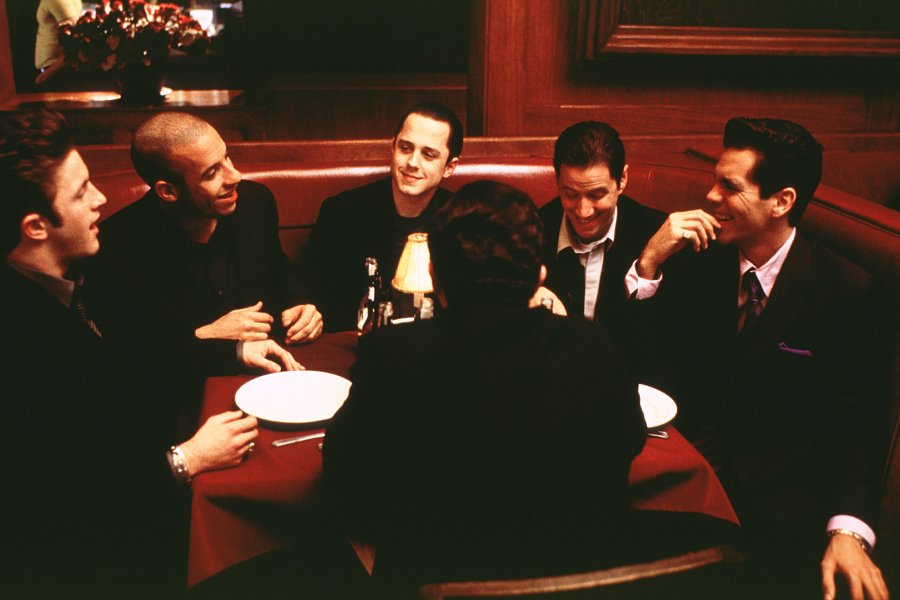
Boiler Room arrived on February 18, 2000, into a landscape where none of its principal actors had yet become the versions of themselves the public now knows. Giovanni Ribisi was best known for Saving Private Ryan and a recurring role on Friends. Vin Diesel had not yet made The Fast and the Furious. Ben Affleck had won the Oscar for co-writing Good Will Hunting but had not yet directed Gone Baby Gone, The Town, or Argo.
The Performances That Preceded Stardom
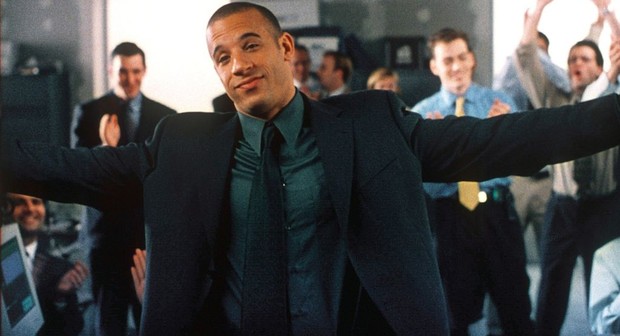
Diesel’s Chris Varick remains the film’s most underappreciated performance. Specifically, he plays a broker who has stayed inside the machine long enough to understand its mechanics and moral cost, yet cannot leave because departure would mean becoming someone he no longer recognizes. Diesel brought a quiet physicality to the role — a man holding himself together through sheer mass. The performance predates his franchise career by a year and demonstrates dramatic range that the Fast and Furious films would spend two decades suppressing.
Similarly, Nicky Katt’s Greg Weinstein functions as the office’s resident bully, a broker whose aggression masks the same fear driving everyone in the building. In addition, Scott Caan’s Richie is the newest recruit — the audience surrogate, the kid most transparently excited about the money and least equipped to understand what it costs.
Younger, Scorsese, and the Film That Got There First
Years after Boiler Room’s release, Martin Scorsese requested a meeting with Ben Younger. He had seen the film and wanted to discuss what the director was developing next. Subsequently, Younger told him about a boxing film based on the true story of Vinny Pazienza. Scorsese’s response: “This is the greatest story never told.” He then helped Younger secure financing for Bleed for This (2016), starring Miles Teller.
The relationship between the two directors provides the canon’s most poetic footnote. The man who made Boiler Room in 2000 received mentorship from the man who would make Wolf of Wall Street in 2013. Both films depict the same crime by the same firm. Yet they reach opposite conclusions about human nature.
The Alternate Ending and the Honest Exit
Boiler Room earned two Independent Spirit Award nominations and won the Special Jury Prize at Deauville. It grossed $28.8 million on a $7 million budget. The DVD includes an alternate ending that implies a workplace massacre by one of the cheated clients — a conclusion Younger filmed and cut because it felt too melodramatic. The restraint proved wise.
Instead, the film uses a quieter exit. Seth downloads files for the FBI, executes one last trade to return Harry Reynard’s money, and walks out the door into an uncertain future. Notably, the system will continue. Backup office space already sits leased and waiting. The only thing Seth controls is whether he participates. Accordingly, he chooses not to. The door closes. The phones keep ringing.
Why Boiler Room Is the Canon’s Conscience
Wall Street is the origin. Wolf of Wall Street is the spectacle. The Big Short is the education. Margin Call is the machinery. Boiler Room is the conscience — the only film in the Wall Street cinema canon that gives equal weight to perpetrator and victim, that names the human cost in the same frame as the human thrill.
Seth Davis does not face punishment or celebration. Instead, he receives an opportunity to do one decent thing on his way out the door, and he takes it. The film does not argue that this makes him good. Rather, it argues that this is all any of us can do once we’ve seen the machine from inside: leave, and try to fix one thing on the way out.
Welcome to the New American Dream

The tagline read “Welcome to the New American Dream.” The year was 2000. Stratton Oakmont had been dead for four years, yet its methods were already migrating into mortgage-backed securities and CDO tranches — the instruments that would produce the 2008 collapse. Boiler Room saw the culture coming. Not the specific mechanism, but the ecosystem: young men in cheap suits selling things they don’t understand to people they will never meet. That culture did not end with Stratton. Instead, it metastasized.
Every Canon Film Is a Sequel to This One
Ultimately, every film in the canon that followed — from Margin Call to The Big Short to Wolf of Wall Street — is ultimately a sequel to the story Younger told first, from a steak restaurant in Brooklyn, at twenty-six, with $7 million and the conviction that the truth was worth more than the tip.
If you’ve ever walked into a room, realized it was a con, and walked out with a story worth telling instead of a paycheck that would cost you everything — then you already understand why Social Life Magazine exists. We cover the people who choose the story. Reach out to our editorial team to be featured.
Want to position your brand alongside the culture that values truth over transaction? Submit a Paid Feature and let our editors build something worth reading.
Join 82,000+ subscribers who get our take on luxury, culture, and the Hamptons scene before anyone else. Subscribe to our email list.
Experience the intersection of sport, style, and status at Polo Hamptons — Bridgehampton’s premier luxury polo event, now in its seventh year with BMW as title sponsor.
Never miss a print issue. Subscribe to Social Life Magazine and get five summer issues delivered from Memorial Day to Labor Day.
Love what we do? Support Social Life Magazine and help us keep covering the culture that matters.
Author

Written by
Recent Posts

He’s Got Millions. He Still Flinches at the Bill.

Streamlining Ground Station Data Pipelines for Deep Space Missions

The Coordination Problem That Kills Growing Marketing Teams
Why Personalized Skincare Is Replacing One-Size-Fits-All Beauty Products
The Return of the Transatlantic Crossing
Categories
- Art
- Articles
- Business of Luxury
- Celebrities
- Culture
- Entertainment
- Events
- Faces of Summer 2026
- Fashion
- Fashion & Style
- Featured
- Finance
- Food, Spirits, Wine
- Hamptons
- Hamptons Celebrities
- Health
- Health & Beauty
- Lifestyle
- Luxury Lifestyle
- Press
- Profiles
- Real Estate
- Technology
- The Chronicles
- Travel
- Uncategorized
- Weddings