

The A24 genre stars cast net worth story begins with a simple observation about the economics of fear.
The first thing you need to understand about A24’s genre films is that they do not operate by the financial rules that govern the rest of Hollywood. This is to say they do not operate by any rules at all. Which is to say the rules they operate by are so counterintuitive that the people who run traditional studios look at the results the way a classically trained chef looks at someone making a Michelin-starred meal with a camping stove and a can of beans.
It should not work. It works spectacularly. And the combined net worth of the actors who passed through these films now exceeds $400 million. Accumulated by people who earned modest salaries on modest budgets and then watched their careers restructure around the credibility that A24 provided free of charge. Except that nothing is free. The charge earned in the willingness to work for less money than they were worth in exchange for material that was worth more than money.
The Deeper Layer
If the first pillar documented A24’s prestige drama machine. This second pillar examines the company’s genre engine. This operates on the same economic principles but with an additional variable that makes the returns even more extreme: fear. Horror audiences are the most reliable audience in cinema. They show up opening weekend regardless of reviews. They buy merchandise. Fan communities sustain interest for decades. And they are dramatically less expensive to attract than the audiences for prestige dramas. The reason: horror markets itself through word of mouth, social media clips. And the specific human compulsion to seek out experiences that terrify them. A compulsion that requires no advertising budget because it is hardwired into the nervous system.
A24 understood this before its competitors did. This is another way of saying A24 understood that the horror audience’s reliability. Combined with horror’s inherently low production costs. Creates a risk-return profile that is among the most favorable in the entertainment industry. A prestige drama needs critical acclaim, awards buzz, and a sophisticated marketing campaign to find its audience. A horror film needs a good trailer and a release date near Halloween.
The Quality Premium
The marketing cost differential alone makes horror the more efficient investment. And when you add A24’s commitment to making horror films that are also genuinely excellent. Films that critics respect as much as audiences fear. The result is a genre that generates both commercial returns and career capital simultaneously.
This is the second pillar in our A24 wealth investigation. The first pillar examined the prestige dramas and cultural provocations: Moonlight, Lady Bird. Spring Breakers, The Bling Ring, Minari, Ex Machina. This pillar goes darker, weirder, and in the case of Everything Everywhere All at Once. Into a dimension where a woman fights interdimensional nihilism with googly eyes and hot dog fingers and somehow produces the most emotionally devastating film of the decade.
The A24 Genre Economy

A24’s genre films operate on a financial model that would give any traditional studio executive a stress migraine. The budgets are small. Hereditary cost $10 million. The Witch cost $3.5 million. Room cost $6 million. Everything Everywhere All at Once cost $25 million. This sounds large until you remember that Marvel spends more than that on catering and digital de-aging. These films are made for the cost of a rounding error on a franchise tentpole. And yet they generate cultural impact. Critical acclaim, and career value that rivals films made for twenty times the price.
Consider the unit economics. Hereditary cost $10 million and grossed $80 million. That is an 8x return before accounting for home video, streaming rights. And merchandise revenue that continues generating income years after the theatrical run. The Witch cost $3.5 million and grossed $40 million. That is an 11x return on a film that most studios would not have financed. The reason is that its premise, a Puritan family unraveling in the 1630s New England wilderness.
Sounds less like a commercial pitch and more like a graduate school thesis that someone accidentally sent to a production company. Room cost $6 million and grossed $36 million while winning an Academy Award for Best Actress. Everything Everywhere cost $25 million and grossed $111 million while winning seven Oscars, including Best Picture. The pattern is not coincidental. It is structural. A24’s genre films cost so little that even modest commercial performance generates attractive returns. The ones that break through generate returns that would make any venture capitalist retire from venture capital to study the model full-time.
The Risk Profile

The genius of the model is in the risk profile. When your film costs $3.5 million. It grosses $40 million, as The Witch did, the return on investment is 11x. When it costs $25 million and grosses $111 million while winning seven Oscars. As Everything Everywhere did, the return is not just financial but civilizational. You have changed what the Academy considers worthy of its highest honor. You have proved that a film about a laundromat owner can beat the entire Hollywood establishment. And the actors who made it possible walk away with career equity that no salary could have purchased.
The actors profiled in this pillar share one characteristic: they all accepted below-market compensation to appear in A24 films. Every single one of them would tell you it was the best financial decision they ever made. Because the market value of what they received. This was career transformation, exceeded the market value of what they sacrificed. This was a bigger paycheck on a worse project.
The career transformation pattern operates identically across every film in this pillar. Despite the radical differences in genre, tone, and subject matter.
The Transformation Mechanism
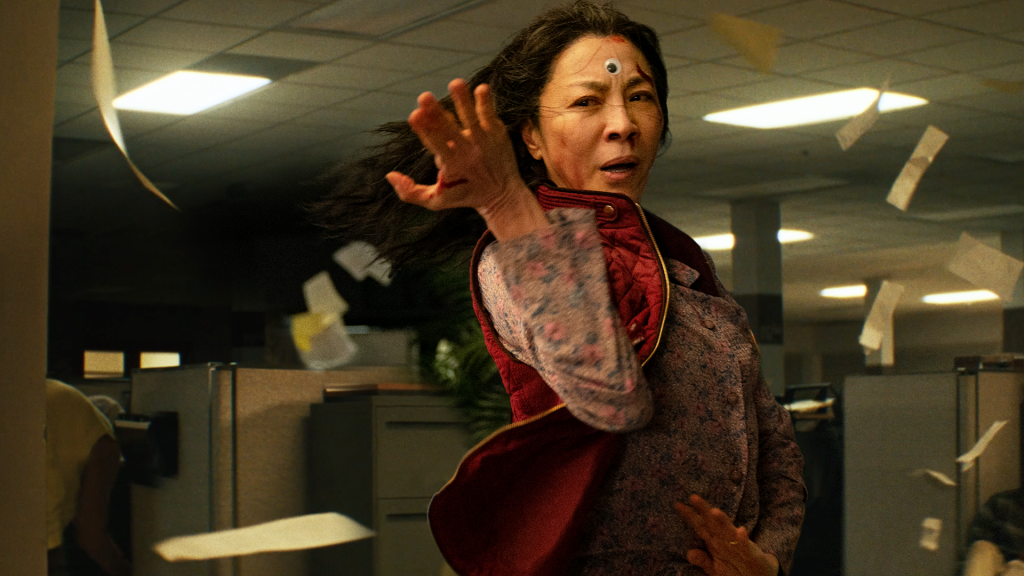
Michelle Yeoh was an action star who could not get a Western dramatic lead. After Everything Everywhere, she is an Oscar-winning actress who can headline any project in any genre. Toni Collette was a respected character actress whose name alone could not greenlight a film. After Hereditary, she is the benchmark against which every horror performance is measured. Florence Pugh was a talented young British actress with a handful of credits. After Midsommar, she was Oppenheimer casting material. Brie Larson was a working actress with a modest profile. After Room, she was Captain Marvel. Anya Taylor-Joy was an unknown teenager. After The Witch, she was the lead of a Netflix series that broke viewership records. The mechanism is always the same: A24 provides the material, the actor provides the performance. The performance restructures the actor’s career economics permanently.
What makes this mechanism so powerful is that it is self-reinforcing. Every actor whose career is transformed by an A24 film becomes a data point that attracts the next generation of actors willing to accept below-market compensation for the chance at the same transformation. A24 does not need to sell actors on the value of working with them. The evidence sells itself. Michelle Yeoh’s Oscar is the most persuasive pitch deck in independent cinema. And it cost A24 nothing to produce except the $25 million they spent making the film that generated it.
Everything Everywhere All at Once: The $111 Million Miracle

Everything Everywhere All at Once is the most commercially successful film in A24 history and arguably the most improbable Best Picture winner since the Academy started giving out the award in 1929. It stars Michelle Yeoh as a Chinese American laundromat owner who discovers she can access the skills and memories of alternate-universe versions of herself while being audited by the IRS. The film cost $25 million. It won seven Oscars. It grossed $111 million worldwide. And its cast, led by Yeoh, Ke Huy Quan, Jamie Lee Curtis, and Stephanie Hsu. Saw their collective career economics transform overnight.
Michelle Yeoh’s net worth sits at an estimated $40 million. Ke Huy Quan’s comeback from a twenty-year career absence is the most emotionally devastating origin story in this entire pillar. Jamie Lee Curtis brought her $60 million fortune to a role that required her to play a woman with hot dog fingers. This is either the bravest or the most unhinged creative decision any actor worth $60 million has ever made. Stephanie Hsu went from Broadway understudy to Oscar nominee in the span of a single film.
Explore the full hub: Everything Everywhere All at Once A24 Cast Net Worth
Hereditary: The $80 Million Horror That Changed the Genre
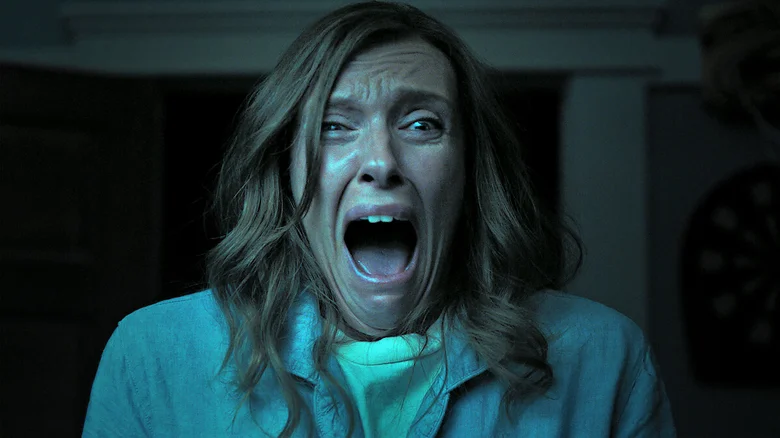
Hereditary is the film that proved A24 could do horror as well as it did prestige drama. This is to say it could do horror better than anyone else. The reason is that it brought the same commitment to character. Atmosphere, and emotional truth that made Moonlight and Lady Bird great and applied it to a genre that Hollywood had largely abandoned to jump scares and franchise sequels. Ari Aster’s debut cost $10 million and grossed $80 million worldwide. Launching a new era of elevated horror that competitors have been trying and failing to replicate ever since.
Toni Collette delivered a performance so physically and emotionally committed that many critics called it the greatest horror performance since Shelley Duvall in The Shining. Her $18 million net worth reflects a career spent being too good for the roles the industry typically offers women over fifty. Alex Wolff’s net worth is growing alongside a career that Hereditary branded with a permanent association with genuine on-screen terror.
Explore the full hub: Hereditary A24 Cast Net Worth
Midsommar: The Daylight Horror That Made Florence Pugh a Star

Midsommar is Ari Aster’s follow-up to Hereditary. The film that transformed Florence Pugh from a respected young actress into one of the most bankable stars of her generation. The film cost $9 million and grossed $48 million worldwide. That proves that Aster’s Hereditary success was structural rather than accidental. That audiences would follow him into increasingly disturbing territory as long as the disturbing territory was photographed beautifully and populated by characters whose suffering felt earned rather than exploitative.
Florence Pugh’s net worth has since climbed to approximately $12 million, fueled by Oppenheimer, Dune: Part Two. A career trajectory that Midsommar made possible by proving she could anchor a film on grief. Rage. The particular madness that arrives when you realize the people around you are not who you thought they were.
Explore the full hub: Midsommar A24 Cast Net Worth
Room: The $6 Million Film That Won Brie Larson an Oscar
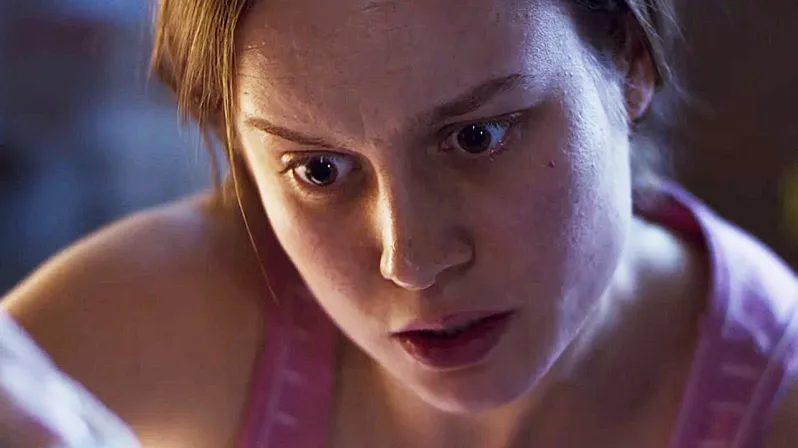
Room is the film that turned Brie Larson from a working actress with a modest profile into an Academy Award winner and. Eventually, a Marvel franchise lead whose net worth would climb past $25 million. The film cost $6 million. It grossed $36 million worldwide. And Larson’s performance as a kidnapping victim raising her son in a single room was so devastating that the Academy had no choice but to give her the statue. This she then leveraged into Captain Marvel. A career phase where the financial returns finally matched the talent that Room had made undeniable.
Jacob Tremblay, who was nine years old when Room hit theaters. Delivered one of the great child performances in cinema history. His career and net worth have grown steadily since. With voice work in Luca and live-action roles that benefit from the credibility a Best Picture-nominated film provides to an actor who was not yet old enough to understand what Best Picture meant.
Explore the full hub: Room A24 Cast Net Worth
The Witch: The $3.5 Million Film That Launched Anya Taylor-Joy

The Witch cost $3.5 million and grossed $40 million worldwide. A return on investment so extreme that it should be taught in business schools alongside the case studies about Google’s early fundraising and Amazon’s first warehouse. Robert Eggers’ debut feature launched Anya Taylor-Joy’s career with such force that she went from an unknown teenager to one of the most sought-after actresses in the world within three years. A trajectory that includes The Queen’s Gambit, Furiosa. A net worth that has climbed to approximately $8 million and is accelerating.
Eggers himself has become one of the most respected directors of his generation, with The Lighthouse, The Northman. And Nosferatu building a filmography that establishes him as the auteur most likely to make period horror into a permanent critical and commercial category.
Explore the full hub: The Witch A24 Cast Net Worth
Civil War: A24’s Most Expensive Bet and Its Biggest Controversy

Civil War is the most expensive film A24 has ever produced at $50 million. This in A24 terms is an almost reckless act of financial ambition and in Hollywood terms is still less than what most studios spend on a superhero film’s marketing campaign. Alex Garland’s dystopian thriller about journalists covering a second American civil war grossed $106 million worldwide and proved that A24 could operate at a scale larger than indie while maintaining the provocation and intelligence that defines its brand.
Kirsten Dunst brought her $25 million net worth and three decades of Hollywood experience to the role of a war photographer confronting the end of American democracy. Cailee Spaeny, whose breakout in Priscilla for Sofia Coppola had already marked her as a talent to watch. Used Civil War to prove she could anchor an action film with the same quiet intensity she brought to playing Elvis Presley’s wife.
Explore the full hub: Civil War A24 Cast Net Worth
The Pattern That Connects Every Film in This Pillar
Each film in this pillar follows the same financial arc that defined the first pillar. But amplified by the emotional extremes of genre filmmaking. Small budget. Outsized cultural impact. Career transformation for the actors involved. And a return on investment that makes traditional Hollywood economics look like a system designed by people who have never heard of compound interest.
Why It Works
The combined net worth of every actor profiled in this pillar exceeds $400 million. The combined production budgets of all six films total approximately $113 million. Each combined worldwide box office exceeds $420 million. But the real math, the math that A24 understood before anyone else. That traditional studios are still pretending is not real. Is the career math: every actor who appeared in these films left with a career worth more than it was when they arrived. The difference between those two valuations, compounded over the next twenty years. Will generate returns that no box office number can capture.
That is the A24 genre economy. Small bets. Asymmetric returns. Cultural compound interest accumulating in the background until the balance is so large that even the people who dismissed the model have to admit they were wrong. They were wrong about horror. They were wrong about sci-fi. A laundromat owner fighting interdimensional nihilism with hot dog fingers proved them wrong most of all. And the actors who bet on A24 when the smart money said otherwise are now the smart money.
Return to our A24 Movies and Actors Net Worth pillar for the prestige drama side of A24’s wealth machine.
The Flywheel Effect
The structural advantage A24 holds in genre filmmaking is self-reinforcing in ways that make it increasingly difficult for competitors to replicate. Every successful horror film attracts the next generation of horror directors who want to work with A24 specifically. The reason is that their predecessors succeeded there. Ari Aster came to A24 with Hereditary. Ti West came with X. The Philippou brothers came with Talk to Me. Each success expands the talent pipeline, which produces more films, which generates more successes, which attracts more talent. The flywheel effect means that A24’s genre division is not just a business unit but an ecosystem, and ecosystems. Once established, are nearly impossible to displace because the network effects compound with each new entrant.
For the actors who participate in this ecosystem, the career economics are equally self-reinforcing. An Oscar nomination from an A24 film signals to the industry that the actor can deliver prestige performance at indie scale. This makes them attractive for both independent and studio projects, which generates more career opportunities. Which generates more income. This increases their net worth, which makes them more selective about future projects, which increases the quality of their filmography, which reinforces the original signal. The cycle does not have an obvious termination point. This is why the actors profiled in this pillar are. Almost without exception, on career trajectories that are accelerating rather than plateauing.
The Financial View
A24’s genre division now operates as a self-sustaining ecosystem. Directors approach A24 rather than the other way around. Actors accept below-market fees for the chance to work on A24 material. The brand has become so strong that the company’s primary challenge is selection rather than recruitment. Too many talented people want in. The bottleneck is not talent supply but production capacity. That is a market position that no competitor has replicated. That is the real moat.
You are reading this because you already understand something most people scroll right past. The intersection of culture, money, and taste is not a Venn diagram. It is a mirror. Social Life Magazine has spent 23 years holding that mirror up to the people who shape the Hamptons, Manhattan, and the corridors between them. If you see yourself in these pages, we should talk. Reach out at sociallifemagazine.com/contact.
If your brand, your launch, or your personal story belongs in front of 82,000 affluent readers and a digital audience that keeps growing, our editorial features are built for exactly that moment. Learn more at Submit a Paid Feature.
Our email list reaches 82,000 subscribers who actually open, read, and act. If your audience is high-net-worth, culturally engaged, and based between Park Avenue and Montauk, you are already in the right place. Join the list.
Polo Hamptons returns to Bridgehampton this July with 1,200 guests, Getty Images coverage, and seven years of BMW title sponsorship behind it. If your brand belongs in that conversation, visit polohamptons.com.
A print subscription to Social Life Magazine puts 25,000 copies per issue into the boutiques, lobbies, and living rooms where decisions get made, from Westhampton to Montauk every summer and Upper East Side doorman buildings for Fall and Winter. Subscribe at sociallifemagazine.com/subscription.
Author

Written by
Recent Posts
4th Annual Catwalk Furbaby
Thomas J. Henry and Dr. Elena Alvarez-Henry Join Forces for Cancer Care
How an Emergency 24/7 Plumber Resolves Sudden Drain Backups Fast
Best Free Location Tracking Apps for Everyday Family Safety: iSharing and HeyPolo Compared
How Disney Channel Stars Become Pop Powerhouses: The Sabrina Carpenter Blueprint
Categories
- Art
- Articles
- Business of Luxury
- Celebrities
- Culture
- Entertainment
- Events
- Faces of Summer 2026
- Fashion
- Fashion & Style
- Featured
- Finance
- Food, Spirits, Wine
- Hamptons
- Hamptons Celebrities
- Health
- Health & Beauty
- Lifestyle
- Luxury Lifestyle
- Press
- Profiles
- Real Estate
- Technology
- The Chronicles
- Travel
- Uncategorized
- Weddings