
The Before
The Ke Huy Quan net worth story begins where all good origin stories begin: before anyone was paying attention.
Ke Huy Quan arrived in Saigon in 1971, Vietnam. During a war that his country did not start and could not end. His family fled Vietnam as refugees when he was a child. Arriving in the United States through a refugee camp in Hong Kong. This is the kind of origin story that makes the phrase “self-made” feel both accurate and insufficient. The reason is that it does not account for the fact that before you can make yourself you first have to survive the circumstances that tried to unmake you.
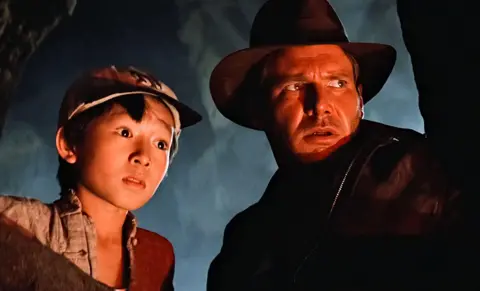
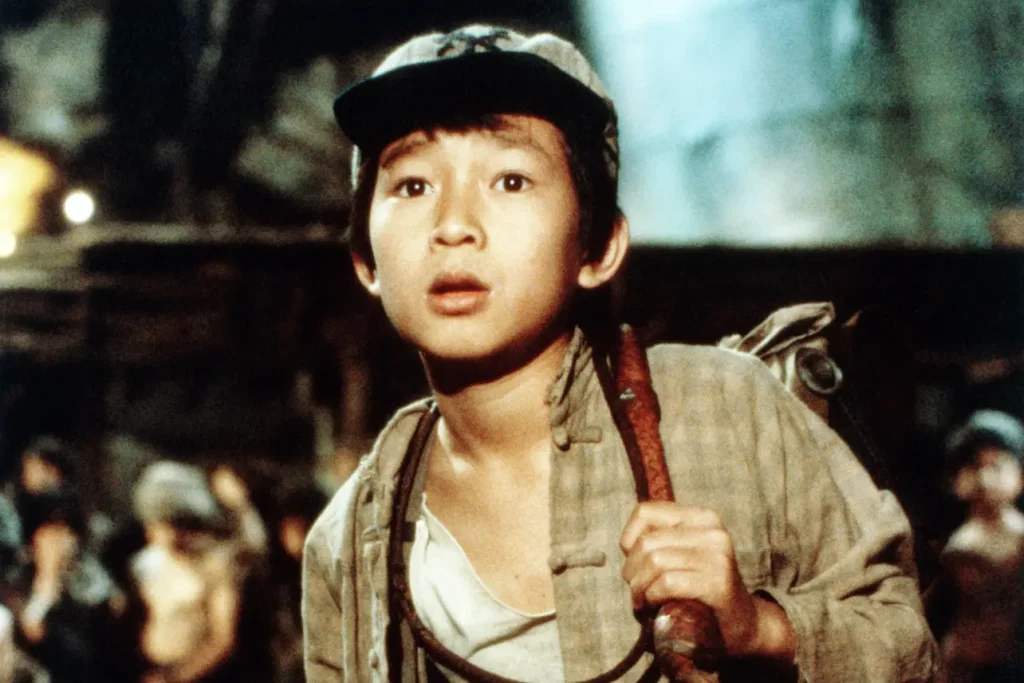
He was eleven years old when Steven Spielberg cast him as Short Round in Indiana Jones. The Temple of Doom. A film that grossed $333 million worldwide and turned a Vietnamese refugee child into one of the most beloved characters in adventure cinema. He was thirteen when he played Data in The Goonies. Two iconic roles in two iconic films before his fourteenth birthday. The child actor’s career was as bright as any career in Hollywood history. This made what happened next all the more devastating.
The Disappearance
The roles stopped coming. Not gradually, the way careers sometimes wind down, but abruptly. With the surgical finality of an industry that had decided Asian American men could not be leading men and was not interested in having the conversation that might change its mind. Quan auditioned for years. The parts available to him were stereotypes or sidekicks or nothing at all. This are three different ways of saying the same thing. By his mid-twenties, he had quit acting entirely. Convinced that the career he had wanted since Spielberg pointed a camera at him was a career the industry would not allow him to have.
He went behind the camera. He became a stunt coordinator and an assistant director. His career worked on films you have seen without knowing he was involved. For twenty years, the kid from Temple of Doom existed in Hollywood’s shadow economy. Doing the invisible work that keeps productions running while watching other people do the visible work that he had been denied the opportunity to do himself. The financial cost of that exclusion, calculated across two decades of unrealized acting income. Is conservatively $10 million to $40 million. The emotional cost is not calculable.
The Pivot Moment
Quan has said that watching Crazy Rich Asians in 2018 made him cry. Not. The reason is that the film was sad but because it proved that the industry had changed enough for Asian actors to carry a major Hollywood film. This meant it might have changed enough for him to try again. He called his agent. He started auditioning again at 47 years old. This in Hollywood is the age at which most actors are already managing the decline rather than attempting the ascent.
The Daniels saw him and understood what they were looking at: a man whose face contained twenty years of longing and loss and the stubborn refusal to let the dream die completely. This is exactly what the character of Waymond Wang required. They cast him. The rest is the kind of story that Hollywood loves to tell about itself and rarely has the decency to actually produce.
The Climb
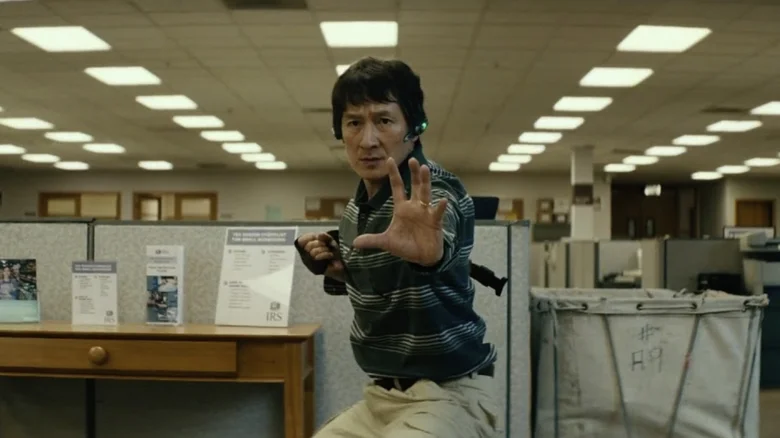
Ke Huy Quan’s performance in Everything Everywhere All at Once is the most emotionally devastating work any actor has done in the A24 catalog. The A24 catalog includes a film about a man grieving his son’s death through a supernatural haunting and another about a woman whose mental health unravels in a Swedish commune. Quan played Waymond Wang, the gentle husband who turns out to be a multiverse-hopping hero. With a tenderness so genuine that audiences who had never heard of him before were weeping in their seats within his first major scene.
The Oscar Speech

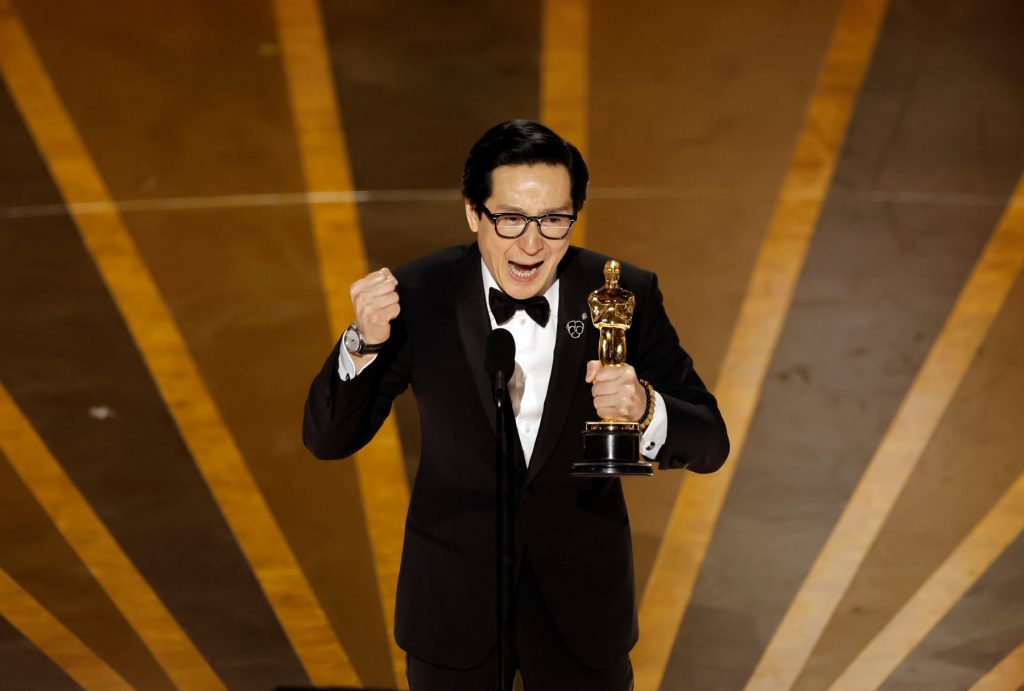
He won the Best Supporting Actor Oscar. His acceptance speech, in which he described his mother sewing costumes for him as a child in Vietnam. His twenty years of believing the dream was over. Was the single most emotionally authentic moment in recent Academy Awards history. He held the statue and said. With the voice of a man who had spent two decades in the desert and had just found water. That the American Dream is real. The speech generated more genuine tears in the Dolby Theatre than most films generate in their entire runtime. It also generated career opportunities at a velocity that suggests the industry is attempting to compensate for twenty years of neglect by compressing a lifetime of work into a single decade.
Loki Season 2 on Disney+ put him in the Marvel Cinematic Universe. His compensation for that role, while undisclosed. Reflects Marvel’s standard rates for established actors in recurring roles. This typically range from $200,000 to $500,000 per episode. Future projects continue to arrive. Each one adds to a net worth that is growing from a base that is artificially low. The reason is that the base was set by twenty years of zero acting income rather than by twenty years of the career he should have had.
What He Built
Ke Huy Quan net worth at $3 million is the most misleading figure in this entire pillar. It reflects the financial reality of a man who spent his peak earning years behind the camera rather than in front of it. Not by choice but by industry exclusion. The $3 million includes his child actor earnings from Indiana Jones and The Goonies. Whatever he earned as a stunt coordinator and assistant director during his twenty-year absence. The compensation from Everything Everywhere and Loki that has arrived since his comeback.
The Trajectory
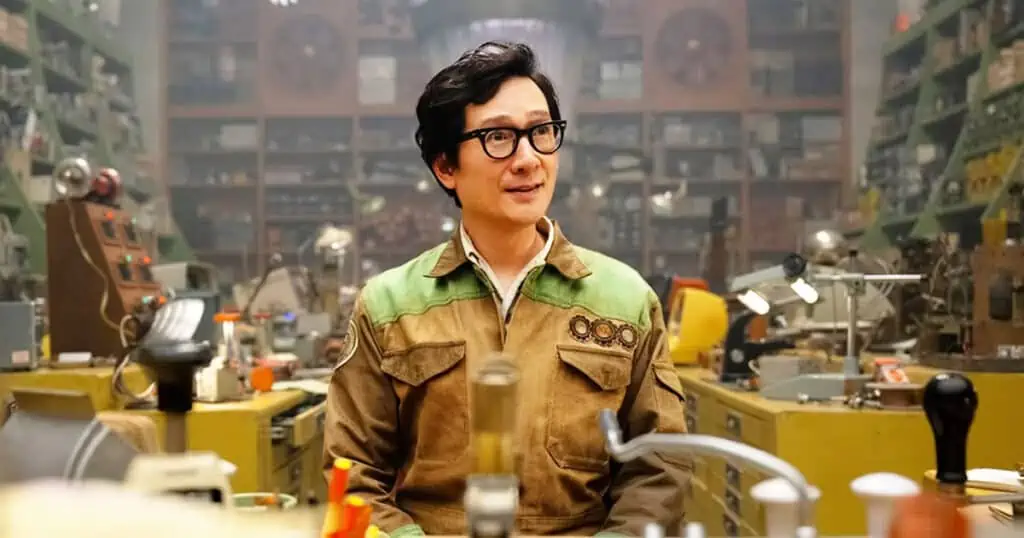
The trajectory, however, is more revealing than the number. Quan is now an Oscar winner with Marvel credentials and the most compelling personal narrative in contemporary Hollywood. His asking price has been permanently restructured. The projects arriving at his agent’s desk are lead roles, not sidekick parts. If the next five years produce the career volume that the last two years suggest is coming. The $3 million net worth will multiply several times over. The multiplication will feel less like growth and more like restitution.
The Soft Landing
Ke Huy Quan is 54 years old and has been acting professionally for approximately five of those years if you subtract the two decades the industry stole from him. That arithmetic is the most important context for understanding his net worth. The reason: it means that every dollar he earns from this point forward carries the weight of every dollar he was denied the opportunity to earn during the years when Hollywood could not imagine an Asian American leading man.
The Dream He Refused to Release
His parents fled a war. He arrived in America as a refugee. Steven Spielberg gave him a role that made millions of children believe in adventure. The industry took that role away and gave him nothing for twenty years. He came back anyway, won an Oscar, and told the world the dream is real. That is a net worth origin story that transcends dollars entirely, though the dollars are coming. And they are coming faster than anyone, including Ke Huy Quan himself, expected. The kid from Saigon who played Short Round is finally getting paid what Short Round’s optimism always deserved.
The Deeper Math
Read more about the cast that made Everything Everywhere a cultural earthquake in our Everything Everywhere All at Once A24 Cast Net Worth hub, or explore the full A24 Genre Stars Net Worth pillar.
What It Means Now
The economics of Quan’s comeback also benefit from a structural shift that his absence inadvertently positioned him to exploit. The entertainment industry’s appetite for Asian American talent expanded dramatically between 2018 and 2024. Driven by Crazy Rich Asians, Parasite’s Best Picture win, and Everything Everywhere’s Oscar sweep. Quan returned to acting at precisely the moment when the market for his talent was larger than it had ever been. This means his twenty-year absence was devastating in terms of unrealized income. Accidentally created the conditions for a comeback more dramatic and more financially productive than any gradual career progression could have generated. The cruelty of the timing is matched only by the poetry of it. The poetry, unlike the cruelty, generates compound returns.
You are reading this because you already understand something most people scroll right past. The intersection of culture, money, and taste is not a Venn diagram. It is a mirror. Social Life Magazine has spent 23 years holding that mirror up to the people who shape the Hamptons, Manhattan, and the corridors between them. If you see yourself in these pages, we should talk. Reach out at sociallifemagazine.com/contact.
If your brand, your launch, or your personal story belongs in front of 82,000 affluent readers and a digital audience that keeps growing, our editorial features are built for exactly that moment. Learn more at Submit a Paid Feature.
Our email list reaches 82,000 subscribers who actually open, read, and act. If your audience is high-net-worth, culturally engaged, and based between Park Avenue and Montauk, you are already in the right place. Join the list.
Polo Hamptons returns to Bridgehampton this July with 1,200 guests, Getty Images coverage, and seven years of BMW title sponsorship behind it. If your brand belongs in that conversation, visit polohamptons.com.
Author

Written by
Recent Posts
4th Annual Catwalk Furbaby
Thomas J. Henry and Dr. Elena Alvarez-Henry Join Forces for Cancer Care
How an Emergency 24/7 Plumber Resolves Sudden Drain Backups Fast
Best Free Location Tracking Apps for Everyday Family Safety: iSharing and HeyPolo Compared
How Disney Channel Stars Become Pop Powerhouses: The Sabrina Carpenter Blueprint
Categories
- Art
- Articles
- Business of Luxury
- Celebrities
- Culture
- Entertainment
- Events
- Faces of Summer 2026
- Fashion
- Fashion & Style
- Featured
- Finance
- Food, Spirits, Wine
- Hamptons
- Hamptons Celebrities
- Health
- Health & Beauty
- Lifestyle
- Luxury Lifestyle
- Press
- Profiles
- Real Estate
- Technology
- The Chronicles
- Travel
- Uncategorized
- Weddings