

The Before
Edie Falco net worth begins in Brooklyn, 1963. Her father was a jazz drummer. Her mother was an actress. The combination produced a child who understood performance as labor rather than magic, who grew up watching her parents work in an industry that pays intermittently and demands constantly. She attended SUNY Purchase, where she trained alongside Stanley Tucci and Sherry Stringfield. The school’s acting program operated on the principle that talent without technique is just enthusiasm, and enthusiasm does not pay rent.
Her early career was the New York grind. Off-Broadway. Small film roles. Oz on HBO gave her a recurring part before The Sopranos existed. She was a working actress in the truest sense: employed, respected, and unknown.
The Pivot Moment
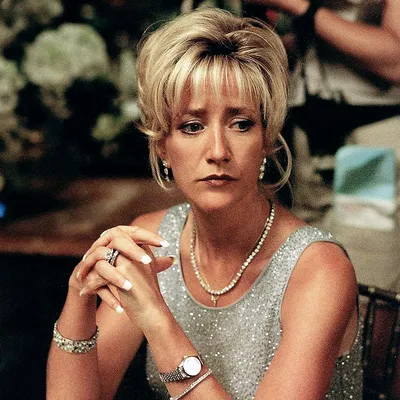
David Chase cast her as Carmela Soprano. That role required something that most mob-wife parts do not: intelligence. Carmela knows what Tony does. She benefits from it. She is complicit. But she is also trapped. After all, the lifestyle that Tony’s income provides is inseparable from the violence that generates it. Falco played this contradiction across eighty-five episodes without ever resolving it, because the contradiction is the character. The audience loved Carmela because Falco made the complicity feel human rather than villainous.
The Sopranos Economics
Her salary escalated from modest early-season rates to $500,000 per episode for the final season. Total Sopranos income likely reached $8 million to $12 million across the series. Three Emmys for Outstanding Lead Actress. Two Golden Globes. The awards positioned her for the next phase.
The Climb

Nurse Jackie on Showtime ran for seven seasons and generated the second major income stream of Falco’s career. She played a hospital nurse addicted to prescription painkillers. Notably, it is the kind of role that sounds like a downer but that Falco made compelling enough to sustain 80 episodes. Her per-episode fee on Nurse Jackie reportedly matched or exceeded her Sopranos rate. Additionally, the show earned her another Emmy and further Golden Globe nominations.
Her real estate investments have been shrewd. Manhattan and Brooklyn properties acquired over decades of premium-cable income have appreciated substantially. The real estate portfolio, while not publicly itemized, represents a significant portion of her net worth and reflects the kind of conservative wealth management that her more flamboyant castmates did not always practice.
What She Built
Edie Falco net worth at $40 million reflects two decades of leading premium television series. She is the only actress in history to win Emmys for playing both a dramatic and a comedic lead in separate series. That distinction generates career dividends that extend beyond any individual paycheck. Furthermore, it means every show seeking a lead actress of a certain age, range, and credibility considers Falco first, which keeps her asking price high even between marquee projects.
The Soft Landing
Falco is sixty-two. She has never chased fame. Never done a reality show. Never launched a fragrance. She has done the work, collected the awards, invested the income, and maintained a personal life so private that entertainment journalists have essentially given up trying to cover it. That privacy is itself an asset. After all, it means her public identity is entirely professional, entirely based on the quality of her performances. The $40 million is the financial expression of a career philosophy that values durability over spectacle. In an industry that rewards spectacle, durability is the contrarian bet. Falco has been making that bet for forty years. The returns speak for themselves.
The Deeper Layer
Read more about the full cast in our Sopranos Cast Net Worth hub, or explore the Prestige TV Antihero Cast Net Worth pillar.
The sobriety dimension of Falco’s biography adds a layer that net worth analyses typically overlook but that profoundly shapes her career economics. She has been sober since 1993. In an industry where substance abuse destroys careers, health, and fortunes with predictable regularity, Falco’s sobriety is itself a financial asset. It means no interruptions for rehabilitation. No productions delayed by unreliability. No insurance premiums inflated by risk assessments. Consequently, her career has been continuous in a way that many of her equally talented contemporaries’ careers were not, and continuity in show business is the compound interest that separates $40 million net worths from $4 million net worths.
The Wider Impact
Her decision to adopt two children as a single mother further distinguishes her financial profile from the typical celebrity wealth narrative. There is no divorce to split the assets. No custody battle to fund. No partner’s career decisions to accommodate. As a result, her wealth has been accumulated and managed by a single decision-maker, which financial advisors consistently identify as the most efficient structure for long-term wealth building.
Similarly, her theater work, including a Tony-nominated turn in Frankie and Johnny in the Clair de Lune, keeps her connected to the New York stage community that launched her career. Theater income is modest compared to television. But theater credibility, in Falco’s case, functions as the anchor that prevents her television career from drifting into the kind of commercial compromise that erodes both reputation and long-term earning power.
The Deeper Layer
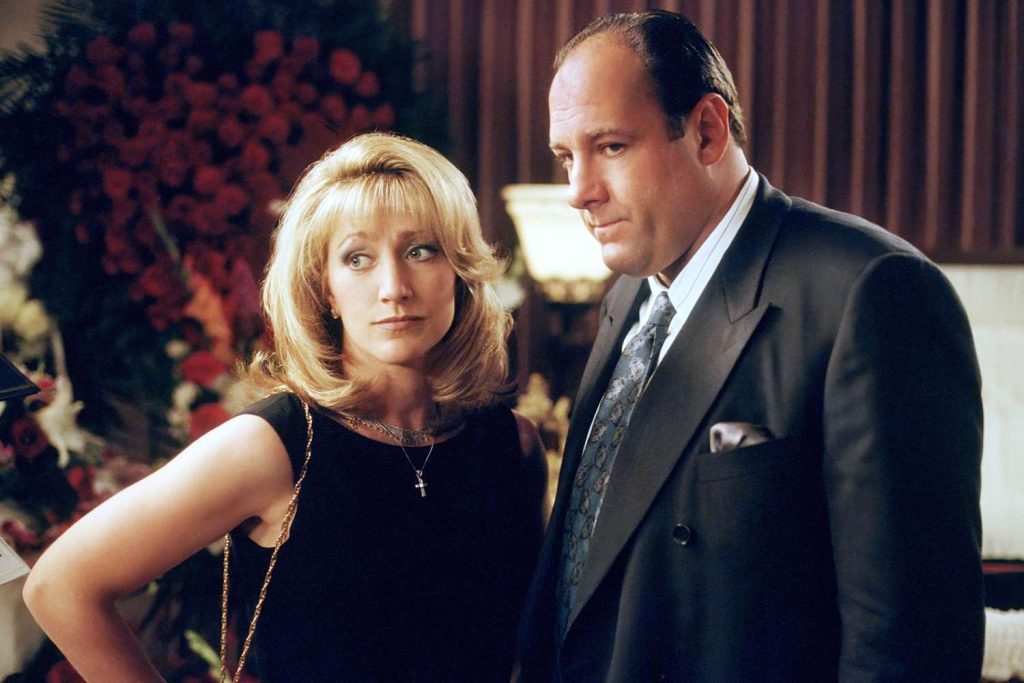
The Carmela character also generated cultural influence that converts to economic value in indirect but measurable ways. Before Carmela Soprano, the mob wife was a supporting character whose function was to react to her husband’s crimes. Carmela was the first mob wife who was also a fully realized protagonist with her own moral calculus, her own ambitions, and her own complicity. That characterization changed how television wrote female characters in crime dramas for the next two decades. Skyler White in Breaking Bad, Wendy Byrde in Ozark, and Beth Dutton in Yellowstone all descend from Carmela Soprano. In other words, Falco’s performance did not just earn her $40 million. It created a character archetype that generated billions in television revenue for other shows, other networks, and other actresses.
The Infrastructure
Her approach to fame stands in stark contrast to the celebrity culture that surrounds most high-earning actors. No endorsement deals. Zero social media presence of note. Not a single lifestyle brand. No cookbook. The absence of these revenue streams. Notably, it could easily add $5 million to $10 million to her net worth, is a deliberate choice that reflects a specific value system: the work is the product. Everything else is noise. That value system limits her total net worth compared to more commercially aggressive peers. However, it protects the artistic credibility that keeps her asking price high for the roles that matter. Notably, it are the only roles she is interested in taking.
The Financial Architecture
Furthermore, the SUNY Purchase connection matters for understanding Falco’s career trajectory. Stanley Tucci, her classmate, has built a $25 million career of his own. The school’s emphasis on technique over charisma produced two of the most respected actors of their generation, both of whom built wealth through sustained excellence rather than celebrity spectacle. That shared educational philosophy produced similar financial outcomes through similar career strategies. Notably, it suggests that the technique-first approach, while slower to generate initial returns, produces more durable wealth over a full career span.
The generational appeal of Carmela Soprano has also created rewatch economics that benefit Falco financially through residuals. New audiences discover The Sopranos on streaming every year. Each new viewer encounter generates residual payments. Specifically, the show’s transition from HBO to Max to potential future licensing deals ensures that Falco’s Sopranos income is not a historical number but an ongoing revenue stream that will continue for decades. The performance she delivered in 1999 is still generating income in 2026. That is twenty-seven years of compound returns on a single casting decision. The compounding has no visible expiration date.
You are reading this because you already understand something most people scroll right past. The intersection of culture, money, and taste is not a Venn diagram. It is a mirror. Social Life Magazine has spent 23 years holding that mirror up to the people who shape the Hamptons, Manhattan, and the corridors between them. If you see yourself in these pages, we should talk. Reach out at sociallifemagazine.com/contact.
If your brand, your launch, or your personal story belongs in front of 82,000 affluent readers and a digital audience that keeps growing, our editorial features are built for exactly that moment. Learn more at Submit a Paid Feature.
Our email list reaches 82,000 subscribers who actually open, read, and act. If your audience is high-net-worth, culturally engaged, and based between Park Avenue and Montauk, you are already in the right place. Join the list.
Polo Hamptons returns to Bridgehampton this July with 1,200 guests, Getty Images coverage, and seven years of BMW title sponsorship behind it. If your brand belongs in that conversation, visit polohamptons.com.
A print subscription to Social Life Magazine puts 25,000 copies per issue into the boutiques, lobbies, and living rooms where decisions get made, from Westhampton to Montauk every summer and Upper East Side doorman buildings for Fall and Winter. Subscribe at sociallifemagazine.com/subscription.
If this publication has added value to your world and you want to support independent luxury journalism, you can contribute directly at our donation page.
Author

Written by
Recent Posts
Get Panama Residency in 30 Days — A Simple Look at Mercan’s Easy Program Process
How to Choose a Stay for a Multigenerational Resort Trip
How Family Property Disputes Can Affect Relationships and Long-Term Plans

Choosing a Reformer for the Life You Already Have

Artful Living: Unique Gifts With A Creative Edge
Categories
- Art
- Articles
- Business of Luxury
- Celebrities
- Culture
- Entertainment
- Events
- Faces of Summer 2026
- Fashion
- Fashion & Style
- Featured
- Finance
- Food, Spirits, Wine
- Hamptons
- Hamptons Celebrities
- Health
- Health & Beauty
- Lifestyle
- Luxury Lifestyle
- Press
- Profiles
- Real Estate
- Technology
- The Chronicles
- Travel
- Uncategorized
- Weddings