

On the Sunday before the 2024 US Open semifinal, a $100 million yacht named Top Five II was anchored in Manhasset Bay off Long Island’s North Shore, roughly a 30-minute black SUV ride from Arthur Ashe Stadium. The yacht belonged to Terry Pegula, owner of the Buffalo Bills and the Buffalo Sabres and, as of the most recent Forbes index, a man with a $9.3 billion net worth. He was there to watch his daughter Jessica play. And yet the more interesting fact, the one that had gone viral two weeks earlier on X, was not the yacht. It was that Jessica herself had been photographed on the subway. Jessica Pegula net worth sits at roughly $20 million, according to Celebrity Net Worth. Her family controls approximately 470 times that figure. She still takes the 6 train.
The Wound
Early morning on June 7, 2022, in a house outside Buffalo, Kim Pegula stopped breathing. It was her fifty-third birthday. Her husband Terry woke to find her unresponsive. Their daughter Kelly, who had taken a CPR class three months earlier because a job she wanted required it, performed chest compressions until the paramedics arrived. Kim had gone into cardiac arrest. Jessica was in Florida when the phone call came around midnight. The family spent two weeks in the hospital, taking shifts, learning the nurses’ names.
Kim Pegula survived. The aftermath, though, has been public and private at once. She lives with significant expressive aphasia and memory loss. She can read, write, and understand most of what is said to her, but she struggles to find the words to respond. Jessica wrote about it eight months later in an essay for The Players’ Tribune, in language that was careful and clear. She did not use the word grief, but the essay read like one.
The Pegulas had kept the cardiac event private for those eight months. Buffalo respected it. The NFL respected it. Eventually, Jessica decided the silence was costing more than the disclosure. She wrote the essay partly because of Damar Hamlin, the Bills safety who had gone into cardiac arrest on the field in January 2023, and partly because her mother was the public face of two professional franchises, and people noticed when she stopped appearing.
The Chip
To understand why Jessica Pegula’s net worth matters less than her last name (and why she seems intent on making it mean something on its own), you need to understand Kim Pegula first.
Kim was born in Seoul. Sometime before her fifth birthday, she was found on a street and placed in an orphanage. She was adopted by a family in upstate New York and given no records of her biological parents, no photograph, no name in Korean. She grew up in Fairport. In her twenties, she took a waitressing job in Belfast, New York, where one afternoon a natural gas executive named Terry Pegula walked in for lunch. They married. She became the first woman to be named president of both an NFL and an NHL franchise, ran Pegula Sports and Entertainment, and sat on multiple league diversity committees. The arc of Kim Pegula’s life is the hidden engine of this entire family. Jessica knows it.
That matters because the most lazy version of Jessica Pegula’s story is daughter of a billionaire plays tennis for fun. The accurate version is considerably more interesting. Her mother built a life out of erasure. Her father built a natural gas company that he sold to Royal Dutch Shell for $4.7 billion in 2010, took several billion more out in dividends before that, and then closed another $1.75 billion transaction with American Energy in 2014. Jessica is half-Korean, half-Pennsylvania-gas-money, and the daughter of two people who earned their own seats.
The Refusal
She could have skipped the work. Most heirs do. Jessica turned professional in 2009 at fifteen, went through the ITF grind, battled hip surgery in 2018, and did not break into the WTA top 50 until she was twenty-five. By tennis standards, she was late. By heiress standards, she was absurd. The ATP and WTA tours are filled with players who need the prize money. Jessica Pegula has never needed a single dollar of it.
The Climb
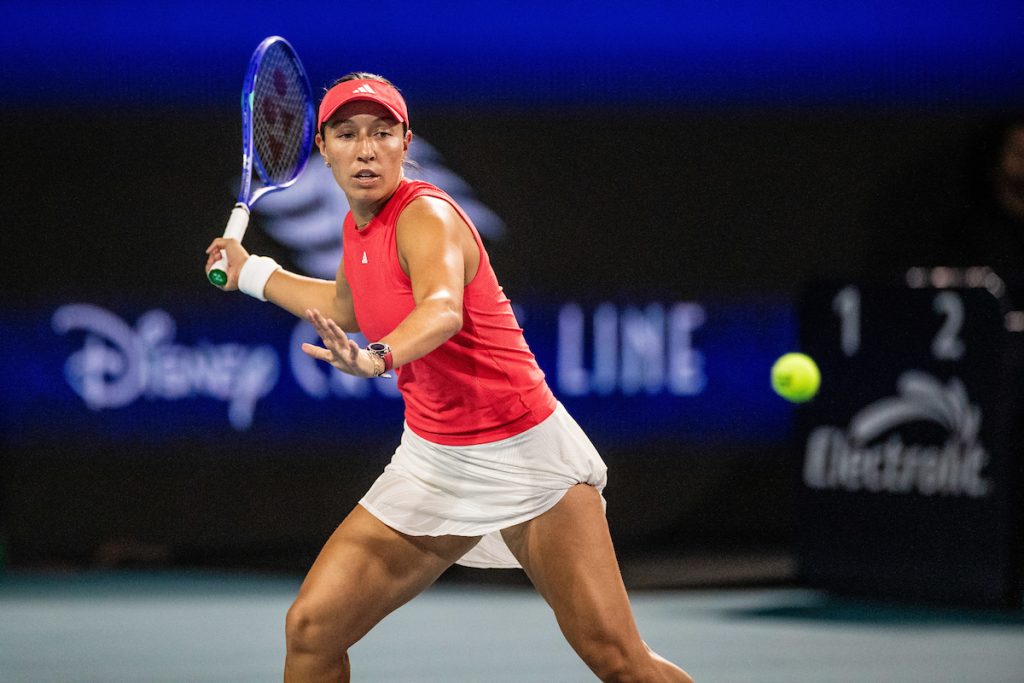
Consider the arithmetic of her ranking. Jessica cracked the WTA top 100 in 2019, the top 25 by mid-2021, and the top 10 by 2022. By October 2022, she was ranked world number three. She has reached Grand Slam quarterfinals at all four majors. In 2024, she made the US Open final (losing to Aryna Sabalenka) and, as of the April 2026 rankings published by the WTA, she sits inside the world top five, having reached the 2026 Australian Open semifinals before falling to Elena Rybakina.
Her 2025 prize money came to roughly $5.2 million. Her total income that year, per Forbes, hit $12.3 million, placing her inside the Top 10 Highest-Paid Female Athletes list. None of this is dynastic money. All of it is hers. The Jessica Pegula net worth figure, in other words, is being built in real time and on the court.
What makes the Pegula tennis arc unusual is the inversion of the usual athlete economics. Most professional tennis players build wealth by winning prize money, leveraging endorsements, and buying assets later in their careers. Jessica already had infrastructure. The prize money and the endorsements are, for her, a ledger of independent earning. That ledger is the point. When the SI article last September titled itself Jessica Pegula Net Worth Feels Wildly Modest With Billionaire Bills Owner Father, it missed the whole architecture. The modest figure is not an accident. It is a deliberate construction.
The Hamptons Chapter
The Pegulas are not Hamptons people in the Meadow Lane sense. They are Buffalo people with a Florida base and a $100 million yacht that shows up in New York harbor when the US Open needs watching. But the yacht matters. Top Five II anchored in Manhasset Bay during the 2024 US Open, roughly thirty minutes from Flushing Meadows and well within helicopter range of East Hampton Airport, was one of the more photographed boats in New York that fortnight.
Every late August, the US Open produces exactly this kind of migration. Private jets into East Hampton. Helicopters into the West Side heliport. And anchored boats within a short drive of Arthur Ashe. The tournament is the armature on which a broader two-week social economy is built, and the Pegulas (Buffalo roots and all) have inserted themselves neatly into it. Family members fly in, stay on the yacht or in Manhattan, and rotate through courtside suites. For a brief window each summer, the Pegulas are functionally part of the East End power grid that Social Life Magazine has been documenting for twenty-three years.
Our full US Open Hamptons coverage makes the larger point: the late-August tournament is not a tennis event in isolation. It is the last major social convergence before Labor Day, and Jessica Pegula (playing in front of a family that has more invested in the optics of New York sports than any other owner in the NFL) is precisely the kind of figure the weekend revolves around.
What She Built
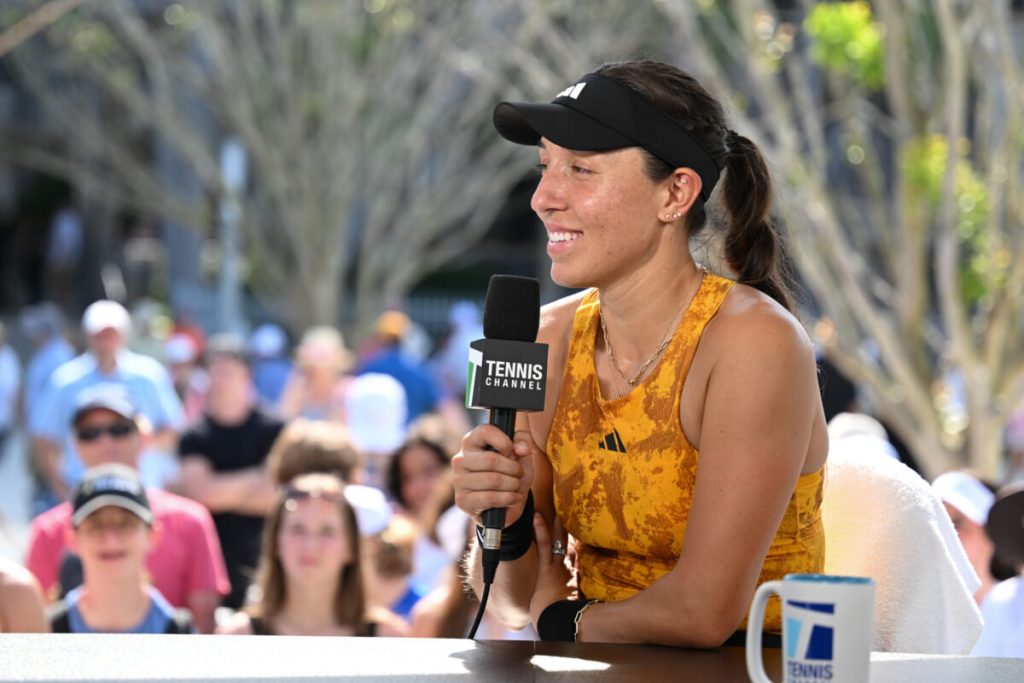
The endorsements themselves tell a specific story. Jessica signed with Adidas as her primary apparel partner and with Yonex for racquets, which places her inside a premium tennis-apparel frame rather than a mass-market one. Beyond that, she represents Ready Nutrition (sharing the roster with Giannis Antetokounmpo), Stella Artois as a global beer-brand partner, and several financial and hospitality names that rotate into her portfolio quietly.
But the real entrepreneurial asset is Ready 24, the skincare line she launched in 2017 aimed at active-lifestyle consumers. Her husband Taylor Gahagen, whom she married in 2021 and who previously worked at Pegula Sports and Entertainment, now serves as Ready 24’s Vice President. The brand operates as a legitimate independent business rather than a vanity extension of her name, and it has quietly expanded through DTC channels and select retail partnerships.
Her earlier venture, Healthy Scratch (a quick-serve restaurant concept opened with sister Kelly in 2016 at LECOM Harborcenter in Buffalo), did not survive. The pandemic closed the stores. The last location shut in 2022. Jessica has not publicly recapped the failure. Heiresses rarely do. But the willingness to attach her name to a concept that could fail (and then see it fail, publicly, without retreat) is itself informative.
A Lending Paw
The philanthropic piece is A Lending Paw, the charity Jessica and Taylor co-founded, which rescues dogs and trains them as service animals. It is a modest operation by Pegula-family standards, which is to say it is funded without fanfare and run without a publicist. The foundation works. That is the point.
The Jessica Pegula Net Worth Math
Here is the balance sheet, with the caveat that athlete wealth estimates are always directional rather than forensic.
Personal net worth, as of 2026: approximately $20 million, per Celebrity Net Worth. Career prize money through early 2026: roughly $18 million cumulative. Annual endorsement income: estimated $7 million to $10 million. Ready 24 equity stake: undisclosed, though material. Trust and family-office exposure: significant but private, and not counted in the $20 million figure because liquidity remains controlled.
The more interesting number is the gap. Terry Pegula is worth approximately $9.3 billion. The Jessica Pegula net worth figure, by the most generous math, lands at approximately 0.2 percent of her father’s. The SI piece on this ran the math more bluntly and arrived at 1.3 percent. Either way, the ratio is the story. Jessica has chosen to build a fortune that is, in absolute terms, substantial (more than most WTA players will ever see), and in relative terms, almost invisible against the family background.
The Tell
In August 2024, a user named Jacob Cersosimo posted a photo of Jessica Pegula on the New York City subway. The caption read: Jessica Pegula’s family is worth billions of dollars, she’s a top 10 tennis player in the world and yet she still takes the subway. She’s #OneOfUs. The post went viral. Tennis Twitter spent a week on it.

But the subway is not the tell. The tell is that she does not post about it. The tell is that her social media is not filled with private-jet selfies, Hermès carousels, or Hamptons weekend aesthetics. She posts about her dog. Her husband appears often. Match highlights make up the rest of the feed. There is a specific school of inherited wealth that understands the aesthetic currency of ordinariness, and the Jessica Pegula net worth story operates squarely inside it. The yacht is her father’s. The subway is hers. The contrast is the branding, whether or not she would ever call it that.
Additionally, there is the matter of what she has not accepted. Kim Pegula reportedly wanted Jessica to take over the Bills and Sabres after her tennis career ended. Jessica has not committed to that path. She has said, carefully, that she wants to finish tennis first and then consider what comes next. Whether that next chapter includes running an NFL franchise or running Ready 24 at scale is an open question. Most heirs do not get to ask it. Jessica does, and she seems to be in no hurry to answer.
East End Verdict
Every late August, the US Open produces a specific kind of proof-of-life for New York’s high-net-worth audience. You are either in the suite or you are not. The yacht slot is the same binary. And dinner back in Sag Harbor by ten belongs to the same ledger. Jessica Pegula is a figure who exists on every rung of that sequence simultaneously. She is the daughter of the man anchoring the hundred-million-dollar boat. She is also the woman on the 6 train.
The smart money, the kind of money that reads this magazine, understands that these two facts are not in tension. They are the same fact, executed with unusual self-awareness. Her net worth of $20 million is not modesty. It is a position. She is building something that will belong to her after the last of her career prize money is counted, after the Ready 24 exit clears, after the family office does whatever the family office is going to do. And when the Hamptons social economy finally settles into its Labor Day close each year, she is the rare figure around whom the economics make sense from every angle, heiress and athlete and founder at once. The most interesting thing about Jessica Pegula net worth is not the $20 million. It is the 470x distance she has deliberately placed between that number and the one behind her.
Related Reading from the Social Life Empire
- US Open Summer: Where Tennis, Money, and the Hamptons Collide
- Serena Williams Net Worth: A Financial Overview
- Serena Williams Net Worth 2025: Racket to $300M Venture Royalty
- Athlete Net Worth Rankings: The Richest Sports Stars
- Celebrity Ownership Wealth: Why Salary Alone Never Wins
The Part Where You Decide Which Side of the Velvet Rope You Want
Everyone reads a piece like this and thinks, that is exactly the room I should be in. Then most people close the tab and go back to their inbox. The ones who do not close the tab are the ones who will be introduced to a Pegula-adjacent family office at a dinner in Sag Harbor next August, and they are the ones who will be in this magazine by September. There is a fish that does not know it is in water. You know. That is the whole point.
If your brand belongs in the Memorial Day through Labor Day Social Life Magazine coverage cycle (25,000 copies per issue across five summer drops, plus the fall and winter UES doorman-building distribution), editorial features run as profiles, founder stories, product-led editorials, and Hamptons lifestyle integrations. Inquiries run through sociallifemagazine.com/contact. The US Open-adjacent September feature slots tend to close first.
For brands that want an expedited editorial feature with guaranteed placement and timing control, the Submit A Paid Feature program runs three tiers ($975, $3,200, and $6,500) depending on depth, multimedia, and distribution scope. Details at sociallifemagazine.com/submit-a-paid-feature/. Turnaround is two to three weeks.
The Social Life Enflyer goes out to 82,000 subscribers of high-net-worth Hamptons, Manhattan, and East End tastemakers who open it the way their parents used to open Town & Country. Brand placements, editorial mentions, and dedicated sends run through sociallifemagazine.com/enflyer/. This is the list that converts.
Polo Hamptons 2026
The July weekend half of the late-summer chain that includes the US Open. Three tiers run from Corporate Cabana ($6,500) to Gold ($14,000 to $22,000) to Platinum ($35,000 to $50,000), and each includes Social Life Magazine editorial integration. The full sponsorship deck is at polohamptons.com. Platinum slots for 2026 are actively closing.
If you would rather read Social Life on paper than only online, print subscriptions are at sociallifemagazine.com/subscription. The magazine has been publishing for 23 years. Most of our subscribers have been reading for more than ten.
And if you simply believe in independent longform media covering the East End the way it actually is, donations support the editorial operation. Contribute here. Yes means you are part of how the next 23 years get written. No means you were always going to read it anyway.
Author

Written by
Recent Posts

hiTechMODA Season 16
How to Keep Your Personal Number Private When Booking Events, Rentals and Services
Understanding Compensatory Damages in a Personal Injury Case

When Online Family Therapy Makes Sense for Modern Families

Carrier Oils, Essential Oils, and Oil Blends: What Beauty Brands Need to Know
Categories
- Art
- Articles
- Business of Luxury
- Celebrities
- Culture
- Entertainment
- Events
- Faces of Summer 2026
- Fashion
- Fashion & Style
- Featured
- Finance
- Food, Spirits, Wine
- Hamptons
- Hamptons Celebrities
- Health
- Health & Beauty
- Lifestyle
- Luxury Lifestyle
- Press
- Profiles
- Real Estate
- Technology
- The Chronicles
- Travel
- Uncategorized
- Weddings