
The helicopter from East Hampton Airport to the West 30th Street heliport takes 39 minutes on a clean Friday in late August, and the man sitting across from you (linen shirt, sockless, watch that cost more than your first apartment) is checking his phone not for stock prices but for a 9 PM table at Sant Ambroeus Southampton for the Sunday after the women’s final. That is the tell. US Open Hamptons is not a travel pattern. It is a status sequence, and everyone on this helicopter knows exactly where they are flying back to on Monday.
Late August in the Hamptons used to end with Labor Day. Somewhere around 2018, it stopped ending and started extending. The US Open arrived, and with it a very specific kind of summer that refuses to close on schedule. Private jets east. Black SUVs west. Champagne at noon in Flushing. Dinners back in Sag Harbor by ten. The whole thing looks like tennis. It is not.
The Migration

Every late August, a small fleet of helicopters, Sprinter vans, and very tan drivers execute a reverse commute that Manhattan did not invent but perfected. Hamptons homeowners drive west toward Queens. Manhattan-based finance guys fly east for the weekend, then hop to the matches. Brand founders who live nowhere in particular book the Baker House 1650 for six nights and act like locals.
The USTA Billie Jean King National Tennis Center sits 92 miles from East Hampton. By helicopter, 28 minutes. By SUV with a driver who knows the LIE, around two hours if you time it right. Most people do not time it right. They still come.
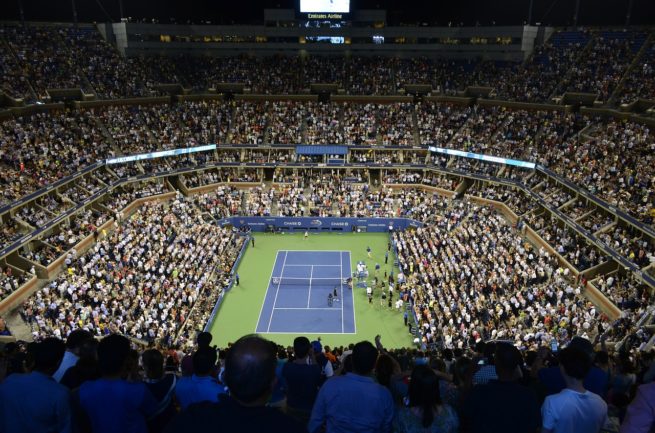
Because the calculation is not distance. It is proximity. Being seen at Arthur Ashe on a Saturday night of the finals is a specific kind of proof-of-life for a specific kind of New Yorker. Having Monday brunch at Sant Ambroeus in Southampton with a guest who was at that match is another proof, layered on top. The Hamptons did not used to overlap with the US Open. Now the two events function like a single operating system.
What Actually Gets Traded Between Sets
Here is what the CBS feed does not show you. During the third set of the women’s quarterfinals, in a suite roughly the size of an Upper West Side studio apartment, a hedge fund guy introduces a family-office principal to a founder whose company just raised a Series C. The introduction takes eleven seconds. The founder’s follow-up email arrives on Tuesday. By Friday, there is a deal memo. By mid-September, a term sheet.
None of this happens at the match. The match is the permission slip. It is the reason everyone is in the same suite, watching nothing in particular, pretending to care about a tiebreak while actually caring about the seating chart.
Meanwhile, a beauty brand founder in the Emirates suite is meeting the COO of a retail concept she has been chasing for eighteen months. They talk for four minutes. She sends product to his wife on Monday. His wife loves it. The retail pilot opens in November. The founder tells this story, later, as if the US Open were simply where she happened to be. Everyone who tells this story tells it that way.
The Players Luxury Is Already Calling About
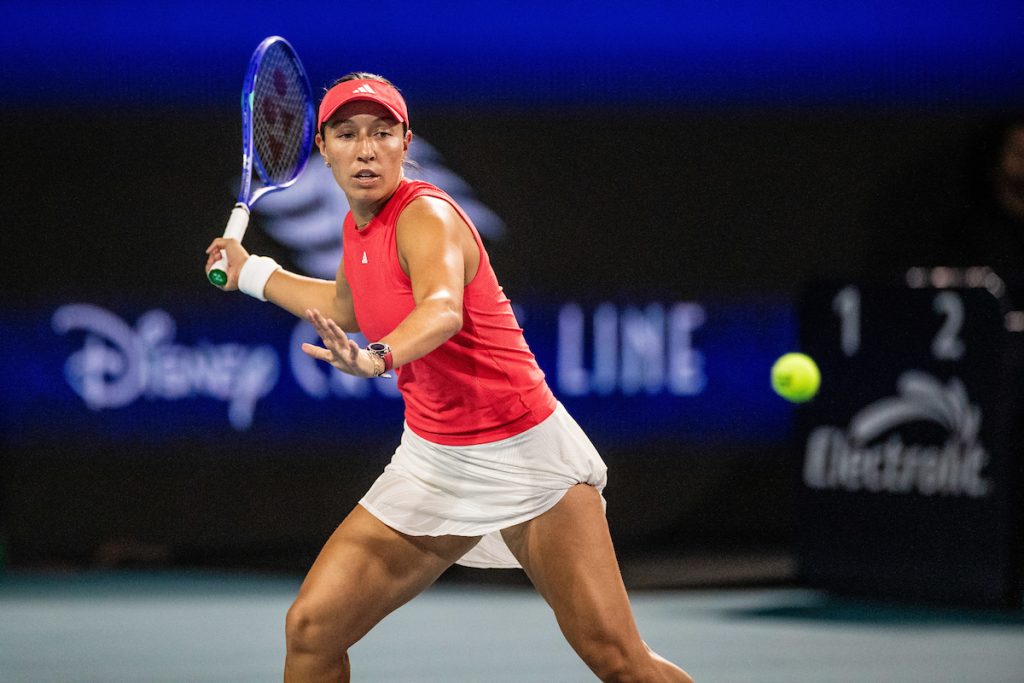
Understand the business structure. The US Open generates roughly a billion dollars in annual economic impact for New York, and the on-court product is only part of the engine. The real machine is the ambassador economy. Rolex, Grey Goose, Emirates, Ralph Lauren, Lavazza, and J.P. Morgan do not sponsor tennis because tennis is popular. They sponsor because the audience indexes absurdly high on disposable income, international travel, and second homes.
Carlos Alcaraz does not just win matches. He moves Rolex inventory. Coco Gauff does not just beat top seeds. She closes New Balance deals in adjacent categories. Iga Świątek, quieter, sells whatever luxury skincare brand signs her next. The point is not that these players are good. The point is they are a distribution mechanism for a very particular kind of attention, and the brands paying for that attention have budgets that do not flinch.
Additionally, the post-match economy runs on a different roster. Retired pros, Wall Street principals, Hamptons fixtures, and a recurring cast of Sag Harbor homeowners all circulate through the same twenty rooms. Those rooms are where the second deal closes.
The Suite Economy (Where Money Watches Itself Spend)
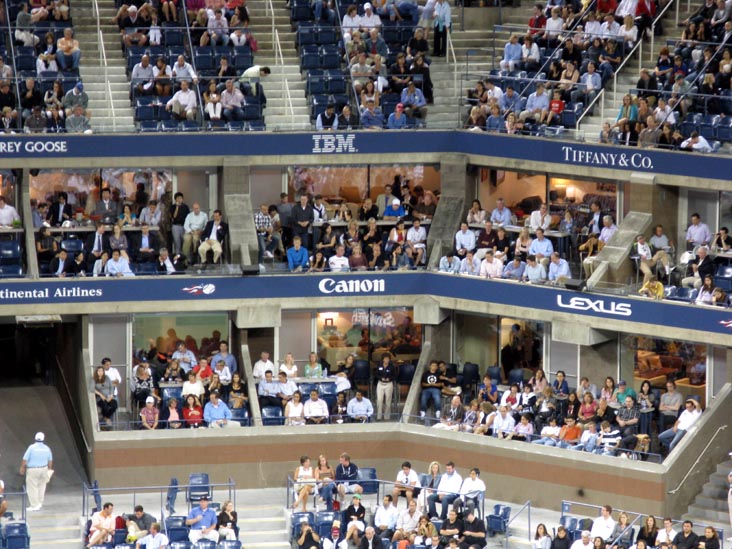
Courtside suites at Arthur Ashe Stadium run between $250,000 and $800,000 for the tournament’s second week. Hospitality packages through American Express and Moët & Chandon top out north of that. The number nobody prints is what brands spend on “activation adjacent” budgets, which is industry shorthand for buying the right dinners, hosting the right afterparties, and sending the right gift suites to the right zip codes.
That adjacency budget is what Social Life Magazine sells. Not a suite. Not a match ticket. The part of the week that happens after the car service turns east on Sunrise Highway and the real conversation starts.
Because the suite closes at 11 PM. The Hamptons does not.
The $10,000 Week That Pays Back in Introductions
Consider the math on a mid-tier US Open weekend. A three-bedroom rental in Sag Harbor the weekend of the men’s final runs $8,000 to $14,000. Two dinners at Nick & Toni’s and Le Bilboquet hit $2,500. Four match tickets in the Loge section come to $3,200. A car service Friday through Monday adds another $2,400. Call it $20,000, give or take, for four people over three nights.
The ROI is not the tennis. The ROI is the four introductions the weekend makes possible. In the Hamptons, an introduction over a shared bottle of rosé on a Sunday afternoon is worth more than three LinkedIn DMs and a Zoom. People say they know this. Very few people price their weekends accordingly.
The Real Game Is in Sag Harbor
Here is where the Hamptons stops performing and starts actually working.
Sag Harbor, during the US Open, turns into an unofficial overflow room for the tournament. The village is close enough to East Hampton Airport to matter, far enough from Southampton’s scene to feel private, and priced just below Amagansett in a way that makes the math pencil for five-day rentals. Players do not stay here. Their managers do. Their brand reps do. The founders and fund principals who want proximity without the noise absolutely do.
Meanwhile, Social Life Residence has taken that pattern and formalized it. The Sag Harbor summer homes run as curated hospitality hubs during US Open week. Private chef optional. Car service to Flushing Meadows or the East Hampton heliport, included. Guests range from emerging beauty founders to finance principals to one recurring creative director from a Milan fashion house you would absolutely recognize.
The booking window is short. Memorial Day to mid-July is when the serious inquiries come in. By August 1, the US Open weekend is usually gone. Brands that want to host clients, media, or ambassadors during the tournament are quietly locking the week now.
Why Beauty Brands Win the US Open Before It Starts
Watch the women’s singles final on any given year. Count how many close-ups the broadcast cuts to in the first thirty minutes. Most of them are not on the players. They are on the crowd. And the crowd at Arthur Ashe for a women’s final in late August is, demographically, exactly the audience a medspa, prestige beauty, or luxury skincare brand spends the entire year trying to reach.
Women, 35 to 55, household income north of $300,000, homes in both Manhattan and the Hamptons, a documented appetite for aesthetics, recovery, and longevity spending. The US Open does not deliver that audience. It concentrates it. For two weeks, the entire demographic is in one zip code during the day and a narrow band of East End restaurants at night.
Beauty brands that understand this stop thinking of the US Open as a tennis event. They think of it as a two-week sampling opportunity to the tightest affluent female cluster in the Northeast. The brands winning are the ones whose founders are at the right dinners in Sag Harbor on the Sunday before the finals. The brands losing are the ones buying banner ads.
Social Life’s Memorial Day through Labor Day issues cover exactly this audience. The magazine lives on Hamptons coffee tables across 25,000 households per issue over five summer drops. The editorial feature slots for September coverage, hitting right as US Open peaks, are the single most valuable real estate in our calendar. Medspa brands that book now own the conversation. Medspa brands that book in August get whatever is left.
The Hamptons Chain: Polo, Tennis, Labor Day
Brands that treat the US Open as a standalone event are mispricing it. The smarter play is to see the late-summer social economy as a three-act chain.
Act One is Polo Hamptons, mid to late July in Bridgehampton. Three thousand affluent attendees, demographic alignment with every luxury vertical that matters, step-and-repeat coverage across Getty Images and Patrick McMullan. This is where brand awareness gets planted.
The middle act is the US Open. The same crowd, reshuffled into a slightly more east-coast-money configuration, in a moment the entire global press corps is watching. This is where brand relevance compounds.
By the closing act (Labor Day weekend), the sequence finally converts. The dinners where the introductions made at Polo and the US Open turn into actual business. This is where deals close.
No other two-month window in the American luxury calendar produces this kind of sequence. Art Basel Miami comes closest, but it is one city over four days. The Hamptons-to-US Open chain runs six weeks across two states, and the audience does not rotate. It compounds.
The US Open Hamptons Operating System
Every sport has a status code embedded in its seating chart, and tennis has one of the sharpest. Courtside at Arthur Ashe signals Wall Street principal, global luxury founder, or active family office. The Loge section signals upper-middle investment banker or successful creative agency partner. The nosebleeds signal a genuine fan, which at the US Open is actually its own kind of flex.
But the real code is not the seat. It is the dinner afterward. Your seat at Arthur Ashe is a public statement. Your table at Nick & Toni’s the night of the men’s semifinal is a private one. Private is always worth more. And private, during the US Open in the Hamptons, is a resource that gets scarcer every year.
The smartest brands figured this out around 2020. They stopped paying for courtside visibility and started paying for the 12-person dinner in a Sag Harbor backyard on the Sunday before the finals. That is the real seat, the one nobody posts about.
That is also the one Social Life has been architecting for fifteen years. We do not sell tennis tickets. We sell the architecture of the right dinner, the right introduction, the right two weeks where attention and affluence and conversation converge on the same small stretch of beach and acrylic court.
Tennis is not a sport in the Hamptons. It is a social operating system. The operating system only runs for two weeks a year. US Open Hamptons is not tennis. It is where the summer finally closes its books.
Related Reading from the Social Life Empire
- Hamptons Hedge Fund Billionaires: Net Worth, Houses, and the Real Power Map
- Polo Hamptons 2026: Sponsorship, Cabanas, and the July Guestlist
- The Hamptons Category Archive: Every Story That Matters Each Summer
The Part Where You Decide Which Side of the Velvet Rope You Want
Everyone reads this kind of piece and thinks, that is exactly the room I should be in. Then most people close the tab and go back to their inbox. The ones who do not close the tab are the ones you will be introduced to at a dinner in Sag Harbor sometime next August, and they are the ones who will be in this magazine by September. There is a fish that does not know it is in water. You know. That is the whole point.
If your brand belongs in the Memorial Day through Labor Day Social Life Magazine coverage cycle (print run 25,000 per issue across five summer drops, plus the fall and winter UES doorman-building distribution), the September issue hitting during US Open peak is the single most valuable real estate on our editorial calendar. Features run as profiles, founder stories, product-led editorials, and Hamptons lifestyle integrations. Inquiries run through sociallifemagazine.com/contact. The medspa, beauty, and luxury wellness slots tend to close first.
For brands that want an expedited editorial feature with guaranteed placement and timing control, the Submit A Paid Feature program runs three tiers ($975, $3,200, and $6,500) depending on depth, multimedia, and distribution scope. Details at sociallifemagazine.com/submit-a-paid-feature/. Turnaround is two to three weeks. US Open-timed features need to be locked by mid-July.
The Social Life Enflyer goes out to 82,000 subscribers of high-net-worth Hamptons, Manhattan, and East End tastemakers who open it the way their parents used to open Town & Country. Brand placements, editorial mentions, and dedicated sends run through sociallifemagazine.com/enflyer/. This is the list that converts. If you want to be in the same inbox as the readers who pay attention to the rest of this article, this is the channel.
Polo Hamptons 2026
The July-weekend half of the late-summer chain. Three tiers run from Corporate Cabana ($6,500) to Gold ($14,000 to $22,000) to Platinum ($35,000 to $50,000), and each includes Social Life Magazine editorial integration across the Memorial Day, July 4th, and July 17th issues. The full guestlist demographic and sponsorship deck is at polohamptons.com. Platinum slots for 2026 are actively closing.
If you would rather read Social Life on paper than only online, print subscriptions (annual, mailed directly, seven issues per year) are at sociallifemagazine.com/subscription. The magazine has been publishing for 23 years. Most of our subscribers have been reading for more than ten.
And if you simply believe in independent longform media covering the Hamptons the way it actually is, donations support the editorial operation and keep the coverage unflinching. Contribute here. Yes means you are part of how the next 23 years get written. No means you were always going to read it anyway.
Author

Written by
Recent Posts
Best Folding Tables for Community Halls and Function Centres
From the Hamptons to Mykonos for a September Encore
Is Business Class Worth It on a Short-Haul Flight?
Failure to Disclose Finances in Divorce
Columbus Car Accident Attorney: Protecting Your Rights After a Georgia Crash
Categories
- Art
- Articles
- Business of Luxury
- Celebrities
- Culture
- Entertainment
- Events
- Faces of Summer 2026
- Fashion
- Fashion & Style
- Featured
- Finance
- Food, Spirits, Wine
- Hamptons
- Hamptons Celebrities
- Health
- Health & Beauty
- Lifestyle
- Luxury Lifestyle
- Press
- Profiles
- Real Estate
- Technology
- The Chronicles
- Travel
- Uncategorized
- Weddings