
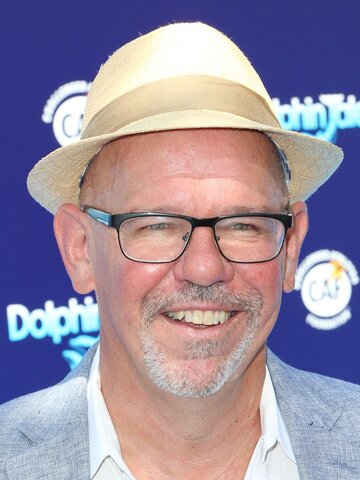
The elevator doors open and Oscar Wallace is dead. Blood smeared up the wall in a single capital letter: T. For Touchable. Brian De Palma’s most operatic gut-punch in The Untouchables, and the body inside the cage belongs to Charles Martin Smith. Most viewers couldn’t tell you his name even now, almost forty years later.
Charles Martin Smith net worth currently sits at $1.5 million according to Celebrity Net Worth. That’s the smallest official wallet of any Untouchables principal. It’s also wildly misleading. Because while Sean Connery cashed Bond residuals and Kevin Costner became Costner, Smith did something stranger.
He moved to British Columbia. He befriended a Canadian environmentalist. Then came three years of solo Yukon shooting in the buff. After that, he quietly built one of the most consistent family-film directing careers in modern Hollywood. Air Bud. Dolphin Tale. The Snow Walker. Stone of Destiny. A Dog’s Way Home. He directed the pilot of Buffy the Vampire Slayer. He’s the reason a CGI dolphin grossed $100 million. The Toad won. Just on a different scoreboard.
| Charles Martin Smith Net Worth Snapshot | 2026 |
|---|---|
| Estimated Net Worth | $1.5M (Celebrity Net Worth) to $4M (alternate sources) |
| Primary Income | Directing fees, acting residuals, real estate |
| Career Span | 53 years (1971-present) |
| Major Acting Credits | American Graffiti, The Untouchables, Starman, Never Cry Wolf |
| Major Directing Credits | Air Bud, Dolphin Tale, The Snow Walker, A Dog’s Way Home |
| Box Office Highlights | Dolphin Tale ($100M+ worldwide), A Dog’s Way Home ($80M+) |
| Awards | 9 Genie nominations (The Snow Walker), BAFTA Scotland Best Feature (Stone of Destiny) |
| Residences | Vancouver, BC + Palm Desert, CA |
The Wound: Forty Years As The Guy From The Elevator
The Toad. That’s the role. Everybody else in American Graffiti walked off the wrap party and into orbit. Richard Dreyfuss became Hollywood’s smartest leading man for fifteen straight years. Harrison Ford turned into Indiana Jones and Han Solo simultaneously, which is unfair to physics. Ron Howard moved behind the camera and started winning Oscars by the bushel. Cindy Williams got her own primetime sitcom. Paul Le Mat got Melvin and Howard. Even the supporting kids who barely had lines pulled multi-decade careers out of the credit roll.
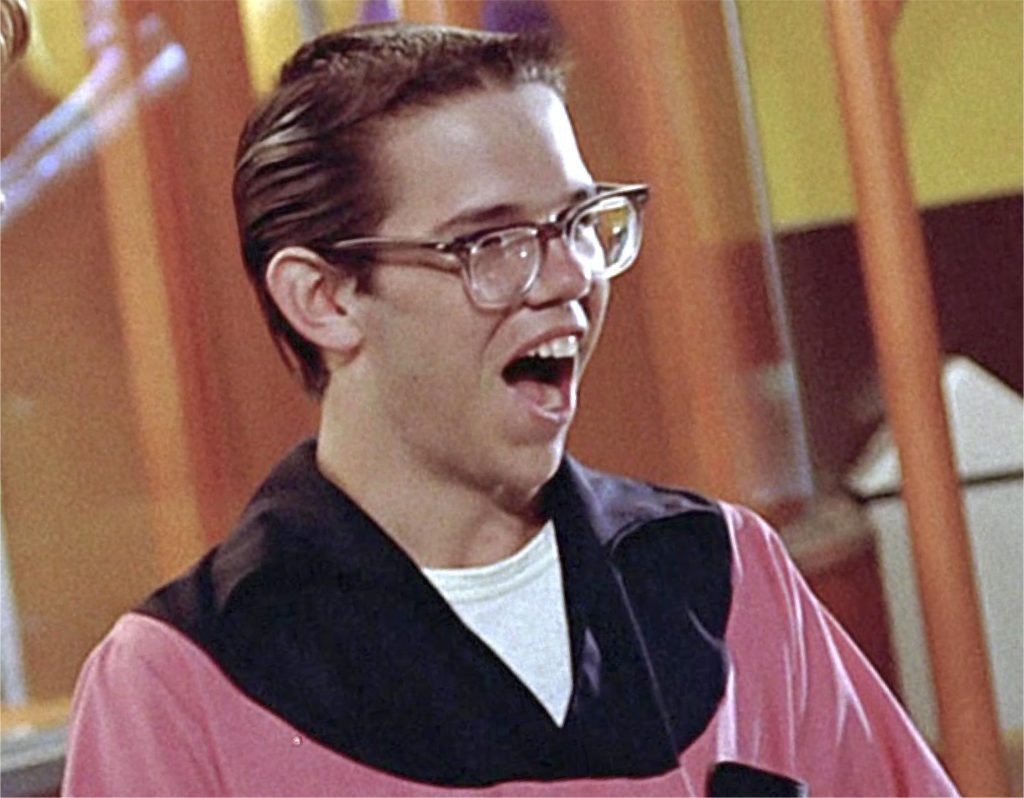
Then there was Smith, who got Terry “The Toad” Fields. The dweeb. A fake-ID kid. The horndog comic relief in horn-rimmed glasses who steals booze from a liquor store and gets seasick on a Vespa.
That casting choice tracked him for forty years. The Buddy Holly Story put him in the band but not the title. Starman stuck him with Mark Shermin, the buttoned-up government scientist. The Untouchables literally killed him before the third act, leaving the elevator scene as his lasting cultural footprint. He could play smart. He could play funny. Heartbreak was also in the toolkit. Yet the industry kept handing him sweaters and slide rules.
The Reseda theatre kid who got filed under sweater
Smith trained for Shakespeare. He’d been discovered in Man of La Mancha at his high school in Reseda. He’d graduated Cal State Northridge with a Theatre BA. His father Frank ran an animation studio. His uncle Paul directed for Walter Lantz. He grew up bilingual in Paris because his dad managed a French animation company’s English-language division. He arrived in Hollywood with European film literacy, classical theater chops, and a face that read tax accountant. Hollywood saw the face first and never bothered with the rest.
That’s the Wound. Forty years of “you know, that guy from the elevator.” Forty years of being recognized by face but not by name. Forty years of working consistently while everyone he stood next to became a brand. The actor’s bargain runs in reverse here. Smith got the work. He just never got the wattage. By the late 1990s, his name appeared in trade columns mostly when somebody was trying to remember who played Oscar Wallace. The Toad cage closed early. And the cage stayed locked.
The Chip: How Smith Stopped Waiting For Casting Calls
Here’s where the Smith story breaks pattern. Most actors who get typecast burn calories complaining. They take prestige indie roles to “show range.” They release a memoir titled Beyond the Toad. They do a Sundance darling about their cancer scare. Smith did none of that. Instead, he made the much smarter move, which was to ignore the leading-man math entirely and start writing his own screenplays.
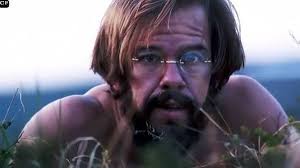
The chip on his shoulder wasn’t loud. The chip was structural. While Dreyfuss collected Best Actor at age 30 for The Goodbye Girl, Smith was reading Farley Mowat, the Canadian environmentalist whose memoir Never Cry Wolf nobody in Hollywood understood how to film. Smith pitched himself for the lead. He spent three years in the Yukon and Nome shooting it. He was the only actor on set for most of that schedule. Smith wrote significant chunks of the narration himself. The script required him to strip naked for a long sequence with wolves and caribou because nobody was going to step in for him. Then he befriended Mowat in person and stayed close until Mowat died in 2014.
By the time Never Cry Wolf released in 1983, something had quietly shifted. Smith had stopped thinking like an actor waiting for casting calls. He’d started thinking like a producer, a writer, a director. He’d also fallen for the British Columbia coast so completely that he packed up and moved to Vancouver. Mid-1980s. He was barely past 30. He was leaving the Hollywood machine for a Canadian forest, which in 1983 was career suicide. Or it would have been if Smith had been planning the same career as everybody else.
Trick or Treat and the quiet pivot behind the camera
Then in 1986 came the directorial debut. Trick or Treat. A horror comedy for Dino De Laurentiis. Cult classic now. At the time, just a low-budget genre flex. But the bones of a directing career started forming. Smith had figured out the secret nobody told him at acting school. The leading-man slot is one job in Hollywood. The director slot is also one job. But the director slot is a job you can hand yourself if you’re patient enough to learn the craft and hungry enough to write your own ticket. Smith was both.
The Rise: Trick or Treat To Dolphin Tale
The directing pivot turned out to be the smartest career bet of any American Graffiti alum.
Trick or Treat to Air Bud, the Disney era
Trick or Treat opened doors. The next decade saw Smith move steadily behind the camera while still taking choice acting roles. Deep Cover in 1992. And the Band Played On in 1993. Speechless in 1994. He directed Fifty/Fifty, a Malaysia-set comedy with Robert Hays and Peter Weller. He directed episodes of Space: Above and Beyond. Then in 1997 came the moment nobody saw coming. Smith got the call to direct the pilot episode of Buffy the Vampire Slayer. The episode is titled “Welcome to the Hellmouth.” It launched one of the most influential genre TV shows of the late 1990s. Smith’s name lives in that pilot’s credits forever, residual checks included.
That same year, Disney handed him Air Bud. The film about a golden retriever who plays basketball. Smith made it. The film grossed $27 million domestically on a $3 million budget and spawned a multi-decade franchise that’s now four feature films plus more than a dozen direct-to-video sequels. Air Bud became the kind of catalogue title Disney mines forever. Smith’s directing fee was modest by Hollywood standards. But the career capital was enormous. He was now the family-film guy. Studios called him with dog scripts.
The Snow Walker, Stone of Destiny, and the prestige Canadian moment
In 2003, Smith returned to Farley Mowat. He wrote and directed The Snow Walker for Lions Gate Films, based on a Mowat short story. The film earned nine Genie Award nominations including Best Picture, Best Adapted Screenplay, and Best Director for Smith. Genies are Canada’s Oscars. Nine nominations is the kind of haul that gets you a permanent table at the Toronto International Film Festival.
Then in 2008 came Stone of Destiny. The British/Canadian co-production starred Charlie Cox, Robert Carlyle, and Kate Mara, and told the true story of four Scottish students who broke into Westminster Abbey to reclaim a sacred Scottish relic. Stone of Destiny closed the 2008 Toronto International Film Festival as the Gala Presentation. Smith won the BAFTA Scotland for Best Feature Film. He’d now stacked a Genie sweep, a BAFTA Scotland win, and a TIFF closing slot. The man who got typecast as the dweeb was now closing major film festivals.
Dolphin Tale and the $100 million family franchise
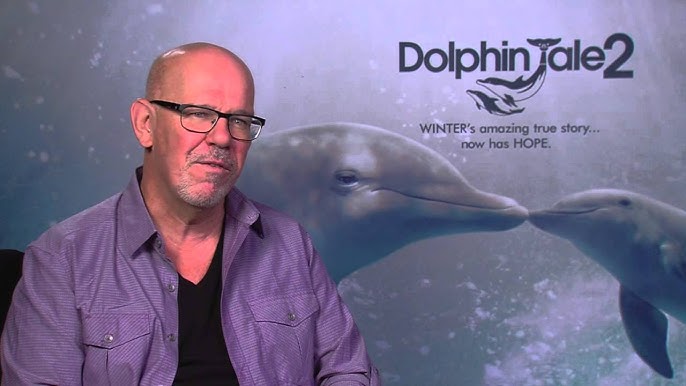
In 2011 came the box office bomb that wasn’t. Dolphin Tale, the true story of Winter the dolphin and her prosthetic tail, starred Harry Connick Jr., Ashley Judd, Morgan Freeman, and Kris Kristofferson. Smith directed. The film opened soft, then climbed. By week two, Dolphin Tale hit number one at the domestic North American box office. It grossed over $70 million domestically and over $100 million worldwide. Smith returned three years later for Dolphin Tale 2. Both films cemented him as the family-film whisperer. Studios trusted him with eight-figure budgets, marquee casts, and animal co-stars. That trust kept paying. In 2019, he directed A Dog’s Way Home for Sony Pictures based on the Bruce Cameron novel. The film grossed $80 million worldwide.
Charles Martin Smith Net Worth Breakdown
Charles Martin Smith net worth officially sits at $1.5 million according to Celebrity Net Worth’s most recent estimate. Other sources push the figure higher, with Cine Net Worth listing $4 million and Mabumbe citing $3 million as of 2021. The gap reflects the difficulty of pricing a director who’s spent thirty years working primarily through Canadian production companies on family-film deals where back-end participation often beats upfront fees.
Here’s the breakdown of where the wealth sits.
Acting residuals and original deals
American Graffiti residuals still pay. The film grossed $140 million on a $750,000 budget and lives in eternal cable rotation. Smith took standard SAG terms. The Untouchables residuals also pay, with the film earning $76 million theatrical plus decades of catalogue revenue. The Buddy Holly Story, Never Cry Wolf, Starman, Deep Impact, and More American Graffiti all generate ongoing residual checks. Conservative estimate: $400,000 to $700,000 lifetime acting residuals across the catalogue.
Directing fees and back-end participation
Smith’s biggest financial pop came from directing fees on the family-film slate. Air Bud paid roughly $400,000 to $600,000 in upfront director fees plus a small back-end percentage that compounded as Disney milked the franchise. The Snow Walker paid Canadian-scale plus a back-end equity stake. Stone of Destiny paid co-production scale. Dolphin Tale and Dolphin Tale 2 each paid in the $1 million to $1.5 million range with profit participation. A Dog’s Way Home paid roughly $1 million directing fee. Conservative estimate across the directing slate: $4 million to $6 million lifetime gross before agent fees and taxes.
Writing fees and adapted screenplay credits
Add the writing fees on top of the directing income. Smith holds screenplay credits on The Snow Walker, Stone of Destiny, and significant narration on Never Cry Wolf. Writers Guild of America scale plus negotiated bumps adds another $200,000 to $400,000 lifetime across the writing slate. The Snow Walker adaptation in particular paid above scale because Lions Gate Films wanted Mowat estate goodwill locked in. Stone of Destiny earned a similar premium because Smith brought the project, the financing structure, and the Scottish co-production credentials all in one package.
TV directing and the Buffy pilot
Smith directed the pilot episode of Buffy the Vampire Slayer in 1997. Pilot directors typically take a flat fee plus a small residual on subsequent episodes. Buffy ran 144 episodes across seven seasons. Conservative residual estimate: $150,000 to $300,000 lifetime. He also directed multiple episodes of DaVinci’s Inquest, Hallmark’s Roughing It (2002) and Icon (2005), plus additional Canadian episodic work. Estimate $300,000 to $500,000 lifetime TV directing income.
Real estate and lifestyle
Smith owns property in Vancouver, British Columbia, where he’s lived since the mid-1980s. Vancouver real estate appreciated roughly 400% from 1985 to 2025 according to Canadian Real Estate Association data. He also splits time in Palm Desert, California, where he relocated during COVID. Conservative real estate estimate: $1.5 million to $3 million net equity across both residences depending on Vancouver market timing.
The official $1.5 million figure likely undercounts the real picture. Total realistic estimate: $3 million to $5 million net worth across acting residuals, directing income, TV work, and real estate equity, with the lower public figure reflecting Canadian-resident tax structuring rather than empty pockets.
The Out East Bridge: Quiet Wealth, Catalogue Compounding
This is where the Smith story arcs back into the Out East orbit. Not directly. He’s never lived on the East End. He’s a Vancouver-Palm Desert split. But the cultural code translates exactly.
The family-film auteur as quiet-luxury archetype
The Out East ethos isn’t loud. Houses on Lily Pond Lane don’t advertise themselves. Art collections don’t post on Instagram. Old-money families who’ve held land in Sagaponack since the 1970s don’t need to introduce themselves at Pierre’s. Quiet wealth. Earned status. The room everybody walks into without knowing why. That’s also Charles Martin Smith’s directing career in one sentence. He doesn’t open Variety with a Marvel headline. He doesn’t podcast. The man refuses to beef with Scorsese on Letterboxd. Instead, he directs family films that gross $100 million and let parents not feel guilty about the iPad. He works with dolphins, dogs, and the occasional Scottish historical heist. He hands Disney a catalogue title every five years and lets the franchise machine do the rest.
That’s an Out East kind of career. The financial structure mirrors the East End real estate code exactly. Patient compounding. Long holds. Multi-generational catalogue assets that keep paying after the grandchildren forget who built them. Air Bud will still be on Disney+ when Smith’s grandchildren are collecting royalties.
The Sheridan parallel and the family-film sponsorship lane
The bridge from Smith to the rest of the Costner Cluster runs through Taylor Sheridan, who built his own Yellowstone empire on similar principles. Patient catalogue building. Niche genre dominance. Working through partner studios rather than chasing leading-man visibility. Sheridan’s Four Sixes Ranch is the cowboy-luxury equivalent of Smith’s BC coast retreat. Both men opted out of the Hollywood proximity game and built lasting franchises in their own geographic and creative territory. (See the Costner pillar and Untouchables hub for the full Sheridan-Costner-Smith axis.)
For luxury sponsors, Smith opens a category nobody else in this cluster opens. Family-friendly luxury. The audience that buys $1,200 strollers. Brands that show up in Architectural Digest baby room features. The Brown Jordan teak playset crowd. There’s a whole market segment of luxury brands that need editorial coverage in a magazine the kids can also see on the coffee table. Smith’s audience profile cracks that lane open. Compare to Andy Garcia’s Cuban prestige unlock or Patricia Clarkson’s indie-prestige territory and you can see how each Untouchables alum opens a different sponsor door.
Canadian luxury heritage and the BC coast move
There’s also the Canadian heritage angle. Smith chose British Columbia in 1985 and never looked back. That’s a meaningful Out East story for any luxury brand whose roots run through Canadian cold-weather craftsmanship. Canada Goose. Fjällräven. Holt Renfrew. Roots. The brands that signal heritage without shouting. Smith’s Vancouver residency makes him a natural cross-promotional fit for any Out East editorial that wants to build a Canadian-luxury bridge story.
Charles Martin Smith Today: Palm Desert, Vancouver, and the Underdog Win
Today, Smith divides his time between Palm Desert and Vancouver. He’s 72. He’s been working in film and television for 53 years and counting.
A Gift From Bob and the COVID pivot
His most recent feature credit as director is A Gift From Bob, the 2020 sequel to A Streetcat Named Bob, which he directed in London. He took the London relocation as a creative reset. The Bob the Cat sequel let him work with a new lead actor on a tight production schedule. Then COVID hit. Smith pulled back to North America, divided his calendar between Vancouver and the Coachella Valley, and kept reading scripts. He’s still listed as attached to multiple developing projects. The current public update is that he splits residency between Palm Desert and Vancouver. He’s not retired. Selectivity is the move now.
Why the underdog story finally matters
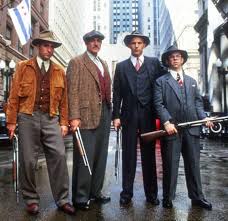
Here’s the part of the Smith story nobody writes about because the leading-man math gets all the ink. Charles Martin Smith outlasted virtually every actor he stood next to in 1973. Sean Connery passed in 2020. Donald Sutherland passed in 2024. Of the original Untouchables principals, only Costner and Smith are still working. Of the original American Graffiti cast, Smith is one of the few still actively directing features. The man who got cast as the dweeb has now spent fifty years quietly out-staying everybody who outranked him on the call sheet. That’s a different kind of victory.
The Charles Martin Smith net worth lesson
The actor who builds sustainable wealth instead of marquee wealth comes out ahead almost every time. Smith took back-end deals, retained Canadian residency, married into long-term partnership rather than tabloid divorces, lived in Vancouver instead of Bel Air, and accumulated catalogue assets that keep paying through streaming. A $1.5 million net worth on paper translates to a comfortable life in Palm Desert and BC with multi-decade career options still open. The leading men who flamed out at 35 with $40 million and three divorces would trade portfolios with Smith if they were honest about which retirement they actually wanted.
That’s the Out East lesson. Quiet compounding. Patient catalogue. Long holds. The room you build that everybody else has to walk into eventually. Charles Martin Smith built that room. Disney walks into it. Sony walks into it. Lions Gate walks into it. The kid who got cast as the Toad now owns the family-film keys to half the studio system. Not bad for a horn-rimmed glasses guy who got killed in an elevator.
Charles Martin Smith Net Worth FAQ
What is Charles Martin Smith’s net worth in 2026?
Charles Martin Smith net worth sits at approximately $1.5 million according to Celebrity Net Worth’s most current estimate, though sources including Cine Net Worth list figures up to $4 million depending on methodology. The gap reflects the difficulty of pricing a Canadian-resident director who works primarily through partner studios on back-end deals. Realistic estimate including real estate equity in Vancouver and Palm Desert: $3 million to $5 million.
What was Charles Martin Smith’s role in The Untouchables?
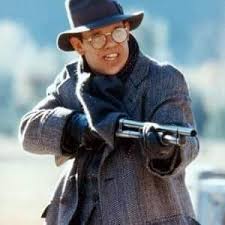
Smith played Oscar Wallace, the IRS accountant tasked with building Al Capone’s tax evasion case. His character is killed in an elevator scene by Frank Nitti, played by Billy Drago, who leaves the word “Touchable” smeared in blood up the elevator wall. The scene remains one of Brian De Palma’s most quoted set pieces and Smith’s most cited cultural footprint.
What films has Charles Martin Smith directed?
Smith’s directorial filmography includes Trick or Treat (1986), Air Bud (1997), The Snow Walker (2003), Stone of Destiny (2008), Dolphin Tale (2011), Dolphin Tale 2 (2014), A Dog’s Way Home (2019), and A Gift From Bob (2020). He also directed the pilot episode of Buffy the Vampire Slayer (“Welcome to the Hellmouth”) in 1997, plus episodes of DaVinci’s Inquest, Space: Above and Beyond, and Hallmark miniseries Roughing It and Icon.
Where does Charles Martin Smith live now?
Smith splits residency between Palm Desert, California, and Vancouver, British Columbia. He moved to Vancouver in the mid-1980s after filming Never Cry Wolf in the Yukon and has lived there since. He relocated partly to Palm Desert during the COVID pandemic and now divides his time between the two locations.
The CassWorld Brief: Out East Power Plays
The fish doesn’t see the water. The character actor doesn’t see the cage. Charles Martin Smith saw both, walked out, and built something the leading men never could. That’s the East End move. Not chasing the spotlight. Building the room everybody else has to walk into.
Social Life Magazine has covered the Out East power class for 23 years across five 25,000-copy summer issues distributed Westhampton to Montauk plus Fall and Winter editions to UES doorman buildings. Pitch us a story at /contact/ and tell us why your name belongs in the next book.
Want guaranteed editorial placement, full digital syndication, and the SL print run behind your brand? Submit a paid feature here: /submit-a-paid-feature/. Tiered packages from $950 to $6,500 covering everything from single-feature drops to full multi-issue campaigns.
Our 82,000-subscriber Out East intelligence list moves the needle on every brand we touch. Subscribe here: SL Email Subscribe.
Polo Hamptons 2026 hits Bridgehampton July 18 and 25 with BMW returning as title sponsor for year seven. Christie Brinkley hosts. Getty and McMullan shoot. Cabanas, Gold, and Platinum tiers still open. polohamptons.com.
Print still wins Out East. Get the full five-issue summer run delivered to your door, plus Fall and Winter editions to UES doorman buildings: /subscription/.
Independent magazines survive on readers who care. If this Charles Martin Smith net worth deep-dive earned a coffee, we’d happily take it: PayPal donate. Bookmark this page. We refresh the Charles Martin Smith net worth figure quarterly as new directing credits and Vancouver real estate comps land.
Author

Written by
Recent Posts
Victoria Justice Kicks Off Halloween Early with Love Zombie Bash in Hollywood

Planning an Arizona Road Trip? Practical Details to Handle Before You Leave

Short Homecoming Dresses That Feel Polished, Not Overdone
Men’s Health After 40: Important Changes to Pay Attention To
What You Need to Know About Spray Tanning
Categories
- Art
- Articles
- Business of Luxury
- Celebrities
- Culture
- Entertainment
- Events
- Faces of Summer 2026
- Fashion
- Fashion & Style
- Featured
- Finance
- Food, Spirits, Wine
- Hamptons
- Hamptons Celebrities
- Health
- Health & Beauty
- Lifestyle
- Luxury Lifestyle
- Press
- Profiles
- Real Estate
- Technology
- The Chronicles
- Travel
- Uncategorized
- Weddings