
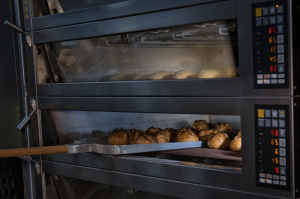
Fine dining consistency relies on precision, power, and thermal control that standard residential ranges simply cannot achieve. High-end kitchens utilize six specific technological capabilities that stabilize the cooking environment and guarantee uniform results during every single service.
These machines transform how ingredients react to heat, moisture, and airflow within the chamber. Understanding these technical components allows chefs to replicate professional-quality textures at home or in boutique catering operations.
Transitioning to a professional-grade setup requires identifying which specific technologies bridge the gap between amateur effort and elite mastery. The following features represent the gold standard for achieving culinary perfection across a wide range of menu items.
1. Combi Steam Control
Combi steam introduces precise humidity levels into the oven chamber to prevent proteins from drying out. This technology ensures that delicate crusts remain crisp while the interior stays succulent.
When you consider upgrading to a commercial-grade setup, the Combi steam stands out as the most versatile addition to your workflow. This feature allows for gentle poaching, steam-baking, and rapid rethermalization without sacrificing food quality.
2. True Convection Airflow
True convection relies on a dedicated heating element surrounding the fan to circulate consistent heat throughout every corner of the cavity. This prevents hot spots and guarantees uniform cooking regardless of shelf placement.
Consistent heat distribution matters most when you are managing heavy loads or baking multiple sheets simultaneously. Professionals trust this airflow to eliminate the need for rotating pans during the cooking cycle.
3. Deck Stone Baking
Deck stone baking utilizes high-mass ceramic or stone surfaces to provide intense, direct heat for artisanal breads and pizzas. This thermal mass creates the characteristic base crunch that defines restaurant-style crusts.
These surfaces absorb and radiate heat efficiently to mimic a traditional wood-fired masonry oven. Achieving this level of structural integrity in a pizza or loaf is nearly impossible without the specific heat transfer provided by a dedicated stone deck.
4. Rapid Cook Impingement
Rapid-cook impingement technology forces high-velocity hot air through specialized nozzles directly onto the surface of the food. This method significantly accelerates the Maillard reaction to create deep, savory browning in record time.
This feature remains essential for high-volume environments where service speed dictates the success of the operation. You gain the ability to finish appetizers or single-serving entrees in minutes rather than waiting for slow heat penetration.
5. Programmable Recipe Automation
Programmable recipes allow for multi-stage cooking sequences where the oven automatically adjusts temperature and humidity levels at predetermined intervals. This automation removes human error from the most critical stages of the production process.
Consider these key benefits of implementing automated cooking cycles:
- Higher consistency across different shifts
- Lower training time for new kitchen staff
- Reduced monitoring for busy culinary teams
Sophisticated automation changes the daily workflow for a kitchen staff by offloading routine monitoring to the machine. The oven manages the environment and alerts the chef only when specific milestones are reached during the cook time.
6. Core Temperature Probes
Core-temperature probes monitor the internal heat of proteins, signaling the system to stop or hold once the target degree of doneness is reached. Using these probes ensures that every steak, roast, or poultry item hits the exact desired internal temperature every time.
Precision finishing prevents the risk of overcooking delicate proteins during busy service hours. You maintain control over the final product quality by relying on internal data rather than guesswork or timers.
These monitoring features offer significant operational improvements:
- Elimination of guesswork in meat preparation
- Exact replication of internal doneness targets
- Better control over inventory waste
Scaling Professional Kitchen Standards
Modern commercial environments demand versatility that exceeds basic heating capabilities. Integrating these high-performance features means you stop fighting against your equipment and start collaborating with it to achieve consistent, elite-level results.
Investing in these six features shifts your output from amateur guesswork to deliberate, professional execution. Each component serves a specific purpose in stabilizing the environment inside the oven chamber for better final products.
Resources available at Restaurant Supply provide deep insights into how these technologies integrate into various kitchen designs. Whether you manage a small cafe or a large professional catering operation, selecting the right equipment from Restaurant Supply ensures your standards remain high and your service remains efficient.
Author

Written by
Recent Posts

Trading the Hamptons for Hvar: A Summer on Croatia’s Most Glamorous Island
How to Make Money 3D Printing: A Guide to Models, Costs, Channels, and Licensing
When an Injury Changes Everything: Building a Strong Durham Claim

Jetsetter Style: Castello del Sole

The First Decision After a Collision Can Be the Most Important One
Categories
- Art
- Articles
- Business of Luxury
- Celebrities
- Culture
- Entertainment
- Events
- Faces of Summer 2026
- Fashion
- Fashion & Style
- Featured
- Finance
- Food, Spirits, Wine
- Hamptons
- Hamptons Celebrities
- Health
- Health & Beauty
- Lifestyle
- Luxury Lifestyle
- Press
- Profiles
- Real Estate
- Technology
- The Chronicles
- Travel
- Uncategorized
- Weddings