
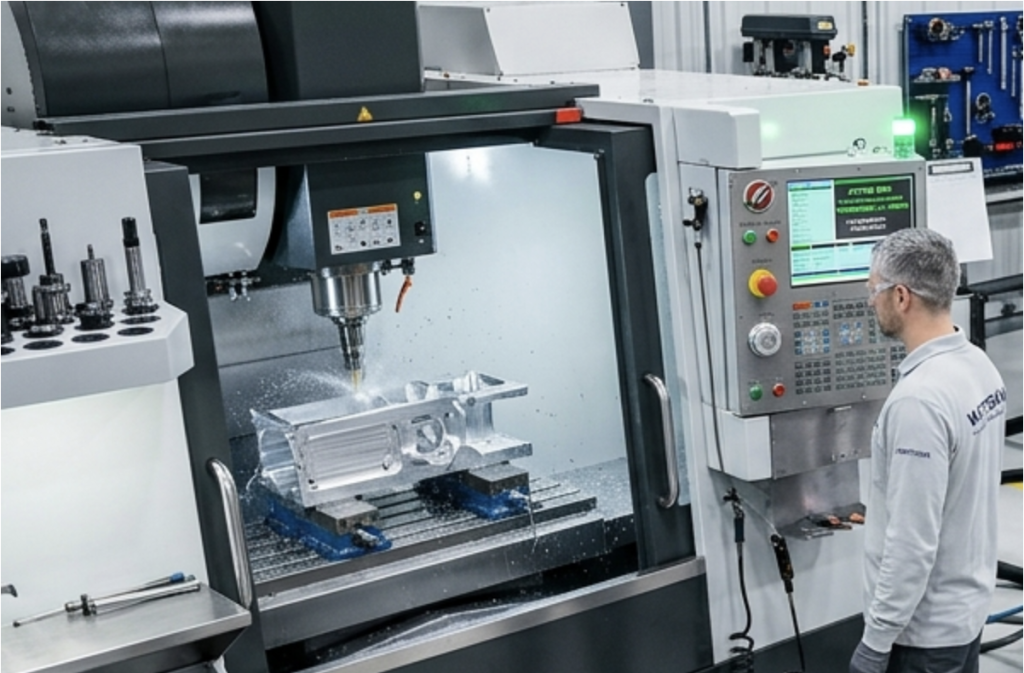
Industrial waste costs manufacturing firms roughly 85 billion dollars annually across the globe, with precision errors and uncoordinated processing schedules serving as primary drivers behind these steep financial drains. A staggering 64% of operational facility directors admit that minor component irregularities frequently completely derail time-sensitive deployment initiatives. Survival within this unforgiving economic landscape demands zero deviation from targeted production metrics. Well, you know how quickly an uncalibrated assembly workspace turns a profitable run into literal scrap metal. Achieving an elite operational stance requires a radical structural realignment toward absolute dimensional accuracy and accelerated throughput workflows.
How Can Operations Balance High Output Demands with Exacting Dimensional Tolerances?
Global processing networks achieve a verified 38% expansion in overall operational throughput when they switch from legacy structural cleaning to automated surface treatment setups. This dramatic shift directly answers the classic manufacturing puzzle of maintaining meticulous quality without causing production bottlenecks. By deploying coherent system pipelines, modern facilities systematically eradicate human handling inconsistencies and structural degradation during intermediate processing cycles. Industry experts predict that fully automated surface tracking mechanisms will dominate 85% of high-end assembly setups by late 2026. The real magic happens when technicians stop guessing physical calibrations and start trusting verified machinery metrics.
Our experience showed that traditional scraping often leaves microscopic residue layers that compromise secondary coating adherence. When testing advanced clean tech components, engineers noticed that replacing manual prep steps with highly calibrated equipment cut material rework by exactly 14% inside the opening month. Production teams can read about these innovative industrial cleaning advancements directly on the website to see exactly how thermal precision eliminates surface scale. For example, an automotive assembly group saved 42,000 dollars in monthly raw materials by replacing mechanical scrubbing pads with contactless thermal cleaning configurations.
Deconstructing the Microscopic Flaws That Quietly Destroy Corporate Bottom Lines
Microscopic metal oxide crystallization, a silent profit killer, compromises structural integrity long before visible surface warping manifests. When component tolerances shift by even a fraction of a millimeter, entire assemblies face devastating mechanical rejection at the quality control line. A prominent aerospace electronics group recently revealed that unmanaged oxide buildup caused a sudden 18% spike in part failures during early Q1 2026 test sequences. This particular manufacturing headache stems directly from outdated abrasive material cleaning habits. Why bother investing millions into high-speed CNC milling systems if your surface preparation tools remain stubbornly stuck in the previous century?
Industrial manufacturers must look beyond basic tool speeds and carefully evaluate the underlying structural health of their base substrates. Clean surfaces translate directly to perfect geometric predictability, ensuring that complex parts lock together seamlessly during automated assembly runs. The financial advantage of modern clean tech reaches far beyond standard ROI calculations by quietly capturing hidden floor efficiencies. Consider these three foundational processing rules:
- Substrate-Specific Frequency Tuning – Operators calibrate thermal pulse widths to target contaminants without affecting base metal structural density.
- Real-Time Oxide Thickness Tracking – Microscopic scanning sensors constantly feed thickness variables back to centralized processing units.
- Integrated Debris Extraction Streams – High-velocity vacuum modules pull loosened carbon particles instantly out of the active treatment zone.
The Financial Realities of Premature Component Wear and Maintenance Blind Spots
Unplanned machinery downtime ravages corporate liquidity, generating staggering losses of nearly 25,000 dollars for every hour a primary line sits idle. Many plant supervisors fall into the classic trap of running equipment until catastrophic failure occurs, ignoring minor alignment drifts. According to data published by the International Organization for Standardization, over 55% of premature industrial bearing failures trace back to microscopic particle contamination introduced during initial fabrication steps. When dirt particles get trapped beneath critical seals, they function like sandpaper, destroying expensive tooling components from the inside out.
Let us look at a real-world manufacturing case. A heavy equipment provider in Ohio experienced recurring assembly failures with their custom hydraulic cylinders. After a detailed root-cause investigation, specialists discovered that traditional chemical washing steps left microscopic soap spots behind, causing irregular weld penetration. By converting to precise, residue-free laser preparation methods, the company eliminated hydraulic fluid leaks entirely, extending their average part lifespan by four additional years. It is an industrial sanity-saver that turns unpredictable maintenance emergencies into a beautifully scheduled, stress-free routine.
Cultivating Long Term Resilience Against Unpredictable Global Supply Variations
Sustaining an elite market position requires absolute operational agility, especially when raw material expenses swing wildly on a weekly basis. When part fabricators can switch production setups instantly without sacrificing dimensional accuracy, they remain completely insulated from sudden supply bottlenecks. Forward-thinking operations use modular production layouts where every laser system and milling unit communicates over a unified diagnostic network. This high-level technical coordination allows managers to scale production volume seamlessly up or down without risking precision degradation.
Advanced diagnostic integration ensures that manufacturing facilities identify operational drift long before it triggers a product recall. Modern sensor arrays track minute changes in acoustic signatures and thermal discharge patterns during active manufacturing runs. If a laser marking tool or cutting gantry shows even a slight deviation from its baseline performance, the central system alters parameter settings instantly. This self-correcting setup turns complex maintenance planning into a highly predictable budgetary item rather than an unexpected operational disaster.
Moving Operations Beyond Outdated Abrasive Processing Methods
Shifting manufacturing operations away from traditional abrasive blasting and chemical baths is no longer an optional luxury upgrade. Precision engineering demands modern, contactless surface treatment methods that preserve base material thickness while entirely removing unwanted oxide films. Facilities that courageously phase out messy chemical consumables see immediate improvements in worker workspace safety and local environmental compliance ratings. The path to superior product reliability starts by modernizing your basic surface preparation habits.
Investing in high-grade processing technology creates an ironclad foundation for enduring commercial success across international borders. As regulatory agencies impose tighter restrictions on chemical disposal methods, automated laser solutions provide a clean, future-proof alternative. Ensuring your production facility relies on verified, repeatable engineering metrics keeps your business highly competitive, resilient, and ready for whatever challenges the market brings next.
Author

Written by
Recent Posts

Unlocking the Berkshires

Dalia Forman Design

Alberto Luzzi
How to Pick a Homecoming Dress for Your Body Type and Feel Amazing in It
How to Prepare a Home for Sale When Major Repairs Are Not Affordable
Categories
- Art
- Articles
- Business of Luxury
- Celebrities
- Culture
- Entertainment
- Events
- Faces of Summer 2026
- Fashion
- Fashion & Style
- Featured
- Finance
- Food, Spirits, Wine
- Hamptons
- Hamptons Celebrities
- Health
- Health & Beauty
- Lifestyle
- Luxury Lifestyle
- Press
- Profiles
- Real Estate
- Technology
- The Chronicles
- Travel
- Uncategorized
- Weddings