
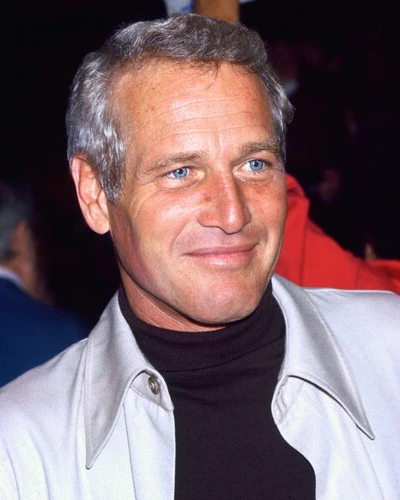
September 26, 2008. Westport, Connecticut. Paul Newman died of lung cancer at his Connecticut farmhouse at 83, with Joanne Woodward at his bedside. The Paul Newman net worth at the time of his death was $80 million, a number the celebrity press called surprisingly modest for an actor of his stature, and which obscured the actual scale of the empire he had built. The number that mattered was downstream. Newman’s Own, the food company he founded as a joke in 1982 with childhood friend A.E. Hotchner, had paid more than $600 million to charity by 2026. Most of his actual fortune lived inside that company. He gave it away by structural design, on purpose, before his estate ever needed to be settled.
Newman was the actor Robert Redford called the most beautiful man he had ever seen. The line was a joke and not a joke. The two of them, paired in two George Roy Hill films, became the most photographed friendship in postwar Hollywood. Newman was older by eleven years. He was the elder partner. He died first.
The fortune was real. Films were louder. The charitable engine he constructed in his last 26 years dwarfed both.
The $80 Million Question
Headline number is $80 million. The texture is the entire story.
By the standards of A-list Hollywood at the moment of his death, $80 million was modest. Newman’s contemporaries (Redford, McQueen, Beatty) all carried higher liquid fortunes. The Newman wealth was structurally unusual because he had transferred the controlling Newman’s Own equity into the Newman’s Own Foundation in 2005, three years before his death. Transfer made the foundation the owner of the company. The foundation distributed every penny of after-tax profit to charity.
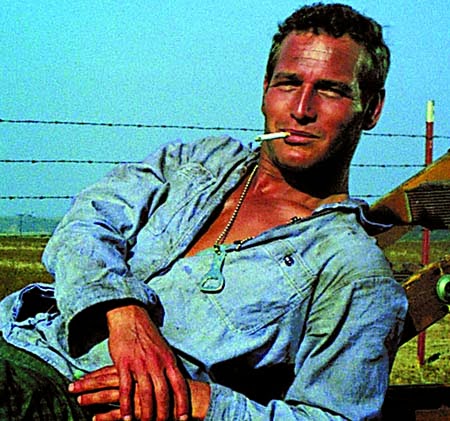
His film salaries across the decades looked like this. Cool Hand Luke in 1967 paid him $750,000. Butch Cassidy and the Sundance Kid in 1969 paid him $750,000 against gross participation. The Sting in 1973 paid him $1 million plus points and made him the second-highest-grossing star of the 1970s after Burt Reynolds. The Color of Money in 1986, which won him his first competitive Best Actor Oscar at age 61 after seven prior nominations, paid him $5 million. Road to Perdition in 2002 paid him $5 million.
Total gross box office attached to his name across 65 film roles exceeded $2.4 billion in 2026 dollars. His personal take was a small fraction of that, partly because he came up before the modern back-end participation deals and partly because he steered his post-1982 income into Newman’s Own at substantial personal opportunity cost. That tradeoff is the entire Newman wealth thesis. He swapped personal liquidity for institutional permanence.
From Shaker Heights To The Actor’s Studio
Paul Leonard Newman was born January 26, 1925, in Cleveland, Ohio. The childhood was Shaker Heights, a Jewish father who ran a sporting goods store, an undistinguished early academic record, and a Navy stint as a World War II radio operator on torpedo bombers in the Pacific. The colorblindness that disqualified him from the pilot program he had wanted is the first documented instance of a Newman setback he turned into structural advantage. He went to Kenyon College on the GI Bill, joined the football team, got kicked off after a bar brawl, and pivoted to drama because the drama department would have him.
Yale School of Drama came next. He left after a year because he could not afford it. New York followed, the Actors Studio with Marlon Brando and James Dean, and Picnic on Broadway in 1953. His first film, The Silver Chalice in 1954, was so reviewed-as-a-disaster that he later took out a full-page apology in Variety when it ran on television. The redemption arc began with Somebody Up There Likes Me in 1956 and consolidated with The Hustler in 1961, the Eddie Felson film he would return to twenty-five years later for the Oscar.
The economic data point is the late start. Newman did not become a leading man until 31. He never cashed a serious salary check until past 35. The fortune that followed compounded across 50 years, not 25.
The Newman-Redford Partnership
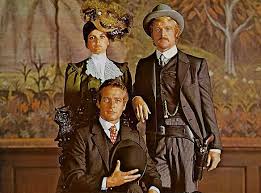
George Roy Hill cast the two of them together in 1969 for Butch Cassidy and the Sundance Kid. Newman was Butch. Redford was Sundance. The film won four Oscars and grossed $102 million worldwide on a $6 million budget. The on-screen chemistry, sealed in the bicycle scene with Katharine Ross and B.J. Thomas singing “Raindrops Keep Fallin’ on My Head,” became the most photographed friendship in postwar Hollywood.
They reunited four years later for The Sting under the same director. Newman played Henry Gondorff. Redford played Johnny Hooker. The film won Best Picture, Best Director, and seven other Oscars. It grossed $156 million on a $5.5 million budget. Universal’s biggest release of the decade. Newman’s character was older. Newman was older. The mentor-protege dynamic that defined their off-screen friendship for the next 35 years was sealed in the editing room.
They never made a third film together. Both were repeatedly offered scripts to reunite them across the next four decades. Both repeatedly declined. The friendship was the asset. Diluting it with a third film, neither thought, was worth the marginal box office. Redford’s Sundance Institute and Newman’s Hole in the Wall Gang Camp ran in parallel as the two charity engines that defined their late careers. The full architecture of Redford’s six-decade career runs in the Robert Redford net worth pillar.
The Newman’s Own Engine
In 1980 Newman bottled homemade salad dressing for friends as Christmas gifts. By 1982 the dressing had a label and a corporation. 1989 the company was profitable enough to pay Newman a salary he refused to take. By 2005 the company was generating tens of millions in annual profit. Newman transferred his equity to the Newman’s Own Foundation that year and made the foundation the owner of the corporation.
The mechanics ran like this. Every dollar of after-tax profit from Newman’s Own salad dressings, pasta sauces, popcorn, lemonade, frozen pizza, dog food, and wine flowed to the foundation. The foundation distributed those dollars to charities. By the time Newman died in 2008, the company had given away approximately $250 million. By 2026 the total exceeded $600 million, with the foundation still managing roughly $200 million in additional assets earmarked for future distribution.
The Hole in the Wall Gang Camp, founded in 1988 in Ashford, Connecticut, was the flagship beneficiary. Camp serves children with serious illnesses at no cost. The model has been replicated globally through the SeriousFun Children’s Network. Newman attended Hole in the Wall summer sessions almost every year from 1988 until 2007. He cleaned bunks. Ate at the cafeteria. He paid for his own meals.
Joanne Woodward And Westport
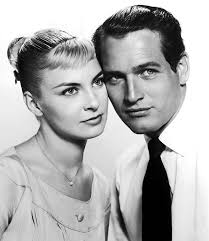
Newman married actress Joanne Woodward on January 29, 1958, in Las Vegas. They had three daughters. The marriage held for 50 years until his death. The Westport, Connecticut, farmhouse they bought in 1961 with $35,000 in cash from The Hustler money was their primary home for 47 years and is held in trust for Woodward’s lifetime under his will. Newman placed his estate in marital trust structure to defer estate taxes until after Woodward’s death, a planning decision that financial advisors still cite as a textbook example of late-life trust architecture.
The Connecticut land Newman lobbied to preserve through the Aspetuck Land Trust totals over 750 acres of conserved Easton and Westport open space. 2017 auction of his Rolex Daytona for $17.8 million at Phillips New York set a record for any wristwatch ever sold and added unrestricted assets to the foundation.
The Racing Career And The Lime Rock Years
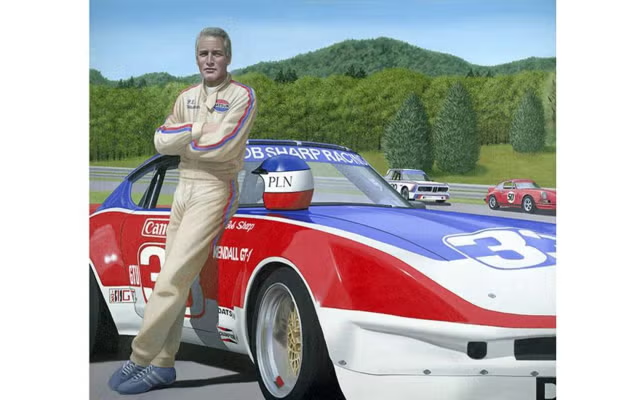
Newman started racing in 1972 at 47, three years after filming Winning, John Frankenheimer’s Indianapolis 500 racing drama. His training had taken place at the Watkins Glen Racing School during pre-production. He kept driving after the film wrapped. He kept driving for the next 35 years.
The racing was not a hobby. He won the SCCA national championship in 1976 in his Datsun 510. Finished second in the 24 Hours of Le Mans in 1979 in a Porsche 935 with Dick Barbour Racing. He won the 24 Hours of Daytona in 1995 at age 70 driving a Ford Mustang with team co-drivers. Took pole position at Watkins Glen International in 2007 at age 82, his last professional race. He kept the photo from that race on his desk at the Hole in the Wall Gang Camp until his death.
Newman/Haas Racing And The Doc Hudson Royalty
The Newman/Haas Racing team he co-founded with Carl Haas in 1983 was an Indy Car constructor that won eight series championships across 30 years. Mario Andretti drove for the team. Michael Andretti drove for the team. Sebastien Bourdais won four consecutive Champ Car titles for the team between 2004 and 2007. Newman/Haas dissolved in 2011 three years after Newman’s death and remains the most successful Indy Car ownership franchise in series history outside Roger Penske.
The income from racing was modest. Newman never raced for money. The investment was structurally philanthropic. Lime Rock Park in northwest Connecticut, where Newman had been racing for decades, renamed its “No Name Straight” to “Paul Newman Straight” in 2022. The naming was unanimous among the track’s ownership. The original “No Name Straight” had been called that because no one had ever been able to figure out what to call it. Now everybody knew.
His racing voice memorialized in 2006 in Pixar’s Cars as Doc Hudson, the retired anthropomorphic 1951 Hudson Hornet who mentors Lightning McQueen, was the only animated role of his career. Cars 3 in 2017 used archival recordings of Newman to bring Doc Hudson back nine years after his death. The Pixar relationship was structurally philanthropic too. Newman directed his Doc Hudson royalties to the Hole in the Wall Gang Camp. The Cars franchise has grossed over $1.5 billion across four films. Camp continues to receive royalty income from the franchise into 2026.
The Last Real Star Who Gave It All Away
The category Newman occupied closes with him. A real movie star who built a parallel philanthropic empire larger than his personal fortune, who made the give-away the entire structural play. Declined the Tom Cruise back-end architecture because he was already richer in symbolic capital than any back-end check could produce. The Paul Newman net worth conversation only makes sense when read against the $600 million that left the books before they could be tabulated.
His own quote, given to the Hole in the Wall Gang Camp board the year he died: let’s give it all away to those who need it. He did.
Where The Conversation Continues
For the brand directors trying to figure out which prestige reference still hits in 2026: the Newman-coded universe is the most underused in luxury marketing. Heritage. Restraint. Symbolic capital that doesn’t broadcast. Charity infrastructure that compounds across generations. The aesthetic that sells without selling.
Social Life Magazine has been writing about Hamptons luxury legacy since 2003. Polo Hamptons sponsorships for July 18 and 25 in Bridgehampton are filling now. If your brand belongs in the conversation Newman built, the entry point is [email protected].
The yacht has a finite manifest. Cabana sales are tracking ahead of last year. Categories already locked are auto (BMW), Hermès, and one real estate sponsor. The rest is open until it isn’t.
Author

Written by
Recent Posts
Get Panama Residency in 30 Days — A Simple Look at Mercan’s Easy Program Process
How to Choose a Stay for a Multigenerational Resort Trip
How Family Property Disputes Can Affect Relationships and Long-Term Plans

Choosing a Reformer for the Life You Already Have

Artful Living: Unique Gifts With A Creative Edge
Categories
- Art
- Articles
- Business of Luxury
- Celebrities
- Culture
- Entertainment
- Events
- Faces of Summer 2026
- Fashion
- Fashion & Style
- Featured
- Finance
- Food, Spirits, Wine
- Hamptons
- Hamptons Celebrities
- Health
- Health & Beauty
- Lifestyle
- Luxury Lifestyle
- Press
- Profiles
- Real Estate
- Technology
- The Chronicles
- Travel
- Uncategorized
- Weddings