
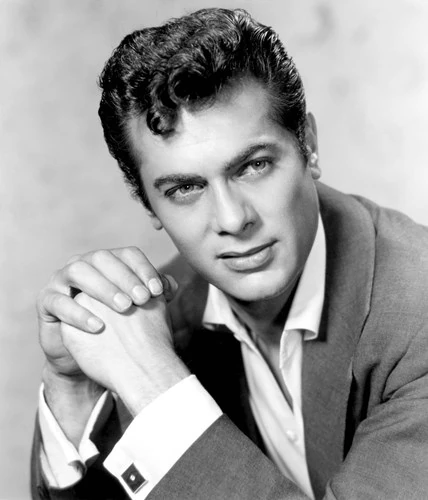
Tony Curtis net worth stood at approximately $40 million when he died on September 29, 2010 at the age of 85. The fortune was bigger before six divorces, two decades of cocaine, and a 2010 will that disinherited the five children of his first three marriages, including Jamie Lee Curtis. As an entry in the Movie Star Legends cluster, Curtis is the case study in economic capital without cultural capital transfer. He made the money. He burned through most of it. The symbolic capital, the thing that compounds across generations, passed to his daughter, who built a $60 million fortune of her own without it ever flowing through her father’s estate. Her name moved. The money did not.
Tony Curtis Net Worth at a Glance
| Birth Name | Bernard Herschel Schwartz |
|---|---|
| Net Worth | $40 million (at death, September 2010) |
| Primary Income Source | Studio acting fees, percentage participations, art sales, royalties, memoirs |
| Career Span | 1949 to 2008 (acting); 1979 to 2010 (painting) |
| Key Films / Credits | Some Like It Hot, The Defiant Ones, Spartacus, Sweet Smell of Success, Operation Petticoat, The Great Race, The Boston Strangler |
| Notable Achievements | Best Actor Oscar nomination for The Defiant Ones (1958), Golden Globe nominee, Hollywood Walk of Fame (1960), serious painter with gallery representation 1979 to 2010 |
| Residence at Death | Henderson, Nevada (Las Vegas area) |
Before the Money: A Bronx Tenement to a Submarine in the Pacific
Bernard Herschel Schwartz was born June 3, 1925 in the Bronx to Manuel and Helen Schwartz, Hungarian Jewish immigrants who ran a tailor shop out of the back of their apartment. The family slept in the same room as the sewing machines. When Manuel could not make rent, the city placed Bernard and his younger brother Julius in an orphanage for a month. His mother was undiagnosed schizophrenic. His brother Julius was killed by a truck at age twelve while Bernard watched.
Schwartz ran with a Bronx street gang in his early teens until a neighborhood social worker pulled him into a settlement-house theater program. The pivot was not romantic. The settlement house offered hot meals. He enlisted in the Navy at seventeen, served on the USS Proteus, a submarine tender in Guam, and watched the Japanese surrender from the deck of the USS Missouri in Tokyo Bay on September 2, 1945.
Back in New York on the GI Bill, Schwartz enrolled at the New School’s Dramatic Workshop under Erwin Piscator, the German exile who had brought Brecht’s technique to Manhattan. The class included Walter Matthau, Rod Steiger, and Elaine Stritch. Schwartz worked the borscht-belt circuit during summer breaks, was scouted by a Universal talent agent in 1948, and signed a seven-year studio contract at $75 a week. The studio insisted on a new name. Bernard Schwartz became Anthony Curtis, then Tony Curtis, before he had cashed a single paycheck.
Studio Contract Player to Oscar Nominee: The $200-a-Week Climb (1949 to 1958)
From Universal Beauty Boy to Sweet Smell of Success
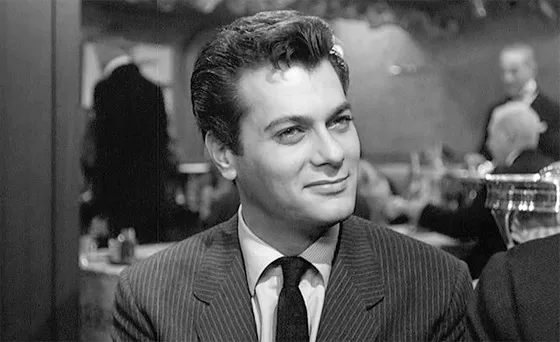
Curtis’s first credited role was a bit part in Criss Cross (1949), opposite Burt Lancaster. Universal then loaded him into a decade of costume swashbucklers, where his Bronx accent became a punchline. “Yondah lies da castle of my faddah” was a line Curtis denied ever speaking, but the impression stuck for fifty years. The studio paid him $200 a week through 1952. His face sold magazines. His acting, the trade press wrote, was incidental to the cheekbones.
Houdini (1953), co-starring his new wife Janet Leigh, grossed $4.5 million on a $1.5 million budget. Curtis’s quote climbed to $50,000 per picture. The Black Shield of Falworth (1954) followed, then Trapeze (1956) opposite Burt Lancaster and Gina Lollobrigida, paying $75,000.
The career pivoted in 1957 with Sweet Smell of Success. Curtis played Sidney Falco, a Times Square press agent who sold his soul to a Walter Winchell-style columnist played by Lancaster. The film flopped at the box office, lost United Artists $1.4 million, and rerouted the entire trajectory of Curtis’s career. Critics who had dismissed him as cheekbones suddenly took him seriously.
One year later, The Defiant Ones (1958) earned Curtis his only Best Actor Oscar nomination. Curtis and Sidney Poitier played chain-gang escapees shackled together. United Artists paid Curtis $100,000 plus a participation. He had insisted on top billing with Poitier, an unheard-of demand in 1958, and got it.
The Peak: Some Like It Hot, Spartacus, and the $300K Paydays (1959 to 1969)
From Marilyn Monroe to Kirk Douglas to The Boston Strangler
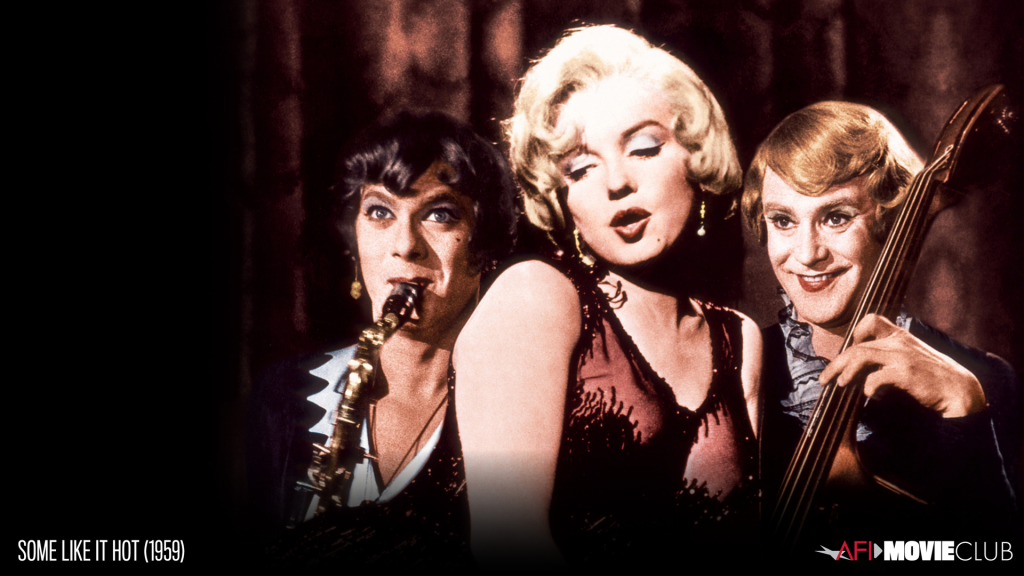
Some Like It Hot (1959), directed by Billy Wilder, paired Curtis with Jack Lemmon in drag and Marilyn Monroe in heat. Curtis took $300,000 plus five percent of the producer’s gross. The film grossed $25 million on a $2.8 million budget. Curtis’s back-end check ran into the seven figures. The Cary Grant impression he did across the second half of the picture became the most quoted comic turn of the decade.
Operation Petticoat (1959) paired him with Cary Grant on a pink submarine and grossed $9.5 million. Spartacus (1960), directed by Stanley Kubrick and starring Kirk Douglas, paid Curtis $250,000. Universal had not wanted him. Douglas, who was producing, insisted.
The Great Race (1965), directed by Blake Edwards and co-starring Jack Lemmon and Natalie Wood, paid Curtis $400,000 plus participation on a $12 million Warner Bros. budget. The film grossed $25 million. Curtis ended the decade owning a piece of three of the highest-grossing comedies of the sixties.
The Boston Strangler (1968) marked the second serious-acting pivot. Curtis played Albert DeSalvo without makeup, gained twenty pounds, and earned a Golden Globe nomination. The film grossed $14 million on a $4 million budget. By the close of 1969 his per-picture fee had crossed half a million dollars, but his marriage to Janet Leigh had collapsed, his marriage to Christine Kaufmann had collapsed, and the studio system that had paid him reliably for fifteen years was disintegrating.
The Decline, the Addictions, the Pivot to Paint (1970 to 1989)
From Lobster Man from Mars to the Picasso Apprenticeship
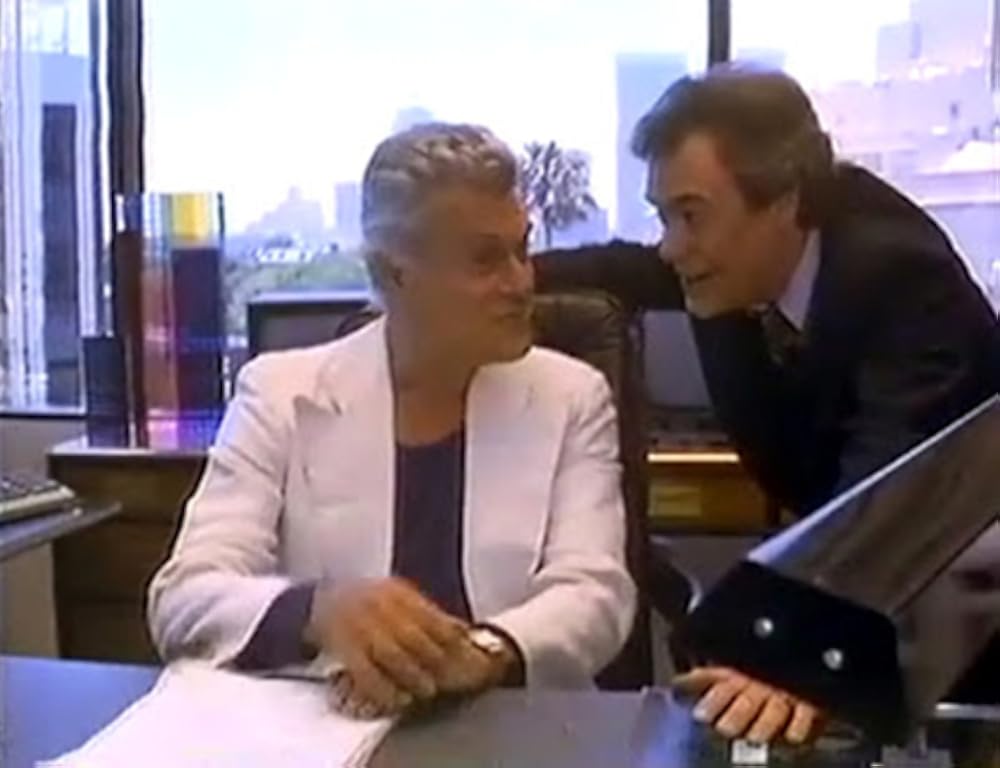
The seventies opened with Curtis taking roles in television, European co-productions, and direct-to-second-run B-movies. His television pivot came in 1971 with The Persuaders, a British ITV series opposite Roger Moore that paid Curtis $1 million for one season across twenty-four episodes. ABC declined to import it. Curtis’s quote in American features collapsed to $75,000 by 1975.
Cocaine arrived in 1972 and stayed for thirteen years. Curtis estimated in his 2008 memoir that he spent between $5 million and $7 million on the drug over its course, plus another $2 million on undisclosed liabilities tied to it. His third marriage to Leslie Allen, the mother of Jamie Lee’s half-brother Benjamin, ended in 1982. Two more marriages followed by 1992. Each divorce cost him between $500,000 and $1.5 million in property settlements and ongoing support obligations.
The pivot to art started accidentally. Curtis had painted since the Navy, mostly oils, in a flat naive style that critics later compared to Henri Matisse cross-bred with Tom Wesselmann. In 1979 the Hammer Galleries in New York gave him a solo show. Twenty-two canvases sold at prices between $4,000 and $18,000. Curtis painted seriously for the next thirty-one years, signed gallery contracts with dealers in Los Angeles, London, and Vienna, and built a parallel income stream that, by the late eighties, exceeded what he was earning from acting.
Lobster Man from Mars (1989), a parody science-fiction film Curtis took as a favor, paid $50,000. Insignia (1985) and other prestige indies paid less. The acting income line had flattened. The art income line was climbing.
Las Vegas, Jill Vandenberg, and the 2010 Will (1990 to 2010)
Sixth Marriage, Painting Career, Disinheritance
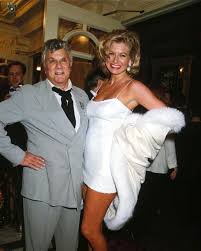
Curtis moved to Henderson, Nevada in 1993, partly for tax reasons and partly because Los Angeles had become unaffordable after five divorce settlements. He met Jill Vandenberg, a horse trainer forty-five years his junior, in 1993 at the Beverly Hills Polo Lounge. They married in 1998. The marriage lasted until his death in 2010.
Art sales generated $400,000 to $700,000 annually through the nineties, climbing to between $800,000 and $1.2 million in the years after 2000. A Curtis canvas titled “Marilyn” sold at Bonhams in 2007 for $108,000. Smaller works moved at galleries for $15,000 to $40,000 routinely. By 2008, when his memoir American Prince was published, Curtis was estimating his living income at roughly 70 percent from art and 30 percent from residuals and personal appearances.
The 2010 will, drafted three months before his death, left his estate to Jill Vandenberg-Curtis. Five surviving children from earlier marriages were explicitly disinherited by name. Kelly Curtis, Jamie Lee Curtis, Allegra Curtis, Alexandra Curtis, and Benjamin Curtis received nothing. The probate filing in Clark County, Nevada listed an estate of $40 million in art, real estate, royalty streams, and a Las Vegas horse ranch.
Vandenberg continued operating a horse sanctuary on the Henderson property called the Shiloh Horse Rescue after Curtis’s death. The contested portion of the estate, primarily film residuals and royalty claims, was settled quietly out of court between 2011 and 2013. The disinheritance held.
How Tony Curtis’s $40M Fortune Broke Down
Curtis’s $40 million at death resolved into four uneven buckets. The art collection accounted for the largest share at roughly $18 million, including approximately 200 of his own canvases stored in Las Vegas and Henderson, plus a personal collection of Matisse drawings, Magritte studies, and minor Picasso works he had acquired during his European decades. Real estate, primarily the Henderson estate and a smaller property in Hawaii, accounted for $10 million. Royalty streams from his sixties catalog generated $300,000 to $500,000 annually, capitalized at roughly $5 million. Cash, bonds, and an annuity portfolio rounded out the remaining $7 million.
The expense side was the reverse of the asset stability. Six marriages had moved between $8 million and $12 million out of his estate across thirty years, with the Janet Leigh settlement in 1962 alone costing $1 million in 1962 dollars, roughly $10 million in 2026 purchasing power. Cocaine had moved another $5 million to $7 million through dealers, treatment programs, and lost work. Lifestyle, primarily horses, art-collecting trips between Europe and the West Coast, and a heated indoor riding ring in Henderson, consumed roughly $400,000 a year in his last decade. The fortune was not destroyed. It was simply prevented from compounding. Cary Grant died with $60 million in 1986 after five marriages but only one expensive divorce. Curtis arrived at the same trajectory with five more wives and a thirteen-year addiction in the way.
Where Tony Curtis’s Capital Stands in 2026
Sixteen years after his death the Curtis estate continues to operate as Jill Vandenberg-Curtis structured it. The Shiloh Horse Rescue remains active. The art catalog is administered through a gallery network that releases Curtis paintings into the secondary market at a controlled pace. Auction prices have held in the $40,000 to $150,000 range for major canvases, with the Marilyn series carrying the strongest premiums.
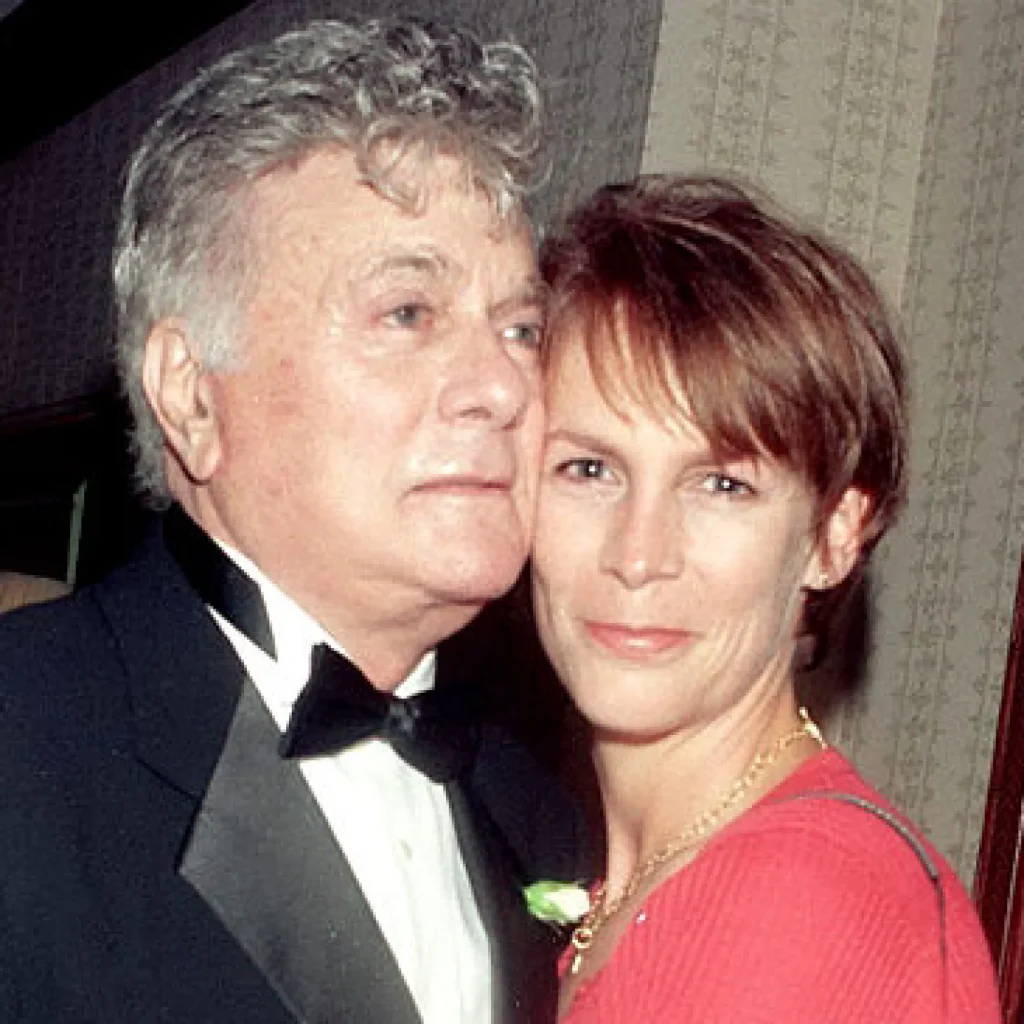
The harder accounting is the dynastic one. Jamie Lee Curtis reached a $60 million net worth in 2024 after her Best Supporting Actress Oscar for Everything Everywhere All at Once. She did so without inheriting a dollar from her father. Her own Best Supporting Actress Oscar in March 2023 arrived twelve years after her father’s death and was widely framed as the long-delayed family Academy Award that the Defiant Ones nomination had foreshadowed in 1958. The symbolic capital, the Hollywood-royalty surname, the second-generation legitimacy, transferred regardless of the will. Tony Curtis built the brand. The disinheritance prevented the cash from following, but it could not stop the name. In Bourdieu terms, Curtis is the proof that economic capital is the easiest form to seize and the hardest form to transmit. The Movie Star Legends cluster reads Curtis as the dynasty cautionary tale, the case where six marriages and a thirteen-year addiction proved that fortunes evaporate but surnames compound. Robert Redford built Sundance to keep his name in motion. Curtis built nothing comparable. The name moved anyway.
Where The Conversation Continues
Social Life Magazine covers the intersection of wealth, culture, and influence from the Hamptons to Manhattan. Our celebrity net worth coverage traces the economics, the leverage, and the decisions that built the fortune.
Our readers are family office principals, exit founders, fashion executives, and the advisors who serve them. For premium editorial placement and integrated advertising across print and digital, submit a paid feature or contact our business development team.
Want insider access to the events, launches, and gatherings that define the Hamptons social calendar? Sign up for Event Invites & Specials and never miss a moment.
Social Life Magazine. Twenty-three years of covering the people and places that define luxury in America.
Author

Written by
Recent Posts
Jetsetter Style: Castello del Sole

The First Decision After a Collision Can Be the Most Important One
Two Weeks in Rome and Beyond: Turkish Airlines Itineraries from Boston, Chicago and Onward to India
Top 10 Hair Transplant Clinics in Turkey 2026

Artist Alley to Online Store: How Convention Artists Can Keep Selling After the Event
Categories
- Art
- Articles
- Business of Luxury
- Celebrities
- Culture
- Entertainment
- Events
- Faces of Summer 2026
- Fashion
- Fashion & Style
- Featured
- Finance
- Food, Spirits, Wine
- Hamptons
- Hamptons Celebrities
- Health
- Health & Beauty
- Lifestyle
- Luxury Lifestyle
- Press
- Profiles
- Real Estate
- Technology
- The Chronicles
- Travel
- Uncategorized
- Weddings