
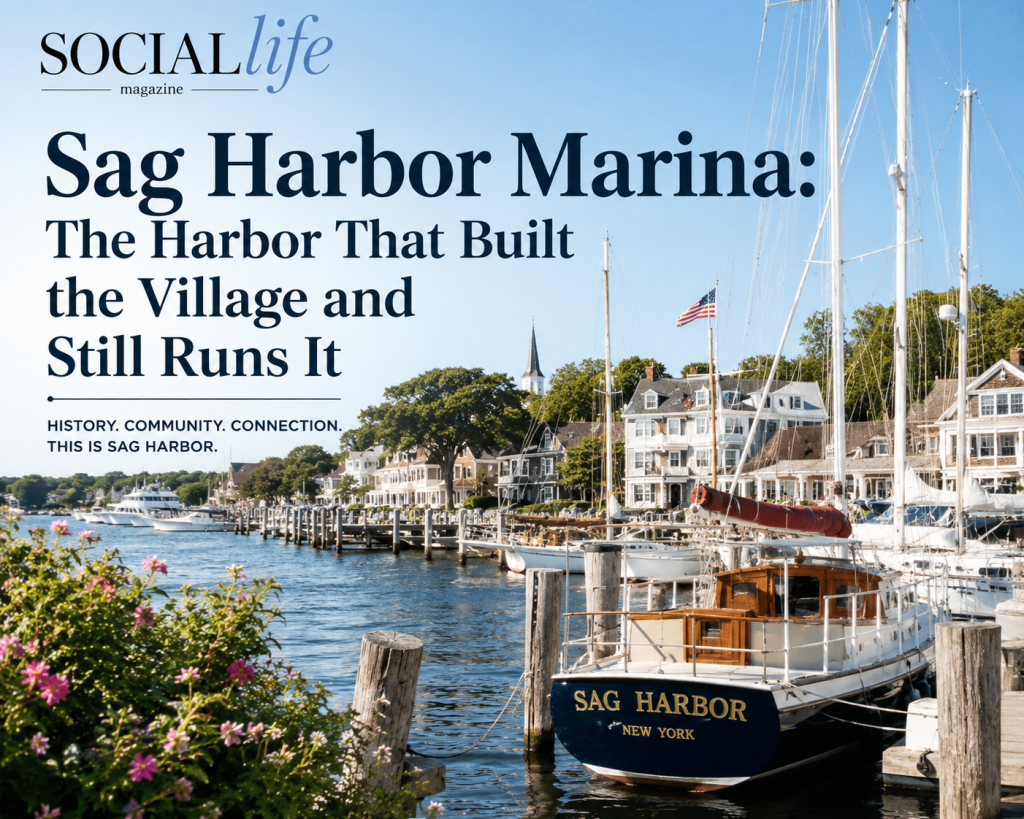
The Harbor: A Technical and Emotional Profile
Sag Harbor possesses the only deep-water port in the Hamptons. However, this fact appears in every historical summary and is usually dispatched in a single sentence. . However, it deserves more attention than a single sentence provides. . In addition, this is because “deep-water port” is not a marketing term. As a result, it is a hydrographic classification that determined the economic fate of every settlement on the South Fork for two centuries.
Deep water means large vessels can enter and anchor safely. For instance, on the South Fork, most harbors are shallow, tidal. Oriented toward the open Atlantic in ways that make them hazardous in weather. By contrast, Sag Harbor’s deep, protected cove offered something no other port on eastern Long Island could: reliability. Meanwhile, a ship could enter the harbor, dock, unload, resupply. Depart with reasonable confidence that the harbor itself would not destroy the vessel. Although this seems like a minimum requirement for a port, on the South Fork it was, and remains, an exceptional geographic advantage.
The harbor is protected by a breakwater that extends from the eastern shore. Creating a barrier between the inner cove and Shelter Island Sound. Similarly, inside the breakwater: calm water, mooring fields, the Village Marina’s floating docks and fixed docks at Marine Park. The Sag Harbor Yacht Club (established 1899, clubhouse since 1914). In contrast, .The Long Wharf mega-yacht berths that accommodate vessels up to 175 feet. Consequently, outside the breakwater: Shelter Island Sound, Gardiners Bay. Furthermore, .From there, the open water routes to Block Island (30 nautical miles), New London (20 nautical miles), Montauk, Newport, and Mystic.
The Breakwater Is The Harbor’S Most
The breakwater is the harbor’s most democratic structure. In particular, it protects the $2 million yacht and the 16-foot sailboat equally. By contrast, currents don’t ask what you paid for your vessel. After all, wind doesn’t recognize your net worth. In fact, in other words, the breakwater provides shelter to everyone who enters. . Ultimately, this is a physical manifestation of the social principle that Sag Harbor has maintained since the whaling days: in the presence of the water, the hierarchy flattens.
Arriving by Water vs. Arriving by Road
He has been coming to Sag Harbor by car for three summers. Essentially, he knows the village from the Jitney stop, from the parking lot behind the pharmacy, from the walk up Main Street past the shops and the restaurants. Accordingly, he knows the captain’s houses from the sidewalk and the cinema from the street and the American Hotel from the bar.
This summer he arrives by boat. Moreover, the approach from Gardiners Bay takes him through the deep-water channel past Cedar Point, past Mashomack Point on Shelter Island. Nevertheless, green and red channel markers compress the navigable water into a corridor that requires real attention. Specifically, not the ambient awareness of a conference call. On the other hand, the kind of attention where consequences are physical. However, he rounds the breakwater. The harbor opens. In addition, he sees the village from the water for the first time. As a result, bay Street Theater sits on the wharf. For instance, the steeple of the Old Whalers’ Church rises above the roofline. Meanwhile, even the Cinema is visible, the building the village spent $20 million to save. He ties up. Similarly, he walks to the village. The walk is short. In contrast, but the psychological distance between arriving by car and arriving by boat is the width of the harbor. . The depth of everything it represents.
Arriving By Water Changes Your Relations
Arriving by water changes your relationship to the village because it reverses the hierarchy of experience. By car, you enter from the periphery: the highway, the back roads, the parking. Then you work your way to the center, which is Main Street and the wharf. By boat, however, you enter from the center. The harbor is the village’s historical and geographic origin point. From there you work your way outward. As a result, the village unfolds differently from this direction. The commercial surface (shops, restaurants) recedes. Meanwhile, the structural truth (the harbor, the breakwater, the deep water) comes forward.
The Marinas: Where to Dock and What Each One Means
Sag Harbor Village Marina (Municipal)
The municipal marina is the people’s marina. Operated by the Village of Sag Harbor under Harbormaster Robert Bori, it offers floating docks, the fixed dock at Marine Park. .A mooring field with service. The Long Wharf mega-yacht berths (slips #1, #2, and #3) accommodate vessels from 100 to 175 feet. Dock personnel monitor VHF Channel 9. The Harbormaster monitors Channel 16.
Transient rates in season run approximately $4 per foot at the floating docks (30-foot minimum) and $5 per foot at Marine Park. Moorings, on the other hand, are $2 per foot. Furthermore, the docks were expanded in 2025. Seasonal contracts are issued through Dockwa; as a result, returning customers must pay in full by mid-January or risk reassignment. Free pump-out service. 30 and 50 amp power. Heads and showers for marina and mooring guests.
The Village Marina puts you closest to Main Street. Walk off the dock and you’re in the village in under five minutes. The proximity is the point. This is where transient boaters dock when they want to eat dinner at Dopo and walk to Murf’s and take the morning coffee at Jack’s and conduct the entire 72-hour itinerary without touching a car.
Reservations: dockwa.com (Sag Harbor Village Marina)
Contact: [email protected] | (631) 725-2368
Season: April 1 through October 31
Sag Harbor Yacht Club
Established in 1899. The clubhouse, a village landmark since 1914. Sits at the center of the dock facilities in the southeast corner of the harbor near where the breakwater meets the land. Its mission is “to serve our members, the yachting community. The Community at Large,” which manages to be both inclusive and exclusive simultaneously. That diplomatic feat is one that yacht clubs have been perfecting for two centuries.
In addition to regular dockage (transient and seasonal), the Yacht Club provides fuel, water, and services from April through November. Each year, the Maycroft Cup Regatta brings competitive sailors from across the Sound. On the Fourth of July, a fireworks display launched from or near the Yacht Club becomes the village’s annual civic spectacle: the one night per year when every resident, every visitor. .Every boat in the harbor faces the same sky.
Membership is comprised mostly of local residents. Transient dockage is available to all visiting yachtsmen based on availability. Check in and check out at noon. Payment upon arrival.
Web: sagharboryc.com
Transient reservations: dockwa.com or call ahead
Sag Harbor Yacht Yard & Marina
Accommodates vessels up to 130 feet. Seasonal slips run May 1 through October 31. Transient overnight slips are available on a first-come, first-served basis but availability is extremely limited. If you want a seasonal slip at the Yacht Yard, you call early and you ask politely and you understand. . The waitlist is itself a form of community vetting.
Web: sagharboryachtyard.com
Reservations: Via Dockwa
Yacht Hampton Boating Club & Marina
The newest marina in Sag Harbor, launched in 2024. Located in a protected cove (the marketing says “Hidden Cove,”. . The description is accurate enough that it doesn’t qualify as real estate language). 35 slips with Brazilian IPE wood docks, power, water, high-speed WiFi. Mediterranean-themed lounge area with lawn furniture, dining tables, cornhole, and a shared Weber gas grill. Complimentary ice and a barbecue area. The vibe is club-like without the exclusivity structures that traditional yacht clubs maintain.
The seasonal membership includes complimentary SEABOB and paddleboard use. Plus a captained sunset charter cruise on one of the marina’s yachts (valued at $3,000). At most marinas, this kind of included amenity would be suspicious. At Yacht Hampton, however, it simply reflects a business model designed to make the marina feel like a second home. . Rather than a parking lot for boats.
Sailboat lessons and rentals, power boat charters, ecology tours. Transient dockage at approximately $6 per foot per day. Slips 30 feet and larger are perpetually sold out. Openings exist annually in the 16- to 23-foot range.
Reservations: dockwa.com (Yacht Hampton)
Sag Harbor Launch, Moorings & Services
For boaters who prefer a mooring to a slip (and there are boaters who prefer this the way some people prefer a hardcover to a Kindle. . This is to say: for reasons that are aesthetic rather than practical and therefore more deeply felt). Consequently, the launch service shuttles you between your mooring and the shore. The service has consistently excellent reviews, which on the water means: the launch comes when you call, the pilot knows the harbor. .The ride doesn’t soak your clothes.
Reservations: dockwa.com
Sailing: The Last Meritocracy on the East End
Breakwater Yacht Club
Founded in 1987 as a nonprofit with an open membership policy and a simple mission: bring regularly scheduled sailboat racing to Sag Harbor. Breakwater sponsors weekly races and instruction for youth and adults. It is reasonably priced and open to everyone. . This is a sentence that sounds unremarkable until you consider that it describes a yacht club on the East End. . That most yacht clubs on the East End would not describe themselves this way even if they could.
Breakwater is the antidote to the private club model. In particular, its primary mission is teaching people of all ages to sail. This means it exists to expand access to the water rather than restrict it. The racing is competitive. The instruction is serious. Similarly, the social environment is welcoming in the specific way that communities organized around shared competence tend to be welcoming.
Sailing is the last meritocracy available on the East End. No amount of money makes you a better sailor. No social connection improves your tacking. The wind does not recognize your cap table, your lineage, or your divorce settlement. Instead, it recognizes your hands on the tiller and your reading of the water. It rewards your willingness to make a decision at the moment the decision is required, not three meetings later. For the post-exit founder who has spent fifteen years in environments where competence was mediated by capital. Breakwater therefore offers something rare: a domain where competence is the only currency.
Web: breakwateryc.org
Contact: [email protected] | (631) 725-4604
Sag Harbor Sailing
Twenty years of sailing education from the harbor. A fleet of 23-foot keelboats. Routes track from the Twin Forks around Shelter Island to Block Island, Newport, Mystic, and Montauk. Students range from eight to eighty, with both private and group instruction available. Fortune 500 companies also use the program for team-building regattas. Whether that’s the best or worst use of a sailboat depends on your opinion of corporate bonding exercises. Although, in fairness, the water has a way of making even manufactured team-building feel genuine. The consequences of poor coordination on a sailboat are immediate and wet.
The Destinations: Where the Water Takes You
Start at the harbor. What follows are the reasons to leave it.
Shelter Island is twenty minutes across the Sound and a world away from the South Fork. The South Ferry from North Haven connects Sag Harbor to Shelter Island without requiring the circumnavigation of Peconic Bay. By boat, however, the crossing is even shorter and infinitely more satisfying. Sunset Beach Hotel on the Shelter Island shore is where the East End’s boating culture and social culture converge: world-class boats, a famous bar. .A shallow beach for anchoring.
Block Island is 30 nautical miles northeast, either a full day sail or a shorter motor. The passage takes you through Gardiners Bay and across Block Island Sound. In fact, arriving at Block Island by boat from Sag Harbor is one of the finest passages on the East Coast. The return trip, with the South Fork visible on the horizon, produces a feeling of homecoming that the Jitney has never replicated.
Montauk is accessible by water along the South Fork’s north shore, past Cedar Point and through Gardiners Bay. Importantly, the approach by boat reveals a coastline that the highway obscures: bluffs, beaches, the lighthouse in the distance. Photographers describe this light in technical language. Sailors describe it by pointing.
Greenport and the North Fork are across Shelter Island Sound. The crossing is short and the contrast is immediate: from the manicured South Fork to the agricultural North Fork. . There, vineyards replace hedgerows and the pace of life drops another register below Sag Harbor’s already reduced tempo.
The Social Life of the Docks
Walk the docks on a Friday evening in July and observe the specific social dynamics that marinas produce. . That no land-based environment replicates.
A marina is a neighborhood where the houses move. Your neighbor this week may not be your neighbor next week. For example, the transient boater from Newport occupies the slip next to the seasonal member from Manhattan. The proximity is closer than most suburban lot lines, because slips are narrow and sound carries over water. As a result, this closeness creates a form of involuntary intimacy that produces either friendship or friction. In Sag Harbor it almost always produces friendship. . This is because the harbor’s social physics match the village’s: mutual respect based on shared competence. . The understanding that the water treats everyone equally.
Dock Talk vs. Main Street Talk
The conversation on the docks differs from conversation on Main Street. On Main Street, people discuss restaurants and real estate and cultural events. On the docks, by contrast, people discuss weather and tides and the passage they made. Conversation drifts toward the passage they’re planning, then inevitably toward the specific mechanical issue with their starboard engine. That engine problem gets discussed with detailed obsessiveness because, on the water, machines functioning correctly is a matter of personal safety.
From Dock to Dinner
The docks are also where Le Bilboquet and the Bell and Anchor and the Beacon draw their evening crowds. These restaurants sit on or near the water, so the transition from dock to dinner is a two-minute walk. Consequently, the boater’s evening begins with tying up and ends with walking home along the water in the dark. The entire experience occurs within the ecosystem that the harbor created, which is the ecosystem that created the village. That circularity is the point this spoke has been making from its first sentence.
What the Harbor Teaches You
The harbor teaches you something that the village’s land-based institutions communicate subtly but. . The water communicates directly: you are not in charge.
The Contrast with Human Systems
Consider the difference. The American Hotel is elegant, but you can walk in and order a drink. Bay Street Theater is intimate, but you buy a ticket and the door opens. Similarly, the real estate market is expensive, but it responds to money. These are human systems with human rules. You can navigate them with the skills you already possess.
The harbor is not a human system. Instead, it is a geographic fact with hydrographic properties that existed before the Montaukett named the site and will exist after whatever we build here is gone. Tides change regardless of your schedule. Currents don’t know your name. Weather arrives without consulting your calendar. As a result, navigating the channel markers into the harbor requires a form of attention that your professional life has not demanded since your last genuine emergency. Deploying that attention, being fully present in a task whose consequences are physical. . Rather than financial, produces a neurological state that three years of meditation apps have failed to achieve.
This is why people who discover boating in Sag Harbor tend to reorganize their relationship to the village around the water.
From Background to Foreground
Specifically, they stop thinking of the harbor as a scenic backdrop for dinner. Instead, they start thinking of dinner as a pleasant interval between time on the water. The harbor moves from background to foreground. The village, which they thought was the point, reveals itself as a support structure for the harbor. After all, the harbor has been the actual point since the first whaling ship rounded the breakwater and the village said: stay.
Where the Conversation Continues
The harbor built the village. The village built a culture. Social Life Magazine has been covering that culture for twenty-three years. The magazine is on the docks (at the Yacht Club, at the waterfront restaurants. At Baron’s Cove, at the Beacon, at Le Bilboquet). .It’s on the water (in the hands of boaters who pick up a copy at the marina and read it on the deck. . Meanwhile, the harbor does what it has done since 1707: hold the village in place).
If your brand serves the boating community, the waterfront lifestyle, or the specific intersection of maritime culture and East End luxury that Sag Harbor represents, a paid feature in Social Life Magazine positions your brand inside the publication that this community reads. Marine services, boat brands, outdoor apparel, suncare, waterfront dining, sailing programs: the audience is here, on the dock, holding the magazine, planning the next passage. Explore paid features here.
Polo Hamptons 2026 runs July 18 and 25 at 900 Lumber Lane, Bridgehampton. BMW North America is the title sponsor. The boating crowd and the polo crowd overlap more than either would admit. Cabanas, VIP tables, and sponsorship packages available. polohamptons.com
Subscribe. Join here.
The harbor came first. Everything followed. Welcome to the water.
Author

Written by
Recent Posts

50 Cent X ZOI NoMad

How to Read Your Brokerage Statement (and Spot What It’s Costing You)

IRA or Taxable Account? Where Your Next Dollar Should Go

How to Move a Brokerage Account Without Losing a Dime

The Credit Cards That Pay You in Stock
Categories
- Art
- Articles
- Business of Luxury
- Celebrities
- Culture
- Entertainment
- Events
- Faces of Summer 2026
- Fashion
- Fashion & Style
- Featured
- Finance
- Food, Spirits, Wine
- Hamptons
- Hamptons Celebrities
- Health
- Health & Beauty
- Lifestyle
- Luxury Lifestyle
- Press
- Profiles
- Real Estate
- Technology
- The Chronicles
- Travel
- Uncategorized
- Weddings