
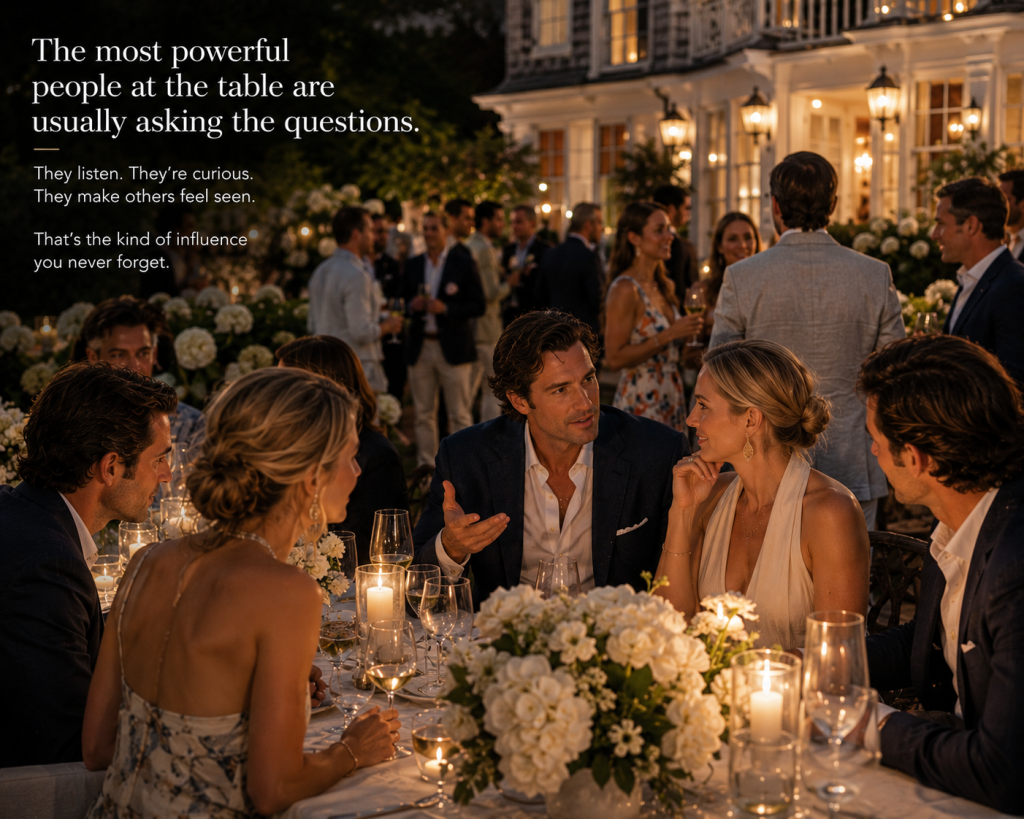
The questions arrived like any other small talk. Read anything good lately. Which beach do you use. Do you know the Hadleys. Friendly, easy, nothing at stake. Except everything was at stake. This is the dinner party status test, and the answers were being graded before the entrees arrived.
Here is the part nobody admits. The room is not curious about your reading list. It is calibrating you, fast, using your answers to place you in the hierarchy. The content barely matters. How you answer is the actual exam.
This piece names the probes, the categories the questions test, and the specific answers that out you. By the end you will recognize the exam while it is happening. Better still, you will learn the one move that beats it, which is not studying harder.
Small Talk Is Never Small
Start with the disguise. The test never looks like a test. It looks like warmth, like someone taking an interest in you over a glass of rosé. That camouflage is the point, because a graded exam would make people behave, and behaving would ruin the data.
So the questions stay casual while the scoring runs underneath. Each answer adds or subtracts a little, adjusting how the table treats you for the rest of the night. You feel the verdict as a temperature, warmer or cooler, without ever seeing the grade itself.
What the room is really sampling is cultural capital, the currency we mapped in the hub on the one thing a billionaire still cannot buy. The dinner table is just where that currency gets counted in public. So small talk is never small. It is an audit with candles.
There is a logic to the cruelty. A test you can see is a test you can game, so the camouflage protects the result. That is also why nobody calls it a test out loud. Naming it would let people prepare, and preparation is exactly what the room is built to detect.
The Three Probes: Names, Books, Beaches
The questions vary, but they cluster into three probes. Names, books, and beaches, each testing a different layer of belonging. None of them cares about the literal answer. Each one cares about what your answer accidentally reveals.
Names
The first probe is the name drop, run in reverse. Do you know the Hadleys. Were you at the thing last weekend. The test is not whether you know the people. It is how you handle the knowing. Drop a big name to impress and you fail, because needing the name to land marks you as new. Mention it flat, almost bored, and you pass, since indifference is the privilege of people who have always had access.
Books
The second probe is culture, usually books, sometimes film or art. What have you read, seen, been to. Again, the content is a decoy. The real measure is fluency versus performance. Recite the right titles like flash cards and you out yourself, because rehearsed culture is no culture at all. Reference something sideways, casually, without explaining why it matters, and the table relaxes, since that ease only comes from a lifetime inside the references.
Beaches
The third probe is place. Which beach, which town, which spot you call yours. Name the obvious tourist beach and you signal newness, plainly. But overcorrect, reaching for the most obscure hidden cove to prove you know it, and you fail differently, because trying to win the beach question is itself the tell. The insider names a place without weighing it, the way you name your own street.
The Answers That Out You
Notice the pattern across all three probes. The thing that outs you is never the fact. It is the effort wrapped around the fact. The room is listening for strain, and strain is what new money cannot help but produce.
The classic tell is over-explanation. You answer the question, then keep going, justifying and contextualizing what nobody asked for. So the answer balloons past where an insider would have stopped. Length itself becomes a confession of anxiety.
The other tell is the upward inflection, the answer offered as a question, fishing for approval. It asks the table to confirm you got it right. But asking for confirmation hands the table proof you were unsure. The insider states and moves on, because the insider was never auditioning.
Both tells share one root, which is the need for approval. The new arrival wants the table to confirm he belongs. But wanting that confirmation is itself the disqualifying signal, since belonging never asks permission. So the cure is not better answers. It is needing the room less.
The Test Gets Quieter the Higher You Go
One more thing worth knowing. The test does not disappear in the best rooms. It gets quieter. At the lower rungs, the probes are obvious, almost clumsy. Higher up, they shrink to a raised eyebrow or a single word.
So do not relax when the questions stop. Sometimes the silence is the probe. A pause where a name should have landed, a beat of nothing after you mention a place, that gap is the room deciding whether you noticed what you failed to say.
This is why the very top of the hierarchy can feel eerily gentle. Nobody quizzes you, because the verdict is already in and nobody needs to. By contrast, the middle is where the testing turns aggressive, since that is where the sorting is still genuinely in doubt.
So read the intensity of the probing as a signal in itself. Heavy questioning means the room has not decided about you yet. Light questioning means it has, one way or the other. Either way, the test never really turns off. It only changes volume. Learn to hear it at every volume, and the test stops being able to surprise you.
Why You Can’t Cram for It
By now the obvious plan is to study. Memorize the names, the books, the beaches, and walk in armed. It will not work, and the reason is structural. The test measures fluency, and fluency is the one thing you cannot fake by memorizing.
Crammed knowledge has a texture the room can feel. It arrives a half-beat too ready, too complete, too pleased with itself. So the harder you prepared, the more prepared you sound, and prepared is the opposite of native. This is the same paradox that runs the whole game.
We took that paradox apart in the naturalization trick, where effort is fatal to the effect you want. The reference test is simply that paradox, staged at a table. So studying for it harder is exactly the move that fails it.
There is a deeper reason cramming backfires too. Memorized answers make you rigid, and rigidity is easy to break. Push a crammed guest one question past his script and the whole performance collapses. The fluent never collapse, because they were not reciting anything in the first place.
The Real Skill: Learn to Ask, Not Answer
Here is the flip that changes everything. The person running the probes is never the one being graded. Ask the questions, and you step behind the desk. So the deepest move is not better answers. It is becoming the examiner.
This is why the most powerful people at any table say the least about themselves. They ask. They draw others out, calibrate the room, and reveal almost nothing in return. Curiosity reads as confidence, and confidence is most of what the test is quietly measuring anyway.
So practice asking instead of performing. Take an interest, hold your own references lightly, and let other people fill the silence you leave. The table will read you as secure, because only secure people can afford to be that uninterested in proving themselves.
There is a bonus to playing examiner. People remember how you made them feel, not what you recited. So the guest who asks good questions leaves a warmer trace than the one who performed. You win the table by giving it the floor, which almost nobody expects and everybody quietly enjoys.
What the Test Is Really Measuring
Step back and the real question becomes clear. The probes are not measuring trivia. They are measuring whether you were placed, whether the right rooms and people already claimed you. The answers are just the surface readout of something deeper.
Your address feeds the same verdict, which is why what your summer rental says about you sorts people before they speak. The table is checking your file against the room. And the file was written long before dinner, by where you live and who vouches for you.
It also tracks which tribe you belong to, the money side or the knowing side. We mapped that split in the two tribes of the one percent. So the reference test is really a membership check, run politely, with wine, while everyone pretends it is just conversation.
This is why the test feels unfair, and in a sense it is. You are being graded on a file you did not know existed, written by choices you made months earlier. So the way to change your grade is not at the table. It is everything you arrange before you ever sit down.
How to Pass Without Studying
So how do you actually beat a test you cannot cram for? You stop trying to pass it. You arrange things so the test simply is not run on you anymore, because the room already has its answer before you sit down.
That happens through placement. When the right institution has vouched for you, the probing stops, since the verdict arrived ahead of you. A feature, a board, a known association does the work no clever answer can. It tells the table you were already graded, elsewhere, and you passed.
None of this is about deception, to be clear. You are not faking the answers. The questions just become unnecessary, since you arrive already vouched for. So the work happens long before dinner, in the rooms that decide who gets claimed in the first place.
So the real preparation is not studying references. It is collecting the placements that make references unnecessary. Be claimed by the right rooms, wear it lightly, and the dinner party status test turns back into the small talk it always pretended to be. That, in the end, is the whole game, hiding in plain sight at every table.
Where The Conversation Continues
There is an old story about two young fish who get asked how the water is. They have no answer, because they have always swum in it. The reference test works the same way. The people born inside it never notice the questions, while the newcomer feels every one as an exam. Now that you can see the test, you can stop sitting for it.
If you would rather be placed than perpetually quizzed, start the conversation here. The right introduction is how most people stop being tested at all.
If you want the table to have its answer before you arrive, look at a paid feature in Social Life Magazine. A feature grades you in public, so the dinner table does not have to.
If you would rather learn the probes before you face them, join the Social Life email list and study the room from a safe distance first. The list is where the quiet intelligence goes out first.
If you want to watch the test run at scale, the gates open in July at polohamptons.com. Christie Brinkley hosts, and the cabanas go the way scarce things always go.
If you want the magazine itself, in your hands and in the right buildings, take out a subscription. Five summer issues, the season documented exactly as it is ranked.
And if the work itself is something you want to keep alive, you can support it directly. Independent eyes on the codes are rarer, and more necessary, than they have ever been.
Author

Written by
Recent Posts

Custom Pins And Patches: Creative Celebrity Merch Gift Ideas with GS-JJ
How to Choose the Right Wall Bed for Your Bedroom

Is It Possible to Travel to Ukraine in 2027? A Practical Guide for International Visitors
Why Are Truck Accident Cases So Difficult? The benefits of working with a truck accident lawyer
Hudson County DUI Attorney: What to Know After a DWI Arrest
Categories
- Art
- Articles
- Business of Luxury
- Celebrities
- Culture
- Entertainment
- Events
- Faces of Summer 2026
- Fashion
- Fashion & Style
- Featured
- Finance
- Food, Spirits, Wine
- Hamptons
- Hamptons Celebrities
- Health
- Health & Beauty
- Lifestyle
- Luxury Lifestyle
- Press
- Profiles
- Real Estate
- Technology
- The Chronicles
- Travel
- Uncategorized
- Weddings