
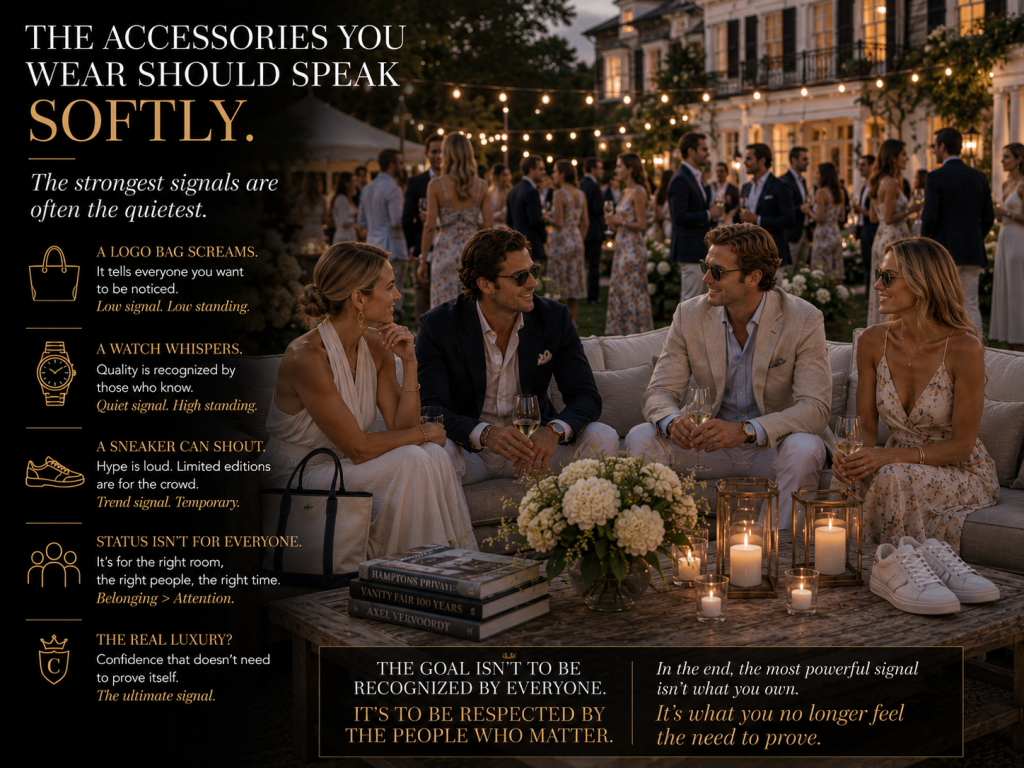
Two handbags sit on the same shelf. One screams its brand from across the room. The other gives away nothing, a quiet shape in good leather with no name on it anywhere. The loud one costs four thousand. Nine for the quiet one. Most shoppers assume the logo adds the value. Out East, the opposite is true, and the gap between those two price tags has a name. It is the logo tax.
The logo tax is the premium you pay to look like you are not trying. The quieter the luxury, the higher the price, because the absence of a logo is the most expensive feature of all. New money rarely sees the bill coming. By the time it arrives, the money is already gone.
So this piece explains the tax in full. Why looking old costs more than looking rich, why new money ends up paying twice, and what the whole thing means for any brand trying to sell into this market. By the end you will read a price tag the way the room reads a logo, which is to say, as a confession.
Two Bags, One Lesson
Start with that price gap, because it confuses everyone at first. Logic says the branded bag should cost more. The brand spent decades building that name. Yet the unbranded one commands the premium. Something other than the leather is being priced.
What is being priced is discretion. The anonymous bag says its owner does not need anyone to know the brand. That confidence is rare, and rarity sets the price. So you are not paying for the bag. You are paying for the right to carry it without explaining it.
The loud bag, meanwhile, does free advertising for the brand. The quiet bag makes you the advertisement for nothing but yourself. So the maker can charge more for less visible branding, because the customer who wants no logo is the one with the most to spend and the least to prove.
This sounds backward until you see the pattern everywhere. Plain is dear. Branded is cheap. The most expensive version of almost anything Out East is the version that refuses to announce itself. Once you notice it, you cannot stop seeing the tax baked into every quiet price. The plainer it looks, the harder it was to afford.
What a Logo Actually Costs You
Now the social side of the tax, which is steeper than the dollar side. A visible logo outsources your status to the brand. It announces that you need the name to vouch for you, that your own standing was not enough on its own.
Old money reads that instantly. The bigger the logo, the louder the request for validation, and validation is something secure people never ask for. So the logo that was supposed to lift you actually places you, and not upward. It marks the wearer as someone still seeking approval.
This is the whole system we mapped in the hub on reading old money Out East. The logo is simply the loudest tell there is. It does the sorting before you say a word, because nothing announces newness faster than a label asking to be seen.
So the logo charges you twice over. You pay the brand for the privilege of wearing its name. Then you pay the room in lost standing for having worn it. That second charge is invisible on the receipt, which is exactly why new money keeps paying it.
The Premium for Looking Like You’re Not Trying
Here is where the tax gets almost funny. The luxury market figured out that discretion sells, so it started charging extra for less. No logo, no flash, just quiet quality at a loud price. You pay a premium specifically to look like you did not.
This is the engine behind the whole stealth aesthetic, the same one we took apart in why quiet luxury was always a con. The quiet pieces cost more because quiet is the signal of distance from necessity. Only people who never worry about money can afford to look like they have none.
So the tax is really a price on indifference. The market sells the appearance of not caring, at a markup, to people who care enormously. And the people who genuinely do not care often spend the least, because they were never the ones being charged for reassurance.
The irony writes itself. The newcomer pays the premium to look effortless and still reads as effortful, because the price tag was never the missing piece. Meanwhile the insider thrifts a perfect old coat and reads as native. So the tax falls hardest on exactly the people trying hardest to escape it.
Conspicuous, Then Inconspicuous
There is a history to this, and it explains the whole flip. For a long time, status meant conspicuous consumption. You showed your wealth by displaying it, the bigger and brighter the better. The logo era was the peak of that logic.
Then the logos got democratized. Knockoffs, accessibility, and aspiration put a visible luxury label within reach of almost everyone. So the signal stopped working, because a signal everyone can show stops meaning anything at all.
The elite responded by going quiet. They switched to inconspicuous consumption, signals only insiders could read. The logo got too crowded, so they abandoned it for codes the masses had not learned yet. That move is what created the modern logo tax.
So the tax is not really about logos at all. It is about staying one step ahead of whoever just caught up. The markers will keep rotating, which is true across this entire hub. The constant is that the elite always move to whatever the crowd cannot yet read.
The One Logo That Still Works
There is one exception to the rule against logos. A few marks are so old and so coded that the logo itself reads as heritage, not hunger. Think of the tiny crest legible only to insiders, or the house so established that its name is a class signal. These do not tax. They credit.
But the exception proves the rule. Those logos work precisely because most people cannot read them. They are quiet by being obscure, not by being absent. So they still obey the deeper law, which is that the signal must stay illegible to the crowd to keep its value.
For a newcomer, this is a trap dressed as a loophole. Reach for the heritage logo to borrow the old-money glow, and you usually pick the wrong one, or wear it too eagerly. So the exception is real but nearly impossible to exploit on purpose. The fluent earned the right to it slowly, the way they earn everything, without a receipt and without a rush.
Why New Money Pays Twice
Bring the two charges together and the full tax appears. New money pays at the register, choosing the costlier quiet version to fit in. Then it pays again at the door, because the version it chose still reads as effort. Two payments, one disappointing result.
The trap is that more spending cannot solve it. Buy the loud luxury and you pay in standing. Buy the quiet luxury and you pay the premium and still get read as new. So the budget is not the lever. There is no amount that buys out of the tax directly.
What sorts the spending is object-level fluency, the knowing exactly what reads and what does not. We ranked that whole hierarchy in what the tote and the watch actually say. Without that fluency, every purchase is a guess, and guesses get taxed.
So new money funds the system from both ends. It overpays for the quiet pieces and underperforms in the codes, season after season. The tax is less a one-time fee than a subscription, renewed every time the wallet opens without the fluency to guide it.
The Tax Is Really an Exclusion Fee
Step back and the deeper function shows. The logo tax is not really about money. It is a gate disguised as a price. The fee funds a system that keeps outsiders out while pretending to be a simple market for nice things.
Think about who can actually read the quiet signals. Only people already inside the code. The anonymous bag, the unbranded coat, the watch under the cuff, none of it registers to the uninitiated. So the tax pays for a language only insiders speak.
This is why reading the room matters more than reading the price. The skill is knowing which quiet signals are working on whom, which we teach in how to read a room in Southampton. Without it, you pay the tax and never even see what you bought.
So the exclusion is the product. The newcomer thinks he is buying a coat. He is really paying admission to a club that has not let him in. And the cruelest part is that the coat works perfectly. It is the membership that never came with it.
What This Means for a Brand
Now the part for the brand. If a loud logo taxes your customer’s status, then stamping your name across everything is doing your buyer harm. You are charging them in standing for the privilege of advertising you. The sharpest customers feel it and walk.
So the move is to give the customer the quiet version and the right context. Shrink the logo. Sell the discretion. Place the brand where the audience already trusts the codes, so the product borrows standing instead of taxing it. That is the opposite of the logo tax, and it is what the best houses now do.
Placement is the cleanest way to pull this off. A loud ad taxes the viewer. A considered page inside the right magazine does the reverse, lending your brand the room’s own credibility. So you stop charging customers in status and start giving them some, which is a far easier thing to sell.
That is the whole flip in one line. Quit taxing the people you want, and start paying them in standing instead. The brand that figures this out stops fighting the logo tax and starts collecting on the other side of it, where the quiet money has been waiting all along. Stop taxing them, and they pay you back in the only currency that compounds, which is belonging.
Where The Conversation Continues
There is an old story about two young fish who get asked how the water is. They have no answer, because they have always swum in it. The logo tax is exactly that invisible. The people inside the code never feel it, while the newcomer pays it on every purchase without seeing the line item. Now that you can read the price, you can stop overpaying.
If you want to stop paying the tax and start collecting on it, start the conversation here. The right placement is worth more than the loudest campaign.
If you want your brand read as standing, not as effort, look at a paid feature or full page in Social Life Magazine. A page inside the code pays your brand in credibility instead of taxing it.
If you would rather learn the codes before your next campaign, join the Social Life email list and study the market from the inside first. The list is where the quiet intelligence goes out first.
If you want to watch the codes priced in real time, the gates open in July at polohamptons.com. BMW takes the title spot, Christie Brinkley hosts, and the cabanas go the way scarce things always go.
If you want the magazine itself, in your hands and in the right buildings, take out a subscription. Five summer issues, the season documented exactly as it is ranked.
And if the work itself is something you want to keep alive, you can support it directly. Independent eyes on the codes are rarer, and more necessary, than they have ever been.
Author

Written by
Recent Posts
Custom Pins And Patches: Creative Celebrity Merch Gift Ideas with GS-JJ
How to Choose the Right Wall Bed for Your Bedroom

Is It Possible to Travel to Ukraine in 2027? A Practical Guide for International Visitors
Why Are Truck Accident Cases So Difficult? The benefits of working with a truck accident lawyer
Hudson County DUI Attorney: What to Know After a DWI Arrest
Categories
- Art
- Articles
- Business of Luxury
- Celebrities
- Culture
- Entertainment
- Events
- Faces of Summer 2026
- Fashion
- Fashion & Style
- Featured
- Finance
- Food, Spirits, Wine
- Hamptons
- Hamptons Celebrities
- Health
- Health & Beauty
- Lifestyle
- Luxury Lifestyle
- Press
- Profiles
- Real Estate
- Technology
- The Chronicles
- Travel
- Uncategorized
- Weddings