
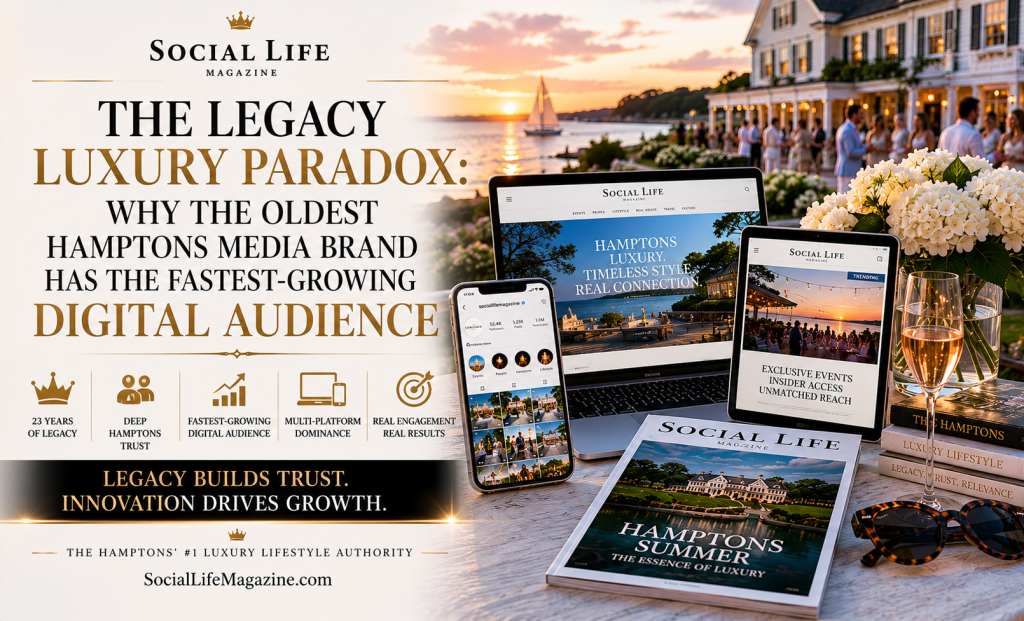
The conventional narrative about legacy print media positions print quality and digital growth as competing forces. Publications that maintain print quality sacrifice digital growth. Publications chasing digital scale sacrifice the editorial standards that made their print product valuable. The trade-off is presented as structural and unavoidable.
Social Life Magazine is a counterexample that the conventional narrative cannot accommodate.
The publication has been distributing five summer issues on the East End of Long Island since 2001. It has never chased digital scale at the expense of editorial quality. Its print distribution standards have not changed significantly in two decades. Its editorial voice — the IJ-style prose, the specific form of status anthropology it brings to Hamptons culture — has been consistent across twenty-three summers. It has never produced content that sounds like every other luxury publication.
And its digital audience is growing faster, in organic search traffic and email subscriber growth, than brands founded after Instagram became a platform.
The reason is not despite the legacy. It is because of it.
Why Domain Authority Compounds Like Interest
When Google evaluates a website’s authority on a topic, it is not evaluating only the current content. It evaluates the accumulated history of the site’s content, the consistency of its topical focus, the age and quality of its inbound links, and the track record built in its domain of expertise.
Social Life Magazine has been publishing content about the Hamptons — its culture, its people, its businesses, its events, its social architecture — since 2001. Every article published in those twenty-three years has contributed to a topical authority profile that newer entrants to the Hamptons media space cannot replicate regardless of how much content they produce in their first two years.
This is domain authority as compound interest. The first ten years of publishing built the foundation. Each of the following ten years built on that foundation. The twenty-third year is operating with the accumulated benefit of every previous year’s content investment. A new Hamptons publication launching today with a larger content production budget than Social Life Magazine cannot catch up on domain authority. It can only begin accumulating it, from a lower starting point, over the years that follow.
For brands evaluating where to invest in Hamptons content marketing partnerships, this domain authority differential has a direct practical implication. A paid editorial feature in Social Life Magazine is not just being published to a current audience. It is being added to an archive with twenty-three years of accumulated topical authority. The SEO benefit of that addition is not comparable to publishing the same content on a site with two years of authority.
The Print-Digital Flywheel
Social Life Magazine’s digital growth is also driven by a flywheel effect that the conventional print-versus-digital narrative misses entirely. The publication’s print product and its digital properties do not compete for audience. They amplify each other.
Print distribution drives initial brand discovery. Readers picking up an issue at a boutique in Water Mill are encountering the editorial brand for the first time. The quality of that editorial product drives the perception of authority that makes the digital content worth seeking out. Coverage of events and people creates the social currency that makes the digital archive a reference resource for anyone wanting to understand the Hamptons social landscape.
Digital search traffic reaches audiences that print cannot. The people researching Hamptons experiences before arriving. The New York City audience that follows the Hamptons summer from a distance but participates in its cultural products digitally.
These are not competing audiences. They are additive ones. The print reader who searches for more information about a feature she read in the summer issue and the digital reader who finds an article through organic search are both encountering the same editorial brand. Both encounters contribute to the same authority accumulation. Both produce the same credibility transfer to the brands featured in the content.
For luxury brands investing in Social Life Magazine, both channels are included in a single content investment. The paid feature runs in print and lives in the digital archive. The brand is discovered by the boutique reader and by the person who searches for it six months later. One investment, two audiences, one compounding asset.
Where The Conversation Continues
The legacy-digital flywheel is one expression of what twenty-three years of Hamptons authority produces. Full hub: The Irreplaceable Asset: Why 23 Summers of Hamptons Trust Cannot Be Bought on a Media Plan.
Sibling spokes: Why Hamptons Print Still Wins (FUTURE) and The Compound Interest of Hamptons Brand Presence (FUTURE).
Submit a paid feature: sociallifemagazine.com/submit-a-paid-feature.
Pillar: Why Luxury Brands That Ignore Psychology Lose the Hamptons Every Summer.
Author

Written by
Recent Posts

Jetsetter Style: Castello del Sole

The First Decision After a Collision Can Be the Most Important One
Two Weeks in Rome and Beyond: Turkish Airlines Itineraries from Boston, Chicago and Onward to India

Top 10 Hair Transplant Clinics in Turkey 2026
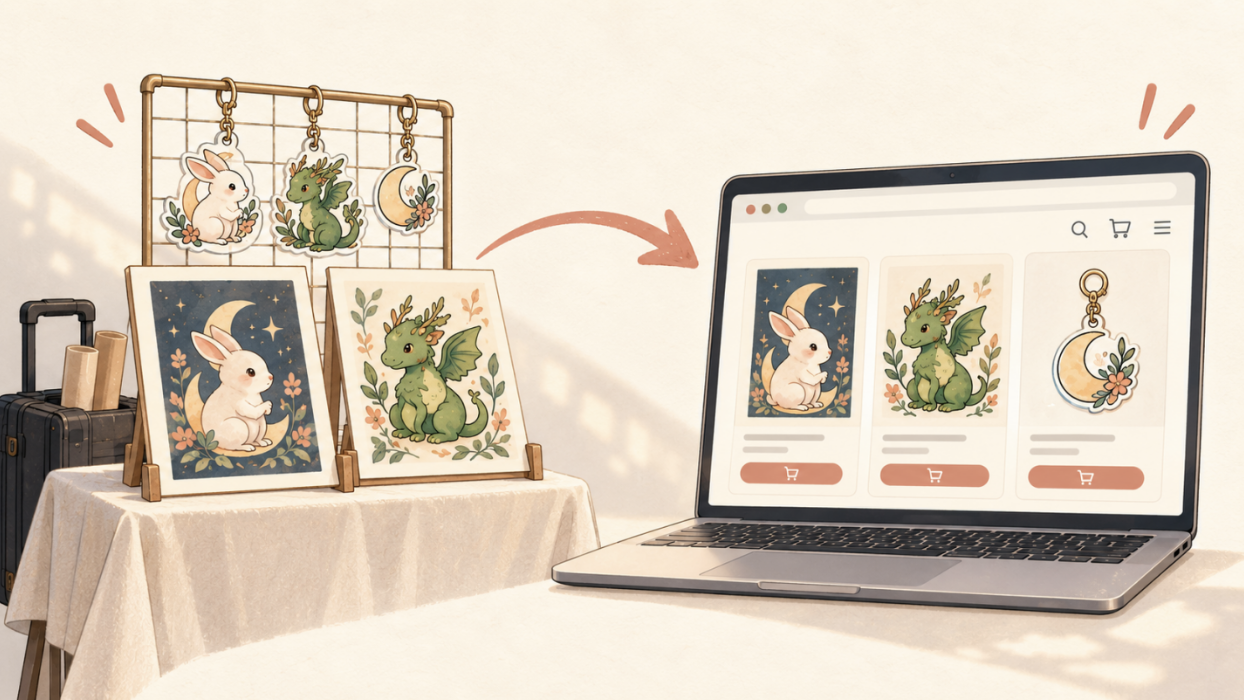
Artist Alley to Online Store: How Convention Artists Can Keep Selling After the Event
Categories
- Art
- Articles
- Business of Luxury
- Celebrities
- Culture
- Entertainment
- Events
- Faces of Summer 2026
- Fashion
- Fashion & Style
- Featured
- Finance
- Food, Spirits, Wine
- Hamptons
- Hamptons Celebrities
- Health
- Health & Beauty
- Lifestyle
- Luxury Lifestyle
- Press
- Profiles
- Real Estate
- Technology
- The Chronicles
- Travel
- Uncategorized
- Weddings