
Devon was purpose-built in 1948 by Imperial Oil following the Leduc No. 1 discovery, the oil strike that transformed Alberta’s economic trajectory and resulted in a boom in petroleum exploration across Western Canada.
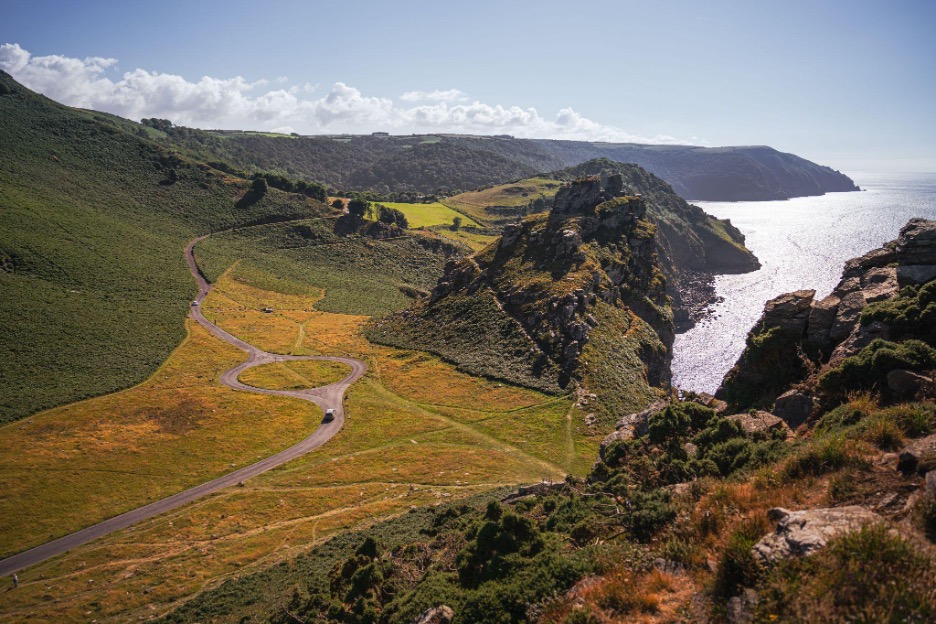
The town was designed from scratch as a planned community to house the workers and engineers developing the Leduc field, which means it has a street grid, a downtown core, a park system, and a residential layout that were thought through before a single house was built rather than accumulated organically over decades of agricultural settlement.
It consisted of four quadrants with regular lots on a grid pattern, recreational facilities including a theatre, swimming pool, fitness centre, auditorium, curling and skating rinks, public buildings like a hospital, and modern water and sewer infrastructure using natural gas for heating. That planned origin produced orderly boulevard streets, a riverside park system along the North Saskatchewan that is genuinely exceptional for a town of Devon’s size, and community infrastructure built to attract and retain skilled workers rather than simply shelter them. The architectural consistency of the original housing stock gives Devon’s older neighborhoods a character that is different from the more ad hoc development patterns of most Alberta small towns.
Devon today is a town of roughly 7,000 people, 40 kilometers southwest of Edmonton, with a property tax rate that consistently sits among the lowest of any municipality in the Edmonton metropolitan region, a riverside trail system that draws users from surrounding communities, and a housing market that offers detached homes at prices that have become increasingly difficult to find anywhere closer to the city.
The town’s origin story is not simply historical trivia. It explains what you see when you drive through Devon and why the place feels different from other communities in its population range.
Devon Within the Edmonton Small Towns Landscape
Devon occupies a specific position in the landscape of communities within commuting distance of Edmonton that distinguishes it from towns like Spruce Grove, Stony Plain, Leduc, and Beaumont that are often mentioned in the same conversation. What Devon offers that the larger Edmonton-area satellite communities do not include the river valley setting and trail access,
a property tax rate of 0.812030 percent that means residents should expect to pay around $4,060 per year for a home worth $500,000, the smaller-town feel that genuine small-town scale produces rather than suburban scale masquerading as small-town, and the specific quality of the original neighborhood fabric that planned-community founding created.
But Devon also trades away what those communities offer, including the retail and service infrastructure that comes with higher population, the variety of school options, and the range of local employment that larger communities provide.
Buyers and renters navigating the near Edmonton market are making decisions that are more nuanced than simply finding the closest affordable community to the city. A comparative look at the best small towns near Edmonton shows Devon sitting in an unusual position. It is smaller and more characterful than most of the region’s bedroom communities, with a river valley asset and a tax rate that makes the financial case as clear as the lifestyle one.
Buyers researching small towns near Edmonton who include Devon in their comparison typically find that
the property tax differential relative to the city and to larger satellite communities like Spruce Grove changes the total cost of ownership calculation
in ways that are not immediately obvious from listing prices alone.
Daily Life Texture and the River Valley Advantage
The river valley trail system means Devon residents have access to natural amenities that function as daily infrastructure rather than weekend destinations. The importance of access to natural environments is huge in shaping residential satisfaction, and Devon’s riverside positioning delivers that advantage without the premium that river valley access commands in Edmonton proper.
Devon Voyageur Park offers a popular launchpad for floating down the North Saskatchewan River, sandy beaches, picnic tables, nature trails, and facilities that host year-round outdoor activities including skiing, skating, golf, bike trails, hiking, and soccer fields.
The community events and seasonal rhythms give the planned industrial town its identity now that the industry has receded into the background of its story. The town’s recreational infrastructure was built during an era when corporations understood that attracting skilled workers required more than paychecks, and that original investment continues to function as civic infrastructure seven decades later.
For families with children and for adults whose quality of life is meaningfully improved by proximity to moving water and forested river valley, Devon offers amenities that larger satellite communities cannot replicate despite their population advantages.
Commute Reality and Remote Work Calculations
The commute reality matters. Highway 60 connects Devon to Edmonton, and the 40-kilometer drive translates to different time investments depending on which part of the city you are heading to and what time you are making the trip. Remote work has fundamentally changed the calculation for people who might previously have ruled out a 40-kilometer distance, and Devon has become legible as an option for households where one or both adults work from home part or full time. Research on planned communities demonstrates that infrastructure designed to support residential satisfaction produces long-term value that extends well beyond the original purpose of the development.
Housing Market and What Buyers Are Getting
Devon homes for sale range from $139,000 to more than $700,000, and what buyers are getting at Devon’s price points genuinely cannot be found closer to the city.
The new construction picture versus the resale market reflects a town that is not experiencing explosive growth but steady interest from buyers who have done the regional comparison and concluded that Devon’s combination of attributes justifies the commute.
Families specifically find school options through public and Catholic systems, recreational infrastructure that was overbuilt relative to current population and therefore not strained, and community scale that means children grow up knowing their neighbors rather than their postal code.
The demographic shift underway reflects the arrival of younger buyers and families who are discovering Devon through the property tax story or the river story and staying for reasons that have more to do with quality of life than financial calculation.
For a town built for oil workers in 1948 to find its second identity as a lifestyle destination for Edmonton professionals and families in the 2020s suggests that the planned-community infrastructure Imperial Oil built to attract skilled workers is now attracting a different kind of skilled worker, and that the river and the streets and the property tax rate are doing the same job for a very different Alberta economy.
Author

Written by
Recent Posts

A Couple Hundred Million Felt Like Real Money, Until He Met the Multi-Billionaires

He’s Got Millions. He Still Flinches at the Bill.

Streamlining Ground Station Data Pipelines for Deep Space Missions

The Coordination Problem That Kills Growing Marketing Teams
Why Personalized Skincare Is Replacing One-Size-Fits-All Beauty Products
Categories
- Art
- Articles
- Business of Luxury
- Celebrities
- Culture
- Entertainment
- Events
- Faces of Summer 2026
- Fashion
- Fashion & Style
- Featured
- Finance
- Food, Spirits, Wine
- Hamptons
- Hamptons Celebrities
- Health
- Health & Beauty
- Lifestyle
- Luxury Lifestyle
- Press
- Profiles
- Real Estate
- Technology
- The Chronicles
- Travel
- Uncategorized
- Weddings