
Texas, a state whose cultural and economic identity has been deeply intertwined with oil and gas for more than a century, is now one of the fastest-growing markets in the country for sustainable residential construction. The apparent paradox resolves itself once you understand what actually drove this shift.
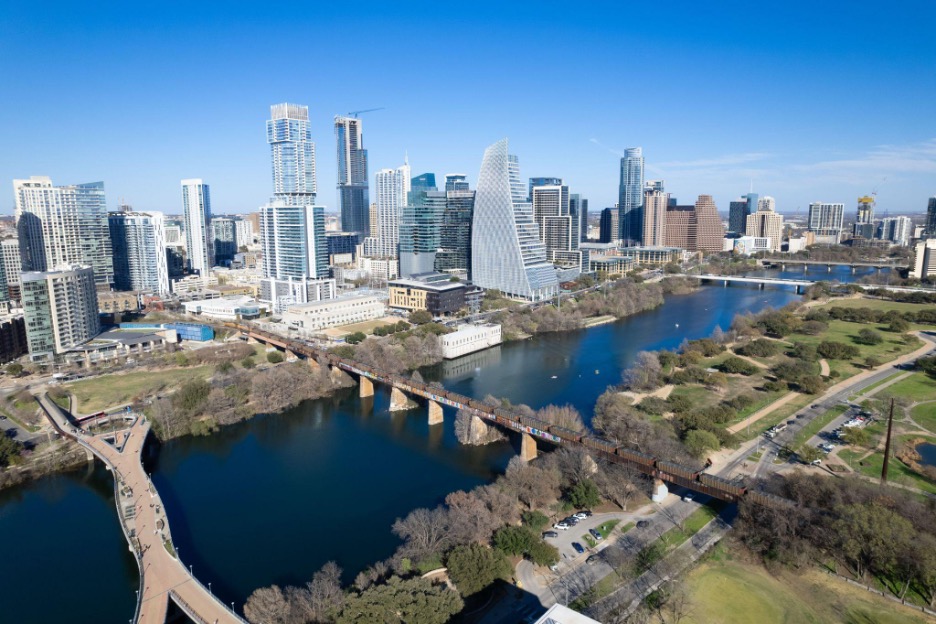
When Winter Storm Uri struck Texas in February 2021, more than 4.5 million households were left without electricity at its peak, some for several days.
At least 246 people were killed directly or indirectly, with some estimates as high as 702 killed as a result of the crisis.
That event was not an environmental awakening in a political sense. It was a practical reckoning with what happens when your home is poorly insulated, dependent on a fragile grid, and built without redundancy.
The growth of eco-friendly building in Texas is primarily pragmatic rather than ideological. Spray foam insulation, solar panels with battery storage, high-performance windows, passive cooling design, and rainwater harvesting are gaining adoption because they solve real problems that Texas homeowners experienced firsthand.
The specific climate pressures that make high-performance building more valuable in Texas than in most other Southern states are obvious to anyone who has lived through a Texas summer or survived a grid failure. The heat intensity and duration, the grid vulnerability, the water scarcity in parts of the state, and the hail and wind exposure make durable exterior materials a financial calculation rather than a lifestyle preference.
This is happening here because the consequences of building poorly became impossible to ignore overnight in February 2021.
What Eco-Friendly Building Looks Like When It Adapts to Texas
Move into what eco-friendly building actually looks like inside Texas home design right now, and you see specific features, materials, and design choices that are showing up in new construction across the state’s major markets and how they intersect with the broader home design trends that are shaping what buyers want and builders are delivering. The design vocabulary that has emerged around high-performance Texas homes includes the shift toward metal roofing that handles hail and heat better than asphalt shingles, the outdoor living spaces engineered for shade and airflow rather than simply square footage, the integration of solar and battery backup into homes that used to treat those as aftermarket additions, the use of native landscaping that reduces irrigation demand in a state where water is an increasingly strategic resource, and the interior design choices that reduce cooling loads in a climate where air conditioning accounts for a disproportionate share of residential energy use.
As of early 2025, more than 250,000 Texas homes have installed rooftop solar systems, contributing to localized power generation and reducing strain on the grid.
Texas electricity prices have risen 35% over the past five years, driven by rapid population growth, extreme weather, and a grid infrastructure that wasn’t built for today’s demand.
The broader context of what design looks like across the state’s diverse markets is unmistakable.
From the Hill Country where passive design principles align with the landscape aesthetic, to the Houston suburbs where flood resilience has become a design driver, to the Dallas-Fort Worth corridor where new construction volume is high enough that builder-level adoption of sustainable features is moving the market more than custom builds alone, the patterns are consistent.
A close look at current residential design shows eco-friendly features moving from the custom home tier into production builder offerings at a rate that reflects genuine market demand rather than regulatory pressure, with outdoor kitchens, energy-efficient envelopes, and solar-ready electrical systems appearing in new construction price points that would not have included them five years ago.
The intersection of sustainability and design in Texas residential construction is producing a recognizable aesthetic that is practical, climate-responsive, and distinctly Texan, one that is beginning to influence what buyers expect rather than simply what builders offer.
The Numbers Tell a Different Story Than You Would Expect From the Oil State
Texas has re-emerged in the Top 10 States for LEED, ranking seventh with 2.58 certified square feet per capita, and in 2024, Texas had the second-highest total of projects, with 205 LEED-certified projects equaling 75 million gross square feet.
Dallas has resulted in over 1,000 LEED certified building projects.
The Lone Star State ranked third with nearly 21 million gross square feet of office space across 61 projects certified and recertified to LEED, with four projects totaling more than 2.1 million square feet awarded the LEED Platinum designation.
These figures reflect a market reality that is not confined to municipal buildings or commercial office towers. The shift is visible at the residential level as well, where custom builders and production homebuilders alike are incorporating sustainable features not because Austin City Council mandated it, but because homebuyers who survived the 2021 freeze are asking for it.
What the major Texas metros are doing differently from each other is instructive. Austin’s policy-driven adoption creates one kind of market pressure. Dallas-Fort Worth’s volume-driven adoption creates another. Houston’s resilience-driven adoption, shaped by repeated flood events and hurricane exposure, creates yet another. Each market is arriving at similar conclusions from different starting points, but the direction of travel is unmistakable.
How Cost and Resilience Intersect in the Texas Climate
One study found that green buildings average only about 1.8 to 2% more than comparable non-green projects, translating to roughly $3 to $5 per square foot.
That cost premium becomes easier to justify when you factor in what sustainable features return in energy savings and resilience over a ten-year horizon in the Texas climate specifically.
The financing and insurance dimensions of high-performance homes are evolving in a state that has experienced repeated climate-related events, and mortgage underwriters and insurance carriers are beginning to recognize that a home with solar and battery backup, high-performance insulation, and impact-rated windows presents a different risk profile than one without.
The custom home market versus the production builder market tells you where sustainable features are being normalized versus where they remain premium. In the custom tier, passive solar orientation, rainwater collection systems, and geothermal HVAC are becoming expected rather than exceptional. In the production tier, spray foam insulation, programmable thermostats, and solar-ready electrical infrastructure are moving into the standard package rather than the upgrade list.
What Texas buyers are actually asking for when they walk into a new construction sales office has changed since 2021. The conversation has shifted from “does this home look good” to “will this home keep my family safe when the grid fails.” That shift is driving adoption faster than any policy mandate could.
What It Means When Sustainability Becomes Survival Rather Than Style
When eco-friendly building takes root in Texas specifically, it happens for reasons that look different from the way it happened in California or the Pacific Northwest. When sustainability becomes pragmatic rather than ideological, when it is driven by lived experience of grid failure and water bills and hail damage rather than by values alignment, it tends to stick in ways that top-down adoption does not.
Texas may be demonstrating what the Southern residential market looks like when climate reality and building practice finally start moving at the same speed.
When we break down the country regionally, the South accounts for the vast majority of new housing construction permits, more than the Northeast, Midwest, and West combined.
If sustainable building practices are normalizing here faster than in Georgia, North Carolina, or Florida, it is not because Texans suddenly embraced environmentalism. It is because they learned the hard way that the old way of building houses in this climate no longer works.
That kind of learning does not reverse itself.
Author

Written by
Recent Posts
Unlocking the Berkshires

Dalia Forman Design

Alberto Luzzi
How to Pick a Homecoming Dress for Your Body Type and Feel Amazing in It
How to Prepare a Home for Sale When Major Repairs Are Not Affordable
Categories
- Art
- Articles
- Business of Luxury
- Celebrities
- Culture
- Entertainment
- Events
- Faces of Summer 2026
- Fashion
- Fashion & Style
- Featured
- Finance
- Food, Spirits, Wine
- Hamptons
- Hamptons Celebrities
- Health
- Health & Beauty
- Lifestyle
- Luxury Lifestyle
- Press
- Profiles
- Real Estate
- Technology
- The Chronicles
- Travel
- Uncategorized
- Weddings