
The Willamette Valley looks different from inside it than it does from a highway or a tasting room bar.
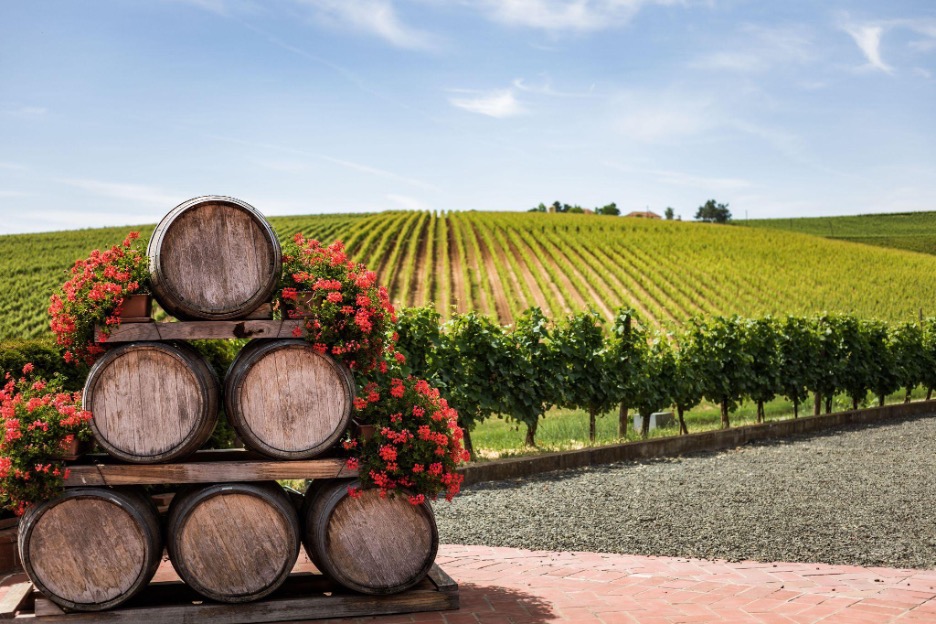
Drive west from Portland through the Chehalem Mountains on a spring morning and the landscape shows itself in layers: Douglas fir stands giving way to ordered vineyard rows, the Coast Range rising to the west as a persistent wall of blue-green, and everywhere the light, softer and more diffuse than anywhere else in the Pacific Northwest, passing through mist that never quite burns off until noon.
This is rolling terrain shaped by ancient floods and volcanic soils, and it creates a bowl of agricultural land between Portland and Salem with a visual character unlike the sharp peaks to the east or the dense coastal forests to the west. Buildings here have always mattered differently than they do in the city.
A structure that might disappear in downtown Portland announces itself in a wine country setting where the nearest neighbor sits a quarter mile away and the view stretches unbroken to the ridgeline.
Post and beam construction is a structural system built on vertical posts and horizontal beams of heavy timber, typically Douglas fir or reclaimed wood, joined with metal fasteners or brackets that may be exposed or concealed depending on the builder’s aesthetic approach.
The vertical posts and horizontal beams create the structural frame, and the wide spans this system enables allow for large expanses of glazing without the visual interruption of conventional stud framing.
The timber skeleton becomes the primary architectural feature rather than something hidden behind drywall, and the relationship it creates between interior volume and exterior landscape defines the spatial quality of these homes.
The structural frame is self-supporting and carries the weight of the house, which means interior load-bearing walls are unnecessary, making large open interior spaces and high vaulted ceilings possible. The material honesty of exposed timber resonates with a wine country ethos already built around authenticity, craft, and the visibility of process. What has driven the recent acceleration of interest in the valley is a convergence:
Oregon wine landscape is shifting as wineries build bold spaces to differentiate themselves in a crowded industry, using design as part of their signature to level up the tasting room experience, and that same design sensibility has traveled from commercial wine architecture into residential building.
The pandemic-era migration of Portland buyers into wine country brought different expectations from what rural Oregon building traditionally offered, and the influence of Sonoma and Napa architecture traveled north with buyers who had spent time there and wanted that same integration of structure and landscape in their own homes.
The availability of Portland-area builders with genuine heavy timber expertise who are now working in the valley on projects that were previously outside their geographic range has made it possible.
Finding a Builder Who Actually Knows Heavy Timber
Post and beam construction utilizes mechanical fasteners and steel plates to join the timber together, and the connectors are either hidden or exposed, but post and beam frames are not the only structural support for a building—additional elements are required, such as infill framing or sheer panels.
Not every builder who markets themselves as a timber frame specialist delivers equivalent results, and what the Willamette Valley buyer market is discovering as it navigates this space is the difference between genuine heavy timber expertise and builders who apply timber aesthetic elements to conventional framing.
What separates a serious post and beam builder from one responding to a trend is the engineering relationship with the structural system, the sourcing and drying of timber, whether the joinery is structural or decorative, the integration of the building envelope with the frame rather than treating them as separate systems, and the portfolio depth that shows a builder has solved the specific problems that heavy timber construction presents across multiple projects rather than one.
Most of the builders with genuine heavy timber expertise serving the Willamette Valley wine country are Portland-based firms that have expanded their radius as demand has moved south into the valley.
Buyers commissioning post and beam homes in wine country typically start their builder search in Portland, where the concentration of firms with genuine heavy timber and custom construction expertise is higher than anywhere else in Oregon. Success depends on a builder with demonstrated wine country project experience and the structural depth to execute heavy timber credibly rather than decoratively, a distinction that matters considerably more in a post and beam project than in conventional residential construction where the framing disappears behind finishes.
Post and beam construction requires skilled carpenters to create tight, well crafted joints, but it often takes a trained eye to distinguish between a true timber frame and well done post and beam construction, and cost and the desire for authenticity are important factors, with timber framing adding roughly 25% more cost than a conventional home and roughly 10-15% more than timber post and beam.
The Interior Quality That Comes With Exposed Timber
Walk into a well-executed post and beam home in a wine country setting and the ceiling height registers first. The structural rhythm of exposed beams changes how a room feels, establishing a visual cadence that conventional flat ceilings cannot produce. Douglas fir aged to a warm honey tone or reclaimed timbers bearing the marks of their previous life as barn beams create a material palette that works with rather than against the landscape visible through floor-to-ceiling glass.
Flooring choices matter: wide-plank oak or reclaimed heart pine in natural oil finishes complete the frame rather than compete with it.
Timber is a natural insulator which regulates the temperature inside the home, keeping it warm in winter and cool in summer without excessive heating or air conditioning, and timber frame homes are up to 30% more energy efficient than traditional homes.
The glazing that post and beam construction makes possible through its wide spans means the relationship between indoor and outdoor living extends beyond summer. In the Willamette Valley, where nine months of the year offer mild weather, properly designed post and beam homes blur that boundary in ways conventional construction cannot.
Siting and Orientation in Wine Country
Post and beam homes in the Willamette Valley are sited differently from conventional construction because the structural system allows for large glass walls that must be oriented to take advantage of valley views, vineyard adjacency, and the specific light quality the valley produces at different times of year.
Regionalist pride that informs the Oregon wine industry plays out in design, with building types native to the Willamette Valley—evoking a pole barn in a vineyard setting—and the resulting building frames views of Mount Hood while using passive-cooling strategies like generously sized doors and clerestory windows, and reflects Pacific Northwest architecture’s rediscovery of homegrown timber.
Morning light in wine country arrives soft and angled through mist, and post and beam homes designed for this landscape position primary living spaces to capture that quality rather than defaulting to southern exposure. The relationship between the building and the land it sits on matters more here than in suburban Portland, where lot constraints dictate placement.
What It Costs and What You Get
Timber frames run about 10-15% more than a conventional custom build with similar finishes, with the premium coming from specialized craftsmanship—mortise-and-tenon joinery requires master timber framers with years of experience, every connection is engineered and hand-fitted, and the materials are premium too: heavy timbers, high-performance SIPs, and quality hardware, not standard 2x4s and fiberglass batts.
Mass timber construction creates strong momentum, with twelve new mass timber plants and over 1,860 mass timber projects in design or completed in all 50 states, creating new opportunities for using wood from forest restoration and supporting rural economies while embracing a construction material that is a superior carbon storing material.
The timeline for a post and beam home takes longer than production building due to the engineering and prefabrication involved, but what buyers get for the premium includes durability that lasts generations, energy performance that registers on every utility bill, and a resale profile that holds value in a wine country market where architectural quality commands premiums as strong as vineyard proximity.
The Market for These Homes in the Valley
The market for thoughtfully designed post and beam homes in the Willamette Valley reflects what buyers who commission them say about the relationship between their build investment and their daily experience of living in them.
The wine country premium applies as strongly to architectural quality as it does to vineyard adjacency, and the buildings being built in the valley right now feel like they belong there in a way that most residential construction in the region has not historically managed.
What post and beam’s moment in Oregon wine country represents is not a trend in the fashion sense but a convergence of the right landscape, the right buyer expectations, and the right builder capacity arriving at the same point.
The Willamette Valley has always had vineyards and Douglas fir and a particular quality of light, but it did not always have buyers willing to invest in buildings that respond to those conditions as primary design drivers, and it did not always have builders with the expertise to execute them credibly. It has both now.
Author

Written by
Recent Posts
Unlocking the Berkshires

Dalia Forman Design

Alberto Luzzi
How to Pick a Homecoming Dress for Your Body Type and Feel Amazing in It
How to Prepare a Home for Sale When Major Repairs Are Not Affordable
Categories
- Art
- Articles
- Business of Luxury
- Celebrities
- Culture
- Entertainment
- Events
- Faces of Summer 2026
- Fashion
- Fashion & Style
- Featured
- Finance
- Food, Spirits, Wine
- Hamptons
- Hamptons Celebrities
- Health
- Health & Beauty
- Lifestyle
- Luxury Lifestyle
- Press
- Profiles
- Real Estate
- Technology
- The Chronicles
- Travel
- Uncategorized
- Weddings