
A room can be expensive and still feel unfinished. It can also be modest, slightly imperfect, and deeply considered. The difference usually comes down to the small decisions that shape how the space is experienced.
Thoughtful interiors are not built by filling every corner or following a fixed style. They come from knowing where to add contrast, where to hold back, and which details deserve attention. The following ideas focus on the choices that make a room feel deliberate without making it look overdesigned.
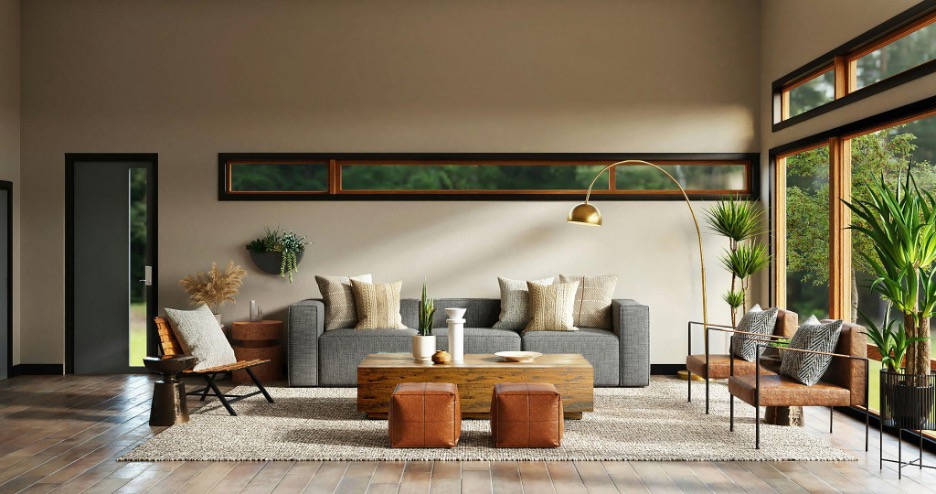
Create the Foundation
1. Let One Surface Do Less
Not every wall needs to become a feature. In many rooms, the most useful background is one that stays quiet enough to support everything else.
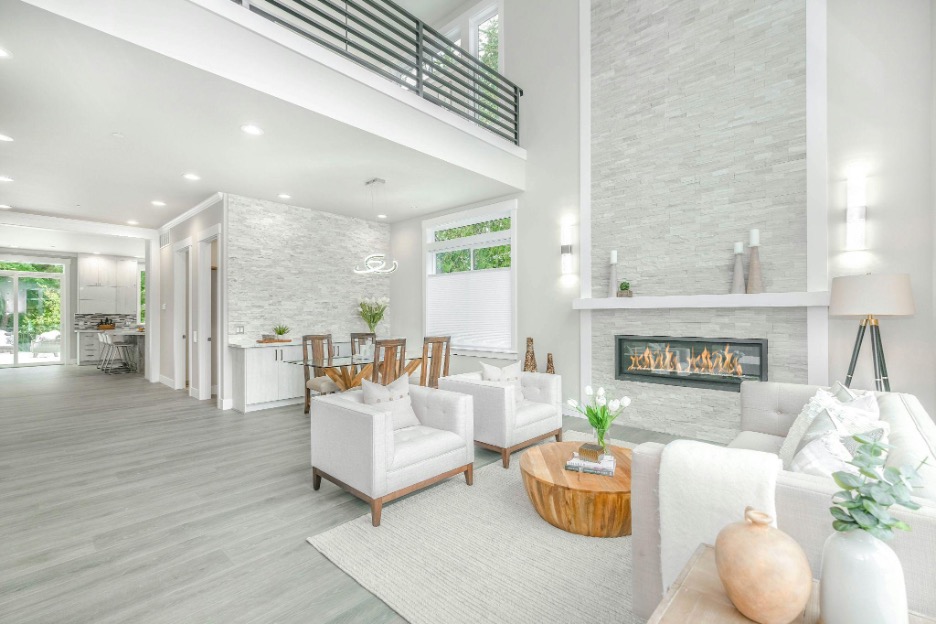
This is where all white interior walls can work particularly well. They give furniture, artwork, and natural materials more visual space, especially in rooms with limited daylight or several competing elements. The key is to avoid treating white as the sole design element. Without texture, contrast, or tonal variation, the room can feel flat rather than calm.
Wood furniture, woven fabrics, aged metals, and soft lighting can prevent a pale room from feeling sterile. The walls create the breathing room, but the surrounding materials give the space its character.
2. Stop Matching Everything
A room often feels more natural when its elements relate to one another without being identical. Matching every wood finish, metal, or fabric can make the space appear assembled rather than collected.
Instead of choosing one exact finish throughout, work within a range. A dark oak cabinet can sit comfortably beside a lighter timber table if the undertones are compatible. Brass lighting does not require every handle and tap to be brass as well. A small amount of variation adds depth and keeps the room from feeling overly controlled.
The same applies to furniture styles. A contemporary sofa can work with an older side table or a traditional chair when the proportions and colors make sense together. Consistency matters, but uniformity is not the only way to create it.
3. Give the Eye Somewhere to Land
Rooms feel clearer when they have a visual anchor. Without one, the eye moves from object to object without finding a natural resting point.
An anchor does not need to be dramatic. It could be a large painting, a sculptural pendant light, a fireplace, a substantial dining table, or a window with a strong view. What matters is that one element carries enough visual weight to organize the rest of the room.
Once that focal point is established, nearby pieces can support it rather than compete with it. Furniture placement, lighting, and smaller decorative objects should help guide attention toward the main feature.
This also reduces the temptation to add several statement pieces. One confident choice is often more effective than several items all trying to perform the same role.
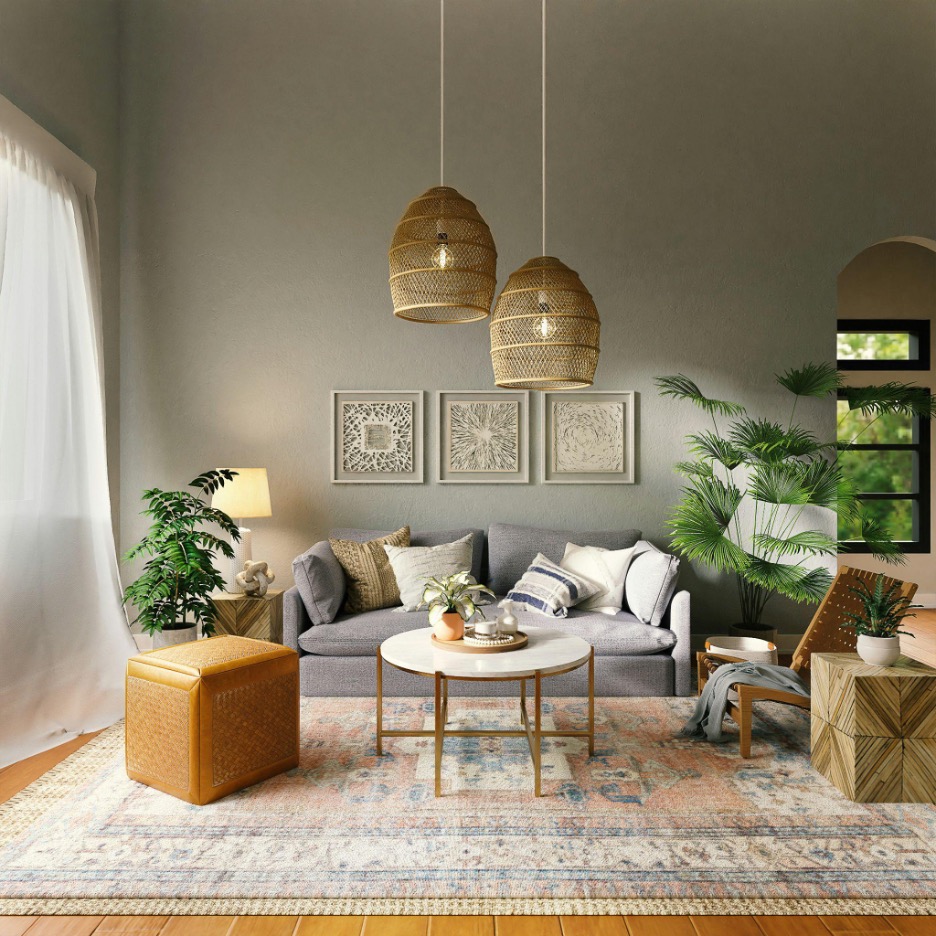
4. Leave Some Space Unfilled
Empty space should not be confused with wasted space. Blank spaces, like a wall segment, a corner, and a tabletop, can make other elements around them look purposeful.
The problem that makes most interiors look exhausting is filling every spot. The walls are covered with pictures, the edges with furniture, and the surfaces with decorations. There isn’t any place left for something to catch the attention.
Not filling up the spaces can create pauses in the interior. It may also be beneficial in terms of mobility and making small spaces look larger. Before you place another chair, table, or picture frame in your interior, ask yourself if you really need them there.
5. Use Texture Where Color Is Quiet
Neutral rooms need variation, even when the color palette remains restrained. Texture provides that variation without introducing visual noise.
Curtains of linen, woolen rugs, ribbed glass, plaster, stones in their natural form, wood in its natural form, and baskets made from natural fiber all react differently to light. Collectively, they form a depth that cannot be created by the choice of colors.
A texture will make a place feel different physically. An area rug, a stone finish, or an uneven handmade ceramic finish will create a physical feeling for the person using the space.
The impact is most pronounced when textures are used together on various scales, starting from a large rug, to cushions, lampshades, and ceramics.
Add Character Without Overworking the Room
6. Make Functional Objects Part of the Design
It is not necessary to hide useful things. Sometimes, they can turn into integral elements of the space.
A nice floor lamp, hooks in a line, a wooden bench, or an open shelf can work just as well as purely decorative things. The aim is not in the display of anything; it is in the choice of objects, their form, material, and place.
This method can be applied especially well in the foyer, kitchen, and living room, where there are many practical things needed. A bench can serve both for sitting and for storing various things. Hooks can organize your bags and make the wall rhythmic.
7. Repeat One Detail in Unexpected Places
Repetition creates relationships, but it is more effective when it is understated. The use of a similar form, texture, or material will link disparate components in a space without being overly apparent in the overall design scheme.
A curved mirror may reflect the form of a sideboard. The fluting seen in a glass cabinet may reappear in a pendant light fixture. A dark metal used for a doorknob may repeat in a frame and lamp base.
Such connections allow the space to become cohesive, and repetition becomes particularly helpful in open floor plans, where the relationship between different spaces needs to be established.
It must be emphasized that the repeated element does not have to occur throughout the whole space. Just a few repetitions are enough to create a relationship.
8. Break the Room’s Symmetry Once
Symmetry helps create a calming ambiance in a room; however, when there is too much symmetry, the whole room looks like it was staged. Just one instance of asymmetry can help to bring life to the room.
For example, the chair can be placed not in the center, the painting can be hung in an asymmetrical manner, or one side of the console can be styled in a different way from the other side. The imbalance should come across as intentional.
It works well if everything else in the room is arranged symmetrically.
9. Keep One Thing That Does Not “Fit”
Memorable rooms have some elements that resist the dominant theme of the room. This could range from an inherited chair to a hand-made bowl or even a lamp of an unusual form.
These pieces have character because they are not selected just to make the whole picture. They may have some history, or it may be sentimental to them, which creates an impression of the owner’s personality.
The house is never supposed to give the feeling of a set of items that have all been selected at one time. The presence of just one piece, which is somewhat out of place in the general style of decor, makes the room more convincing.
Well-composed interiors are never perfect interiors. They are places where the concepts of moderation, contrast, utility, and significance coexist. The best interiors have space left in them to let life take place.
Author

Written by
Recent Posts

Jetsetter Style: Castello del Sole

The First Decision After a Collision Can Be the Most Important One
Two Weeks in Rome and Beyond: Turkish Airlines Itineraries from Boston, Chicago and Onward to India

Top 10 Hair Transplant Clinics in Turkey 2026
Artist Alley to Online Store: How Convention Artists Can Keep Selling After the Event
Categories
- Art
- Articles
- Business of Luxury
- Celebrities
- Culture
- Entertainment
- Events
- Faces of Summer 2026
- Fashion
- Fashion & Style
- Featured
- Finance
- Food, Spirits, Wine
- Hamptons
- Hamptons Celebrities
- Health
- Health & Beauty
- Lifestyle
- Luxury Lifestyle
- Press
- Profiles
- Real Estate
- Technology
- The Chronicles
- Travel
- Uncategorized
- Weddings