
Cleaning of rooftop HVAC units can often be much more cost-effective than equipment replacement or the incorporation of a control upgrade, and can instantaneously enhance system performance. As time goes on, dust, dirt, pollen, grease, and other particles accumulate on HVAC coils and require more work to be done. This extra load causes the energy use to rise, cooling to be ineffective, and increased stress on vital parts.
HVAC coil cleaning from rooftop HVAC unit services for New Jersey businesses can be one of the most cost-effective ways to prolong the life of the air conditioning system while limiting the need to replace the entire system.
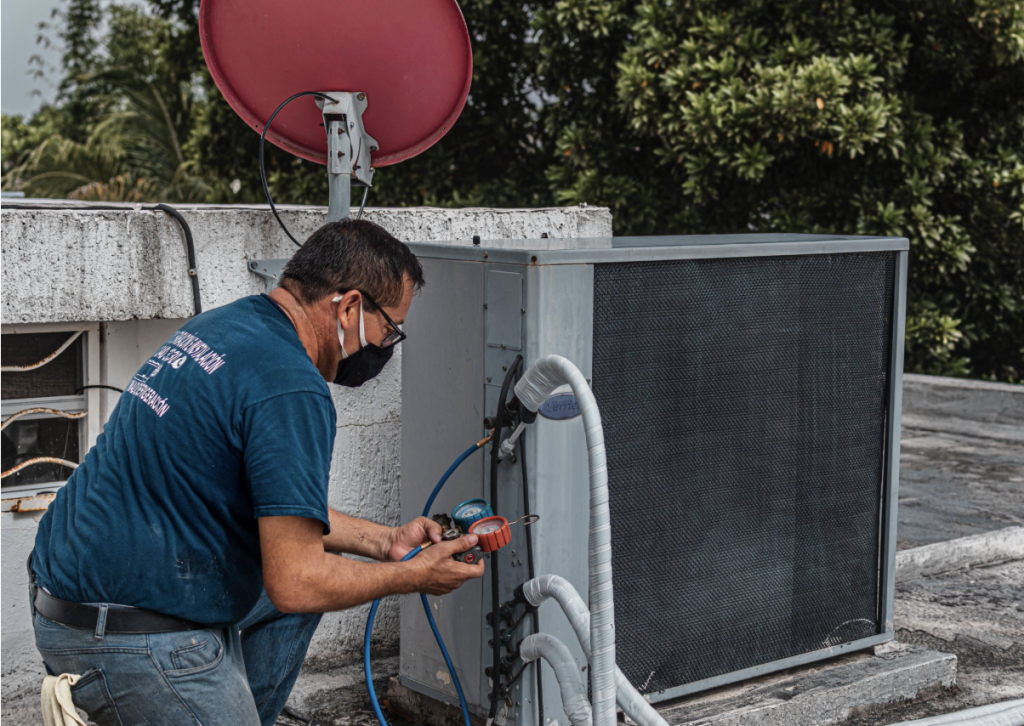
What Does a Rooftop HVAC Coil Actually Do?
There are very important coils in the rooftop HVAC system, which permit heat to be transferred effectively. These coils enable heat to transfer from the indoor air to the refrigerant, providing cooling in summer.
Two main types of coils are found in most rooftop units:
- Evaporator coils: These are used to draw heat from the inside air of the building, and they help to cool the building.
- Condenser coils: Remove heat from the refrigerant to the outside air.
Air circulation must be allowed over the heat exchange surface to ensure the processes are working properly. Coils become ineffective at transferring heat when they are covered with dirt, which makes the HVAC system more energy-consuming and time consuming and energy-efficient.
How Dirty Coils Increase Energy Bills
Dirty coils in rooftop HVAC units provide resistance and don’t allow heat to transfer efficiently. If it doesn’t adequately remove heat, the system increases running cycles and draws more electricity as compensation.
Some causes for rising operating costs due to dirty coils are:
- Backed by higher compressor runtimes.Higher compressor runtimes.
- Increased electrical consumption
- Reduced cooling output
- Higher operating temperatures
- Wear is increased on mechanical parts.
A meter sitting atop a roof cooling apparatus that has been neglected for a while might look as if it’s cooling, but it’s silently consuming more bill-draining energy every month. The commercial rooftop HVAC system keeps functioning to produce conditioned air, but the amount of energy needed to get the desired results is much greater.
Why Coil Cleaning Delivers One of the Highest Returns on Maintenance Investment
The price of cleaning coils is lower than if they’re installed in major HVAC tune-ups, and they can yield significant efficiency gains.
The monetary advantages are:
- Reduced energy bills
- Fewer unexpected repairs
- Longer equipment lifespan
- Improved cooling performance
Professional rooftop HVAC maintenance companies, such as Platinum HVAC, can detect the early signs of coil contamination and clean the system before becoming a problem.
Common Signs Your Rooftop HVAC Coils Need Cleaning
There are many commercial HVL systems with warning signs that indicate when coils are dirty or blocked.
Common indicators include:
- An increase in energy costs with no additional energy use.
- Longer cooling cycles
- Reduced airflow
- Uneven indoor temperatures
In addition, building managers should monitor other variations in performance during the season.
How Professional Rooftop HVAC Coil Cleaning Works
There’s more to commercial rooftop HVAC coil cleaning than just spraying some water on the equipment.
The following is a list of general steps in a typical cleaning procedure:
- System inspection
- Coil condition and airflow, as well as overall equipment performance, are evaluated.
- Power shutdown
- Debris removal
- System testing
Professional cleaning ensures coils are thoroughly cleaned without harming fins or other fragile parts.
How Often Should Rooftop HVAC Coils Be Cleaned?
Systems can experience a 40% reduction in capacity due to dust and dirt buildup. Building location, use of equipment, conditions within the building, and other factors will determine the ideal cleaning schedule.
Coil cleaning is beneficial to many commercial rooftop units:
- As a precautionary step, once a year or more frequently if necessary.
- Twice a year, in heavily used areas
- In dusty environments or in regions where a lot of dust, drains, wetland organisms, and pollution are present, more often.
Such limitations as restaurants, warehouses, and manufacturing plants may require increased frequency due to increased amounts of air contaminants.
Coil Cleaning vs. Waiting for Repairs: Which Costs Less?
Cleaning coils is often a prevention approach that is far less costly than when you have HVAC issues.
Frequently cleaning to prevent expenses such as:
- Emergency service calls
- Compressor failures
- Reduced equipment lifespan
- Increased energy consumption
- Major component replacements
Delaying action till a rooftop unit breaks down can lead to more significant costs as the issue has advanced past the point of being handled as a maintenance concern.
Conclusion
The cleaning of HVAC coils in rooftop locations is arguably the most efficient and cost-effective approach to increasing efficiency and minimizing energy costs. Dirty coils cause HVAC equipment to work much harder than they need to, hence causing companies to incur higher costs in terms of utility expenses as well as quicker depreciation of components.
Author

Written by
Recent Posts

The First Decision After a Collision Can Be the Most Important One
Two Weeks in Rome and Beyond: Turkish Airlines Itineraries from Boston, Chicago and Onward to India

Top 10 Hair Transplant Clinics in Turkey 2026

Artist Alley to Online Store: How Convention Artists Can Keep Selling After the Event
When an 18-Wheeler Crash Leaves Lasting Consequences
Categories
- Art
- Articles
- Business of Luxury
- Celebrities
- Culture
- Entertainment
- Events
- Faces of Summer 2026
- Fashion
- Fashion & Style
- Featured
- Finance
- Food, Spirits, Wine
- Hamptons
- Hamptons Celebrities
- Health
- Health & Beauty
- Lifestyle
- Luxury Lifestyle
- Press
- Profiles
- Real Estate
- Technology
- The Chronicles
- Travel
- Uncategorized
- Weddings