
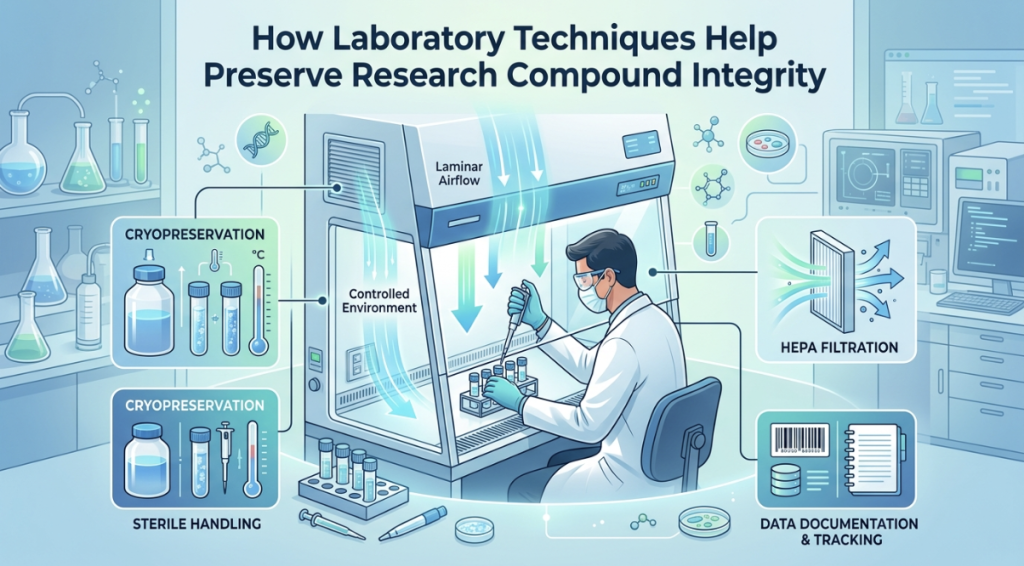
Scientific research depends on precision, consistency, and careful handling of materials. Whether researchers are studying proteins, peptides, enzymes, or other laboratory compounds, preserving sample integrity is essential for producing reliable results. A well-designed experiment can still produce inaccurate findings if the research compounds are damaged by poor storage, contamination, or incorrect handling.
What Is Research Compound Integrity?
Research compound integrity refers to maintaining the original physical and chemical characteristics of a laboratory sample throughout its lifecycle. From the moment a compound is received until the final stage of testing, researchers aim to keep it stable and free from contamination or degradation.
When a compound remains unchanged, scientists can trust that their observations reflect the material itself rather than outside factors. This consistency makes research findings more dependable and easier to reproduce.
Why Preserving Sample Quality Matters
Every scientific study relies on accurate and repeatable data. If one sample has degraded while another remains stable, the results may no longer be comparable. Preserving compound integrity helps reduce unnecessary variation and supports better scientific conclusions.
High-quality samples also save time and resources. When materials remain stable, researchers are less likely to repeat experiments because of preventable errors.
Some of the biggest benefits include:
- More reliable experimental results
- Better consistency between studies
- Improved data accuracy
- Easier collaboration between laboratories
- Greater confidence in published research
Proper Storage Makes a Difference
One of the most effective ways to preserve research compounds is through proper storage. Laboratories carefully control environmental conditions to reduce degradation and extend sample stability.
Temperature Control
Many research compounds are sensitive to temperature changes. Laboratories use refrigerators, freezers, or specialized storage units depending on the characteristics of each material. Continuous monitoring systems help detect unexpected temperature changes before they affect valuable samples.
Light Protection
Certain compounds can change when exposed to direct light. For this reason, laboratories often use amber containers or store sensitive materials in dark environments.
Moisture Control
Humidity can also affect sample stability. Properly sealed containers and controlled laboratory environments help minimize moisture exposure and protect compound quality over time.
Preventing Contamination
Contamination is one of the most common reasons research samples become unusable. Even a tiny amount of unwanted material may influence experimental results.
Researchers reduce contamination by following strict laboratory procedures.
Clean Equipment
All laboratory tools should be cleaned, sterilized, and inspected before use. Many laboratories also use disposable equipment whenever practical to reduce contamination risks.
Organized Work Areas
Maintaining clean workstations helps prevent accidental mixing of samples. Clearly labeled containers and organized storage systems also reduce handling mistakes.
Protective Equipment
Researchers wear gloves, laboratory coats, and other protective equipment to reduce direct contact with research materials while protecting both the samples and themselves.
Standard Operating Procedures Improve Consistency
Modern laboratories rely on written Standard Operating Procedures, commonly known as SOPs. These documents explain exactly how different tasks should be performed.
Following standardized procedures ensures every researcher prepares, stores, and handles samples using the same methods. This reduces human error and improves consistency across multiple experiments.
Typical SOPs include:
- Sample receiving
- Storage requirements
- Equipment cleaning
- Documentation
- Waste disposal
- Quality inspections
Consistency is one of the foundations of good scientific research.
Accurate Documentation Matters
Laboratory work involves much more than performing experiments. Good documentation allows researchers to understand exactly how each sample has been handled.
Records commonly include:
- Sample identification numbers
- Preparation dates
- Storage locations
- Environmental conditions
- Equipment used
- Testing timelines
- Laboratory observations
Researchers reviewing laboratory handling methods sometimes encounter educational discussions covering how much bacteriostatic water to add to peptides while learning about standardized preparation procedures and documentation practices. These discussions are intended to explain research workflows rather than promote any specific practice.
Clear records also make it easier for other laboratories to repeat experiments and verify published findings.
Equipment Calibration Supports Accuracy
Scientific instruments must provide accurate measurements every time they are used. Over time, equipment can slowly drift from its original calibration.
Laboratories routinely inspect and calibrate important instruments, including balances, pipettes, temperature sensors, and analytical devices. Regular maintenance helps prevent measurement errors and supports dependable research outcomes.
Proper calibration also reduces unnecessary delays caused by equipment failure.
Quality Control Protects Research
Quality control is an ongoing process throughout every research project. Instead of waiting until experiments are finished, laboratories continuously monitor their systems to identify problems early.
Quality control may include:
Routine Equipment Checks
Researchers inspect instruments regularly to ensure they continue operating correctly.
Environmental Monitoring
Storage temperatures, humidity levels, and other environmental conditions are monitored continuously.
Sample Verification
Labels, documentation, and storage locations are checked frequently to reduce identification errors.
These simple but consistent practices strengthen the reliability of scientific studies.
Safe Handling Throughout the Research Process
Proper handling begins when a compound enters the laboratory and continues until testing is complete. Researchers minimize unnecessary handling because every transfer creates an opportunity for contamination or accidental loss.
Training also plays an important role. Laboratory personnel learn standardized handling methods before working with research materials independently.
During educational training, researchers may also review topics such as how much bacteriostatic water to add to peptides to better understand laboratory preparation concepts within controlled research settings.
Common Challenges Laboratories Face
Even experienced laboratories encounter challenges that require careful attention.
Human error remains one of the biggest risks. Incorrect labeling, incomplete documentation, or accidental sample mixing can affect research quality.
Environmental changes such as unexpected power failures or temperature fluctuations also require backup systems to protect valuable samples.
Long-term storage presents another challenge. Research projects often continue for months or years, making consistent monitoring essential for preserving sample integrity.
Practical Tips for Researchers
Maintaining research quality does not always require complex technology. Small daily habits often have the greatest impact.
Researchers should:
- Verify sample labels before every experiment.
- Store materials according to laboratory guidelines.
- Keep workspaces clean and organized.
- Minimize unnecessary sample handling.
- Record every important observation.
- Inspect equipment regularly.
- Follow written laboratory procedures.
- Report unexpected changes immediately.
These practices help create reliable and reproducible research.
Looking Ahead
Laboratory science continues to evolve with better automation, digital record systems, and improved monitoring technology. These innovations help researchers maintain higher standards while reducing the chance of human error.
As scientific collaboration expands across the world, standardized laboratory techniques will become even more important. Consistent methods allow researchers to compare findings more accurately and build on previous discoveries with greater confidence.
Conclusion
Preserving research compound integrity is essential for producing accurate and dependable scientific results. Proper storage, contamination prevention, careful documentation, equipment calibration, and routine quality control all contribute to successful laboratory research.
Although technology continues to improve laboratory capabilities, the most important factor remains consistent scientific practice. By following established procedures and maintaining high laboratory standards, researchers help ensure that every experiment produces meaningful and trustworthy data.
Disclaimer
Disclaimer: Peptides mentioned in this article are intended for laboratory research purposes only. They are not intended for human consumption, medical treatment, diagnosis, or veterinary use. This article is provided solely for educational and informational purposes.
Frequently Asked Questions
1. What is research compound integrity?
It refers to keeping a laboratory compound stable, uncontaminated, and unchanged throughout storage, handling, and testing.
2. Why is proper storage important?
Proper storage helps protect research compounds from temperature changes, moisture, light exposure, and contamination that may affect scientific results.
3. How do laboratories prevent contamination?
They use sterile equipment, clean workspaces, protective equipment, and standardized handling procedures.
4. Why is documentation important in laboratory research?
Detailed records help researchers track samples, repeat experiments accurately, and verify scientific findings.
5. How does quality control improve research?
Quality control helps detect problems early, maintain consistency, and increase confidence in laboratory results.
Author

Written by
Recent Posts

Unlocking the Berkshires

Dalia Forman Design

Alberto Luzzi
How to Pick a Homecoming Dress for Your Body Type and Feel Amazing in It
How to Prepare a Home for Sale When Major Repairs Are Not Affordable
Categories
- Art
- Articles
- Business of Luxury
- Celebrities
- Culture
- Entertainment
- Events
- Faces of Summer 2026
- Fashion
- Fashion & Style
- Featured
- Finance
- Food, Spirits, Wine
- Hamptons
- Hamptons Celebrities
- Health
- Health & Beauty
- Lifestyle
- Luxury Lifestyle
- Press
- Profiles
- Real Estate
- Technology
- The Chronicles
- Travel
- Uncategorized
- Weddings