
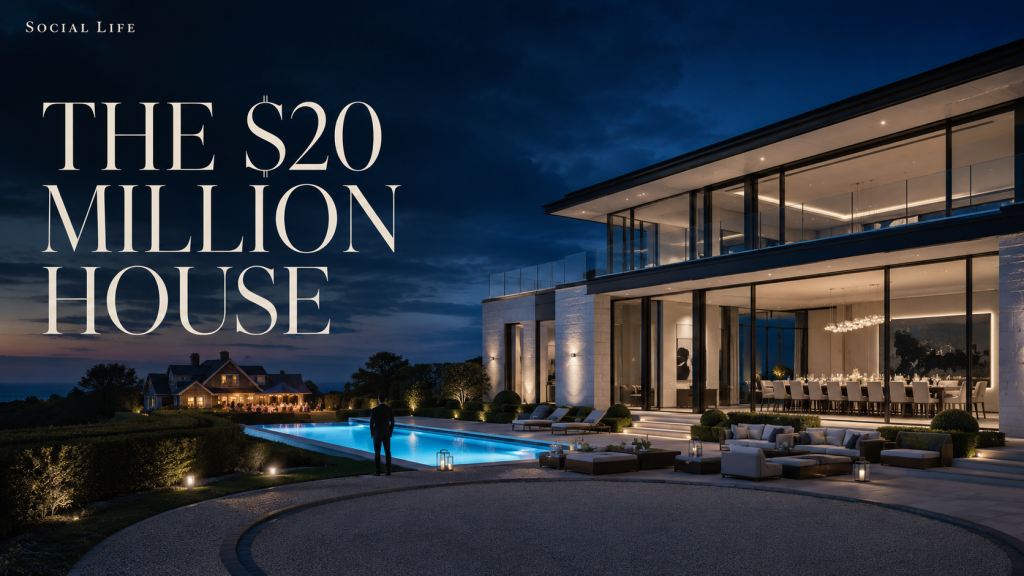
The house is, by every measurable standard, perfect. Eleven thousand square feet of glass and cedar, finished in April, photographed in May, published in June. The pool is a negative edge over a second, warmer pool. The kitchen contains a second, hidden kitchen where the actual cooking happens, so that the visible kitchen can remain a photograph of a kitchen. Every light is on. It is Saturday evening in August, and the gravel court is empty.
Two miles away, a low shingled house with a sagging porch roof is turning cars away. The disparity between these two facts is the strangest number in Hamptons real estate, and it is the subject of this piece. Because the market has priced both houses precisely, and the market is not wrong about either one. There are simply two markets, and they close on different schedules.
Hold both images. The rest of this piece is only an accounting of the space between them.
Every Hamptons Real Estate Deal Closes Twice
The first closing happens at the bank, takes ninety days, and produces a number everyone can look up. A second closing happens in the room, takes years, and produces a number nobody writes down. One transfers the object. The other transfers the standing, and the two transfers are not linked, which is the single most expensive fact in the market.
Buyers at this level generally arrive fluent in the first market and illiterate in the second, because nothing in the acquisition of a fortune teaches the difference. Money buys the maximal object. It cannot schedule the second closing, and the attempt to accelerate it, more spend, more finish, more photography, reliably delays it.
Because the two markets share no clearing house, arbitrage between them is the coastline’s oldest sport. Some buyers overpay in the first market to shortcut the second, which never works. A few underpay in the first because they can see second-market value the appraisal missed, which is how the best purchases in East End history were made, quietly, off a ledger the listing never mentioned.
So the coastline fills with houses that have closed once. The eleven-thousand-foot glass house is one of them. It is not failing. It is waiting, in escrow, in the second market, and nobody told the owner about the escrow.
What the Price Cannot Buy
Price measures the scarcity of the object: the acreage, the frontage, the spans of glass. Standing measures the scarcity of something else entirely, which is recognition, and recognition has a supply chain the checkbook cannot reach. A house acquires it the way a cellar acquires value, through documented time. There is no expedited option, and everyone selling one knows it.
The new build’s problem is therefore structural, not aesthetic. It can be flawless. It is also, in the second market’s terms, blank. Nothing has happened in it. Nobody met anyone there, no marriage started on its lawn, no August was survived in it. The house is an asset with no history of returns, and the second market, conservative as any lender, does not underwrite projections.
For example, take the two Augusts side by side. In the glass house, a catered evening for eighty produces photographs and a caterer’s invoice. In the low house, a burned dinner for nine produces a story that will be retold for a decade. One event cost forty times the other. The market of record only booked one of them, and nine people still tell it.
In fact the finish itself testifies against it. A perfect surface is a surface on which time has not yet been permitted to act, and the room reads exactly that. Not wealth. Recency.
Anatomy of the Unvisited House
The tells cluster, and they are worth listing clinically. Too finished: every decision made in one eighteen-month burst, by professionals. The interior has the coherence of a proposal rather than the sediment of a life. Overdocumented: the listing film is still the first search result for the address. Every guest has therefore toured the house before arriving, and a toured house holds no discoveries.
Too available: the invitations go wide, early, and often, because the owner is, understandably, amortizing. The house was built to be seen, and the room can feel the amortization schedule under the hospitality. Attendance starts feeling like a payment.
Also, too explained. The owner narrates the house, the provenance of the stone, the name of the architect, the difficulty of the permits. The narration is honest and fatal. A house that requires explanation is a house whose second closing has not happened, and every explanation postpones it further. The old families never explain their houses. There would be no place to start.
None of these tells is a moral failing, in fact, and the anatomy is offered without contempt. Every one of them is the correct behavior in the first market, performed in the second. The owner is not wrong. He is early, and this coastline has never once distinguished between the two on any Saturday that mattered.
The Shabby House That Outranks It
Now the low house with the sagging porch, because its ledger is the mirror image. The kitchen dates to an administration nobody at the table voted in. The tennis court has a soft spot everyone knows to play around, and knowing where it is functions as a membership card. Nothing photographs well. Everything is full.
The house’s actual holdings are invisible to an appraiser: four weddings, two wakes, a christening, an argument in 1987 that is still funny. Add sixty consecutive Augusts of the same three families arriving in roughly the same order. The house is not a residence with a past. It is the past, load-bearing, with bedrooms.
Guests do not visit it for comfort, which is in genuinely short supply there. They visit because presence in that house is a form of being written into the record, and the record is the scarcest publication on the East End. The porch sags because it is holding up more than a roof.
Notice also who maintains it, because the porch has a politics. Repairs happen invisibly, between seasons, by the same local families who have serviced the house for two generations and hold, in fact, a share of its record. Out here the tradesmen are archivists. They know which houses matter, and they are never wrong, and they get consulted more than anyone admits.
How a House Acquires a Record
The mechanism is repetition witnessed, nothing grander. A house begins accruing the moment the same people return to it a second year. It compounds every season the returning continues. Events deposit into it: the annual dinner, the standing weekend, the graduations and the funerals. Time does the rest, provided the owner commits the one act of restraint the market finds hardest. Leaving it alone.
Renovation, at this ledger, is a withdrawal. The gut job that doubles the first market’s number can zero the second’s. Its record lived in the fabric, and the fabric left in dumpsters. The families who understand this replace what fails and touch nothing else. Their contractors, the good ones, have learned to talk clients out of their own budgets.
Renters, for the record, can participate in the mechanism too, and the smart ones do. A returning tenant deposits into the house’s ledger and draws a little out for himself, which is one more reason the same-house-every-July strategy outperforms its budget. The record does not check the deed. It checks the attendance.
Watch what the oldest annual parties do, notably. They refuse to move. The same gathering in the same garden for thirty years compounds in both ledgers at once, and the hosts know it, which is why the garden stays non-negotiable long after the tent outgrew it. Rooms accrue. Formats that rotate are starting over every June.
Notice that nothing in the mechanism requires beauty, or even taste. It requires continuity, and continuity is the one input the impatient cannot counterfeit, because its only ingredient is elapsed time under witness.
The Market That Prices It Anyway
Here is the strange part: the first market has quietly learned to price the second. Brokers call it provenance, and the premium is real and measurable. Two properties with comparable specs trade apart by material percentages when one carries a documented social history. The gap has widened as new construction multiplied. Scarcity economics, functioning perfectly. The coastline can always build another perfect object. It cannot build another 1962.
The premium even shows up in how listings get written, once you look. Old houses are marketed in stories, years, and the names of hedges. New ones are marketed in numbers, because numbers are what they have. Brokers did not invent the two languages. They translated them, off what buyers’ faces do at showings, which remains the most honest market research on the East End.
Buy the Record, Not the Object
The sophisticated buyer strategy follows directly, and the quiet money already runs it. Buy the record, not the object. The worn house with the deep guest book converts faster than the glass house at twice the price. That purchase includes a seat in an ongoing story, provided the buyer has the discipline not to interrupt it.
One warning attaches to the strategy, still. Buying the record also means buying its tenants, the standing weekend, the annual dinner, the three families and their order of arrival. Evicting the history to redecorate is the same gut job by other means, and the market grades it identically.
The unvisited house has a redemption path too, for the record. It is slow, and it is simple. Stop amortizing. Close the listing film. Host eight people, annually, identically, and let a decade do what the budget could not. Houses are forgiven out here. They just are not forgiven quickly, and the forgiveness cannot be purchased at any price that has a number on it.
Where The Conversation Continues
If you own the glass house, nothing above is fatal. It is a schedule. If you own the porch, check the soft spot before Saturday. People are coming.
Social Life Magazine has kept the second ledger for over two decades. For editorial inquiries, reach the editorial desk.
For brands and individuals ready to be part of the story, explore a feature in Social Life.
The people in these pages get the invitations first. Sign up for Event Invites and Specials and read the season before it happens.
Both markets assemble in one tent every July. Polo Hamptons, Bridgehampton.
Print still carries a weight the feed cannot. Subscribe to the print edition and hold the season in your hands.
Independent coverage of this world stays independent because readers keep it that way. Support Social Life’s editorial desk.
Author

Written by
Recent Posts

Why the Supplement Market Is Shifting From More Products to Smarter Choices
5 Ways Engraved Custom Trophies Boost Employee Engagement
Creating Beautiful Mix-and-Match Tablescapes for Any Occasion
Is It Cheaper to Drive or Ship Your Car? We Ran the Numbers
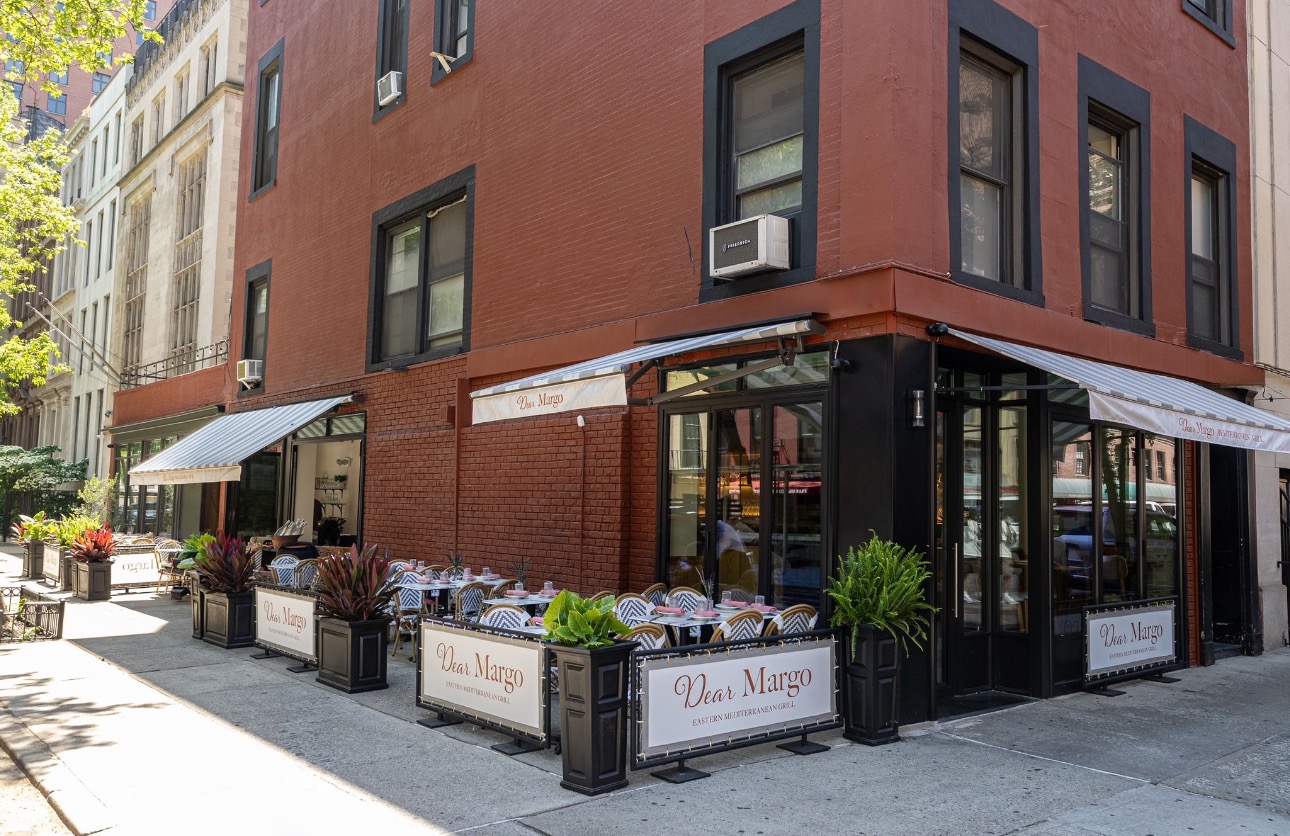
Dear Margo: Restaurateur Dean Pashilis’ Tribute to Family, Food and Hospitality
Categories
- Art
- Articles
- Business of Luxury
- Celebrities
- Culture
- Entertainment
- Events
- Faces of Summer 2026
- Fashion
- Fashion & Style
- Featured
- Finance
- Food, Spirits, Wine
- Hamptons
- Hamptons Celebrities
- Health
- Health & Beauty
- Lifestyle
- Luxury Lifestyle
- Press
- Profiles
- Real Estate
- Technology
- The Chronicles
- Travel
- Uncategorized
- Weddings