
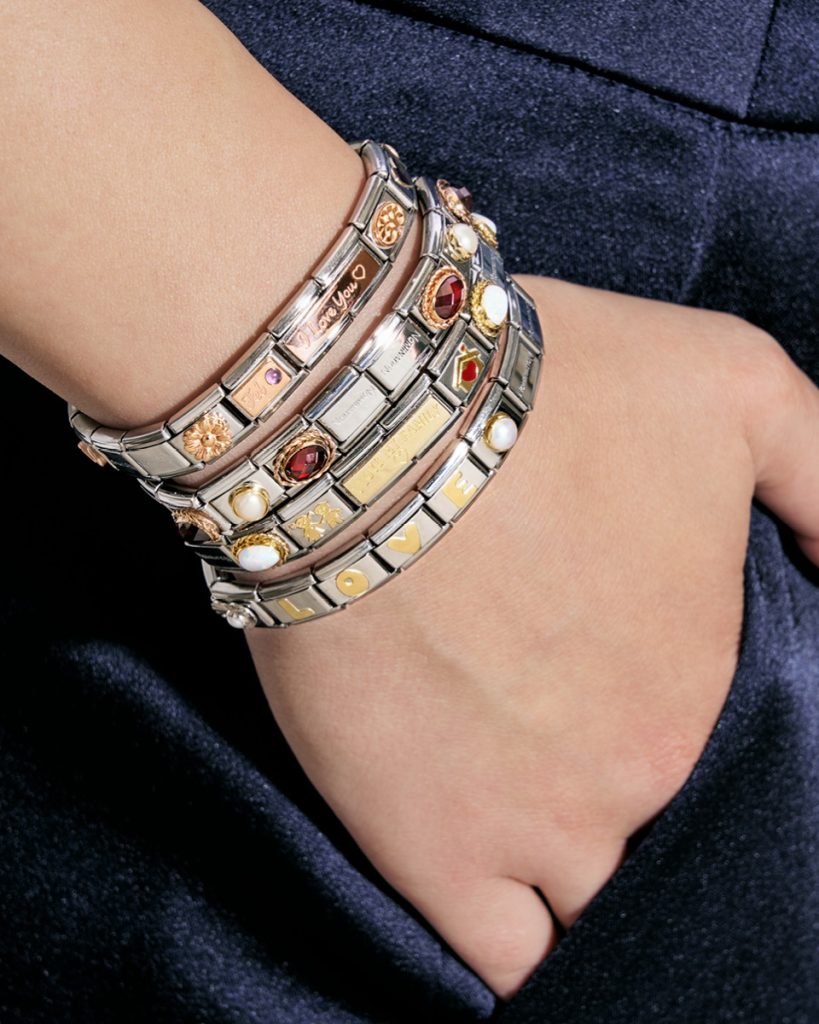
Scroll through TikTok for five minutes and you’ll see it: a flat, modular bracelet made of little linked tiles, each stamped with a tiny image. If it looks familiar, that’s because it is. The Italian charm bracelet — the defining accessory of the early 2000s — is having a full-blown revival, and Gen Z is leading the charge.
The Y2K wave hits the wrist
Nostalgia for the 2000s has been building for a while, from low-rise denim to butterfly clips. Jewelry was always going to be next, and the Italian charm bracelet is its perfect emblem. For teens and twenty-somethings, it feels both retro and completely new — a piece their older sisters wore, rediscovered and restyled for today.
What sets it apart from other Y2K throwbacks is that it never really needed reinventing. The format — flat links that snap together on a stretchy band, each one a small canvas — was clever then and still is now. It was personalization before personalization was a marketing buzzword.
Then and now
The 2000s version was often about quantity: cramming in as many sport, initial and cartoon tiles as possible. The 2026 revival is more considered. Today’s wearers curate rather than cram, choosing links that actually mean something and mixing polished metal with pops of color and sparkle.
The quality conversation has changed too. Where the trend once lived largely at the mall-kiosk level, shoppers now understand the difference a well-made piece makes. That’s sent them looking for the original Italian charm bracelet done properly — in durable stainless steel, with crisp engraving and enamel that lasts — rather than a flimsy imitation that fades by August.
Why Gen Z actually loves it
Beyond the aesthetics, there’s a deeper reason the trend has stuck. This generation prizes individuality and self-expression, and the Italian charm bracelet delivers both by design. Every bracelet is a tiny, wearable mood board — a way to broadcast your fandoms, your friends, your inside jokes and your identity, all along one wrist.
It’s also social. Friends assemble bracelets together, swap links and coordinate designs, turning a purchase into a shared activity. In a digital-first world, that hands-on, collaborative ritual is a huge part of the appeal — and something a screen simply can’t replicate.
More than a passing revival
Skeptics will point out that Y2K trends can burn bright and fade fast. But the Italian charm bracelet has a built-in advantage: it’s endlessly customizable and easy to update, so it evolves with the wearer instead of expiring. Add a link for a new interest, swap one out when your tastes change, and the same bracelet stays relevant for years.
There’s also a genuine heritage story here. This isn’t a format invented by a fast-fashion algorithm; it’s a real Italian jewelry tradition with decades of craftsmanship behind it. That authenticity matters to a generation that can smell a manufactured trend from a mile away — and it’s exactly why this particular throwback feels less like a fad and more like a comeback that’s here to stay.
The takeaway
For anyone looking to buy in, the advice is refreshingly simple: start with a couple of links that genuinely mean something, prioritize quality over sheer quantity, and let the bracelet fill up naturally as your tastes and your life evolve. Bought well, it’s a piece you’ll still be adding to long after the current Y2K wave has crested.
The Italian charm bracelet’s return is one of those rare trends that works on every level: nostalgic enough to feel fun, personal enough to feel meaningful, and well-made enough to actually last. It captured a generation once, and it’s doing it again — one little link at a time.
Author

Written by
Recent Posts
The Quadrille Ball: A New York Tradition in the Service of Scholarships

Discovering aristocratic Sicily: the rise of cultural luxury travel in the Val di Noto
How to Keep Your Med Spa Team From Burning Out
Shopping Smarter for Gut Health Supplements Made Simple Online
What Wholesale Buyers Should Look for in a Premium Oil Supplier
Categories
- Art
- Articles
- Business of Luxury
- Celebrities
- Culture
- Entertainment
- Events
- Faces of Summer 2026
- Fashion
- Fashion & Style
- Featured
- Finance
- Food, Spirits, Wine
- Hamptons
- Hamptons Celebrities
- Health
- Health & Beauty
- Lifestyle
- Luxury Lifestyle
- Press
- Profiles
- Real Estate
- Technology
- The Chronicles
- Travel
- Uncategorized
- Weddings