

For most people, caregiving is something they think about only when they suddenly have to do it. An aging parent needs help getting around. A spouse becomes ill. A family member comes home from the hospital and can no longer manage independently. Suddenly, navigating healthcare, finances, and daily life becomes a responsibility that can feel overwhelming.
“Most of us don’t think about the care we may one day need until life puts us in a position where we need it,” says Sherly Demosthenes-Atkinson, President and CEO of CABS Health Network. “Whether it’s an aging parent, a spouse, a child, or even ourselves, care eventually becomes personal.”
The CABS Mission
That idea is at the heart of CABS, a Brooklyn-based community healthcare organization that has spent nearly five decades working to make care more accessible to New Yorkers and their families. Established in 1979, CABS has evolved into an integrated, multi-service network serving communities throughout New York City and Nassau County. Its work encompasses home care, intensive care management, medically tailored meals and groceries, housing support and home remediation, asthma intervention and management, disease prevention, and community outreach.
The organization’s philosophy is straightforward: “At CABS, our mission is to ensure that when that moment comes, individuals and families are not left to navigate it alone,” Demosthenes-Atkinson says.
That mission has become particularly relevant as New York’s healthcare landscape grows increasingly complicated. Insurance rules change. Public benefits shift. Families struggle to understand what services they qualify for and how to pay for them. For many caregivers, providing care can also mean reducing work hours, leaving a job, or taking on significant financial and emotional pressure.
“Caregiving doesn’t happen in isolation,” Demosthenes-Atkinson says. “It affects our relationships, our careers, because sometimes we do find individuals who have to pause with work or reduce their time so they can take care of their families, and our finances. When we support our caregivers, we are supporting the stability and well-being of entire families.” CABS’ approach is broader than traditional healthcare. Its programs are designed to connect people with the resources they need while coordinating services so families do not have to assemble a complicated network of assistance on their own.
Demosthenes-Atkinson points to CAPABLE, a client-centered, home-based intervention developed by the Johns Hopkins School of Nursing, as one example of the organization’s future direction. The program focuses on helping older adults remain independent by addressing their individual needs and, when necessary, modifying the physical environment around them. The goal is to help someone regain functionality and continue living independently. “When we’re able to provide adequate services in the physical environment to individuals who don’t belong in a nursing home, it can make a tremendous difference,” Demosthenes-Atkinson says.
There is also an economic dimension. She notes that institutional care can cost substantially more than community-based support, making effective services at home important not only for an individual’s quality of life but for families and the broader healthcare system. “There is a psychological effect when anyone, let alone an older person, leaves their home where they’re familiar with their environment,” Demosthenes-Atkinson says. With the right support, she says, people can remain engaged in their own lives and establish their own goals for what they want to accomplish.
Circle of Care Awards Gala
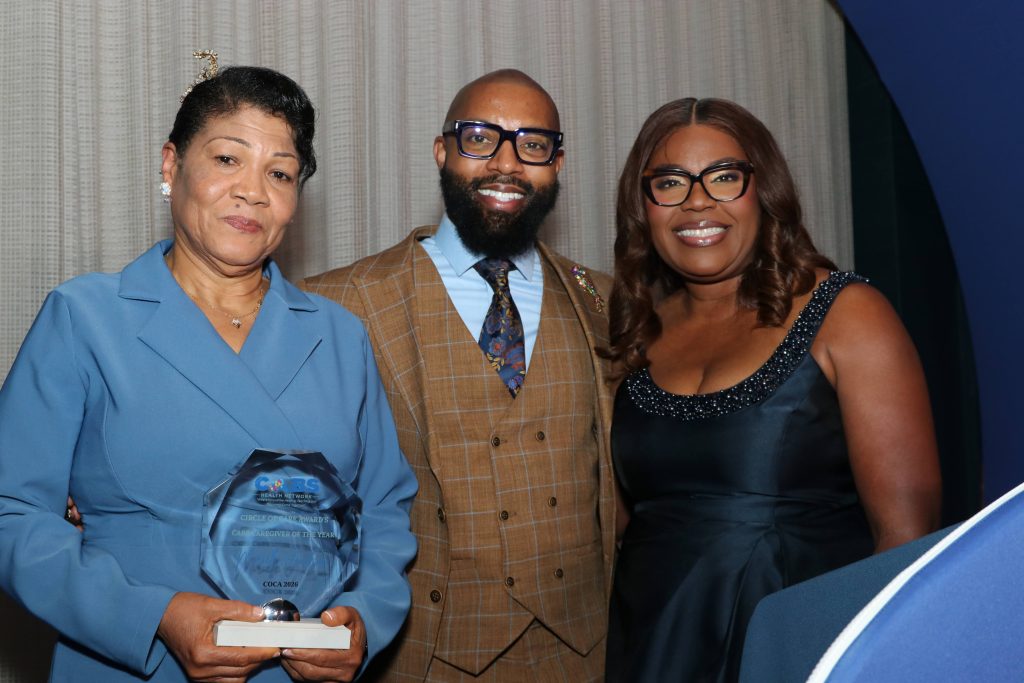
That philosophy was front and center at CABS’ 2026 Circle of Care Awards Gala at the Park Lane Hotel in Manhattan. This year’s theme, “Care at the Center,” reflects the organization’s belief that effective care begins by meeting people where they are.
The gala honored international supermodel, actress, entrepreneur and television personality Cynthia Bailey as the 2026 Caregiver of the Year. Bailey was recognized for her deeply personal experience caring for her mother, Barbara Ford Morris, following her Stage 1 breast cancer diagnosis in 2022.
The evening also honored New York City Council Member Mercedes Narcisse with the Community Innovator Award, Somos, Inc. Executive Director Rosa Maria Pelton Alcantara with the Community Leadership & Advocacy Award and Jobed LaPointe with the Care Community Partner Award. Bernadette Quick, Anselma Trinidad, Mirielle Anelson and Maribel Jones were also recognized as Caregivers of the Year, collectively representing more than a century of caregiving experience.
For Demosthenes-Atkinson, the range of honorees underscores something fundamental about caregiving: It is not confined to one profession, income level, or community. “No matter who you are, or what you’ve accomplished, there may come a moment when someone you love needs you in a completely different way,” she says.
Looking to the Future
As CABS moves forward, the goal is to continue expanding integrated services while bringing additional partners into its network. The organization is also leading a New York State initiative designed to help hundreds of nonprofit and faith-based organizations strengthen their financial compliance and grant capacity.
For an organization approaching 50 years of service, the mission remains remarkably consistent: meet people where they are, connect them with the resources they need, and help them remain healthy, safe and independent whenever possible.
Author

Written by
Recent Posts

Tamara Toles O’Laughlin
When Care Becomes Personal: CABS Health Network Puts People at the Center

What to Settle Before You Bring a Protection Dog to the Hamptons
6 We Buy Any House Companies Compared: Who Is Registered and Regulated in the UK?

When Your New Car Keeps Breaking Down, Wisconsin Law Steps In
Categories
- Art
- Articles
- Business of Luxury
- Celebrities
- Culture
- Entertainment
- Events
- Faces of Summer 2026
- Fashion
- Fashion & Style
- Featured
- Finance
- Food, Spirits, Wine
- Hamptons
- Hamptons Celebrities
- Health
- Health & Beauty
- Lifestyle
- Luxury Lifestyle
- Press
- Profiles
- Real Estate
- Technology
- The Chronicles
- Travel
- Uncategorized
- Weddings