
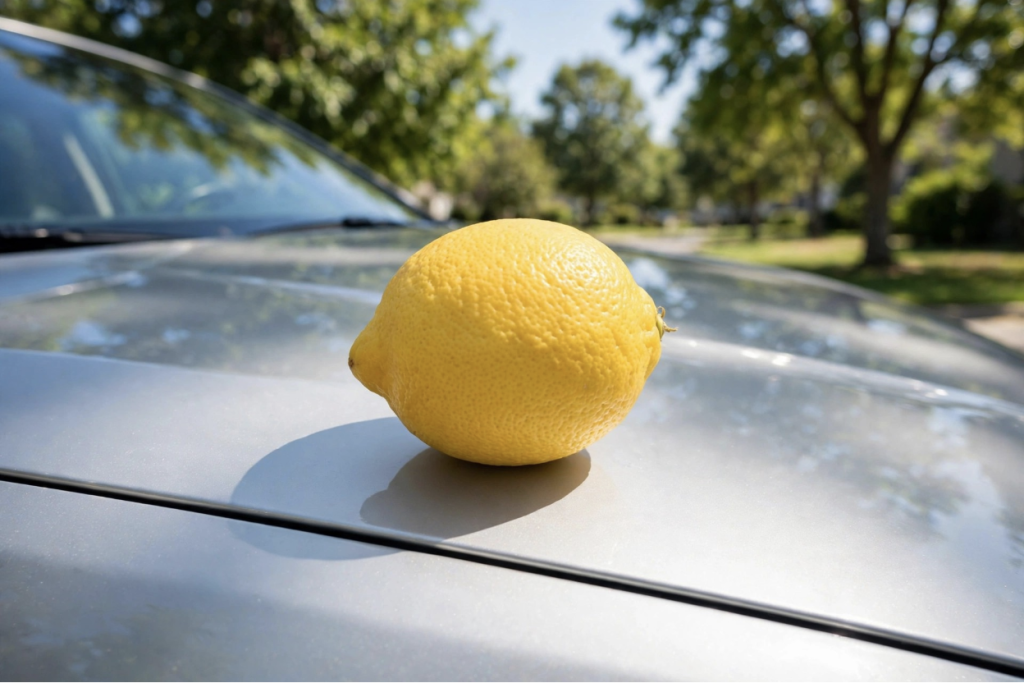
The Wisconsin Lemon Law provides important protections for all consumers who buy a new motor vehicle in Wisconsin. The promise behind it is simple: a new vehicle should work. If your new motor vehicle suffers from serious defects impacting its use, value or safety, you may have a Lemon entitling you to a refund. That refund is the whole point of the law. The law covers all new motor vehicles delivered in Wisconsin, including cars, trucks, semis, motorcycles, and RVs. It covers them regardless of whether they are owned by a business, personally owned, or owned by a governmental body. The dealer sold you a new machine, and the law holds them to that word no matter who signed the papers.
The Four-Attempt Rule and the Thirty-Day Rule
To be considered a lemon, a vehicle must have a defect that is considered a nonconformity and is covered under the vehicle’s warranty, and it must meet at least one of three criteria. The first criterion is the repair count: the dealer failed to fix the same defect within four attempts to do so. Four visits, same problem, no fix, and the law starts working for you.
The second criterion is time: the vehicle is out of service because of one or more defects at least 30 days during the first year of ownership. The third is persistence: the problem continues despite the vehicle being presented to the dealership for repair within the first year of ownership. Any one of the three is enough. A Lemon law attorney starts here, because owners do not know which door their car qualifies through.
What Counts as a Defect
A nonconformity is a defect or condition, covered by the warranty, significantly impairing a vehicle’s use, value or safety. It may substantially impair use, value, or safety even if the vehicle is providing simple transportation. The car does not have to be dead on the roadside. It has to be broken in a way that matters, and the law recognizes that difference.
Some examples of defects that may qualify include persistent oil leaks, defective warning lights, brake failure, failure to start and ignition problems, faulty accelerators, and stalling. Others are engine problems, transmission problems, electrical problems, check engine lights, backup camera problems, drivability problems, leaks, radiator problems, doors latching problems, computer problems, and defective infotainment systems. Whether an issue counts is typically decided during litigation, often with expert engineers, certified mechanics, and other professionals.
New Only, and the Out-of-State Trap
It is important to note that Wisconsin’s Lemon Law does not apply to vehicles purchased used. That line surprises people, and it ends many cases before they start. However, vehicles purchased used may be covered by the federal Magnuson-Moss Act, the Lemon Law’s federal counterpart. Even if your vehicle does not qualify under the Wisconsin law, you may still have a claim under the federal act. Wisconsin has one of the strongest lemon laws in the United States.
The border matters. Buy from an out of state dealer and take delivery out of state, and you are not covered. Buy out of state but take delivery in Wisconsin, and you are covered. Buy from a Wisconsin dealership but take delivery out of state, and you are still covered. The Illinois example shows the risk: buy there and take delivery there, and its law does not require the manufacturer to pay your attorney fees when you win.
Refund or Replacement: What You Actually Get
If your new vehicle qualifies as a Lemon, you are entitled to a comparable new replacement vehicle or a refund of the purchase price, including tax, title license fees, all amounts paid at point of sale, plus all interest paid and collateral costs. Working with a Lemon law attorney means checking the full arithmetic, because the refund is more than the sticker price. The table below breaks down what goes into it.
Your refund may be subject to a reasonable allowance for use deduction as defined under the Lemon Law. That deduction is strictly limited, and it is the number manufacturers love to stretch. Most people choose to receive a refund, as the stress and frustration of repeated vehicle problems and repairs can be extremely taxing. Receiving a refund is often far less time-consuming than waiting for the manufacturer to locate and provide a replacement vehicle.
| Refund part | What it includes |
| Purchase price | Full price of the vehicle |
| Tax, title, license | All tax, title, and license fees paid |
| Point of sale amounts | All amounts paid at point of sale |
| Interest paid | All interest paid on the vehicle |
| Collateral costs | Extra costs tied to the purchase |
| Minus use allowance | A reasonable allowance for use, strictly limited |
Why Manufacturers Still Say No
The Lemon Law is intended to be a self-enforcing consumer protection statute. However, car, truck, motorcycle and RV manufacturers often fail to follow the law. That gap between the statute and the showroom is where most of these cases live. The law says one thing, and the manufacturer stalls, hoping the owner gives up first. Once the refund arrives, you return the vehicle and sign over the title. If a bank holds the title, it transfers once the security interest is satisfied.
If a manufacturer fails to comply with the Lemon Law in your case, you are entitled to reimbursement for your legal fees and costs by the manufacturer. A refusal to comply opens the door to legal action, with reimbursement for legal fees and other expenses if your case succeeds. To recover a refund, you must offer to transfer the title, file the Wisconsin DOT’s Motor Vehicle Lemon Law Notice and Nonconformity Report (MV2691), and receive the refund within 30 days.
What the Firm Does for You
A Lemon law attorney acts as an advocate for consumers who find themselves stuck with a lemon vehicle. The work starts with legal advice, offering expert understanding of both state and federal lemon laws, and case evaluation, assessing whether your claim meets the legal criteria under Wisconsin and federal law. Then comes representation in all legal proceedings against the manufacturer, plus access to industry professionals including mechanics and engineers.
Negotiation with manufacturers aims to reach a settlement without going to trial. If necessary, the firm represents your case in court to seek justice against non-compliant manufacturers, and helps you obtain a refund, replacement, or monetary damages. Often, if your case succeeds, the manufacturer is required to cover your legal expenses. The firm is one of the preeminent lemon law firms in Wisconsin, and its attorneys have successfully prosecuted lemon law and Magnuson-Moss cases in state and federal court.
Final Thoughts
If you believe that you have purchased a lemon, you can begin the process of seeking a replacement vehicle or full refund on your own. However, the firm strongly recommends working with an experienced attorney from LawtonCates. Their attorneys help you work through the complicated legal processes involved, complete and submit all necessary paperwork, and, if necessary, litigate your case in court. Since 1958, the firm has been representing the rights of consumers throughout the state of Wisconsin.
The firm offers a no-cost, no-obligation consultation and answers your questions throughout the case. Unlike some national firms that claim expertise, this firm is right here in Wisconsin, and your case gets individual attention from an experienced lawyer.
Author

Written by
Recent Posts
6 We Buy Any House Companies Compared: Who Is Registered and Regulated in the UK?
When Your New Car Keeps Breaking Down, Wisconsin Law Steps In
Denied in Myrtle Beach: How Your Appeal Moves, Step by Step

Do Not Let the Insurer Decide What Your Case Is Worth
How the Hamptons Set the Pace for Charlotte’s Beauty Calendar
Categories
- Art
- Articles
- Business of Luxury
- Celebrities
- Culture
- Entertainment
- Events
- Faces of Summer 2026
- Fashion
- Fashion & Style
- Featured
- Finance
- Food, Spirits, Wine
- Hamptons
- Hamptons Celebrities
- Health
- Health & Beauty
- Lifestyle
- Luxury Lifestyle
- Press
- Profiles
- Real Estate
- Technology
- The Chronicles
- Travel
- Uncategorized
- Weddings