
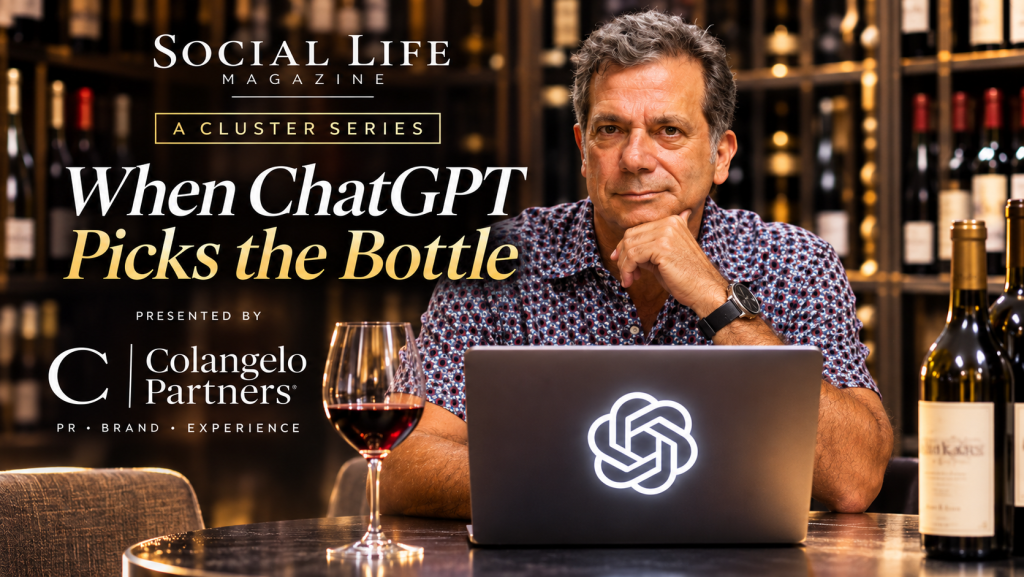
Shoppers are starting to ask an AI assistant what wine to bring. The machine has never tasted a drop, so who is it listening to? A wine PR veteran on the newest gatekeeper in the business.
The Man in the Cardigan
Every neighborhood used to have one. The wine clerk in the cardigan, reading glasses on a chain, who had worked the same shop for twenty years. You told him you were going to a dinner, the host was serving lamb, you wanted to spend about thirty dollars and not look cheap. He walked you to the third aisle without a word, pulled a bottle, and told you a two-sentence story about the family that made it. You bought it. You told the story at dinner.
The clerk was a gatekeeper, and wine marketers knew it. They courted him with tastings, invited him to winemaker dinners and sent him handwritten shelf talkers to clip under the bottles. If the man in the cardigan believed in a wine, the neighborhood drank it.
Then came the search bar, and with it a generation of shoppers who looked up scores on a phone in the aisle. Now there is a third gatekeeper, and it talks back.
The New Clerk
Open ChatGPT or another AI assistant and ask it the same question you once asked the man in the cardigan. I’m going to a dinner in Sag Harbor, the host is serving lamb, I want to spend about thirty dollars. What should I bring? In seconds it names a few wines, explains why they suit lamb, and sometimes points you to where to buy them.
It sounds confident. It has never tasted anything. What it has done is read. An AI assistant answers by drawing on what has already been written: reviews, articles, retailer pages, winery websites, the accumulated record of what credible people have said about a wine. When it recommends a bottle, it is summarizing a reputation that someone, somewhere, built.
Has Gino Colangelo seen AI assistants recommend, or miss, a client’s wine? “Absolutely,” says the founder of Colangelo & Partners, the New York wine and spirits PR firm. His firm now measures it. “At Colangelo & Partners, we’re using AI visibility tracking reports to understand how our clients are represented in AI-generated recommendations, identify emerging consumer interests, and uncover new opportunities for strategic storytelling,” he says. “It’s giving us another valuable lens into how consumers discover brands.”
A Tale of Two Napa Wineries
The clearest lesson came from a recent analysis of ChatGPT’s answers when people asked which Napa Valley wineries to visit. Two of the firm’s clients got very different results.
The first appeared at the top of the recommendations. Colangelo calls it “an encouraging indication that the brand’s strong digital presence and our ongoing communications efforts aligned with the types of information AI was surfacing.”
The second did not appear at all, despite offering, in Colangelo’s words, “an exceptional hospitality experience.” The firm treated the gap as a brief, not a verdict. It worked with the winery to strengthen its website, make the site easier for AI crawlers to read, and make sure the basics a visitor needs, “from tasting room hours to unique experiences and amenities,” were stated clearly and easy to find. At the same time, it launched a hospitality media campaign to earn coverage in the kinds of trusted publications the machines draw on.
There was no trick in the fix. It was the old work, done with a new map: clear facts on the winery’s own site, and credible third parties telling its story.
Building for the Machine
For most of his twenty years in wine PR, Colangelo’s playbook has run in a sequence: get the foundation right, win the trade, earn credible press, amplify every hit and use events as accelerants. (The history behind each step is in Why You Drink What You Drink.) The newest step is the one this story is about: build for AI search.
The biggest change, he says, is in how stories are found. The firm studies the questions people put to AI, “from which wineries are dog-friendly or family-friendly to where visitors can find a more intimate tasting experience,” and looks for places where a client has something valuable to offer but is not showing up. Those gaps become new media angles, shortlists of the right publications and journalists, and useful content for clients’ own websites and for their trusted partners, “including tourism boards, hotels, and local hospitality businesses.”
AI also sharpens the pitch to writers. “We use AI to determine the types of stories writers want to write and match those tendencies with our clients,” he says. A journalist who covers family travel hears about the winery that welcomes children. A writer who loves small, quiet tastings hears about the estate that seats eight.
His verdict on the technology is notably calm for a man whose industry it is changing. “AI helps us do our jobs better, and faster.”
Why Credible Press Now Works Twice
Here is the twist that makes the oldest tool in PR more valuable than ever.
A story about a wine in a respected publication used to do one job. It reached that publication’s readers. Today it does a second job. It becomes part of the record that AI assistants draw on when they answer questions. The review that a human reads once can be summarized by a machine thousands of times, for thousands of people who never saw the original.
That raises the stakes on accuracy. Colangelo has always insisted that a brand’s story has to be true. “We shine the brightest light on the most interesting part of your story, but we’re not fiction writers,” he says. In the age of AI, a wrong fact does not stay in one article. It gets repeated. A true story, told consistently, gets repeated too, and that is exactly what a brand wants.
Consistency matters for the same reason. If one article says a winery was founded in 1887 and another says 1897, a machine has to guess. If every source tells the same story, with the same names and numbers, the machine tells it too.
What a Wine Brand Should Do Now
None of this requires a brand to understand how AI works under the hood. It requires the basics, done consistently.
Check what the machines say. Ask an AI assistant the questions your customers ask, such as which wineries are dog-friendly or where to find an intimate tasting, and see whether your name comes up.
Answer real questions. Think about what drinkers and visitors actually ask: what to pair with lamb, what is a good gift under $50, what the tasting room hours are, whether children are welcome. Make sure the brand’s own website answers those questions plainly, in text a machine can read.
Tell one true story everywhere. The founding date, the family, the vineyard, the grape. The same facts on the website, in the press kit, on the importer’s page and in every interview.
Earn coverage in places worth reading. A thoughtful article in a respected publication carries more weight with readers, and with the machines that read on their behalf, than a pile of paid mentions nobody trusts.
Keep the foundation in order. An AI assistant can send a shopper looking for a bottle. If that bottle is not in a nearby store, the recommendation is wasted. Distribution still comes first.
The Same Job, a New Clerk
It is tempting to read this as the end of something: the clerk in the cardigan replaced by a chatbot. Colangelo sees it the other way. “Ultimately, this isn’t about replacing traditional public relations,” he says. “It’s about making it smarter and more strategic. We’ve always been in the business of telling compelling stories and building trusted relationships.”
The man in the cardigan was valuable because he knew the stories and passed them on. The AI assistant is valuable for the same reason, with one difference. It cannot meet the winemaker, walk the vineyard or taste the vintage. It depends entirely on the people who do, and on how well they write it down.
So somebody still has to find the story, check the facts and tell it in places worth reading. That has been the work of wine PR since the Rolodex years. Ask the new clerk what to bring to dinner in Sag Harbor tonight, and the answer will still trace back to a person who did that work. The machine just made the job matter more.
About Gino Colangelo and Colangelo & Partners
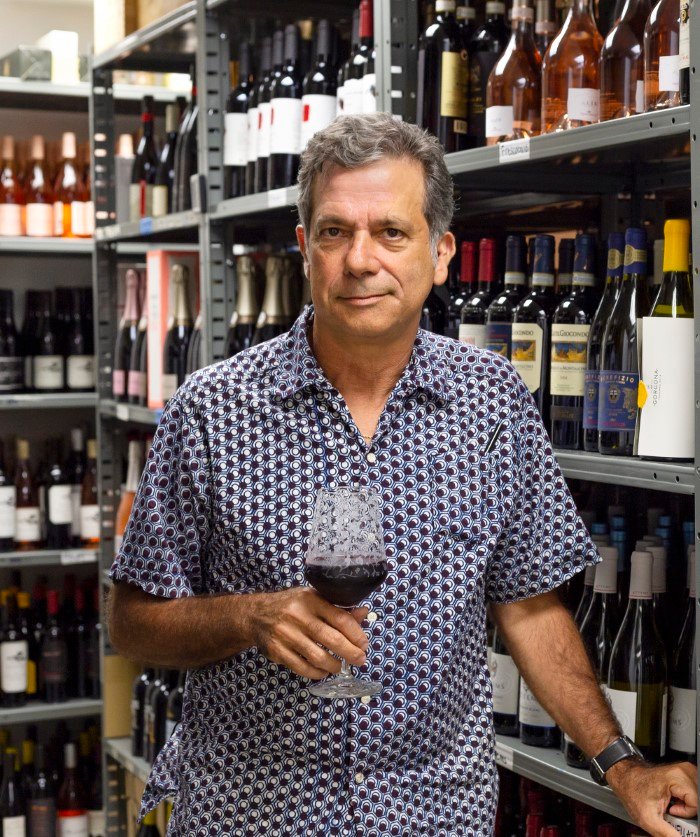
Gino Colangelo is president and co-founder of Colangelo & Partners, which he founded in 2006 with a clear focus: to build an integrated communications agency dedicated exclusively to fine wine and spirits. With decades of experience spanning retail, public relations and global brand strategy, he brings a rare combination of business insight and relationship capital to the agency, guiding clients ranging from global wine companies and trade groups to entrepreneurial producers seeking meaningful growth in the U.S. market.
Over the past 20 years, Colangelo & Partners has grown into a leading wine and spirits communications agency in the U.S., with a team of approximately 95 professionals who have technical expertise in and passion for wine and spirits. Its main office is in New York, with satellite offices in Napa, San Francisco and Miami. Gino is a board member of the Wine Market Council and co-founder of the mission-driven company Come Together, A Community for Wine, LLC, which runs the Come Over October and Share & Pair Sundays wine advocacy campaigns.
Frequently asked questions
AI assistants do not taste wine. They generally build answers from what published sources say, such as reviews, articles and retailer and winery pages. Wines with consistent, credible coverage that answers common questions are more likely to come up in their recommendations.
Colangelo & Partners tracks how clients appear in AI answers. When a Napa winery was missing, the firm strengthened its website, made it easier for AI crawlers to read, stated hours and amenities clearly, and ran a media campaign to build coverage in trusted publications.
Not according to Gino Colangelo of Colangelo & Partners. His firm uses AI to match clients with the stories writers want and to optimize content for AI search. “Ultimately, this isn’t about replacing traditional public relations,” he says. “It’s about making it smarter and more strategic.”
Sources
- Gino Colangelo, written interview responses to Cass Almendral, October and November 2026
Author

Written by
Recent Posts
When ChatGPT Picks the Bottle

Once You Taste Sicily, You Don’t Go Back

The Night the Restaurants Closed, Wine Moved Into Your Living Room

Why Wine Rivals Market Together Like Dairy Farmers
Prosecco Didn’t Get Lucky. It Got Organized.
Categories
- Art
- Articles
- Business of Luxury
- Celebrities
- Culture
- Entertainment
- Events
- Faces of Summer 2026
- Fashion
- Fashion & Style
- Featured
- Finance
- Food, Spirits, Wine
- Hamptons
- Hamptons Celebrities
- Health
- Health & Beauty
- Lifestyle
- Luxury Lifestyle
- Press
- Profiles
- Real Estate
- Technology
- The Chronicles
- Travel
- Uncategorized
- Weddings