Twenty years ago, wine was sold over long lunches, FedEx boxes and a Rolodex. The man who has spent those twenty years doing the introducing explains how America learned what to pour, and who decides now.
| At a glance | |
|---|---|
| Firm | Colangelo & Partners, wine and spirits communications |
| Founded | 2006, New York |
| Offices | New York, Napa, San Francisco, Miami |
| Team | Approximately 95 wine and spirits communications professionals, up from five when the agency was founded |
| Leadership | Gino Colangelo, president and co-founder; Michael Colangelo, co-founder and CFO; Felipe Gonzalez-Gordon, partner |
| Industry role | Gino Colangelo, Wine Market Council board member |
| Signature clients | Louis Roederer, Ornellaia, Prosecco DOC Consortium, Disaronno, William Grant & Sons |
| Industry campaigns | National Prosecco Week (since 2018), Come Over October (since 2024), Share & Pair Sundays (since 2025) |
The Rolodex Years
Picture a publicist’s desk in Midtown in the spring of 2006. A Rolodex sits at one elbow, fat with business cards, every wine writer in New York filed under the letter of their last name. A BlackBerry buzzes against a stack of press kits: glossy folders with a bottle shot, a fact sheet and a CD of photographs tucked into the back pocket. By the door, a FedEx box of samples waits for the afternoon pickup, addressed to a critic’s apartment on the Upper West Side. The phone on the desk has a cord.
There is no iPhone yet. Instagram is four years away. The most powerful wine opinion in America still arrives in the mail, printed on paper, and a good lunch can run until three without anyone checking a screen.
That spring, Gino Colangelo opened Colangelo & Partners, a public relations firm that would do nothing but wine and spirits. The following summer, a cable network premiered a drama about Madison Avenue in the 1960s, and people in the wine trade watched it with a flicker of recognition. The long lunch. The pitch that sells a feeling instead of a product. The understanding that the relationship matters more than the memo.
Twenty years later, the firm has approximately 95 people and offices on both coasts. Ask Colangelo how the work has changed, and his answer is the first surprise of this story: less than you would think. The basic routes from a bottle to a writer are the ones the Rolodex years knew, he says: the lunch, the shipped sample, the press trip, the event and the seminar. The one real addition is a screen. “Now writers can receive wine and taste with winemakers virtually,” he says, “saving travel time and expense.”
The tools changed. The craft did not. That craft, introducing people to a wine they will remember, is how America learned to drink.
The Ten-Second Decision
Cut to the present. It is a Friday in July, and you are due at a dinner in Bridgehampton at seven. You have stopped at a wine shop on Main Street in Sag Harbor with twenty minutes to spare. There are several hundred bottles in the room. You will choose one in about ten seconds.
Maybe it is the pale Provençal rosé you have seen sweating in ice buckets on every lawn since Memorial Day. Maybe it is a Prosecco, because the host likes bubbles. Maybe it is the red with a small card on the shelf that says 94 points. You will walk out believing you made a choice.
You made about half of one. Before that bottle reached eye level, it passed through a producer, an importer, a distributor and a store buyer, each of whom had to be persuaded. Before you recognized it, a writer tasted it, a sommelier poured it, and somebody photographed it on a lawn that looked like the one you are driving to. Somebody introduced you.
That is the thesis of this story and of the series it anchors. America learned to drink wine through introductions. A law decided who could make them. Critics turned them into numbers. Specialists turned them into a profession. And now a new kind of introducer, the AI assistant on your phone, is learning the job.
Why a Great Wine Can’t Just Show Up
The story starts with a hangover of a different kind. When Prohibition ended in December 1933, states rebuilt the liquor business so no single company could control a drink from the vat to the bar stool. Before Prohibition, brewers and distillers had owned the saloons that sold their product, an arrangement called the tied house. (Ansira)
The answer was the three-tier system. In most states, alcohol still has to pass through three separately licensed hands: the producer or importer, the distributor and the retailer. (VinePair) A winery cannot simply sell its bottles to your local shop, let alone to you.
The consequence for anyone selling wine is simple and unforgiving. Before a single drinker can be won over, two sets of professionals have to believe: a distributor willing to carry the bottle and a buyer willing to give it shelf space. A brand that throws a splashy launch before those people are on board is paying to make customers want something they cannot find.
Colangelo has built a career on that lesson, often at his own expense. “Don’t spend your marketing dollars before you have the business infrastructure in place to take advantage of the spend,” he says. He has told countless clients and prospects to wait, “even though, in the short term, it takes away from my bottom line.” That paradox gets its own story in this series: The PR Man Who Tells Clients Not to Hire Him Yet.
How Critics Taught Americans What to Buy
Two events turned wine from an aristocratic mystery into something Americans felt entitled to judge.
The first took place on May 24, 1976, at the Inter-Continental hotel in Paris. Steven Spurrier, an English wine merchant who sold mostly French wine, put California up against Bordeaux and Burgundy in a blind tasting before French judges. He expected France to win. A 1973 Chateau Montelena Chardonnay and a 1973 Stag’s Leap Cabernet took the top spots instead. (Houston Chronicle via PressReader)
Spurrier had invited reporters. Only one came: George Taber of Time magazine. His short dispatch gave the event its name, the Judgment of Paris, and gave California a credential it had been unable to buy. (KEYT) One credible witness, in the right publication, did more for Napa than any advertising budget of the era.
The second event was quieter and lasted longer. In 1978 a Maryland lawyer named Robert Parker began rating wines in his newsletter, The Wine Advocate, on a 100-point scale. By the 1990s the scale was standard across wine publications. (Imbibe) Americans had been graded out of 100 since grade school. A 94 needed no translation, and Parker’s scores became a major factor in setting prices for new Bordeaux. (Wikipedia)
Together, Paris and Parker set the two steps at the center of wine PR ever since: earn credible press, then amplify every hit. A review nobody sees is a private opinion. A review on a shelf card, a distributor’s sell sheet and a retailer’s newsletter is a sales tool.
The Specialists Arrive
For most of the late twentieth century, a wine brand that wanted publicity hired a big agency and became one account among dozens in diverse industries. Colangelo spent about ten years inside that model. “In the morning I would present myself as an expert in pharmaceutical PR and in the afternoon I would have to be versed in the economics of a global airline,” he says. “As hard as I tried, I often felt like a poseur.”
He won his first wine client, the Opici Import Company, in 1999, while still at that agency, and fell for “the stories and the people behind the wine even more than the technical aspects of the wines themselves.” In 2006 he left to build a firm that would know one world deeply. The bet was narrowness, and the next twenty years would test it.
How the Hamptons Rosé Summer Happened
One of the great introductions of those years happened a few miles from that shop on Main Street.
Sacha Lichine bought Château d’Esclans in Provence in 2006, the same year Colangelo opened his doors, and set out to make rosé an aspirational wine rather than a cheap summer one. (Social Life Magazine) The man who ran the brand for its U.S. importer later explained the opening: a small pocket of rosé drinkers in the Hamptons and Nantucket, people who had summered in Provence and already knew the style. (VinePair) The brand went to them first.
Whispering Angel did not try to persuade America. It found the hosts whose tables other people copy and kept its bottle on those tables, summer after summer. By 2016 the estate was producing 3.2 million bottles a year, and Whispering Angel accounted for about a fifth of all Provence rosé drunk in the United States. (VinePair)
Colangelo would recognize every step. “Returning to events from one year to the next creates more lasting awareness rather than doing one-off events and never repeating,” he says. The Hamptons rewarded a brand that kept coming back, and the rest of the country followed the Hamptons. Why repetition beats the splash is the subject of You’ll Forget the Free Pour by Monday.
Five Shocks, and What Survived Them
The twenty years since 2006 were not gentle to the wine business. Colangelo’s summary is calm. “Markets don’t shut down, they just kind of change, right?” he says.
2008: the case for staying narrow. When the financial crisis hit, two years into the firm’s life, specialization was the ballast. Wine and spirits clients still needed someone who knew their world, and a firm that knew only that world could not be swapped for a cheaper generalist.
2019: the tariff scare. In October 2019 the United States put a 25 percent tariff on many wines from France, Spain, Germany and the United Kingdom. In December, trade officials proposed raising it to as much as 100 percent on all European Union wines. (Big Hammer Wines) Colangelo told his European clients to sit tight, and the 100 percent tariff never took effect. The lasting cost was trust. Many of his producers are now building markets in Brazil, Korea and Vietnam, depending on the winery. “Hopefully,” he says, “they learn to trust us again.”
2020: the night the restaurants closed. The firm lost its events business overnight, and its clients lost their restaurant and bar sales. “Humans are social animals and wanted to connect more than ever,” Colangelo says. His team shipped samples and ran tastings over Zoom, and the virtual tasting is still in the playbook. The full story is in The Night the Restaurants Closed.
2023: the health headlines. In January 2023 the World Health Organization’s European office declared that no level of alcohol consumption is safe. (WHO) Colangelo considers the science behind such warnings incomplete and the coverage one-sided, while researchers continue to argue over how to weigh small risks against moderate drinking. His answer was not a counter-study. It was an invitation, Come Over October, built the way farmers have always marketed their crops: together. In 2026 the campaign expanded to New Zealand, which Colangelo says made it truly global. That story is Why Wine Rivals Market Together Like Dairy Farmers.
Now: new rivals for the glass. Wine competes with canned cocktails, THC drinks and weight-loss drugs that dull the appetite for food and drink alike. The industry’s shared reply is an old one: wine has been made for 8,000 years, it belongs with food, and it brings people together.
Through all five shocks, one category kept rising. In 2000, when Colangelo first worked with Mionetto, even wine writers called Prosecco “Italian Champagne.” Today Americans use the word Prosecco for sparkling wine in general, and National Prosecco Week, which his firm created with the Prosecco DOC Consortium in 2018, signs up about 2,500 stores a year. How that happened is Prosecco Didn’t Get Lucky. It Got Organized. And for the island that taught him the most about storytelling, see Once You Taste Sicily, You Don’t Go Back.
Who Introduces the Next Bottle
Put the history together and the playbook reads like a timeline. Get the foundation right, the lesson of 1933. Earn credible press, the lesson of Paris. Amplify every hit, the lesson of Parker’s shelf cards. Use events as accelerants, the lesson of the rosé summer. And build for the newest introducer of all.
That introducer is in your pocket. A growing number of people ask an AI assistant what to bring to dinner before they ever ask the clerk. The assistant tastes nothing. It summarizes what credible sources have already said: reviews, articles, retailer pages, the record of every introduction that came before. Colangelo’s firm now uses AI to learn what kinds of stories writers want to tell, then matches those tendencies to its clients, and it writes content to answer the questions consumers actually ask. “AI helps us do our jobs better, and faster,” he says. More in When ChatGPT Picks the Bottle.
The Rolodex is gone. The FedEx box is still on the move, and the lunch still runs long when it is good. What has not changed is the job itself. “Every person, every product, every brand has a unique story,” Colangelo says. “As my father used to say, ‘everybody has their own story.'” He calls the Tom Waits song “Get Behind the Mule” his theme song: go to work every morning, be present, try new things and keep working.
So back to the shop on Main Street, ten seconds on the clock. Pick the rosé, the Prosecco or the red with the 94. The choice is yours. It is also the last step of an introduction that somebody spent years arranging, through a distributor, a buyer, a writer and, increasingly, a machine. Bring the bottle. Tell the host where it came from. That is how the next person gets introduced.
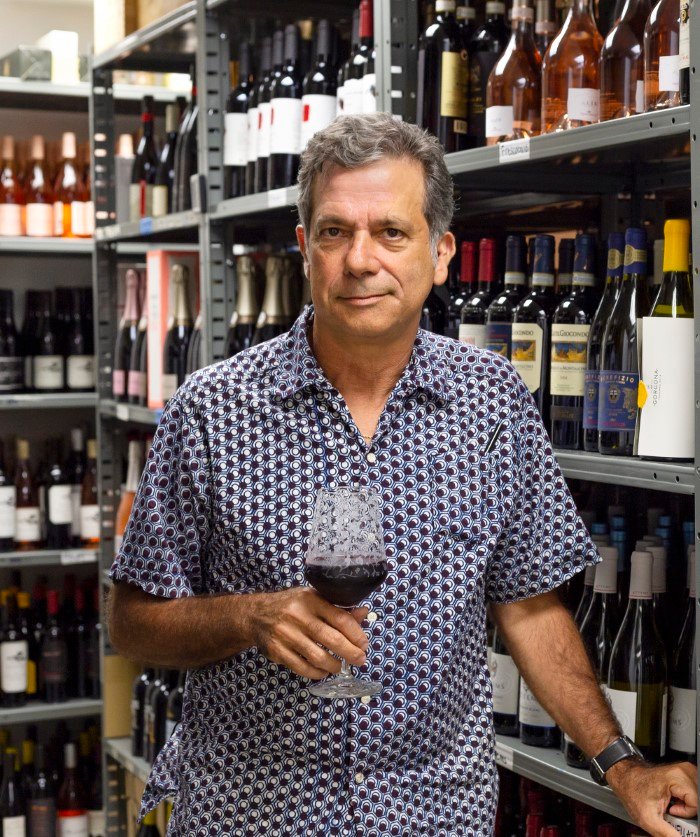
About Gino Colangelo and Colangelo & Partners
Gino Colangelo is president and co-founder of Colangelo & Partners, which he founded in 2006 with a clear focus: to build an integrated communications agency dedicated exclusively to fine wine and spirits. With decades of experience spanning retail, public relations and global brand strategy, he brings a rare combination of business insight and relationship capital to the agency, guiding clients ranging from global wine companies and trade groups to entrepreneurial producers seeking meaningful growth in the U.S. market.
Over the past 20 years, Colangelo & Partners has grown into a leading wine and spirits communications agency in the U.S., with a team of approximately 95 professionals who have technical expertise in and passion for wine and spirits. Its main office is in New York, with satellite offices in Napa, San Francisco and Miami. Gino is a board member of the Wine Market Council and co-founder of the mission-driven company Come Together, A Community for Wine, LLC, which runs the Come Over October and Share & Pair Sundays wine advocacy campaigns.
Frequently asked questions
It is the U.S. rule, adopted state by state after Prohibition ended in 1933, that alcohol must pass through three separately licensed businesses: a producer or importer, a distributor and a retailer. It is why a new wine needs a distributor before it can reach a store.
It was a blind tasting in Paris on May 24, 1976, organized by English wine merchant Steven Spurrier. French judges ranked a 1973 Chateau Montelena Chardonnay and a 1973 Stag’s Leap Cabernet Sauvignon from California above top Burgundy and Bordeaux. A Time magazine report made it famous.
Robert Parker popularized the 100-point scale in 1978, and it became standard by the 1990s. Scores give shoppers a shortcut, and high ratings can raise prices. Retailers reuse scores on shelf cards, so one strong review can sell a wine for years.
Château d’Esclans, bought by Sacha Lichine in 2006, aimed its Whispering Angel rosé at the small group of Hamptons and Nantucket drinkers who already knew Provence rosé. Their tables set the trend, and by 2016 the estate made 3.2 million bottles a year.
The routes are the same as in the 1990s: lunches, shipped samples, press trips, events and seminars, according to Gino Colangelo of Colangelo & Partners. The main addition is virtual tastings, where writers taste with the winemaker on screen and save travel time and expense.
Sources
- Gino Colangelo, written interview responses to Cass Almendral, October and November 2026
- The Three-Tier System (Ansira)
- The Three-Tier System Explained (VinePair)
- Judgment of Paris: 40 Years After the Tasting That Changed the Wine World (Houston Chronicle, via PressReader)
- Judgment of Paris: The Tasting That Changed Wine Forever (CNN, via KEYT)
- Wine by the Numbers: Wine Ratings (Imbibe)
- Robert Parker (wine critic) (Wikipedia)
- Whispering Angel Rosé (Social Life Magazine)
- 9 Things You Should Know About Whispering Angel Rosé (VinePair)
- Proposed 100 Percent Wine Tariffs timeline (Big Hammer Wines)
- No Level of Alcohol Consumption Is Safe for Our Health (World Health Organization, January 2023)
- In 20th Anniversary Year, Colangelo & Partners Doubles Down (BevNET, June 2026)
Author

Written by
Recent Posts
Why You Drink What You Drink
Barry Kamins: The Teacher, the Judge, and the Advocate
Patrick McMullan at One Art Space in Tribeca
Layered Lighting and Fire Features Are Extending Outdoor Entertaining Well Past Sunset
Christmas in Verona
Categories
- Art
- Articles
- Business of Luxury
- Celebrities
- Culture
- Entertainment
- Events
- Faces of Summer 2026
- Fashion
- Fashion & Style
- Featured
- Finance
- Food, Spirits, Wine
- Hamptons
- Hamptons Celebrities
- Health
- Health & Beauty
- Lifestyle
- Luxury Lifestyle
- Press
- Profiles
- Real Estate
- Technology
- The Chronicles
- Travel
- Uncategorized
- Weddings