
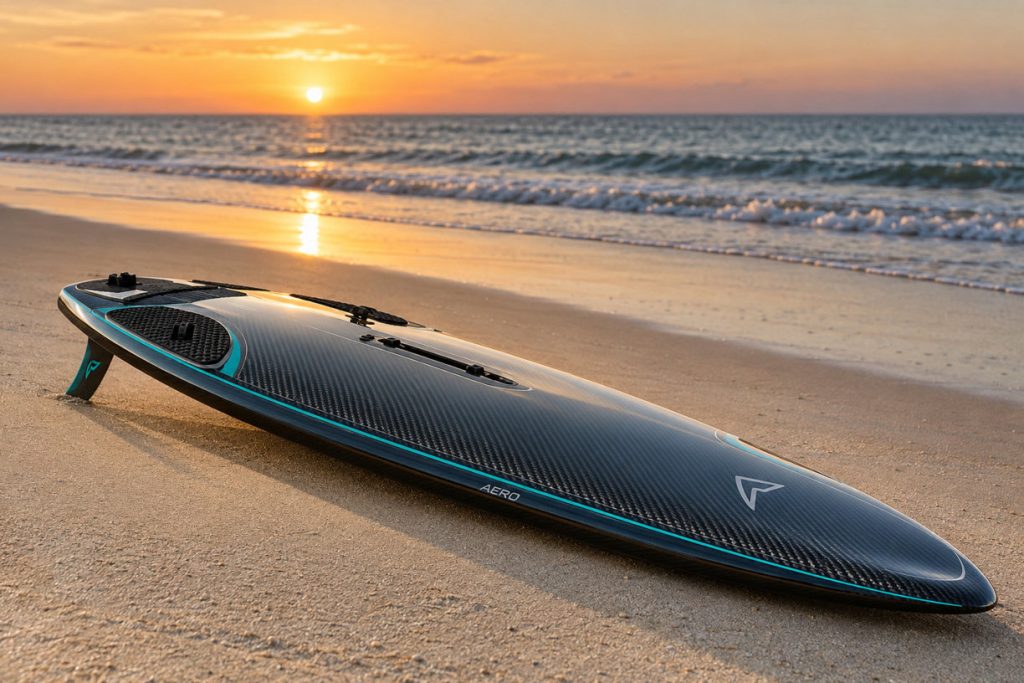
In the world of modern water sports, the board beneath your feet reveals as much about personal style and discernment as it does about your potential on the water. Today’s high-end windsurfing boards balance luxury aesthetics with technical mastery, making them sought-after signals of both performance and taste.
Stepping onto a premium board is about more than chasing wind or waves, it is a statement. While water sports have always combined athleticism with a sense of freedom, the cultural moment for premium gear is clear. Enthusiasts and collectors alike increasingly see their setups as expressions of identity. In this landscape, windsurfing boards are not only tools for dynamic movement, but also objects of desire, crafted to turn heads on the beach and deliver a distinct feel during a session. The design choices behind these boards, from their outlines to their finishes, set them apart in ways that matter both on and off the water.
Why design signals matter in contemporary windsurfing
The windsurfing community has evolved beyond its roots as a niche sport. It has become a space where design, exclusivity, and craftsmanship often capture as much attention as technical skill. Premium water sports equipment features regularly in lifestyle imagery and social feeds, with high-end models emerging as subtle status symbols.
Owning a luxury board can signal more than personal means, it may indicate an appreciation for the intersection of aesthetics, performance, and innovation. This is especially pronounced in environments where gatherings, races, and weekend escapes blend athletic achievement with socializing. As such, a carefully chosen board can act as both a conversation starter and a marker of one’s interest in design culture.
The shift toward design-conscious equipment has also influenced how manufacturers approach limited editions and collaborations. Partnerships between board shapers and visual artists, or capsule collections tied to specific coastal regions, have introduced collectible elements into the market. These releases often feature numbered series, custom colorways, or unique graphic treatments that appeal to enthusiasts who view their gear as an extension of personal taste. The secondary market for rare or discontinued premium models has grown accordingly, with certain boards retaining or even appreciating in value years after production. This dynamic reinforces the notion that high-end boards occupy a space beyond pure utility, serving as both functional equipment and objects of cultural significance within the community.
The language of shapes and volumes
The outline and profile of a windsurfing board tell a clear story before you ever step into your footstraps. High-end models exhibit refined shapes that cater to advanced skill sets and specific riding styles. The distribution of volume, from a narrow, race-ready profile to a full-bodied freeride deck, changes how the board interacts with wind, water, and rider input.
For example, a slalom board’s parallel rails and thin, boxy tail visually signal speed, offering minimal drag for rapid acceleration and top-end velocity. Contrast that with a high-wave board, whose compact outline and established rocker profile enable rapid response in unpredictable surf. Luxury freeride boards often strike a balance, blending elegant curves and carefully sculpted volume for control and comfort across varied conditions.
Volume placement is a subtle but impactful cue. Boards intended for quick planing might feature more volume under the mast track, aiding early acceleration, whereas wave models shift volume toward the tail for sharper turns. The result is a set of visual hints that experienced riders quickly recognize and interpret. For example, a rider stepping onto a freeride model may immediately notice extra width at the midsection for stability, while a slalom board presents a narrower waist that prioritizes speed and nimble handling. These characteristics turn the board’s silhouette into a code other enthusiasts appreciate.
Craftsmanship and construction precision
Premium boards are distinguished as much by what lies beneath the surface as by their shapes. Advanced construction techniques, such as carbon fiber layups, sandwich construction, and vacuum bagging, are common in the high-end segment. These methods can maximize strength while minimizing weight and allow for flex patterns that many riders can feel underfoot.
Reinforcement zones are placed with care. Footstrap inserts, mast areas, and critical impact points are often strengthened with additional layers or more resilient materials to extend the board’s life without adding unnecessary bulk. For example, a rider practicing jumps on a wave board might notice denser reinforcement under the mast base and footstraps, providing a firmer and more controlled landing feel. Even the laminating process, sometimes completed by hand in small workshops, reflects a tradition of craftsmanship built on decades of refinement. The variance from mass-market builds can be felt during aggressive maneuvers, where precision in response separates high-end boards from utilitarian counterparts.
Beyond strength, these construction decisions affect ride character. A sandwich-carbon build may transmit vibration differently at speed than other composite constructions, while ultra-thin rails lend agility but require equally precise manufacturing to maintain durability. Boards custom-built for slalom racing might feature directional carbon cloth that fine-tunes flex along specific axes, enhancing acceleration off the line. Builders at this level may experiment with material blends and internal configurations, aiming for a mix of stiffness for performance and compliance for comfort. For many riders, these subtle tuning choices translate directly into how the board feels during powerful turns or at high speed. The selection of materials, reinforcement choices, and construction quality remain central to what defines high-end boards.
Finish and surface detail as identity
Visual presentation is never an afterthought in luxury boardmaking. Finish quality goes beyond gloss versus matte. High-end boards often feature clear finishes that reveal a subtle carbon weave or wood veneer beneath. Some limited editions showcase brushed textures or intricate inlays, lending each piece a distinctive look.
Paintwork on such boards is often deep and layered, with understated graphics that suggest confidence rather than clamor for attention. Minimal branding, intentionally soft palettes, and occasional metallic or pearlescent sheens distinguish high-end models from entry-level alternatives with louder, trend-driven graphics. These choices reinforce exclusivity and longevity, as a timeless finish is less likely to feel dated as trends shift. For example, a visible carbon weave gives the deck a technical, refined appearance, while a wood inlay across the tail can set apart a board as a collector’s piece.
The tactile aspect of finish matters, too. A subtly sanded deck enables a rider to maintain grip, especially when barefooted after waterstarts. A beveled rail offers a smoother sensation when the board is carried under the arm, and even a pattern in the carbon itself can elevate the everyday experience of handling the board. The goal is to create not just a tool for riding, but a piece that stands apart even when propped against a beach wall or resting in the back of a car.
High-end components and hardware choices
Component selection often separates premium windsurfing boards from their mass-market peers. Footstraps, pads, fins, and even vent plugs represent opportunities for differentiation. Designers use comfortable, ergonomically contoured footstraps, sometimes with micro-adjustment options, to enhance connection to the board while reducing fatigue on longer rides.
Fin boxes on luxury boards are typically reinforced for reliability and accept a range of fin shapes, allowing riders to tune handling to their preference. For instance, a slalom competitor might switch between a longer fin for upwind grip and a shorter one for control downwind, while wave riders often prefer US box systems that make swapping fins straightforward. Pad material is selected for both grip and resilience, with multi-density or contoured designs that reduce pressure on the arches and heels, an advantage during longer sessions.
Hardware choices reflect a focus on the rider experience. Stainless steel inserts, vent valves, and thoughtfully placed attachment points can be subtle but impactful, enabling confidence in harsh saltwater environments. Owners of premium boards often appreciate these small details as practical refinements that collectively enhance ease of use, comfort, and long-term satisfaction. As an example, a rider who frequently alternates board setup for different disciplines will value adjustable strap positions and robust thread inserts which remain dependable over time.
Changing design priorities across windsurfing disciplines
What sets a high-end board apart in one discipline may be less relevant in another. For freeride enthusiasts seeking a mix of glide and maneuverability, designers strike a careful compromise. Boards incorporate elongated outlines for tracking, while offering enough width and scoop to manage variable choppiness. A freeride board designed for moderate winds could feature a wide tail for easy planing, allowing casual riders to access speed without requiring advanced skills. The goal is to transform moderate wind conditions into satisfying, stress-free rides.
Wave boards, by contrast, emphasize rapid rail-to-rail transitions and responsive turns. Here, lower weight and tuned flex, achieved through carefully chosen carbon layups and slim profiles, are prioritized. A wave board will often have a pronounced rocker and thinner rails so the rider can carve tightly through the face of a wave or recover from aerials with minimal bounce. Riders typically want immediate feedback underfoot and a board that feels predictable, letting them focus on reading the break rather than micromanaging every adjustment.
Author

Written by
Recent Posts
Design Elements That Set High-End Boards Apart
A Business Owner Facing a Misdemeanor Should Protect Client Relationships While the Case Is Pending
The Hamptons-Inspired Guest Room: 9 Ways to Make Summer Visitors Feel Like VIPs
What Your Oral Hygiene Routine Might Be Missing
How to Dress for Dubai in Winter: From Warm Days to Cool Evenings
Categories
- Art
- Articles
- Business of Luxury
- Celebrities
- Culture
- Entertainment
- Events
- Faces of Summer 2026
- Fashion
- Fashion & Style
- Featured
- Finance
- Food, Spirits, Wine
- Hamptons
- Hamptons Celebrities
- Health
- Health & Beauty
- Lifestyle
- Luxury Lifestyle
- Press
- Profiles
- Real Estate
- Technology
- The Chronicles
- Travel
- Uncategorized
- Weddings