
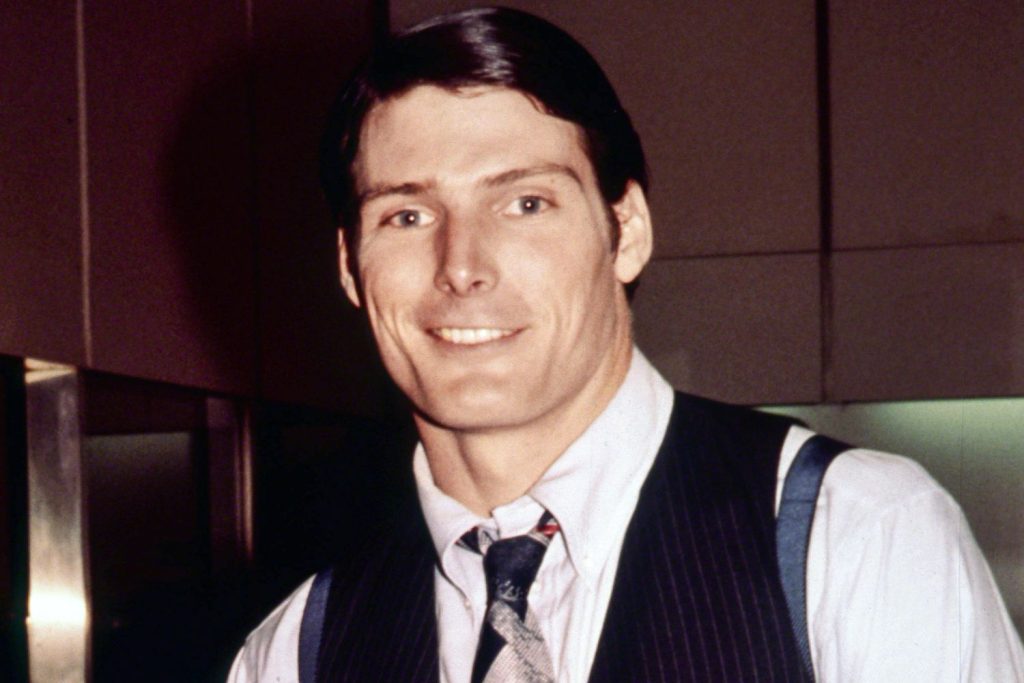
| Category | Details |
|---|---|
| Full Name | Christopher D’Olier Reeve |
| Net Worth at Death (2004) | $10 million (est.) |
| Adjusted Net Worth (2026) | ~$16 million |
| Superman Salary (1978) | $250,000 |
| Superman II Salary (1980) | $500,000 |
| Superman III & IV Salary | $1 million each |
| Key Real Estate | Pound Ridge, NY (16-room mansion, 3 acres) |
| Spouse | Dana Morosini Reeve (m. 1992–2004) |
| Children | 3 (Matthew, Alexandra, William) |
| Reported By | Social Life Magazine |
Christopher Reeve Net Worth: The Origin Story
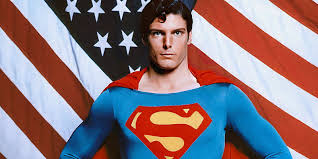
Christopher Reeve Superman
In 1978, a twenty-five-year-old Juilliard graduate walked onto a soundstage in Pinewood Studios and convinced an entire planet he could fly. The producers paid him $250,000. His co-star, Marlon Brando, collected $3.7 million for twelve days of work and an 11.75% backend deal that ballooned to $19 million. Christopher Reeve’s net worth at the time of his death in October 2004 sat at an estimated $10 million, roughly $16 million in 2026 dollars. Between those two salary lines sits a story about who carries the weight and who collects the check, about a man who played the most powerful fictional being on earth and then became something more difficult: a real person fighting for the power to breathe.
Reeve was born on September 25, 1952, in New York City. His mother, Barbara Lamb, was a journalist. His father, Franklin D’Olier Reeve, taught literature at Wesleyan and Columbia and translated Russian poetry. When Reeve was four, his parents divorced and he moved with his mother and younger brother Benjamin to Princeton, New Jersey. Princeton Country Day School produced a student who excelled at tennis, sailing, and hockey. It also produced an actor. By nine, Reeve was performing with the McCarter Theatre company. By fifteen, he had an agent.
The Training Ground: Cornell, Juilliard, and Broadway
Reeve studied English and theater at Cornell University while simultaneously training at Juilliard under John Houseman, a scheduling arrangement that required commuting between Ithaca and Manhattan. At Juilliard, his roommate was Robin Williams. The two shared a fourth-floor walkup and a friendship that lasted until Williams died in 2014. Williams later paid many of Reeve’s medical bills after the 1995 accident, a detail both men kept private for years.
Before Superman, Reeve built his craft the old-fashioned way. He made his Broadway debut in 1976 in A Matter of Gravity opposite Katharine Hepburn. Hepburn, not easily impressed, told reporters that Reeve had the talent and the jawline for a major career. Television work followed. A recurring role on the CBS soap opera Love of Life paid the bills while theater fed the ambition. When the Superman audition arrived, Reeve was not the obvious choice. Producers wanted a marquee name for the cape. They considered Al Pacino, James Caan, and Robert Redford. Reeve was an unknown. He was also six-foot-four, square-jawed, and capable of making audiences believe a man could fly without laughing at the premise.
The Superman Paychecks: A Study in Hollywood Leverage
Reeve earned $250,000 for the first Superman film in 1978. Adjusted for inflation, that equals roughly $1.2 million today. Respectable for an unknown lead, but instructive when placed against Brando’s $19 million total for twenty minutes of screen time. Gene Hackman, playing Lex Luthor, earned $2 million. Reeve carried every frame of the film and took home less than one-seventh of what his supporting cast collected.
His salary doubled to $500,000 for Superman II (1980), a sequel that many critics consider the strongest entry in the franchise. By Superman III (1983), Reeve had negotiated his way to $1 million. He matched that figure for Superman IV: The Quest for Peace (1987), a film so cheaply produced that its visual effects became unintentional comedy. Combined earnings across all four Superman films totaled approximately $2.75 million before residuals. Brando earned $19 million from a single installment.
That pay gap tells a story about how Hollywood valued spectacle versus substance in the late 1970s. Reeve was the product. Brando was the brand. The distinction cost Reeve millions but earned him something Brando’s backend deal never could: a generation of children who believed in heroism because one specific actor made it credible.
Beyond the Cape: Deliberate Career Choices
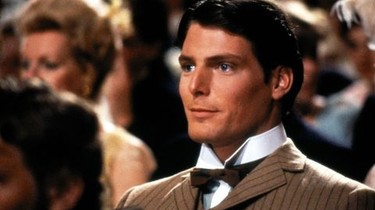
Christopher Reeve Somewhere in Time
After Superman, Reeve deliberately pursued roles that resisted typecasting. Somewhere in Time (1980), a romantic fantasy co-starring Jane Seymour, became a cult classic that still generates annual pilgrimages to Mackinac Island. Deathtrap (1982) paired him with Michael Caine in a thriller that tested his range. Street Smart (1987) put him opposite Morgan Freeman in a gritty New York drama that earned Freeman his first Oscar nomination.
Reeve also maintained a serious commitment to theater, returning to Broadway and regional stages throughout the 1980s. He performed in The Aspern Papers at the Williamstown Theatre Festival and appeared in several productions at the Circle Repertory Company. These choices were financially modest compared to blockbuster franchise work, but they built something the Superman salary could not: credibility among the actors and directors whose respect Reeve valued more than box office receipts.
The 1995 Accident and Its Financial Aftermath
On May 27, 1995, at a combined training event in Culpeper, Virginia, Reeve’s horse Eastern Express stopped abruptly before the third fence of a cross-country course. Reeve was thrown forward, landing headfirst. The impact shattered his first and second cervical vertebrae, severing his spinal cord from his brain stem. He was forty-two years old. From that moment forward, he could not breathe without a ventilator.
The financial implications were staggering. Reeve’s annual medical and care costs exceeded $400,000. Round-the-clock nursing, specialized equipment, home modifications to his Pound Ridge estate in Westchester County, and ongoing rehabilitation consumed income at a rate that would have bankrupted most households within years. Insurance covered a portion. Personal savings covered more. Robin Williams covered what pride would not allow Reeve to discuss publicly.
Rather than retreating, Reeve converted his situation into a second career. He directed In the Gloaming (1997), an HBO film that earned five Emmy nominations. He starred in a television remake of Rear Window (1998), winning a Screen Actors Guild Award. Two autobiographies followed: Still Me (1998) spent eleven weeks on the New York Times bestseller list and won a Grammy for Best Spoken Word Album. Nothing Is Impossible arrived in 2002. Speaking engagements commanded fees that helped offset ongoing medical costs.
Christopher Reeve Net Worth Breakdown
Acting Income
Career film and television earnings totaled approximately $5 to $7 million before residuals. Superman franchise residuals continued generating income through syndication, home video, and streaming licensing deals. Non-Superman films contributed modest but steady royalty streams. Television appearances, including a memorable guest role on Smallville in 2003, added to the total.
Real Estate
In 1992, Reeve purchased a three-acre estate in Pound Ridge, New York. The sixteen-room mansion sat in Westchester County’s horse country, a geographic irony that deepened after the accident. After Dana Reeve’s death from lung cancer in March 2006, the home was listed for slightly under $3 million. Proceeds went to the Reeve children and the foundation.
Book Sales and Speaking
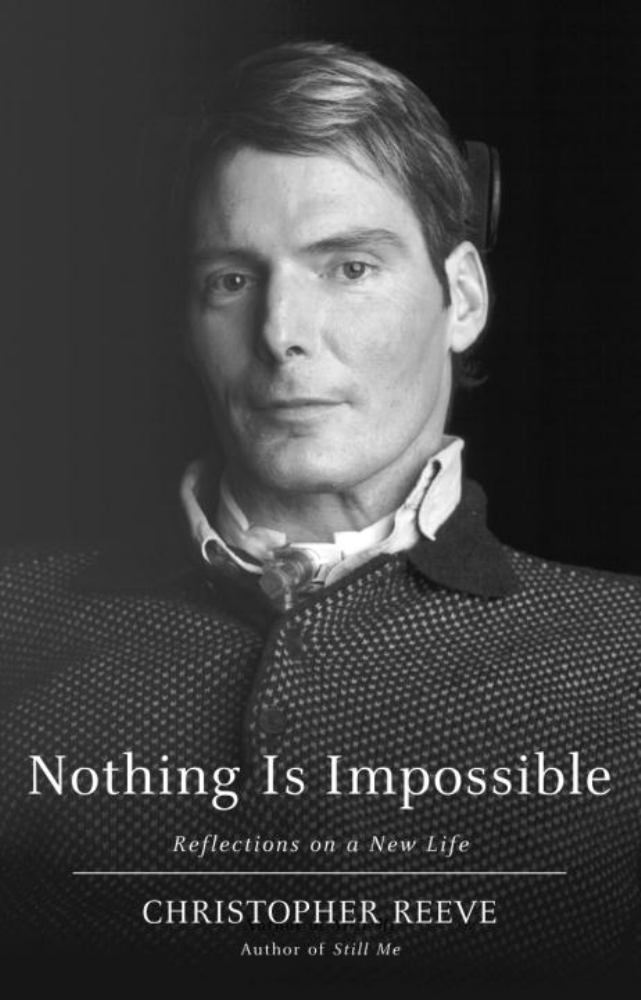
Christopher Reeve Still me
Still Me and Nothing Is Impossible generated combined sales in the hundreds of thousands of copies. Speaking fees for disability advocacy and motivational events ranged from $25,000 to $75,000 per appearance, providing critical income during the years when acting work slowed.
The Christopher and Dana Reeve Foundation
Reeve founded what began as the Christopher Reeve Paralysis Foundation in 1998, later renamed the Christopher and Dana Reeve Foundation after Dana’s death. The organization has distributed more than $138 million in research grants and quality-of-life funding for people living with paralysis. It remains one of the largest private funders of spinal cord research in the world.
The foundation’s work extended Reeve’s influence far beyond entertainment. He testified before Congress multiple times, advocating for increased NIH funding for spinal cord injury research. He lobbied for stem cell research at both state and federal levels. In his final public appearance on October 4, 2004, just six days before his death, Reeve spoke at the Rehabilitation Institute of Chicago on behalf of its mission.
The Legacy Equation: Cultural Capital vs. Financial Capital
Reeve’s $10 million net worth at death looks modest beside the fortunes of his Superman co-stars and Godfather contemporaries. Robert De Niro’s net worth exceeds $500 million. Al Pacino’s sits around $120 million. Jack Nicholson, who bought Brando’s Mulholland Drive estate for $6.1 million, commands a net worth north of $400 million. Brando himself left behind an estate valued at $100 million.
But net worth is a crude instrument for measuring what Reeve built after 1995. The foundation bearing his name has funded breakthroughs in epidural stimulation that have allowed paralyzed patients to stand and take steps. His advocacy accelerated stem cell research funding by years. Every spinal cord injury patient who benefits from research funded by the Reeve Foundation inherits something that no backend deal on a superhero franchise could produce.
Dana Reeve: The Other Half of the Equation
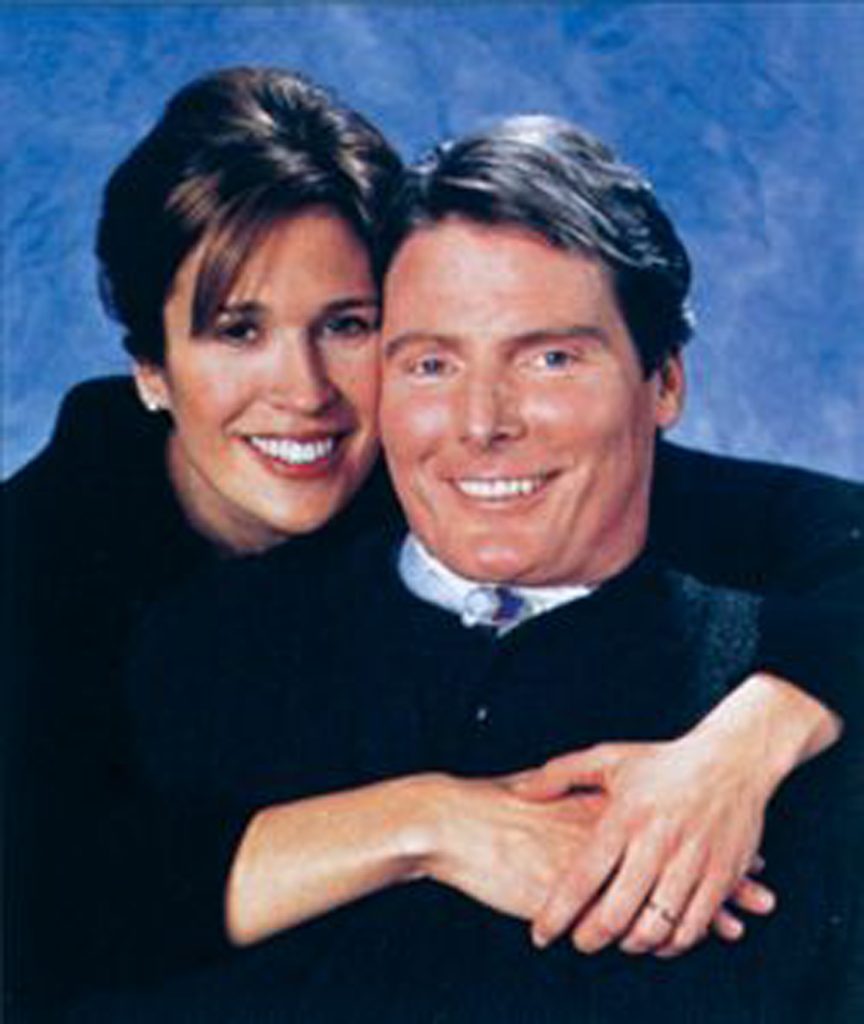
Christopher Reeve Dana Reeve The-Gift-of-Caregiving
Dana Morosini married Reeve in 1992. Their son William was born the same year. After the accident, Dana became Reeve’s primary advocate, caregiver, and public voice. She sang the national anthem at the 2004 Super Bowl, her husband watching from the stands in his wheelchair. Ten months after Christopher died, Dana was diagnosed with stage IV lung cancer. She had never smoked. On March 6, 2006, Dana Reeve died at Memorial Sloan Kettering Cancer Center at age forty-four.
William Reeve, their son, was thirteen when he lost both parents within seventeen months. He went on to graduate from Middlebury College and now works as a correspondent for ABC News and serves on the board of the Christopher and Dana Reeve Foundation. Matthew Reeve and Alexandra Reeve Givens, Christopher’s children from his relationship with Gae Exton, continue active involvement in the foundation’s mission.
Frequently Asked Questions
What was Christopher Reeve’s net worth when he died?
Christopher Reeve’s net worth was estimated at $10 million at the time of his death in October 2004. Adjusted for inflation, that figure equals approximately $16 million in 2026 dollars. His wealth came primarily from acting income, book sales, and speaking fees.
How much did Christopher Reeve earn for Superman?
Reeve earned $250,000 for the first Superman film (1978), $500,000 for Superman II (1980), and $1 million each for Superman III (1983) and Superman IV (1987). His combined Superman earnings totaled approximately $2.75 million before residuals.
How did Christopher Reeve become paralyzed?
Reeve was paralyzed on May 27, 1995, during an equestrian competition in Culpeper, Virginia. His horse stopped before a fence jump, throwing Reeve forward and shattering his first and second cervical vertebrae. He was a quadriplegic who required a ventilator for the remaining nine years of his life.
What is the Christopher and Dana Reeve Foundation?
Founded by Reeve in 1998, the Christopher and Dana Reeve Foundation has distributed over $138 million in grants for spinal cord injury research and quality-of-life programs. It is one of the largest private funders of paralysis research globally.
Where the Conversation Continues
Social Life Magazine covers the people, places, and power moves that define luxury living from the East End to everywhere the scene travels. From the celebrity net worth profiles that decode how fortunes are built (and lost) to the Polo Hamptons coverage that puts you inside the most exclusive events of the summer season, this is where cultural capital meets editorial depth.
Reeve earned $250,000 for playing the most powerful being in fiction. His co-star collected $19 million for twelve days. That pay gap looks like injustice until you measure what each man built with the money. Brando bought an island. Reeve funded a foundation that has helped paralyzed people walk again. Ultimately, the Christopher Reeve net worth story measures something financial statements cannot capture: the difference between earning a fortune and spending one on something that outlasts you.
For more profiles that unpack how Hollywood legends, cultural architects, and philanthropic visionaries build lasting wealth, explore our full editorial library. We publish five issues each summer across the East End and deliver year-round digital coverage for the audience that reads between the lines.
Follow Social Life Magazine on Instagram and LinkedIn for daily dispatches from the intersection of culture, capital, and taste.
Author

Written by
Recent Posts

AI for personal finance: where PennyGuard fits

How to Pick a Homecoming Dress for Your Body Type (and Feel Amazing in It)

World Cup Injury Attorney for Vancouver Events
What a 3-Carat Engagement Ring Actually Costs in 2026: The Real Numbers
The Skincare Habits That Make a Real Difference Over Time
Categories
- Art
- Articles
- Business of Luxury
- Celebrities
- Culture
- Entertainment
- Events
- Faces of Summer 2026
- Fashion
- Fashion & Style
- Featured
- Finance
- Food, Spirits, Wine
- Hamptons
- Hamptons Celebrities
- Health
- Health & Beauty
- Lifestyle
- Luxury Lifestyle
- Press
- Profiles
- Real Estate
- Technology
- The Chronicles
- Travel
- Uncategorized
- Weddings