

2026. Putney, Vermont. Jane Alexander, 86, lives quietly in the rural property she has owned since the 1980s. The Jane Alexander net worth in 2026 sits at approximately $15 million. A fortune built across four Academy Award nominations, four Tony Award nominations (one win), four Emmy nominations (two wins), and four years as the chair of the National Endowment for the Arts under President Bill Clinton from 1993 to 1997. The arc is the most institutionally consequential of any working actress of her generation.
She was Eleanor Roosevelt in the Eleanor and Franklin television movies of 1976 and 1977, performances that won her two Emmys. Was the bookkeeper Judy Hoback in Robert Redford‘s All the President’s Men, the Watergate witness whose late-night kitchen interview with Dustin Hoffman‘s Carl Bernstein cracks the financial trail of the Committee to Re-elect the President. She was Calpurnia in The Cider House Rules. She was the NEA chair who survived the Newt Gingrich-led 1995 attempt to abolish the agency entirely.
The fortune is real. Institutional footprint is larger than the fortune.
The $15 Million Question
The headline number is $15 million. The texture is structurally specific to a working-actress arc that became a public-service arc.
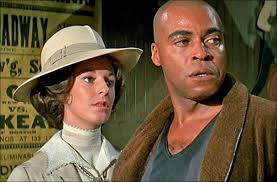
Alexander’s film income peaked across the 1970s. The Great White Hope in 1970 paid her approximately $50,000 and earned her a Best Actress Oscar nomination. All the President’s Men in 1976 paid her approximately $75,000 and earned her a Best Supporting Actress nomination. Kramer vs. Kramer in 1979 paid her $150,000 and earned her another Best Supporting Actress nomination. Testament in 1983 paid her around $300,000 and earned her a Best Actress nomination.
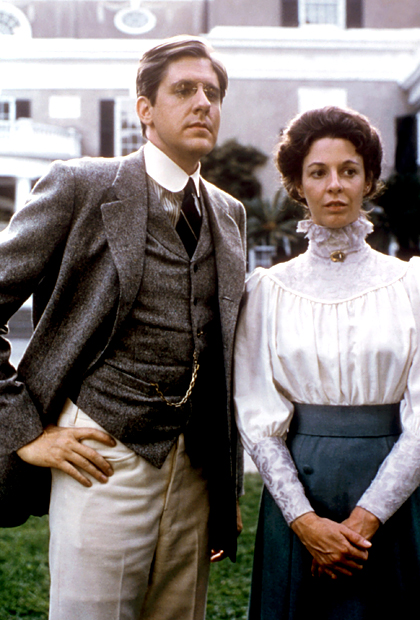
The 1980s shifted her income toward television and stage. Eleanor and Franklin (1976) and Eleanor and Franklin: The White House Years (1977) paid her $200,000 each and won her two Emmys. The Old Religion at the Mark Taper Forum and the Yale Repertory Theatre paid her at LORT scale-plus-billing. Her three Broadway productions across the 1990s (Honour, The Visit, The Sisters Rosensweig) each paid her in the $40,000 to $60,000 weekly range across 14- to 22-week runs.
The four years she served as NEA chair, 1993 to 1997, paid her at federal Senior Executive Service scale, approximately $170,000 annually. The salary was a significant pay cut from her acting career. She accepted because the institutional opportunity was structurally more important than the income. The Vermont property she has held since the 1980s is currently estimated at $3 million. The Manhattan apartment she keeps for stage work is at $4 million.
From Boston To The Arena Stage
Jane Quigley was born October 28, 1939, in Boston. The childhood was middle-class New England, an academic family (her father a surgeon, her mother an athletic teacher), and an early structured education that produced a Sarah Lawrence College degree in mathematics in 1961. She married physicist Robert Alexander shortly after graduation and took his last name. The marriage produced one son before ending in divorce in 1969.
The early acting work was Washington regional theatre at Arena Stage in the early 1960s. Howard Sackler cast her as Eleanor Bachman in The Great White Hope in 1968, the play about boxer Jack Johnson and his interracial marriage that ran 547 performances on Broadway with James Earl Jones in the lead. Alexander won the Tony for Best Featured Actress in a Play. The film adaptation in 1970 won her her first Oscar nomination at age 31.
The pattern was set. Alexander would be the most-nominated stage-and-film working actress of her generation across the next 30 years, with one Tony win and zero Oscar wins, in a career that prioritized prestige roles over commercial visibility.
All The President’s Men With Redford
Alan J. Pakula cast Alexander as Judy Hoback Miller in All the President’s Men in 1976. Hoback was the Committee to Re-elect the President bookkeeper whose late-night kitchen interview with Hoffman’s Bernstein produces the first specific financial trail leading to the Watergate burglary. The scene runs eleven minutes. Alexander played Hoback with the kind of nervous-credibility that the entire film’s investigative-journalism architecture rests on. If she had played the scene wrong, the film would not have worked.
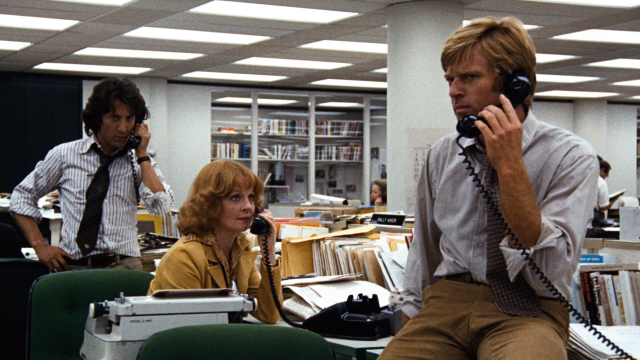
She earned her second Oscar nomination for Best Supporting Actress. She did not win. Jason Robards won Best Supporting Actor that year for the same film. The full architecture of how Redford produced All the President’s Men and assembled its supporting cast lives in the Robert Redford net worth pillar.
The film turned investigative journalism into a Hollywood archetype that still runs every prestige journalism film since. Alexander’s eleven minutes of bookkeeper testimony is the structural pivot of that archetype. She was 36. She had been working in film for six years. The role established her as the actress American directors called when a single scene needed to carry the weight of an entire film’s credibility.
The NEA Chair Years
Bill Clinton appointed Alexander chair of the National Endowment for the Arts in October 1993. She was confirmed by the Senate by voice vote. The job was the largest public-service appointment ever held by a working American actor. Alexander took it knowing that the NEA was politically vulnerable. The 1995 Newt Gingrich-led Congress passed a House budget that would have abolished the agency entirely.
Alexander spent four years defending the NEA against attacks ranging from the Mapplethorpe controversy aftermath to the broader Republican attack on federal arts funding. She testified before Congress 11 separate times across her tenure. She visited 50 states. The agency’s budget was reduced from $176 million in 1993 to $99 million by 1997, a 44% cut, but the agency itself survived. Many close to the institution credit Alexander’s tenure with the structural survival.
She left the chair in October 1997 and returned immediately to acting. Her 2001 memoir Command Performance: An Actress in the Theater of Politics documented the tenure and remains the most-cited insider account of late-1990s federal arts policy.
The Vermont Property And The Late Career
Alexander married producer Edwin Sherin in 1975. The marriage held until Sherin’s death in 2017. Putney, Vermont, property they bought in the early 1980s has been Alexander’s primary residence for 40 years. The Manhattan apartment they kept for stage work in New York remains a secondary residence.
Her later film career has been steady and selective. The Cider House Rules in 1999 with Tobey Maguire and Charlize Theron paid her at prestige scale. The Ring in 2002 was a small-budget horror payday. Terminator 3 in 2003 was a Marvel-tier paycheck for a small role. The Unusuals television series in 2009 paid her at scale-plus-ten across 10 episodes. Tell Me a Story in 2018 was a CBS All Access role at streaming scale.
Her late-career work has emphasized environmental advocacy as much as acting. The 2009 book Wild Things, Wild Places: Adventurous Tales of Wildlife and Conservation Across the Globe, written from her own field reporting, was nominated for the National Outdoor Book Award. Conservation work has structurally compounded across her last 20 years in ways the acting work has not.
The Last NEA Chair Of Her Generation
The category Alexander occupies is closed. The four-Oscar-nominated stage-and-film working actress who paused her career to chair a federal arts agency through its most existentially threatened four-year period since founding. Survived that tenure intact, and who returned to disciplined working-actress projects without bitterness or scaling back, is a public-service-meets-show-business arc that no longer exists in 2026.
The Jane Alexander net worth ledger at $15 million reads modest against the four Oscar nominations. Read against the institutional footprint of the NEA tenure, the figure is exactly the size of a fortune built by someone who could have maximized it for personal compounding and chose not to. She is still working in 2026.
Where The Conversation Continues
Social Life Magazine has been writing about luxury legacy since 2003. Polo Hamptons sponsorships for July 18 and 25 in Bridgehampton are filling now. The Alexander-coded universe is heritage, public service, institutional defense of arts infrastructure, and the kind of symbolic capital that compounds across decades of restraint.
If your brand belongs in that conversation, the entry point is [email protected]. The yacht has a finite manifest. Cabana sales are tracking ahead of last year. Categories already locked are auto (BMW), Hermès, and one real estate sponsor. The rest is open until it isn’t.
Author

Written by
Recent Posts

AI for personal finance: where PennyGuard fits

How to Pick a Homecoming Dress for Your Body Type (and Feel Amazing in It)

World Cup Injury Attorney for Vancouver Events
What a 3-Carat Engagement Ring Actually Costs in 2026: The Real Numbers
The Skincare Habits That Make a Real Difference Over Time
Categories
- Art
- Articles
- Business of Luxury
- Celebrities
- Culture
- Entertainment
- Events
- Faces of Summer 2026
- Fashion
- Fashion & Style
- Featured
- Finance
- Food, Spirits, Wine
- Hamptons
- Hamptons Celebrities
- Health
- Health & Beauty
- Lifestyle
- Luxury Lifestyle
- Press
- Profiles
- Real Estate
- Technology
- The Chronicles
- Travel
- Uncategorized
- Weddings