
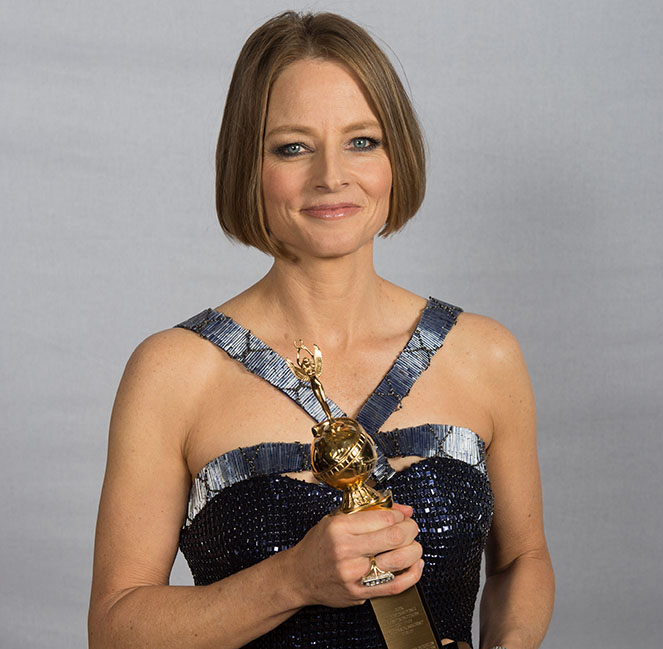
Jodie Foster net worth is estimated at $100 million, making her one of the wealthiest actresses of her generation and arguably the most financially successful child star in Hollywood history. She started acting at three, earned an Oscar nomination at 13, graduated from Yale, won two Academy Awards by 30, and then spent the next two decades commanding $12-15 million per film while most of her contemporaries saw their quotes collapse. The $100 million is not a windfall. It is the compound interest on five decades of choosing correctly.
| Full Name | Alicia Christian Foster |
|---|---|
| Net Worth | $100 Million |
| Primary Income Source | Film Acting, Directing, Producing |
| Career Span | 1965 – Present |
| Key Films | Taxi Driver, The Silence of the Lambs, The Accused, Contact, Panic Room |
| Notable Achievements | 2 Academy Awards, 4 Oscar nominations, Cecil B. DeMille Award, Egg Pictures production company |
| Residence | Los Angeles, California |
Before the Money
Alicia Christian Foster was born in Los Angeles in 1962. Her father, Lucius Fisher Foster III, left the family before she was born. Her mother, Evelyn “Brandy” Foster, raised four children alone while managing young Jodie’s career from age three, when she appeared in a Coppertone sunscreen commercial. By six, she was booking television roles. By nine, she had a film credit. The child was earning before she could read.
What separated Foster from every other child star of the 1970s was not talent alone but the infrastructure around her. Her mother managed the money carefully. Foster attended normal schools. When the fame became dangerous, she chose Yale over Hollywood. The discipline that built $100 million started before she was old enough to understand what discipline meant.
ERA 1: The Prodigy (1972-1980)

jodie-foster-in-taxi-driver-1976
Foster’s film debut came in Napoleon and Samantha (1972) at age nine. By 13, she had delivered the performance that would define the first phase of her career: Iris, the teenage prostitute in Martin Scorsese’s Taxi Driver (1976), opposite Robert De Niro. The role earned her first Oscar nomination for Best Supporting Actress.
Yale and the Hinckley Shadow
In 1980, Foster enrolled at Yale University. On campus, she became the target of obsessive stalker John Hinckley Jr., who attempted to assassinate President Ronald Reagan in 1981 to “impress” her. The trauma was profound. Foster considered leaving acting entirely. Instead, she finished her degree in 1985 with honors and returned to Hollywood on her own terms. The Yale years cost her momentum but built the self-possession that would fuel every career decision that followed.
ERA 2: The Two Oscars (1988-1994)
SOTLClariceLecter
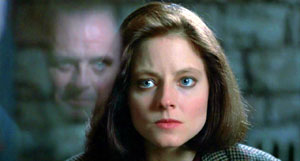
The Accused (1988) won Foster her first Academy Award for Best Actress. She was 26. The Silence of the Lambs (1991), costarring Anthony Hopkins, won her second. She was 29. Two Oscars before 30 gave Foster leverage that most actresses spend entire careers pursuing.
The Director Emerges
Between the two Oscars, Foster directed her first film, Little Man Tate (1991). The move signaled that she intended to build a career with multiple revenue streams, not just acting fees. She founded Egg Pictures as her production company. By the mid-1990s, her per-film quotes were climbing into territory that only a handful of actresses had ever reached.
In 1993, Sommersby paired Foster with Richard Gere in a Civil War drama. On set, Foster met producer Cydney Bernard, who would become her partner for the next 15 years and the mother of her two sons. The film performed modestly, but the personal connection it created proved more enduring than the box office.
ERA 3: The $15 Million Club (1994-2007)
Foster’s salary trajectory through this era reads like a case study in leverage economics. Maverick (1994) paid $5 million. Nell (1994) paid $9.5 million including a producing fee. Contact (1997) paid $9 million. Anna and the King (1999) paid $15 million. Panic Room (2002) paid $12 million. Flightplan (2005) paid $13 million. The Brave One (2007) paid $15 million.
The Quiet Machine
During this period, Foster earned over $100 million in base film salaries alone, not counting backend participation, residuals, or producing fees. The numbers are remarkable not for any single payday but for their consistency. While other actresses saw their quotes rise and fall with box office performance, Foster maintained $9-15 million per film across 13 years. No scandals damaged her value. No flops destroyed her leverage. The $100 million fortune is built on this plateau of sustained high-end earning.
ERA 4: The Director and the Legacy (2008-Present)
Foster’s acting output slowed after 2007, but her income streams diversified. She directed The Beaver (2011) and Money Monster (2016) starring George Clooney. Television directing became a new revenue source: episodes of Orange Is the New Black, House of Cards, and Black Mirror for Netflix earned Emmy nominations and steady fees.
The Late Resurgence
Nyad (2023) earned Foster her fourth Oscar nomination, this time for Supporting Actress. True Detective: Night Country (2024) gave her a prestige television lead that introduced her to a new generation of viewers. At 63, Foster is earning both critical acclaim and market relevance simultaneously, a combination that continues to generate income from a career that began before most working actresses were born.
In 2014, she married photographer Alexandra Hedison. Her two sons, Charles and Kit, were born during her relationship with Cydney Bernard. Foster’s personal life has remained remarkably private for a public figure of her stature, a discretion that has protected both her brand value and her family.
How Jodie Foster’s $100M Fortune Breaks Down
Film acting salaries represent the majority of Foster’s wealth. Over $100 million in base salaries between 1994 and 2007, combined with residuals from films that continue to generate streaming and licensing revenue, provides the financial foundation. The Silence of the Lambs alone has earned over $400 million in cumulative gross.
Directing and producing fees add a second layer. Egg Pictures has produced multiple projects, and television directing for premium platforms pays $150,000-500,000 per episode for directors of Foster’s caliber.
Real estate has been a measured contributor. Foster purchased a Beverly Hills property for $11.75 million in 2012 and sold it for $14.9 million in 2019, a clean $3 million gain. Previous properties were bought and sold at modest profits. The approach is conservative rather than speculative.
Where the Money Stands Now
At 63, Foster’s $100 million fortune represents the most efficiently built wealth in this cluster. No tech investments, no wine empire, no franchise merchandise. Just five decades of acting, directing, and producing, managed with the discipline of someone who started earning at three and never stopped being careful about where the money went.
Her Gere connection through Sommersby is a minor filmography footnote, but it produced something more valuable than box office: it was where Foster met the person who would become her family. In a cluster defined by what money costs people, Foster is the exception. The $100 million cost her nothing she wasn’t willing to pay.
Where The Conversation Continues
Social Life Magazine covers the intersection of wealth, culture, and influence from the Hamptons to Manhattan. Our celebrity net worth coverage traces the economics, the leverage, and the decisions that built the fortune.
Our readers are family office principals, exit founders, fashion executives, and the advisors who serve them. For premium editorial placement and integrated advertising across print and digital, submit a paid feature or contact our business development team.
Want insider access to the events, launches, and gatherings that define the Hamptons social calendar? Sign up for Event Invites & Specials and never miss a moment.
Social Life Magazine. Twenty-three years of covering the people and places that define luxury in America.
Author

Written by
Recent Posts

AI for personal finance: where PennyGuard fits

How to Pick a Homecoming Dress for Your Body Type (and Feel Amazing in It)

World Cup Injury Attorney for Vancouver Events
What a 3-Carat Engagement Ring Actually Costs in 2026: The Real Numbers
The Skincare Habits That Make a Real Difference Over Time
Categories
- Art
- Articles
- Business of Luxury
- Celebrities
- Culture
- Entertainment
- Events
- Faces of Summer 2026
- Fashion
- Fashion & Style
- Featured
- Finance
- Food, Spirits, Wine
- Hamptons
- Hamptons Celebrities
- Health
- Health & Beauty
- Lifestyle
- Luxury Lifestyle
- Press
- Profiles
- Real Estate
- Technology
- The Chronicles
- Travel
- Uncategorized
- Weddings