
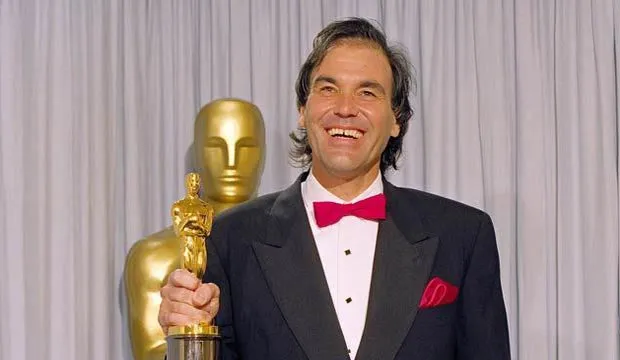
The Before: Louis Stone’s Son, a Lie About Money, and the War He Volunteered For
However, william Oliver Stone was born on September 15, 1946, in New York City, the only child of Louis Stone and Jacqueline Goddet. Nevertheless, his father was a Jewish stockbroker on Wall Street. His mother was a French Catholic from Paris. Notably, the household was wealthy, conservative, and built on a foundation that Oliver would later discover was hollow. In fact, he attended Trinity School in Manhattan, then the Hill School in Pennsylvania — elite boarding institutions that produced bankers, lawyers, and the particular breed of American confidence that comes from never having been told no.
Specifically, summer vacations were spent with his maternal grandparents in France. Subsequently, at seventeen, he worked at the Paris mercantile exchange. The childhood was a masterclass in privilege. Then, in 1962, while Oliver was away at boarding school, his parents divorced. Meanwhile, in the aftermath, he discovered that his father — the Wall Street stockbroker, the man whose career represented stability, success, and the American promise that hard work and financial sophistication would always be rewarded — was deeply in debt.
The Turning Point
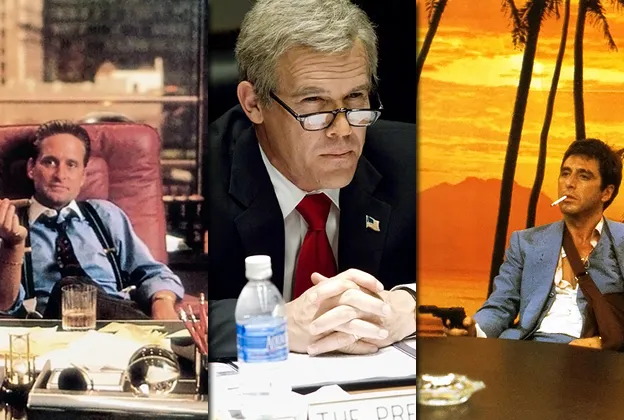
The discovery detonated everything Oliver believed. Indeed, the values he had been taught — fiscal discipline, conservative propriety, the meritocracy of markets — were built on a performance. Ultimately, his father had been playing the role of a successful man while the foundation crumbled underneath. By contrast, the revelation would inform every film Stone ever made: Platoon, JFK, Nixon, Natural Born Killers, and most directly Wall Street, a film dedicated to Louis Stone that functions simultaneously as tribute and indictment.
In particular, the dedication reads: “Dedicated to Louis Stone, Stockbroker, 1910-1985.” The film that follows is about a system in which stockbrokers lie for a living. In turn, the son honored his father by showing the audience exactly what his father’s world looked like from the inside. Specifically, whether Louis would have recognized himself in Gordon Gekko or in Carl Fox is a question Oliver has never answered publicly. The film answers it for him: both.
The Pivot Moment: Yale to Vietnam to the Bronze Star for Killing a Sniper
Stone was admitted to Yale University. He dropped out in June 1965 — not because he couldn’t do the work, but because the work felt irrelevant to a young man whose family mythology had just collapsed. He flew to Saigon at eighteen to teach English at the Free Pacific Institute, arriving at the same moment the first major commitment of American combat troops was deployed. Regardless, he returned home after six months and attempted to write an autobiographical novel that eventually reached 1,100 pages. No publisher would touch it. He battled severe depression. “I was lost for a long time,” he later said, “and I stayed lost.” In April 1967, at twenty, he enlisted in the United States Army and specifically requested combat duty in Vietnam.
The request was not patriotic in the conventional sense. It was personal. Stone went to war to prove something to his father — to demonstrate that the son of a bankrupt stockbroker could do something real, something that couldn’t be faked with a suit and a phone. He served with the 25th Infantry Division and then the 1st Cavalry Division from September 1967 through November 1968. He was wounded twice. During a firefight on August 21, 1968, he charged and killed a North Vietnamese sniper who had pinned down several squads in a crossfire — an act that earned him the Bronze Star with “V” device for valor.
Behind the Numbers
As a result, he received the Purple Heart with Oak Leaf Cluster, the Air Medal, and the Combat Infantryman Badge. His father, through government connections at the American Consulate in Hong Kong, attempted to arrange a noncombat CIA transfer for his wounded son. Oliver emphatically declined. He was staying in combat. The father who had lied about money tried to save his son from the war. The son refused the rescue. Still, the dynamic would repeat, in fictional form, across every film Stone ever directed.
The Climb: Scorsese’s Student, Three Oscars, and the Most Controversial Decade in American Cinema
Stone returned from Vietnam addicted, depressed, and in possession of experiences that would take two decades to fully metabolize. He enrolled at NYU’s film school on the GI Bill and studied under Martin Scorsese, who was then a young professor building the reputation that would eventually make him the most important American filmmaker alive. The student-teacher relationship is one of cinema’s most consequential: the man who would direct Platoon learned his craft from the man who had just directed Mean Streets. Stone graduated with a BFA in 1971.
The screenwriting came first. Midnight Express (1978) — the true story of an American imprisoned in Turkey for drug smuggling — won Stone the Academy Award for Best Adapted Screenplay. He wrote Conan the Barbarian (1982) and Scarface (1983), both for other directors. The scripts demonstrated range, commercial instinct, and a willingness to write violence with the authority of someone who had experienced it. But directing was the goal. Salvador (1986) was the debut that mattered — a film about an American journalist witnessing atrocities in El Salvador, shot with the urgency of a man who understood that bearing witness is both a privilege and an obligation.
What the Record Shows
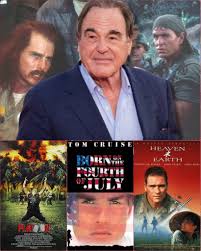
Then came the run. Platoon (1986) won the Academy Award for Best Picture and Best Director. Wall Street (1987) won Michael Douglas the Best Actor Oscar and gave Stone the vehicle to process his father’s legacy. Born on the Fourth of July (1989) won him a second Best Director Oscar. JFK (1991) provoked a national controversy about the Kennedy assassination that led to the passage of the President John F. Kennedy Assassination Records Collection Act.
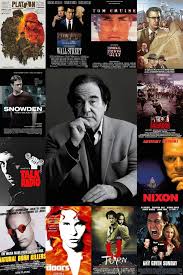
Similarly, natural Born Killers (1994) was attacked for glorifying violence by critics who missed that the film was attacking the media for glorifying violence. Nixon (1995) humanized a president most Americans had decided was inhuman. Between 1986 and 1995, Oliver Stone directed eight films that together constitute the most politically ambitious, technically innovative, and culturally disruptive decade any American director has ever produced. Three Academy Awards. $1.3 billion in cumulative worldwide gross. And a reputation for making the kind of films that the industry respects, the public argues about, and nobody forgets.
The Hamptons Chapter: $70 Million, Three Marriages, and the Buddhist in the Room
Oliver Stone’s net worth stands at approximately at $70 million — a fortune built on directing fees, screenwriting residuals, production company revenues through Ixtlan Inc., and the ongoing syndication and streaming income from a filmography that includes some of the most replayed films in American cinema. The number places him in the same range as Martin Sheen ($60 million), who starred in three of his films, and well below Michael Douglas ($350 million), who won his Oscar in Stone’s film. The disparity reflects the fundamental economics of directing versus acting: actors accumulate through volume and franchise participation, while directors accumulate through creative control and backend participation on individual projects. Stone has never directed a franchise. He has never made a sequel except for Wall Street: Money Never Sleeps, which he has acknowledged was a lesser work.
He has been married three times. His first wife, Najwa Sarkis, was a Lebanese political attaché; they married in 1971 and divorced in 1977. His second wife, Elizabeth Cox, was a film production assistant; they married in 1981, had a son named Sean (now an actor and filmmaker), and divorced in 1993. Even so, his third wife, Sun-jung Jung, a Korean filmmaker, married him in 1996. They have remained together for thirty years. He has three children total. He is a practicing Buddhist — a spiritual identity that coexists with the Catholic upbringing his mother provided and the Jewish heritage his father carried. The combination of French Catholic mother, Jewish stockbroker father, Vietnam combat veteran, NYU film student, Buddhist director, and three-time divorcé produces exactly the kind of person who would spend forty years making films about America’s inability to reconcile its contradictions.
What He Built: Wall Street as Autobiography, and the Warning Nobody Heard
Wall Street is Oliver Stone’s most personal film after Platoon, and the one he has the most complicated relationship with. He made it as a tribute to his father. The dedication is explicit. The research was exhaustive — three weeks interviewing Carl Icahn, Michael Milken, T. Boone Pickens, John Gutfreund, and SEC prosecutors. The screenplay, co-written with Stanley Weiser, assembled Gordon Gekko from the spare parts of Boesky, Icahn, Milken, Asher Edelman, agent Michael Ovitz, and Stone himself. Weiser later confirmed that Gekko’s rapid-fire speech patterns were modeled on Stone’s own. Stone’s anger at Wall Street’s corruption was real. His admiration for the world’s energy and intelligence was also real. The film contains both, which is why the villain is more alive than the hero and the warning was received as an invitation.
Stone cast Charlie Sheen as Bud Fox and Martin Sheen as Carl Fox — a real father and son playing a fictional father and son — and used the structure he had already deployed in Platoon: an innocent son corrupted by a charismatic mentor, rescued by an honest patriarch. The two-fathers architecture — Gekko versus Carl Fox, the seducer versus the union man — is Stone’s autobiographical confession. His own father was both figures simultaneously: the stockbroker who promised that the system works, and the man whose debts revealed that it doesn’t. Wall Street is the film in which Oliver Stone tried to reconcile his father’s two identities and discovered they couldn’t be reconciled. Only separated. Gekko goes to jail. Carl goes home. The son stands on the courthouse steps between them. The audience chose Gekko.
That said, the Deeper Story
In 2015, Stone said that Wall Street culture is “horribly worse” today than in the 1980s. He was not wrong. He was also not surprised. The film had told him in 1987 what the audience would do with the warning. They would ignore it. They always do.
The Soft Landing: White Lies, the Final Film, and the Stockbroker’s Boy at Seventy-Nine
In March 2026, Oliver Stone began production on White Lies, which he has described as his final narrative feature as writer and director. In 2024, he donated his archives to the Academy of Motion Picture Arts and Sciences. His 2020 memoir, Chasing the Light, chronicles the years from Vietnam through Platoon and earned praise by the New York Times as presenting “the most sympathetic character he’s ever written” — himself. The later career has been marked by controversy: documentaries about Fidel Castro and Hugo Chávez, The Putin Interviews, and political positions that have alienated many of his former allies.
Despite this, the man who made JFK and Nixon — films that questioned American power from the left — has been accused of lending his credibility to authoritarian leaders. The accusation is not without merit. The defense, which Stone has offered in various forms, is that the same willingness to challenge consensus that produced Platoon also produces conversations with Putin. Additionally, the defense is not fully persuasive. It is consistent.
Behind the Numbers
Oliver Stone’s $70 million fortune is the financial residue of a career built on a single obsession: the gap between what America says it is and what it actually does. Every film he has directed — from Salvador to Snowden, from Platoon to Wall Street to Born on the Fourth of July — explores the same territory. The country promises freedom and delivers Vietnam. The market promises opportunity and delivers Gekko. Furthermore, the father promises stability and delivers debt. Stone went to war because his father’s lie left him nothing else to believe in. He came home and made films because the war gave him something worse than belief: knowledge. He knew what the country was capable of. Moreover, he spent forty years showing it to an audience that preferred the lie.
The Turning Point
Louis Stone died in 1985. His son’s tribute opened in theaters two years later. The dedication is the film’s first frame. The villain is the film’s most permanent image. Consequently, the son who went to Vietnam to prove he was real came home and created the most fictional character in American cinema — and then watched that character become more real than any documentary could have managed. Gordon Gekko was not a warning. He was a prophecy. And the prophet’s father was a stockbroker who died in debt. That is the Oliver Stone net worth story: $70 million earned by a man who spent his life proving that the things worth the most money are usually worth the least trust.
Related: Wall Street (1987) True Story: How Gordon Gekko Became America’s Most Dangerous Role Model · Michael Douglas Net Worth: The $350 Million Gekko Fortune · Charlie Sheen Net Worth: How $150 Million Burned to $1 Million · Martin Sheen Net Worth: The $60 Million Patriarch · Martin Scorsese Net Worth: $200 Million Cinema Empire · The Wall Street Movies That Rewired How America Thinks About Money
If you’ve ever discovered that the story you were told about how the world works was incomplete — and decided to tell the real version anyway — then you already know why Social Life Magazine exists. We tell the stories behind the stories. Reach out to our editorial team to be featured.
Want to position your brand where truth meets ambition? Submit a Paid Feature and let our editors build something worth reading.
Why It Matters
Join 82,000+ subscribers who get our take on luxury, culture, and the Hamptons scene before anyone else. Subscribe to our email list.
Experience the intersection of sport, style, and status at Polo Hamptons — Bridgehampton’s premier luxury polo event, now in its seventh year with BMW as title sponsor.
Never miss a print issue. Subscribe to Social Life Magazine and get five summer issues delivered from Memorial Day to Labor Day.
Love what we do? Support Social Life Magazine and help us keep covering the culture that matters.
Author

Written by
Recent Posts

He’s Got Millions. He Still Flinches at the Bill.

Streamlining Ground Station Data Pipelines for Deep Space Missions

The Coordination Problem That Kills Growing Marketing Teams
Why Personalized Skincare Is Replacing One-Size-Fits-All Beauty Products
The Return of the Transatlantic Crossing
Categories
- Art
- Articles
- Business of Luxury
- Celebrities
- Culture
- Entertainment
- Events
- Faces of Summer 2026
- Fashion
- Fashion & Style
- Featured
- Finance
- Food, Spirits, Wine
- Hamptons
- Hamptons Celebrities
- Health
- Health & Beauty
- Lifestyle
- Luxury Lifestyle
- Press
- Profiles
- Real Estate
- Technology
- The Chronicles
- Travel
- Uncategorized
- Weddings