
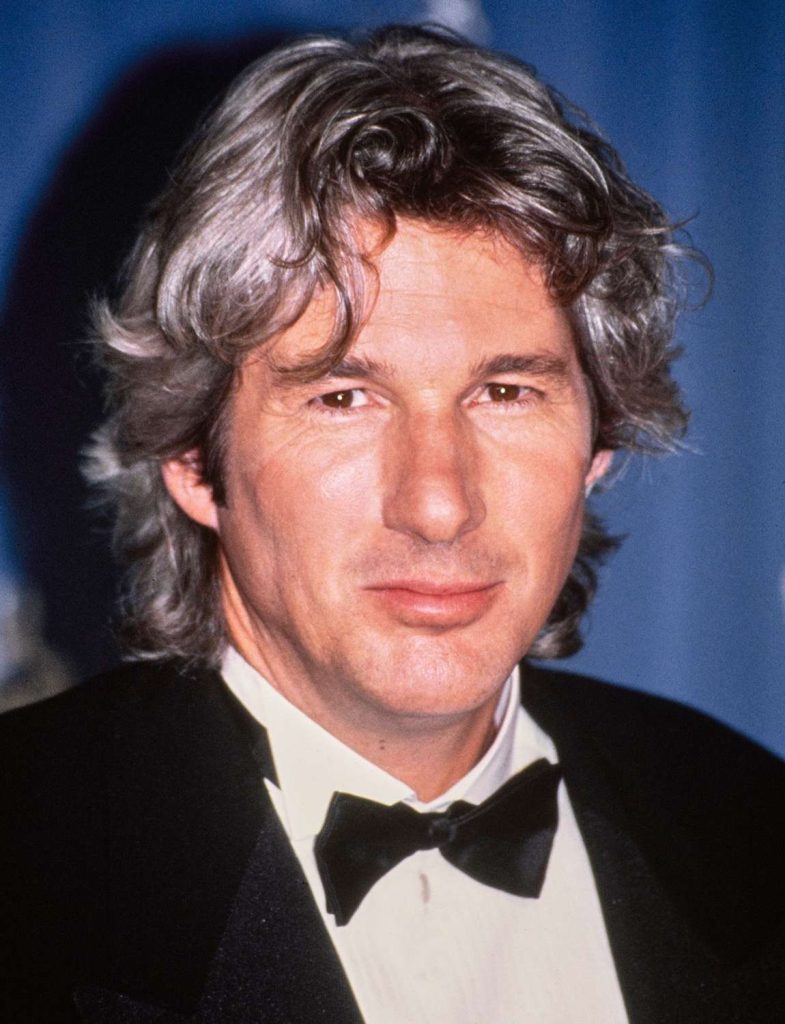
Richard Gere net worth sits at an estimated $120 million, which sounds like a win until you do the math on what it should have been. In 1993, the man who made Pretty Woman the highest-grossing romantic comedy in history walked onto the Oscar stage and threw a grenade at his own career. One unscripted speech about Tibet. Twenty years of studio exile. And a fortune that stopped compounding at the exact moment it should have doubled.
| Full Name | Richard Tiffany Gere |
|---|---|
| Net Worth | $120 Million |
| Primary Income Source | Film Acting, Real Estate, Hospitality |
| Career Span | 1975 – Present |
| Key Films | Pretty Woman, An Officer and a Gentleman, Chicago, American Gigolo |
| Notable Business Ventures | Bedford Post Inn (Relais & Châteaux), Real Estate Portfolio |
| Residence | North Salem, NY / Madrid, Spain |
Before the Money
Richard Tiffany Gere was born in Philadelphia in 1949 to a housewife and a Nationwide insurance agent. The family relocated to Syracuse, where Gere graduated from North Syracuse Central High School in 1967 as a kid who could play trumpet, do gymnastics, and charm a room. A gymnastics scholarship carried him to the University of Massachusetts Amherst, where he studied philosophy. He dropped out after two years.
No trust fund. No industry connections. Not a dollar of family money smoothing the path to Hollywood. Gere’s first professional work came in 1969 at the Seattle Repertory Theatre, followed by years grinding through off-Broadway stages and regional productions. The gap between a Nationwide insurance household in Syracuse and a $120 million fortune in Bedford is enormous. It only makes sense when you trace the economics of each era that built it.
By the mid-1970s, Gere had enough stage credibility to catch the attention of casting directors looking beyond the usual pool. What happened next moved fast.
ERA 1: The Face That Changed the Price Tag (1975-1983)
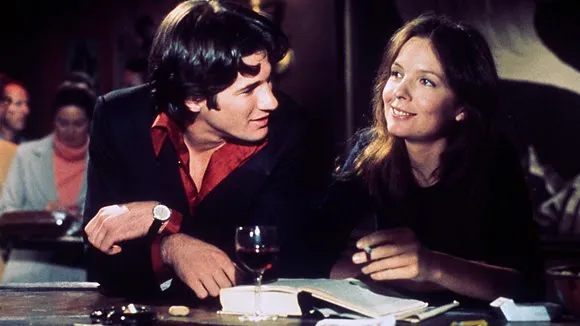
Gere’s film career started with a supporting role in a movie most people remember for Diane Keaton. Looking for Mr. Goodbar (1977) paid him almost nothing, but it put his face on screens at a moment when Hollywood was hunting for a new type of leading man. Not the square-jawed action hero. Something more ambiguous, more European, more dangerous.
The Malick Credential
Days of Heaven (1978) earned modest returns at the box office, but working with Terrence Malick gave Gere something money couldn’t buy at that stage of his career: critical credibility. The film told studios he could carry a prestige picture. That distinction mattered, in fact, because it separated him from the action guys and positioned him for the roles that actually built wealth.
The Gigolo and the Officer
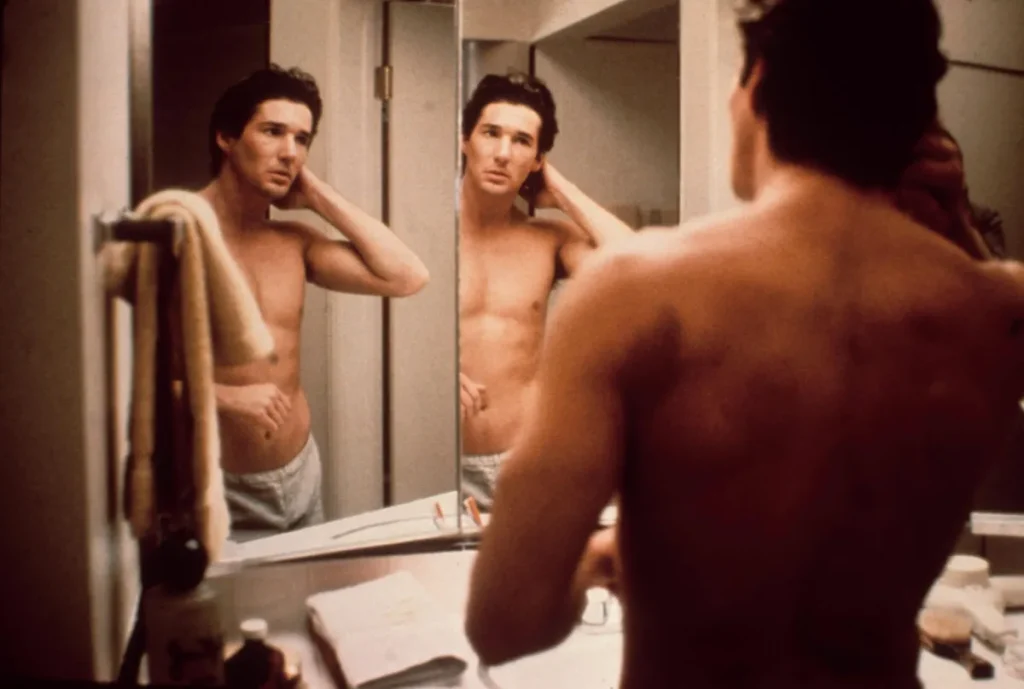
Then came the one-two punch that turned him into a commodity. American Gigolo (1980), directed by Paul Schrader, grossed $52 million on a $5 million budget. It did something no film had done since Valentino: marketed a male actor’s sex appeal as the primary reason to buy a ticket. Gere became the first American leading man in decades whose body was the box office draw.
Two years later, An Officer and a Gentleman (1982) grossed $190 million worldwide against a $7 million budget. The film turned Debra Winger into a star, won Louis Gossett Jr. the Academy Award for Best Supporting Actor, and gave Gere the one thing that sets salary negotiations for the next decade: proof he could open a movie on opening weekend. In total, forty-four million tickets sold domestically. By the time the returns came in, Gere’s quote had moved from scale to seven figures. The insurance agent’s son from Syracuse was now a bankable commodity in the most literal sense of the word.
ERA 2: The Pretty Woman Economy (1988-1999)
The mid-1980s were uneven. The Cotton Club (1984), directed by Francis Ford Coppola, was a notoriously troubled production that hemorrhaged money. It taught Gere a lesson about attaching your name to prestige projects with unstable financing. King David (1985) flopped. For a few years, the bankability equation wobbled.
$463 Million on a $14 Million Bet
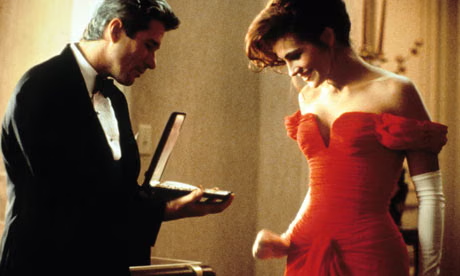
Then Pretty Woman happened. The 1990 romantic comedy, costarring Julia Roberts, grossed $463 million worldwide on a $14 million budget. At the time of its release, it was the fifth highest-grossing film in history. It became the highest-grossing romantic comedy ever made, a record it held for over a decade, and it sold 42 million domestic tickets.
Pretty Woman didn’t just make Gere rich. It invented a new economic model for the romantic comedy genre. Before this film, rom-coms were mid-budget studio afterthoughts. After it, they became tentpole-level investments with tentpole-level returns. Gere’s leverage shifted accordingly. By the mid-1990s, he was commanding $10-15 million per picture, a bracket that only a handful of actors in the world occupied at that time.
The Speech That Changed Everything
The money was compounding. The leverage was real. And then Gere walked onto the Oscar stage on March 29, 1993, to present the award for Best Art Direction. Instead of reading the teleprompter, he addressed the Chinese government directly. He called Tibet’s occupation a “horrendous, horrendous human rights situation” and wondered aloud whether Deng Xiaoping was watching.
Producer Gil Cates banned him from the ceremony. The Academy didn’t invite him back for nearly twenty years. At the time, it looked like a career footnote. It wasn’t. It was the first crack in a wall that would eventually seal Gere off from every major studio in Hollywood.
The $12 Million Runway
Despite the Oscar ban, the 1990s remained commercially productive. Primal Fear (1996) grossed $102 million on a $30 million budget. Its real economic product was Edward Norton, whose debut performance launched an entirely separate career from inside Gere’s film. First Knight (1995) paired him with Sean Connery in a medieval epic that performed modestly. Runaway Bride (1999) reunited him with Roberts and earned $152 million domestically, with Gere collecting a reported $12 million salary.
But beneath the surface, something was shifting. Red Corner (1997), a thriller set in China where Gere played an American businessman wrongly accused of murder, became the canary in the coal mine. MGM was negotiating a broader deal with the Chinese government. China told the studio: release this film and we won’t buy anything from you. MGM effectively buried it. Marketing was pulled. Press tours were canceled. The economics of Gere’s activism were becoming visible on balance sheets.
ERA 3: The Chicago Encore (2000-2007)
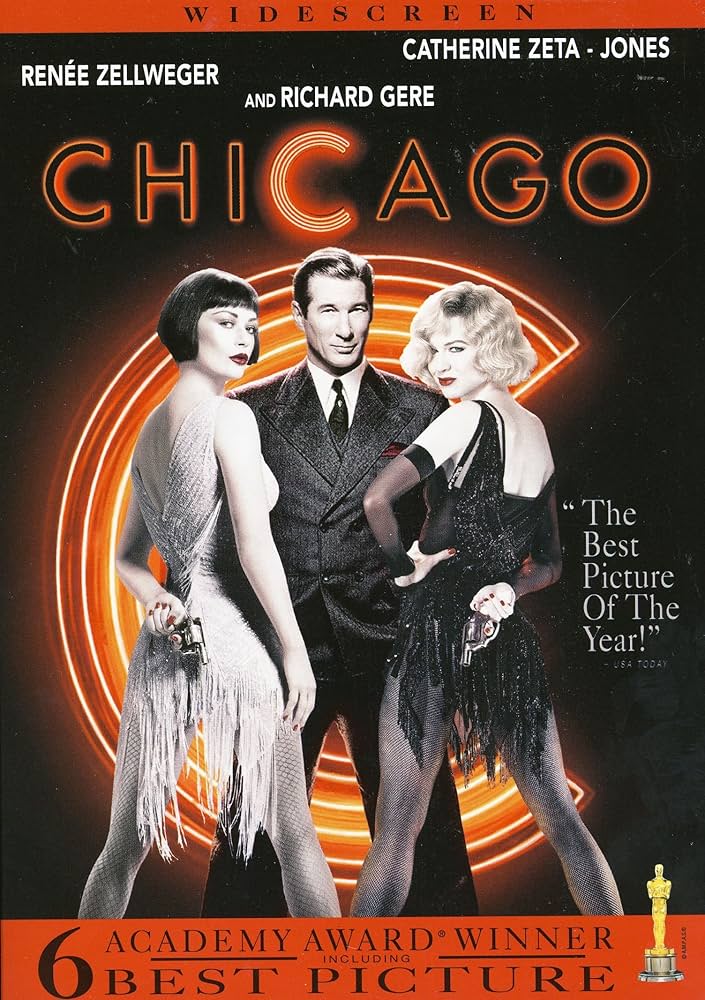
The 2000s opened with what should have been a coronation. Chicago (2002), directed by Rob Marshall, grossed $306 million worldwide on a $45 million budget and won six Academy Awards, including Best Picture. Notably, it was the first musical to take that prize since Oliver! in 1969. Gere starred alongside Renée Zellweger and Catherine Zeta-Jones, both of whom received Oscar nominations for the same film. Gere’s performance as Billy Flynn, the silver-tongued lawyer, won him a Golden Globe and a Screen Actors Guild Award.
The Oscar Snub That Proved the Point
Here’s where the economics get interesting. Chicago won Best Picture. Four of its actors received Oscar nominations. Gere was not one of them. The man who carried the musical, who sang and danced at 53, who won the Golden Globe for the same performance, was invisible to the Academy. He later recalled hearing the nominations announced from a hotel in Paris. “You could hear the whoas,” he said. “Then silence.”
Whether the snub was about the 1993 speech, the China factor, or the Academy’s own politics didn’t matter. The practical result was the same: Gere got the Golden Globe paycheck but not the Oscar multiplier. In practice, that multiplier matters. An Oscar nomination inflates a star’s quote by 20-40% on the next project. Gere never got the bump.
Side Bets and Real Estate
Unfaithful (2002) grossed $119 million worldwide and proved Gere could still sell tickets on charisma alone at 53, starring opposite Diane Lane in an erotic thriller directed by Adrian Lyne. Shall We Dance (2004) paired him with Jennifer Lopez and performed adequately. But the trajectory was clear: each film was slightly smaller than the last.
During this era, Gere married actress Carey Lowell in 2002 and began building outside the film industry. In 2007, he and business partner Russell Hernandez acquired an abandoned 1860s Dutch Colonial property on 14 acres in Bedford, New York. They restored it and opened the Bedford Post Inn, an eight-room luxury boutique hotel that earned membership in the prestigious Relais & Châteaux network. In 2011, Gere was named the organization’s global ambassador. The inn represented a quiet pivot: converting cultural capital into a hospitality asset that generated revenue independent of whether studios returned his calls.
ERA 4: The Beijing Blacklist (2008-Present)

The last major studio film Richard Gere made was Nights in Rodanthe (2008) for Warner Bros. After that, the door closed. Not with a dramatic confrontation or a public firing. It closed the way doors close in Hollywood: quietly, through phone calls that never came and financing that evaporated when his name was attached.
The China Math
By the late 2000s, China had become the world’s second-largest box office market. Studios were restructuring entire slates to avoid anything that might offend Beijing. Gere had called for a boycott of the 2008 Beijing Olympics. He remained a vocal supporter of the Dalai Lama and continued funding two foundations dedicated to Tibetan independence. “There are definitely movies that I can’t be in because the Chinese will say, ‘Not with him,’” he told The Hollywood Reporter in 2017. “I recently had an episode where someone said they could not finance a film with me because it would upset the Chinese.”
The math is brutal. Between 2008 and 2020, the average Richard Gere film budgeted under $10 million. By comparison, his salary alone in the 1990s often exceeded that number. Arbitrage (2012) was a critical success and a smart piece of filmmaking. But it was a $12 million indie, not the $80 million studio picture his career arc should have produced. Norman (2016) was even smaller. Time Out of Mind (2014) saw him playing a homeless man on the streets of New York for a budget most studio executives wouldn’t approve for catering.
The Schrader Bookend
In 2024, Schrader directed Gere in Oh, Canada, a drama that premiered at the Cannes Film Festival. Schrader had also directed American Gigolo 44 years earlier. In hindsight, the bookend was unmistakable: the man who launched Gere’s career returned to mark a chapter that Hollywood’s biggest studios had refused to fund. Oh, Canada was not a commercial event. It was a cultural statement, the kind of film that deposits credibility rather than cash.
The Return (On His Own Terms)
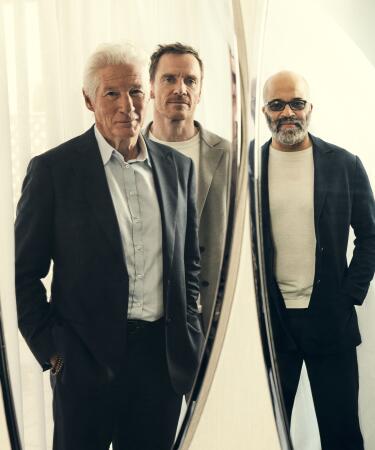
In 2025, Gere stepped into television for the first time with The Agency on Paramount+. He plays a London Station Chief in the political thriller adapted from the French series Le Bureau des Légendes. Television had become the refuge for actors whose names no longer guaranteed $100 million opening weekends. Kevin Costner had already monetized that shift with Yellowstone before his own high-profile exit. For Gere, at 76, the economics were straightforward: streaming platforms pay well and don’t need Chinese distribution deals.
Meanwhile, the real estate portfolio kept moving. In 2020, Gere and his third wife, Spanish publicist Alejandra Silva, paid $10.5 million for a 35-acre estate in North Salem, New York. In 2022, he bought Paul Simon and Edie Brickell’s 32-acre New Canaan, Connecticut estate for $10.8 million. He sold it in November 2024 for $10.75 million, essentially breaking even, as the couple prepared to relocate to Spain to be closer to Silva’s family.
How Richard Gere’s $120M Fortune Breaks Down
The architecture of Gere’s wealth is a study in what happens when a career’s biggest growth window gets cut short by geopolitics. Overall, his total acting earnings are estimated between $80-100 million across more than 50 films, anchored by the $10-15 million per picture peak of the 1990s. The $12 million Runaway Bride payday and the Chicago-era salaries represent the high-water mark of his per-film compensation.
Real estate has been a consistent wealth preserver. The North Salem compound, the Bedford Post Inn property, and a New York City apartment form the core of a portfolio that has generated both rental income and appreciation over decades. His New Canaan purchase and sale (in at $10.8 million, out at $10.75 million) suggests Gere treats property more as a lifestyle asset than a speculative instrument.
The Bedford Post Inn, while not a massive profit center, functions as what the hospitality industry calls a “passion project with upside.” Relais & Châteaux affiliation provides global visibility. Situated on 14 acres in one of Westchester County’s wealthiest zip codes, the property holds its value independent of RevPAR fluctuations.
However, what’s missing from the balance sheet is equally instructive. There are no production company credits generating backend revenue. No franchise residuals compounding annually. No endorsement portfolio worth tens of millions. The China blacklist didn’t just cost Gere films. It cost him the entire secondary economy that major-studio stardom generates: producing deals, global brand partnerships, franchise participation rights. At $120 million, Gere is wealthy by any standard. By the standard of what his 1990s trajectory projected, he left $100 million or more on the table.
Where the Money Stands Now
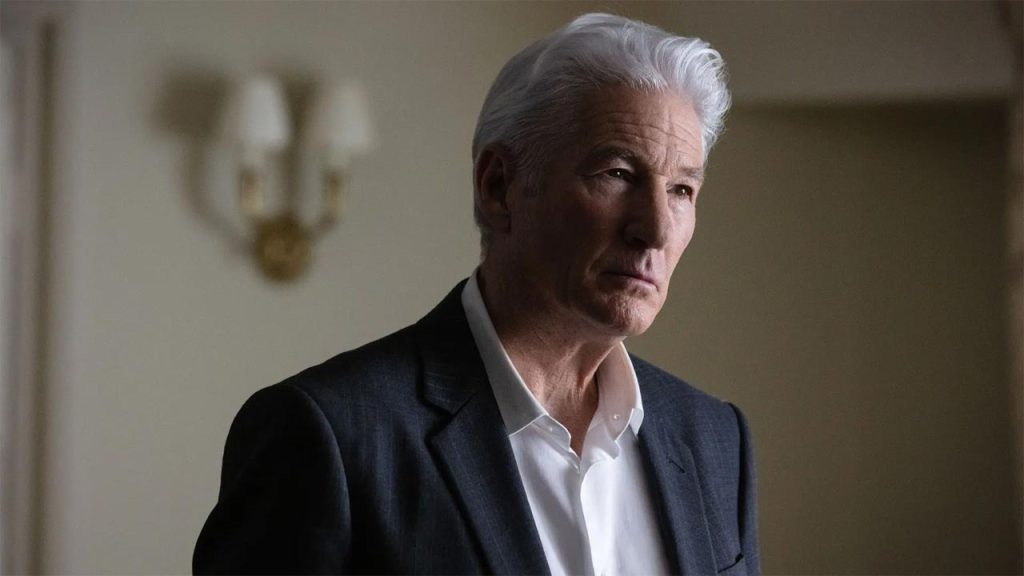
At 76, Gere is earning again through television and select independent films, but the growth phase of his fortune is behind him. The Agency on Paramount+ represents the kind of steady, well-compensated work that streaming platforms offer actors of his stature: high enough to maintain lifestyle, low enough that it doesn’t move the net worth needle significantly.
The move to Spain signals a strategic shift toward lower cost-of-living and closer family ties rather than career expansion. Gere continues to executive-produce documentaries aligned with his Buddhist practice, including Wisdom of Happiness (2025), a film featuring the Dalai Lama. Ultimately, these projects generate cultural capital, not financial returns.
In the end, the question his fortune poses is the one nobody in Hollywood likes to answer out loud: what is a principle worth in dollars? Gere’s $120 million says it cost him somewhere between $80 million and $150 million in unrealized earnings. Whether that math represents a tragedy or a choice depends entirely on which form of capital you think matters most.
Where The Conversation Continues
Social Life Magazine covers the intersection of wealth, culture, and influence from the Hamptons to Manhattan. Our celebrity net worth coverage traces the economics, the leverage, and the decisions that built the fortune.
Our readers are family office principals, exit founders, fashion executives, and the advisors who serve them. For premium editorial placement and integrated advertising across print and digital, submit a paid feature or contact our business development team.
Want insider access to the events, launches, and gatherings that define the Hamptons social calendar? Sign up for Event Invites & Specials and never miss a moment.
Social Life Magazine. Twenty-three years of covering the people and places that define luxury in America.
Author

Written by
Recent Posts

AI for personal finance: where PennyGuard fits

How to Pick a Homecoming Dress for Your Body Type (and Feel Amazing in It)

World Cup Injury Attorney for Vancouver Events
What a 3-Carat Engagement Ring Actually Costs in 2026: The Real Numbers
The Skincare Habits That Make a Real Difference Over Time
Categories
- Art
- Articles
- Business of Luxury
- Celebrities
- Culture
- Entertainment
- Events
- Faces of Summer 2026
- Fashion
- Fashion & Style
- Featured
- Finance
- Food, Spirits, Wine
- Hamptons
- Hamptons Celebrities
- Health
- Health & Beauty
- Lifestyle
- Luxury Lifestyle
- Press
- Profiles
- Real Estate
- Technology
- The Chronicles
- Travel
- Uncategorized
- Weddings