
The Before: The Band, the Twin, and the Beverly Hills Playhouse at Age Five
Even so, antonino Giovanni Ribisi was born on December 17, 1974, in Los Angeles, California, into a household so embedded in the entertainment industry that acting was less a career choice than a dialect. That said, his father, Albert Anthony Ribisi, was the keyboardist in People!, a rock band that scored a minor hit in the late 1960s. Additionally, his mother, Gay Landrum Ribisi, worked as a talent manager for actors and writers — the person behind the phone call, the meeting, the career trajectory.
By contrast, giovanni has a twin sister, Marissa, who is fifteen minutes younger and became an actress herself, appearing in Dazed and Confused and later marrying the musician Beck. His other sister, Gina, is a voice actress. Furthermore, the family tree extends further into entertainment’s root system than most Hollywood dynasties: Giovanni’s daughter Lucia appeared on Beck’s album The Information and two of Sia’s albums. Moreover, his pseudo-step-brother, through the tangled connections of Los Angeles creative families, is Leonardo DiCaprio.
The Turning Point
The family were Scientologists. Consequently, giovanni grew up inside the Church and participated in institutional events throughout his career, including the 2005 gala opening of Scientology’s Psychiatry: An Industry of Death museum. However, more recent reports suggest he may no longer be a practicing member, though he has not addressed the subject publicly. Nevertheless, the religion is a fact of his biography rather than its defining feature, but it is worth noting because it places Ribisi inside a specific Los Angeles subculture — one that connects Tom Cruise, John Travolta, Elisabeth Moss, and a network of entertainment professionals whose industry relationships are reinforced by institutional affiliation. The Church is a system. Ribisi grew up inside systems.
Notably, he began studying acting at the Beverly Hills Playhouse as a small child, under the instruction of Milton Katselas, a legendary acting teacher whose students included Gene Hackman, Alec Baldwin, and Michelle Pfeiffer. His childhood hero was Marlon Brando. He has said that watching A Streetcar Named Desire changed his understanding of what film could do. By the time he was eleven, he was appearing on television: Highway to Heaven, My Two Dads, The New Leave It to Beaver. The child actor pipeline usually produces one of two outcomes: early burnout or sustained mediocrity. Ribisi produced a third: he got stranger, more precise, and more valuable with every decade.
The Pivot Moment: Phoebe’s Brother, Spielberg’s Medic, and Two Films That Changed the Trajectory
The 1990s gave Giovanni Ribisi two roles that established the range he would spend the next three decades exploiting. On Friends, he played Frank Jr. — Phoebe Buffay’s half-brother, a sweet, slightly unhinged kid who marries his home economics teacher and fathers triplets. The role was recurring rather than regular (he appeared across multiple seasons between 1995 and 2003), and it demonstrated something that most comic actors cannot do: Ribisi made Frank Jr. simultaneously absurd and tender, a character who should have been a punchline but instead became someone the audience genuinely worried about. The comedy came from sincerity, not from mugging. The technique was identical to what he would later bring to dramatic work — commit fully to the character’s reality, regardless of how unusual that reality is, and let the audience adjust.

In 1998, Steven Spielberg cast him as Medic Irwin Wade in Saving Private Ryan. The role required Ribisi to undergo boot camp alongside Tom Hanks, Vin Diesel, Edward Burns, and Barry Pepper — a training regimen supervised by a former Marine captain designed to break the actors down physically and psychologically before filming began. Wade’s death scene — in which the medic, mortally wounded, talks himself through his own treatment protocols as he dies, calling for his mother — is one of the most devastating sequences in war cinema.
Behind the Numbers
In particular, ribisi played it with a stillness that made the panic underneath visible without ever letting it surface. The performance earned him the ShoWest Newcomer of the Year Award and a Vanity Fair cover. More importantly, it connected him professionally to Vin Diesel, with whom he had shared the boot camp and the foxhole. Two years later, both men would appear together in Boiler Room — the medic and the soldier reunited as the broker and the senior trader on a Long Island pump-and-dump floor.
The Climb: Seth Davis and the Only Actor Who Played Both Victim and Perpetrator

Giovanni Ribisi is the only actor in the Wall Street cinema canon who has played both sides of the transaction. In Saving Private Ryan, he dies as the victim — the innocent killed by a system he volunteered to serve. In Boiler Room, he is the perpetrator — the broker who cold-calls Harry Reynard, lies about a stock’s value, and steals the man’s life savings. The two performances, separated by two years, constitute a single argument about what happens to young men who enter systems designed to consume them. Wade enters the army and is consumed by combat. Seth Davis enters J.T. Marlin and is consumed by greed. Both men are intelligent enough to understand what is happening to them. Neither is powerful enough to stop it. The only difference is the exit: Wade dies. Seth cooperates with the FBI and walks out.
Ribisi’s Seth Davis is the film’s moral center — a college dropout running an illegal casino out of his Queens apartment who joins the brokerage not because he wants wealth but because he wants his father’s approval. Judge Marty Davis, played by Ron Rifkin with the cold precision of a man who communicates love exclusively through disappointment, is the engine that drives Seth into the fraud and the conscience that ultimately pulls him out. The performance required Ribisi to play vulnerability without weakness, intelligence without arrogance, and guilt without self-pity.
What the Record Shows
Specifically, he achieved all three. Critics compared the film to Glengarry Glen Ross and Wall Street, and the comparisons were valid, but Ribisi’s contribution was distinct: he played a man who knows he is doing something wrong and does it anyway because the alternative — returning to his father’s silence — is worse than the crime. That motivation is more honest than greed. It is also more common.
The Hamptons Chapter: Avatar’s $5 Billion Franchise and the Quietest Career in Hollywood
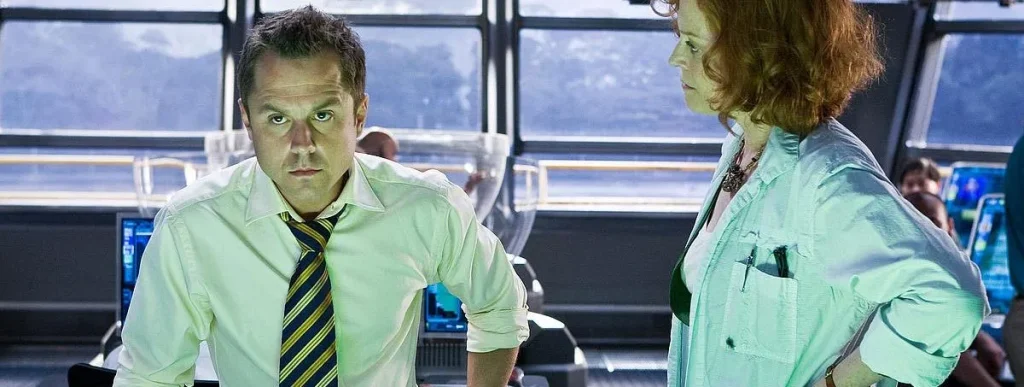
In 2009, James Cameron cast Ribisi as Parker Selfridge in Avatar — the corporate administrator who authorizes the destruction of the Na’vi homeland because the mineral beneath it is worth more than the civilization above it. The role is not large. Selfridge appears in approximately fifteen minutes of screen time. But the character embodies the film’s thesis about colonial extraction, and Ribisi plays him with a breezy amorality that makes the genocide feel like a quarterly earnings report. Avatar grossed $2.9 billion worldwide. Its sequel, The Way of Water, added another $2.3 billion. Ribisi reprised Selfridge in both. The franchise’s cumulative gross exceeds $5 billion, making it the highest-grossing film series in which Ribisi has appeared — by a factor of roughly fifty over everything else in his filmography combined.
The Avatar paychecks have not been publicly disclosed, but franchise supporting actors in Cameron productions typically earn seven figures per installment. Furthermore, the income, combined with thirty-five years of television residuals (Friends alone generates hundreds of millions annually for its network and cast), film roles in Gone in 60 Seconds, Lost in Translation, Public Enemies, Ted, and Gangster Squad, plus five seasons of Amazon’s Sneaky Pete, produces a career portfolio that is broad, consistent, and allergic to the spotlight. Ribisi does not maintain public social media accounts. He does not do press tours beyond contractual obligations.
The Deeper Story
As a result, he does not appear at events unnecessarily. The privacy is not a strategy. It is a temperament. A man who has been acting since age eleven, who has watched contemporaries flame out, divorce publicly, enter rehab on camera, and monetize their own destruction, has apparently concluded that the safest place in Hollywood is the one nobody is looking at.
His real estate is similarly understated. He purchased a Hollywood Hills home in 2004 for approximately $2.3 million — a property he later listed at $6.25 million, reflecting the appreciation curve of Los Angeles hilltop real estate over two decades. The home is 6,400 square feet on 1.23 acres. Six bedrooms. A pool. A cabana. It is a comfortable home for a working actor with three children. It is not a compound, an estate, or a statement. Similarly, it is a house.
What He Built: Sneaky Pete, Strange Darling, and the Third Act Nobody Expected

From 2015 to 2019, Ribisi starred in Sneaky Pete, an Amazon crime drama in which he played Marius Josipović — a con man released from prison who assumes the identity of his cellmate to hide from a gangster he owes money. The role gave Ribisi his first sustained television lead since Friends and demonstrated that his particular combination of nervous intelligence and moral flexibility could anchor a series across multiple seasons. The show ran three seasons and was co-created by Bryan Cranston, who also recurred as the gangster. Ribisi’s performance earned praise for its precision: a man pretending to be someone else while trying to figure out who he actually is. The description applies equally to Seth Davis, Parker Selfridge, and Frank Jr. — characters who are all, in different registers, performing versions of themselves that serve someone else’s needs.
In 2024, Ribisi made his debut as a feature film cinematographer on Strange Darling, an independent thriller. The career expansion — from actor to director of photography — is unusual and revealing. Cinematography requires technical mastery, visual instinct, and the ability to serve someone else’s vision without imposing your own. It is, in other words, the ultimate supporting role: the person who makes the frame beautiful while remaining invisible within it. The choice to pursue cinematography rather than directing (the path most actors take when they move behind the camera) tells you everything about Ribisi’s relationship with visibility. He doesn’t want the director’s chair. He wants the camera.
Why It Matters
His upcoming role as Angelo Dundee in Amazon’s Muhammad Ali limited series, The Greatest, marks a return to biographical drama and the kind of supporting-lead performance that has defined his strongest work. Dundee trained Ali during the most consequential period of his boxing career. The role requires playing a man whose greatest skill was making someone else look extraordinary — which is, in the end, the same skill Ribisi has been practicing since the Beverly Hills Playhouse.
The Soft Landing: $20 Million and the Value of Not Being Seen
Giovanni Ribisi’s net worth stands at approximately at $20 million. The number is modest by franchise standards — he has appeared in films grossing over $7 billion worldwide — but substantial for an actor who has never been the name above the title on a theatrical poster. The $20 million rests on on volume, consistency, and the compounding value of a career that never stopped and never peaked. Friends residuals. Avatar franchise payments. Sneaky Pete seasons. A filmography of over forty films and twenty-five television productions spanning four decades. No scandals. No public meltdowns. Despite this, no period of overexposure followed by inevitable backlash. Just work, delivered with a specificity that casting directors trust and audiences recognize without necessarily being able to name.
The Cost
He is fifty-one years old. He has three children from three relationships. In turn, he trained at the Beverly Hills Playhouse before he could read. His sister married Beck. His pseudo-step-brother is DiCaprio. Regardless, his boot camp partner from Saving Private Ryan became Vin Diesel, the biggest action star of the 2020s. The kid who played Phoebe’s weird brother on Friends played the man who stole Harry Reynard’s life savings in Boiler Room and the corporate executive who authorized genocide in Avatar. The range is absurd. Still, the career is invisible. The $20 million is what you earn when you spend four decades being the most interesting person in the frame while making sure nobody notices. That is not a failure of marketing. It is a style of survival. And in an industry that consumes its brightest lights first, survival is worth more than any salary the frame can hold.
Related: Boiler Room True Story: The Long Island Pump-and-Dump That Hollywood Told Twice · Vin Diesel Net Worth · Ben Affleck Net Worth · Wolf of Wall Street True Story · The Wall Street Movies That Rewired How America Thinks About Money
If you’ve ever been the most capable person in a room full of louder people — and understood that capability compounds while volume fades — then you already know why Social Life Magazine exists. We cover the people who outlast the noise. Reach out to our editorial team to be featured.
Where It Led
Want to position your brand where longevity outranks flash? Submit a Paid Feature and let our editors build something worth reading.
Join 82,000+ subscribers who get our take on luxury, culture, and the Hamptons scene before anyone else. Subscribe to our email list.
The Real Impact
Experience the intersection of sport, style, and status at Polo Hamptons — Bridgehampton’s premier luxury polo event, now in its seventh year with BMW as title sponsor.
Never miss a print issue. Subscribe to Social Life Magazine and get five summer issues delivered from Memorial Day to Labor Day.
Love what we do? Support Social Life Magazine and help us keep covering the culture that matters.
Author

Written by
Recent Posts
Josh Brolin Net Worth: The Fortune That Required Twenty Years of Irrelevance to Build
Shia LaBeouf Net Worth: How a Fortune Survived the Man Who Keeps Trying to Destroy It
Vin Diesel Net Worth: The $225 Million Fortune a Bouncer Built by Trading a Cameo for a Franchise
Ben Affleck Net Worth: The Fortune Built on a Joint Bank Account, Two Oscars, and the Boiler Room Speech
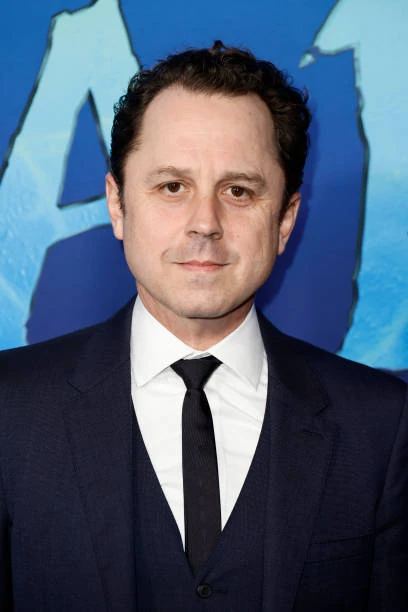
Giovanni Ribisi Net Worth: The Child Actor Who Never Burned Out and Plays Men You Shouldn’t Trust
Categories
- Art
- Articles
- Beauty & Skincare
- Celebrities
- Celebrities|Movies
- Celebrities|The Chronicles
- Chronicles
- Entertainment|Culture
- Event Photos
- Events
- Fashion
- Fashion & Style
- Featured
- Food & Beverage
- Food, Spirits, Wine
- Hamptons
- Hamptons Celebrities
- Hamptons Celebrities|Celebrities|The Chronicles
- Health
- Health & Beauty
- Lifestyle
- Luxury Lifestyle
- Movies|Culture
- Movies|Hamptons Lifestyle
- Press
- Profiles
- Real Estate
- Technology
- The Chronicles
- Travel
- Uncategorized
- Weddings