
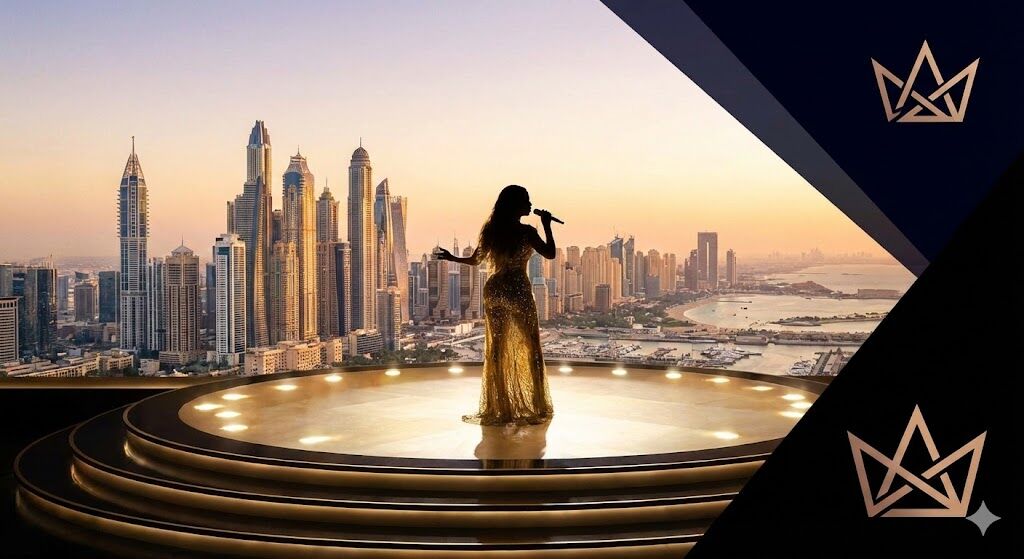
She grossed $500 million on tour. The interesting number is what she kept.
Beyoncé Knowles-Carter crossed the billion-dollar threshold not through album sales, streaming royalties, or endorsement deals. Her $1 billion net worth in 2026 emerged from a strategy most fans never see: vertical integration of every revenue stream under companies she owns outright. The Renaissance World Tour wasn’t just a concert series. It was a demonstration of what happens when an artist treats touring as a production company, not a performance obligation.
Understanding Beyoncé’s wealth requires abandoning the conventional framework for celebrity finances. She doesn’t work for promoters. She owns production companies. She doesn’t endorse brands. She holds equity stakes. The distinction explains everything about how her fortune compounds while other artists’ fortunes plateau.
The Three Tiers of Beyoncé’s Empire
Beyoncé’s business empire operates on three distinct tiers, each generating wealth through different mechanisms. Analyzing these tiers reveals why her net worth continues accelerating while she releases fewer albums and appears less frequently than earlier in her career.
| Tier | Asset | Estimated Value | Why It Matters |
|---|---|---|---|
| Performance Infrastructure | Parkwood Entertainment touring division | $500M+ generated (Renaissance Tour) | Backend participation, not flat artist fees |
| Ownership Stakes | Ivy Park, film production, publishing | Undisclosed, eight-figure annual | Royalty streams independent of touring |
| Brand Equity | Name licensing, strategic partnerships | Appreciating intangible asset | Enables favorable deal terms across all ventures |
The performance tier generates cash flow. The ownership tier creates compounding assets. The brand equity tier provides leverage for negotiating terms unavailable to artists who lack institutional positioning. Together, these three tiers explain how Beyoncé’s wealth continues growing even during periods of relative public absence.
The Renaissance Tour Financial Architecture
The 2023-2024 Renaissance World Tour grossed over $500 million globally, making it one of the highest-earning tours in music history. Media coverage focused on the gross number. Sophisticated observers focused on the structure beneath that number.
Most artists tour under arrangements with Live Nation or AEG, receiving guaranteed fees plus percentage participation in ticket sales. The promoter captures the majority of upside. Risk and reward distribute according to contracts negotiated from positions of relative weakness. Even major artists accept these terms because the alternative requires capital, infrastructure, and operational expertise most performers lack.
Beyoncé’s arrangement inverted this model. Parkwood Entertainment, her production and management company, operated the tour as a principal rather than a contractor. According to Billboard industry analysis, this structure allowed her to capture backend participation at rates substantially higher than standard artist deals. When the tour exceeded projections, the excess flowed to Parkwood, not to external promoters.
Film Rights as Asset Creation
The Renaissance concert film demonstrated the same ownership philosophy applied to content. Rather than licensing film rights to a studio for an upfront fee, Beyoncé released the film through her own distribution arrangement. Theatrical release preceded streaming availability, maximizing revenue across both windows.
This approach treats concert films as appreciating assets rather than promotional materials. The footage, the masters, and the distribution rights remain within Parkwood’s portfolio. Future licensing, rereleases, and derivative content all generate revenue to entities Beyoncé controls.
The Ivy Park Model: Ownership vs. Endorsement
When Beyoncé relaunched Ivy Park through a partnership with Adidas in 2020, the deal structure diverged from typical celebrity endorsements. She didn’t accept a flat fee for her face on marketing materials. She negotiated an ownership stake in the brand itself.
The distinction creates fundamentally different wealth trajectories:
| Endorsement Model | Ownership Model |
|---|---|
| Fixed fee regardless of sales | Percentage of every unit sold |
| Income ends when contract ends | Royalties continue indefinitely |
| No participation in brand appreciation | Equity stake appreciates with brand value |
| Celebrity as marketing asset | Celebrity as business partner |
According to Business of Fashion reporting on celebrity brand partnerships, ownership structures like Ivy Park generate long-term wealth that endorsement deals cannot match. The difference becomes exponential over time as successful brands compound in value while endorsement contracts reset to market rates.
The Wound That Shaped the Empire
Every fortune has an origin story. Beyoncé’s net worth breakdown cannot be understood without examining the early career experiences that shaped her obsession with ownership and control.
Destiny’s Child operated under contracts structured by others. Business decisions, creative control, and financial arrangements reflected the priorities of managers and labels rather than the artists generating the value. Beyoncé observed this dynamic firsthand during her formative years in the industry.
Her father managed her early career, providing valuable guidance but also creating dynamics that many child performers experience: professional success intertwined with family relationships in ways that complicate both. The eventual transition to independent management required navigating personal and professional separation simultaneously.
These experiences produced a strategic philosophy that explains nearly every subsequent business decision. Control everything. Own everything. Trust the infrastructure you build rather than the infrastructure others offer. What critics sometimes describe as perfectionism or difficulty reflects this underlying architecture of asset protection.
The Parkwood Entertainment Structure
Parkwood Entertainment functions as the holding company for Beyoncé’s business interests. Understanding its structure reveals how how rich Beyoncé actually is differs from how rich she appears based on public revenue events.
The company encompasses:
- Music production and publishing
- Film and television production
- Artist management (including her own career)
- Touring and live event production
- Merchandise and licensing operations
This vertical integration means Beyoncé participates in every revenue stream her career generates. When she releases an album, Parkwood owns the masters. When she tours, Parkwood produces the shows. When she appears in film, Parkwood may hold production credits. When merchandise sells, Parkwood captures margins typically lost to licensors.
According to Forbes analysis of celebrity business structures, this level of integration is rare among performers. Most artists outsource production, touring, merchandise, and management to separate entities, each capturing portions of the value the artist generates.
Dynasty Positioning: The Next Generation
Blue Ivy Carter’s Grammy appearance alongside her mother wasn’t nepotism theater. Industry observers recognized it as succession planning made visible.
The Knowles-Carter family structure suggests preparation for generational wealth transfer. Real estate holdings span multiple markets including the Hamptons, Bel Air, and New Orleans. These properties provide non-entertainment asset bases that appreciate independently of career trajectory.
Combined with husband Jay-Z’s $2.5 billion empire, the family controls approximately $3.5 billion in assets. This scale moves the discussion from celebrity wealth to dynasty wealth, requiring different management structures and succession strategies.
The children will inherit portfolios, not just estates. Trust structures, holding companies, and diversified assets create mechanisms for wealth preservation across generations. Whether Blue Ivy pursues entertainment or other fields, the financial infrastructure exists to support multiple paths.
The Scarcity Strategy
Beyoncé releases fewer albums and gives fewer interviews than earlier in her career. This reduced visibility seems counterintuitive for maintaining wealth, but it reflects sophisticated understanding of how scarcity affects value.
According to economic analysis of celebrity brands, oversaturation diminishes pricing power. Artists who appear everywhere command lower rates than artists who appear selectively. The principle applies across endorsements, licensing, and performance fees.
Beyoncé’s relative scarcity maintains premium positioning. When she does release an album, it becomes an event. When she does tour, tickets command premium prices. When she does partner with brands, the association carries more value than partnerships with constantly visible celebrities.
This strategy requires financial security that most artists lack. Only those with substantial existing wealth can afford to reduce visibility without reducing income. The Parkwood structure provides that security, enabling strategic scarcity rather than desperate visibility.
The Comparative Landscape
Beyoncé operates in a peer group that includes Taylor Swift and Rihanna as the only other female artists to cross the billion-dollar threshold. Each achieved that milestone through different strategies.
Taylor Swift’s $1.6 billion emerged from catalog ownership and touring revenue, with less emphasis on brand partnerships. Rihanna’s $1.4 billion came primarily from Fenty Beauty, demonstrating that beauty industry exits can exceed music industry accumulation.
Beyoncé’s model combines elements of both approaches: brand ownership like Rihanna, touring infrastructure like Swift, plus the vertical integration that neither peer has replicated to the same degree. The music billionaire landscape includes multiple viable strategies.
The 2026 Wealth Trajectory
Projecting Beyoncé’s net worth in 2026 requires accounting for several appreciating assets beyond touring income:
| Asset Category | 2024 Estimate | 2026 Projection Factors |
|---|---|---|
| Catalog and Publishing | $100M+ | Music IP appreciating 10-15% annually |
| Real Estate Portfolio | $150M+ | Luxury market appreciation varies by location |
| Brand Equity Stakes | $100M+ | Ivy Park performance and potential exit scenarios |
| Cash and Liquid Assets | $200M+ | Renaissance Tour proceeds, ongoing royalties |
| Parkwood Enterprise Value | $300M+ | Operating business with multiple revenue streams |
These estimates suggest Beyoncé’s billion-dollar status rests on diversified holdings rather than any single asset category. The structure provides resilience against entertainment industry volatility while enabling participation in upside across multiple sectors.
The Bottom Line
Beyoncé’s $1 billion net worth in 2026 reflects two decades of systematic infrastructure building rather than accumulated performance fees. Destiny’s Child made her famous. Parkwood made her a billionaire.
The Renaissance wasn’t an album. It was an asset class. The tour wasn’t a performance series. It was a production company demonstration. Every visible event in Beyoncé’s career connects to invisible structures designed for wealth accumulation and preservation.
For readers managing their own exits, successions, or legacy planning, the model offers transferable principles. Own rather than license. Integrate vertically rather than outsourcing margins. Treat current income as capital for future asset acquisition rather than lifestyle inflation. Build infrastructure that compounds independently of any single revenue event.
The Queen didn’t just reign. She structured.
Related Articles
- Billboard to Billions: How Music’s Biggest Names Built Empires
- Jay-Z Net Worth 2026: The Empire Architect
- Taylor Swift Net Worth 2026: The Eras Excess
- The Difference Between Celebrity Wealth and Dynasty Wealth
For features on legacy wealth, cultural capital, and entertainment industry deal structures, contact Social Life Magazine. For luxury brand activation and event sponsorship opportunities, visit Polo Hamptons.
Subscribe to our print edition for exclusive coverage of how the wealthy actually build wealth. Support independent luxury journalism with a $5 contribution.
Author

Written by
Recent Posts
The Real Reason Smart, Motivated People Don’t Follow Through
Simple Eating Habits That Boost Your Wellness
When to Seek Professional Support for Persistent Mental Health Symptoms
Creative Strategies Couples Use to Pay for Their Big Day
How International SEO Helps Brands Succeed Across Borders
Categories
- 2025 Social Life Events
- Access to Digital + Physical Magazine
- Art
- Articles
- Beauty & Skincare
- Beauty & Wellness
- Business Strategy
- Celebrities
- Chronicles
- Design History
- Design History|Hamptons
- Design Process
- Design Trends
- Event Photos
- Events
- Family
- Fashion
- Fashion & Style
- Featured
- Food & Beverage
- Food, Spirits, Wine
- Hamptons
- Hamptons Celebrities
- Hamptons Design
- Health
- Health & Beauty
- Home & Design
- Home & Living
- Lifestyle
- Luxury Home Design|Design Process
- Luxury Home Design|Design Trends
- Luxury Home Design|Hamptons Design
- Luxury Home Design|Interior Design
- Luxury Lifestyle
- Luxury Living
- Luxury Living|Design Process
- Luxury Living|Hamptons
- Luxury Living|Hamptons Design
- Press
- Profiles
- Real Estate
- Technology
- The Chronicles
- Travel
- Trending
- Uncategorized
- Weddings
- Wellness