
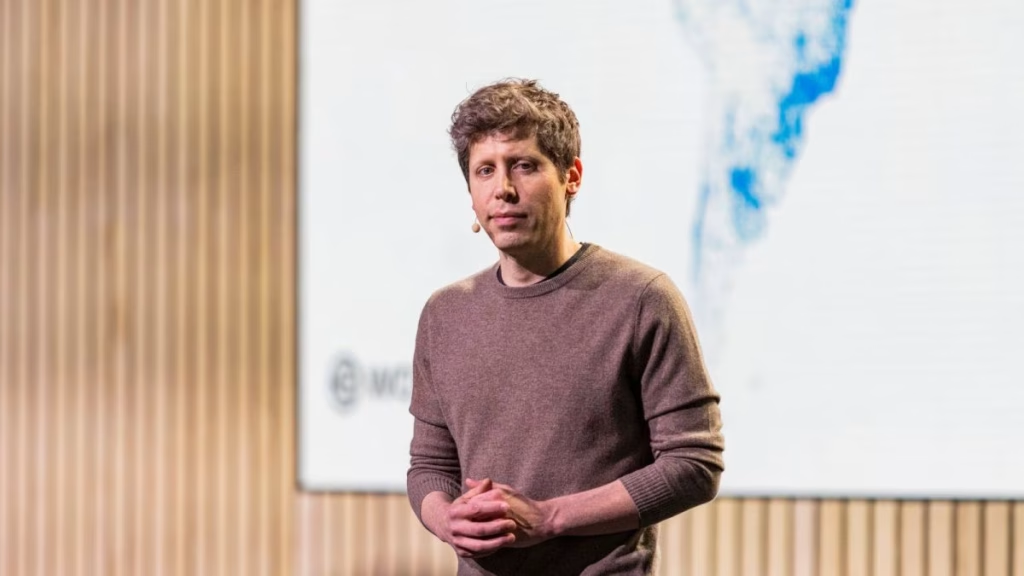
Sam Altman Net Worth 2026: The $76,000 CEO Who Doesn’t Own His $730 Billion Company
Sam Altman net worth 2026 is estimated at $3.3 billion according to Forbes, built entirely from venture capital investments made years before OpenAI existed. He does not own a single share of the company he runs. His annual salary is $76,001, up from $73,546 the year before. He has described his compensation as “whatever the minimum for health insurance is.” OpenAI is valued at $730 billion. Altman cannot financially benefit from its success. That paradox, the most powerful person in artificial intelligence leading a company he has no equity in, makes him the defining cautionary tale of the AI billionaires reshaping American wealth.
Before OpenAI: Stanford, Loopt, Y Combinator
Sam Altman was born on April 22, 1985, in Chicago and grew up in St. Louis, Missouri. He enrolled at Stanford University and dropped out after two years to found Loopt, a location-based social networking app. Loopt was acquired for $43 million in 2012. Altman used the proceeds to seed his own venture fund and begin investing aggressively in early-stage startups.
In 2014, he became president of Y Combinator, the startup accelerator that had launched Airbnb, Stripe, Dropbox, and hundreds of other companies. During his tenure, Altman expanded Y Combinator’s scope and invested in over 400 companies. His portfolio reads like a directory of the companies that defined the 2010s tech economy: Stripe, Airbnb, Reddit, Uber, DoorDash, Instacart. He was Reddit’s third-largest shareholder before its 2024 IPO, holding approximately 9% of the company.
The $3.3 Billion That Has Nothing to Do with OpenAI
Altman’s entire net worth derives from investments made outside OpenAI. The $3.3 billion Forbes figure reflects his venture portfolio: stakes in Stripe (valued at $91 billion), Reddit (public since 2024), Airbnb, Uber, DoorDash, and hundreds of smaller positions accumulated during his Y Combinator years. Bloomberg estimated in 2024 that his holdings included $1.2 billion in various venture capital funds. The Wall Street Journal reported he had invested in more than 400 companies.
Zero of those dollars came from OpenAI. An OpenAI spokesperson confirmed to TechCrunch that Altman held a “quite insignificant” indirect stake through a Sequoia-backed Y Combinator fund, amounting to less than a fraction of a percent, and that it had already been sold. He has repeatedly stated under oath and in public that he owns no equity in OpenAI. The company’s for-profit restructuring may eventually change this, but as of 2026, the man who runs the most valuable AI company in the world cannot cash a single share.
The Firing: Five Days That Shook Silicon Valley
On Friday, November 17, 2023, Sam Altman joined a video conference call with OpenAI’s board. Co-founder and chief scientist Ilya Sutskever informed him he was being fired. The board published a statement saying Altman “was not consistently candid in his communications with the board, hindering its ability to exercise its responsibilities.” Chief Technology Officer Mira Murati was named interim CEO.
See also: Elon Musk’s competing AI empire.
What followed was five days of corporate chaos without precedent in modern technology. Microsoft, which had invested over $13 billion in OpenAI, was furious. CEO Satya Nadella announced that Altman and former president Greg Brockman would join Microsoft to lead a new AI research division. Over 700 of OpenAI’s approximately 770 employees signed an open letter demanding the board resign and threatening mass departure. Sutskever, who had orchestrated the firing, publicly expressed regret within days.
The Reinstatement
By Tuesday night, the board capitulated. Altman was reinstated as CEO. The board that fired him was dissolved. Sutskever was removed. Only one member of the original six-person board, Quora CEO Adam D’Angelo, survived the transition. Altman later told Bloomberg: “All those people that I feel like really fucked me and fucked the company were gone, and now I had to clean up their mess.” He described feeling “fucking depressed and tired” in the aftermath. The reinstatement was not a reconciliation. It was, as the New Yorker described it, “a rout.”
The Equity Paradox: Building the Cathedral Without Owning the Bricks
OpenAI was founded in 2015 as a nonprofit research laboratory. Altman, Elon Musk, Sutskever, and others pledged over $1 billion, though actual contributions totaled roughly $130 million through 2019. The nonprofit structure meant nobody owned equity. When OpenAI created its “capped-profit” subsidiary in 2019 to attract investment, Altman maintained his position as CEO without taking a stake. The decision was framed as alignment with the nonprofit mission. It resulted in the most lopsided power-to-wealth ratio in corporate history.
Altman runs a company valued at $730 billion. He earns $76,001. He owns no shares. His actual wealth comes from bets he placed on other people’s companies a decade ago. If OpenAI’s for-profit conversion eventually grants him equity, the math changes overnight. If it does not, Altman will retire as the person who built the most consequential technology company of the 2020s and captured approximately 0% of its financial value.
Personal Life: Hawaii, Napa, and a Mansion in San Francisco
Altman married Oliver Mulherin, an Australian software engineer, in Hawaii in 2024. Their first child arrived via surrogacy in early 2025. Altman owns a $27 million mansion in San Francisco, where the median household income is $126,730. He sold his Napa Valley ranch. He listed a Hawaii mega-estate in early 2026.
The real estate portfolio, while substantial by any normal standard, is modest relative to his net worth and microscopic relative to the value of the company he leads. Altman’s $27 million house represents 0.8% of his personal fortune and 0.000004% of OpenAI’s valuation. The ratio underscores the central absurdity of his position: he lives well on the returns from investments he made before OpenAI existed, while running a company worth more than most countries that pays him less than a first-year associate at a mid-tier law firm.
The Insider Angle: Power Without Equity
Altman’s story inverts every assumption about how wealth and power relate in technology. Founders own their companies. CEOs receive stock options. The person who builds the cathedral lives in the cathedral. Altman built the cathedral and negotiated himself into a position where he holds the keys but not the deed. Whether this was idealism, oversight, or a strategic calculation that will eventually pay off through the for-profit conversion remains the most expensive open question in Silicon Valley.
On the East End, where AI wealth is reshaping the buyer profile of ultra-luxury real estate, Altman occupies an unusual position. He has the access and influence of a $730 billion CEO but the liquidity of a $3 billion venture capitalist. His purchasing power is real but disconnected from the company that makes him powerful. The model builders of the AI economy generate headlines. Altman generates the most headlines of all. He just cannot cash them.
The Psychology of Working for Free at the Top of the World
There is a question that serious people in serious rooms ask about Sam Altman, and it is a question that resists easy answers because the easy answers all sound like the kind of thing a person would say in a press release rather than in a conversation where truth was the operating currency. The question is: why? Why would a person with $3.3 billion in personal wealth and the demonstrated ability to generate extraordinary investment returns choose to run the most consequential technology company of the decade for $76,001 per year with no equity? Standard answers, mission alignment, idealism about AI safety, a belief that the nonprofit structure served the technology’s long-term interests, are all plausible and all insufficient, because they treat the decision as rational when the decision is, by any financial framework, deeply irrational.
Consider what Altman gave up. If he had negotiated a standard CEO equity package when OpenAI created its capped-profit subsidiary in 2019, even a modest 2% stake would be worth $14.6 billion at the current $730 billion valuation. A 5% stake, common for a founding CEO, would be worth $36.5 billion. Instead he took $76,001 and the psychic income of being the person everyone calls when they want to understand what artificial intelligence will do to the world. Whether psychic income compounds at the same rate as equity is a question behavioral economists will study for decades, and the preliminary evidence from Altman’s own emotional state, “fucking depressed and tired” in the aftermath of his firing, suggests that psychic income has a lower Sharpe ratio than most investors would find acceptable.
The Deeper Read
A deeper truth about Altman’s compensation structure is that it functions as a form of credibility arbitrage. By refusing equity, Altman can claim, and has claimed under oath before the United States Senate, that his motivations are not financial. That claim, whether true or performative or some quantum superposition of both, gives him a moral authority that equity-compensated CEOs cannot access. Sundar Pichai cannot testify about AI safety without the implicit asterisk that Google’s stock price depends on AI products shipping. Jensen Huang cannot discuss responsible AI development without the implicit footnote that Nvidia sells the chips to everyone regardless of their safety practices. Altman, alone among major AI leaders, can stand in front of Congress and say: I make nothing from this. That sentence is true. Whether it is the whole truth is the $730 billion question that nobody in Washington knows how to ask.
Where the Conversation Continues
You are reading this because the relationship between power and wealth is no longer linear. Sam Altman proves that the most influential person in an industry can also be the person who benefits least from its financial explosion.
If your brand, property, event, or company belongs in this conversation, reach us through our contact page.
For premium editorial visibility, explore our paid feature submission process.
Subscribe at sociallifemagazine.com/enflyer for weekly updates.
Polo Hamptons returns July 18 and 25 at 900 Lumber Lane, Bridgehampton. BMW is the title sponsor. Details at polohamptons.com.
Subscribe at sociallifemagazine.com/subscription. Contributions help keep independent luxury journalism going.
Author

Written by
Recent Posts

Powerful Strategies to Stay Ahead in a Fast-Moving Real Estate Market
How Latino Players Have Helped Shape Modern Basketball Culture
10 Best Designer iPhone 18 Pro Cases to Choose From
AI for personal finance: where PennyGuard fits
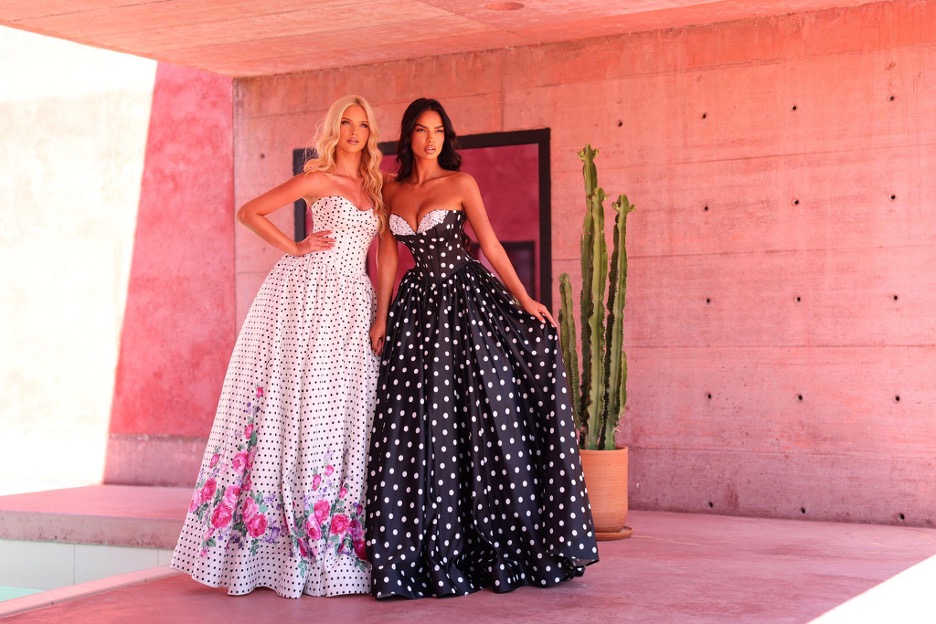
How to Pick a Homecoming Dress for Your Body Type (and Feel Amazing in It)
Categories
- Art
- Articles
- Business of Luxury
- Celebrities
- Culture
- Entertainment
- Events
- Faces of Summer 2026
- Fashion
- Fashion & Style
- Featured
- Finance
- Food, Spirits, Wine
- Hamptons
- Hamptons Celebrities
- Health
- Health & Beauty
- Lifestyle
- Luxury Lifestyle
- Press
- Profiles
- Real Estate
- Technology
- The Chronicles
- Travel
- Uncategorized
- Weddings