

At a benefit dinner in Water Mill, the seating chart circulates before the first drink. Table one belongs to the honoree, and everyone knows it. Table twelve sits two turns from the kitchen door, which everyone also knows. Still, the sharpest guest in the tent holds no ticket, because the Adam Smith impartial spectator has worked rooms like this since 1759.
He is not a person. Rather, he is the figure you assemble inside your own head out of everyone who has ever looked at you. Smith called him the man within the breast. Once you know he is there, a benefit dinner stops being a party and starts being a hearing.
The evening runs on two verdicts at once. One comes from the room, delivered in seat assignments, in who walks over, in how long the walk takes. Another comes from that internal judge, who is not impressed by the tent and cannot be seated. Of course the two verdicts often disagree.
That disagreement is the subject here. Out east, the room’s opinion of you and your own private conclusion rarely match. Notably, the gap between them is the most expensive square footage in the county. Nobody has described it better than a Scottish professor who never saw this ocean.
The Judge Nobody Elected
Smith published The Theory of Moral Sentiments in 1759, seventeen years before the economics book. Part III is where he does the thing that still startles people. He asks a plain question: when you judge yourself, who exactly is doing the judging?
His answer is that you split in two. One half acts. The other half watches the acting and issues a ruling, using standards borrowed from everyone you have ever met. Smith named that second half the impartial spectator, an ideal observer assembled out of secondhand parts.
Because the spectator is built from other people, he is social. Since he is imaginary, he is also yours alone. That combination makes him useful, and it also makes him hard to bribe.
You have met him. He is the reason you rewrote a text three times before sending it to someone whose opinion you claim not to care about. Also the reason you felt strange accepting praise for work you know you phoned in.
Smith’s larger argument about money and rank runs through the whole system his two books describe together. Still, the spectator is the load-bearing piece. Remove him and the rest collapses into flattery.
How the Spectator Gets Built
Smith offers a thought experiment about a man raised in total isolation. Such a man, he says, could no more think about his own character than about his own face. He has no mirror. Bring him into society, Smith writes, and he is immediately provided with the mirror which he wanted before.
The mirror is other people’s faces. You learn what you are by watching what happens to strangers while you speak. After enough of those readings, you stop needing the actual faces, because you carry a working model of them.
Children run the raw version. A seven-year-old checks the room after every joke, openly, with her whole head. Adults run the compressed version, which is why the same check now takes a quarter second and reads as poise.
Out here the model gets calibrated fast. One summer in Sagaponack teaches a newcomer more about his own standing than a decade in a Midtown office ever did. Because the signals are denser, the feedback arrives sooner.
Eventually the internal model outruns the actual audience. That is the strange part. You end up managed by a committee of people who are not in the room, several of whom are dead, at least one of whom you never liked.
Applause Is Not a Verdict
Smith draws a distinction that costs people entire reputations out here. Man naturally desires, he writes, not only to be loved but to be lovely. Being loved means the room approves. Being lovely means you would deserve the approval even if it never arrived.
Two tribunals, then. The first is the crowd, which grades on presentation and speed. Another sits inside, has read the whole file, and grades on the work.
Anyone can win the first court for a season. Buying a table at the right August benefit is a solved problem, priced between twenty-five and one hundred thousand dollars depending on the cause. Whereas the second court cannot be bought, which is precisely why it holds value.
The split between winning applause and deserving it gets a full accounting elsewhere in this cluster. Notably, it explains much of the sorting between Further Lane and the new builds north of the highway. Still, at table twelve the question arrives in a smaller form.
Are you having a good time? Or are you conducting a demonstration of having a good time for an audience that includes yourself?
Table Twelve at 8:40
Here is the scene. The salads have gone. Meanwhile the auctioneer warms up with a Turks and Caicos week that will sell for four times its value, since the bidding is the product and the villa is only the receipt.
At table twelve, a hospitality founder who bought his own seat watches the honoree’s table across the tent. He has measured the distance in tables, not feet. Everyone has, although nobody would admit to the arithmetic.
His phone lies face down, which is a performance. The unstructured Italian jacket is another. Meanwhile his laugh at the auctioneer’s third joke arrives a half beat early, and he hears it land early, and that is the spectator clearing his throat.
Nothing has gone wrong. The evening is pleasant, the wine is fine, the cause is real, and the check will do actual work in actual classrooms. Yet a second track runs underneath, and on that track he is both the defendant and the court reporter.
Smith would recognize the apparatus instantly. Although he would want one more fact before ruling. Is the man watching himself through the eyes of the room, or through the eyes of a judge he built long before he could afford this ticket?
What a Seating Chart Encodes
A seating chart is a balance sheet with flowers on it. Every placement records a transaction, although most of those transactions were never financial.
The development office knows things the guests only sense. Who gave, who pledged and slipped, who brought the donor that mattered more than his own gift. Also who called in March, when nobody calls.
Money buys proximity to the podium, obviously. Yet the tables carrying real weight are seated by relationship rather than by wire transfer. A family three generations into a Southampton hospital board sits where it sits for reasons no line item explains.
So the chart is a public ranking of a private ledger. Guests read it in four seconds, then spend the rest of the night pretending they did not.
Notably, the chart also encodes risk. Placing a new arrival too close too fast tells the older guests that the institution can be purchased, which lowers the price of everything the institution sells. Development directors protect the ranking the way a house protects its odds.
None of this is cynical. Rather, it is the room doing exactly what Smith described. Sympathy runs in every direction at once, and the results get converted into furniture.
Enjoying Yourself, or Performing It
Here is the specific dizziness that gives the evening its texture. Once you notice the spectator, you cannot stop noticing him. And once you cannot stop, you lose the ability to tell a real pleasure from a well-executed one.
You laugh. Then you check the laugh. After that you wonder whether the checking ruined it, which of course it did, and now you are three levels deep at a dinner with a raffle.
Smith understood this trap. He knew the internal judge could turn tyrannical, so he argued for better standards rather than less self-observation. Instead of asking whether the room approves, ask whether a well-informed stranger would.
Brand people live inside the same loop professionally, which is why the marketing version of this problem deserves its own examination. Buyers rarely want the object itself. Generally they want the approval that arrives attached to it.
At the table, the practical version is simpler. Guests who seem most at ease are not the ones without a spectator. They are the ones whose spectator is satisfied, and therefore quiet, and therefore invisible to everybody including the guest.
The People Who Ignore the Judge
Every season produces two or three guests who appear to have switched the spectator off entirely. They are magnificent for about eleven weeks.
Such a guest arrives in June, takes the best table at every dinner, sponsors the after-party, and photographs beautifully doing it. Because he feels no internal friction, he moves faster than anyone else in the room. Speed reads as confidence, and confidence sells.
Then Labor Day comes. Invitations for the following June get built in February, quietly, by four people on a call. That is where the absence finally gets priced.
What the room punishes is not ambition. Ambition is the local dialect. Rather, the room punishes the man who never once imagined how he looked from the next chair. Since that lapse predicts every other lapse he will make with their names attached, the pricing is efficient.
Smith saw the pattern in 1759 and gave it a cold description: the man who wants praise without caring whether he deserves it. Such a man is not evil. He is simply running on one tribunal, and one tribunal is a thin structure.
Eventually a season ends. The tent comes down on the Bridgehampton field. And a call gets made about next year that he never hears about.
The Host Who Runs a Good Room
Hospitality, done properly, is applied Smith. A great club manager, a great maitre d’, a great hotel director: each one carries an unusually accurate model of how every guest wants to be seen.
Watch a general manager at a Bridgehampton club during Saturday lunch. He greets the founder by first name and the founder’s mother-in-law by hers, since he knows which recognition actually lands.
The skill is not memory. Rather, it is running other people’s spectators in parallel with his own, then adjusting the room until each internal judge is satisfied. Guests call the result warmth. Warmth is the visible surface of very fast arithmetic.
Objects do this work too, which is why the watch and the boat are not frivolous even when they look it. Smith had a soft spot for beautiful useless things, a case made in defense of the possessions nobody strictly needs.
Still, a room outperforms an object. A well-run dinner tells forty people at once that they were correctly understood, and that is rarer than anything on the auction block. Hotels that grasp this charge accordingly, particularly in August.
The Limits of the Man Within
Now the honest part. The impartial spectator is not actually impartial, and Smith knew the risk better than his admirers do.
Your internal judge gets assembled from the people around you. Given that, a man who has spent thirty years exclusively among the very rich builds a judge with very rich opinions. The tribunal gets captured by its own jurisdiction.
Smith worried about this failure elsewhere in the same book. There he argues that admiring the rich and neglecting the poor corrupts our moral sentiments at the root. So the judge can be trained badly, and often is.
Also, the spectator is a poor engineer. He is good at whether you behaved well and useless at whether the deal was structured well. Plenty of people out here carry a beautifully calibrated conscience and a terrible term sheet.
And the tribunal can turn cruel. Smith’s own version has a stoic streak that borders on self-punishment. A judge with no mercy produces a person who cannot accept a compliment, which is its own species of vanity.
Even so, a flawed internal court beats no internal court at all. The alternative is a life graded entirely by whoever bought the table next to yours.
Where The Conversation Continues
Social Life Magazine has spent its summers inside these rooms, which is a different thing from covering them. Twenty-five thousand print copies move hand to hand each season, across Southampton, Bridgehampton, East Hampton and Sag Harbor. Another eighty-two thousand people open the email.
For a private club, a hotel group, or a hospitality brand, that audience is not a media buy. It is the seating chart. Presence in the July issue tells the room where you belong, and the room is very good at reading exactly that.
Polo Hamptons in Bridgehampton works the same way, although outdoors and in daylight. Brands that show up there stop being advertisers and become part of the scene guests describe on Sunday. Meanwhile the guest house in Sag Harbor puts a smaller number of the right people inside your product for a weekend.
The issues close early, because the pages are finite and the categories are held exclusive. One private club per season. One hotel partner. If it is not you in July, it will be somebody whose name your own guests repeat all August.
The conversation is already underway at table twelve. Surely the only question left is whether your brand is seated.
Author

Written by
Recent Posts

The New York Women’s Foundation’s 2026 Neighborhood Dinner

Marco Maranghello

The Baker House 1650
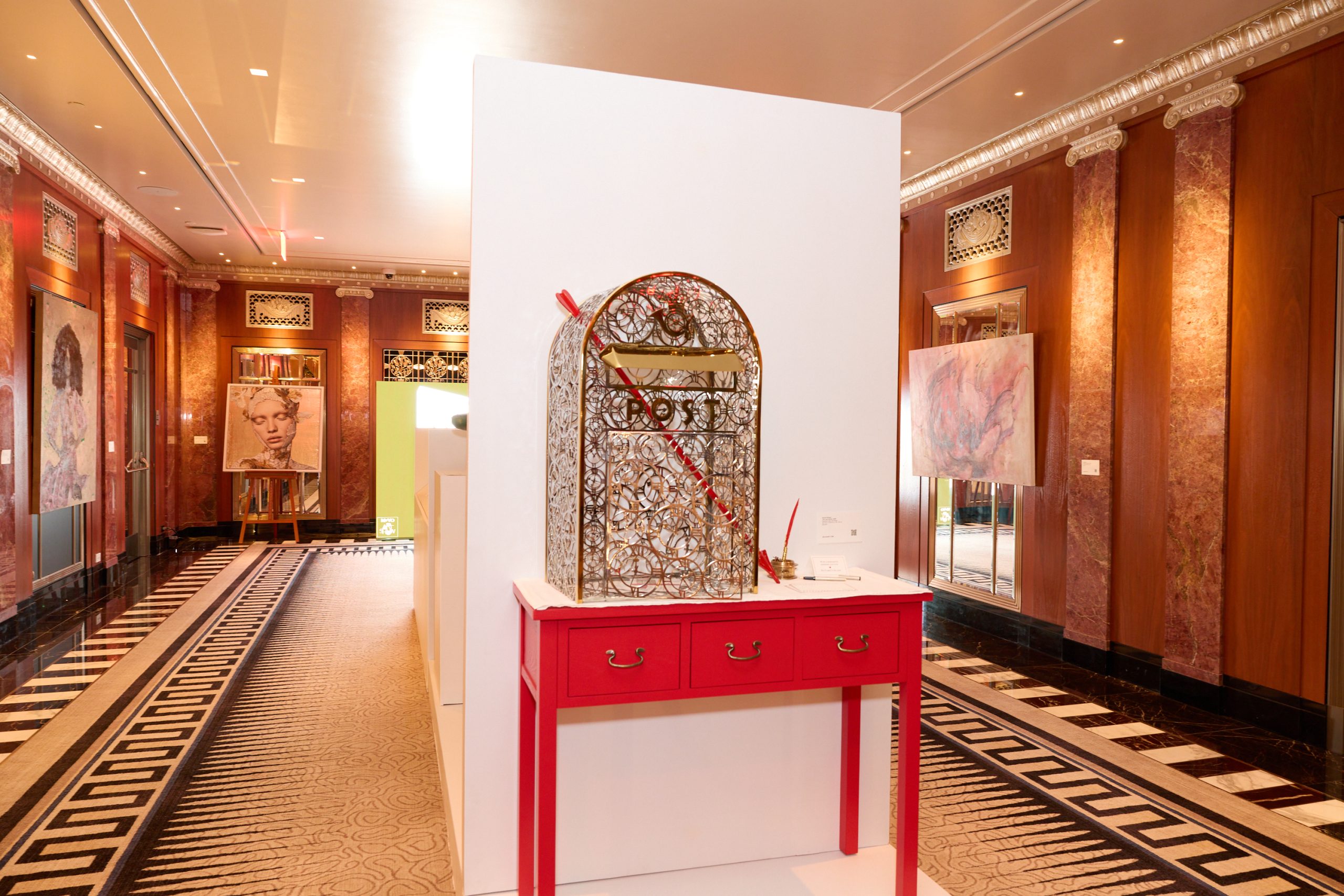
MvVO ART Show

Casita Maria Center for Arts and Education
Categories
- Art
- Articles
- Business of Luxury
- Celebrities
- Culture
- Entertainment
- Events
- Faces of Summer 2026
- Fashion
- Fashion & Style
- Featured
- Finance
- Food, Spirits, Wine
- Hamptons
- Hamptons Celebrities
- Health
- Health & Beauty
- Lifestyle
- Luxury Lifestyle
- Press
- Profiles
- Real Estate
- Technology
- The Chronicles
- Travel
- Uncategorized
- Weddings