
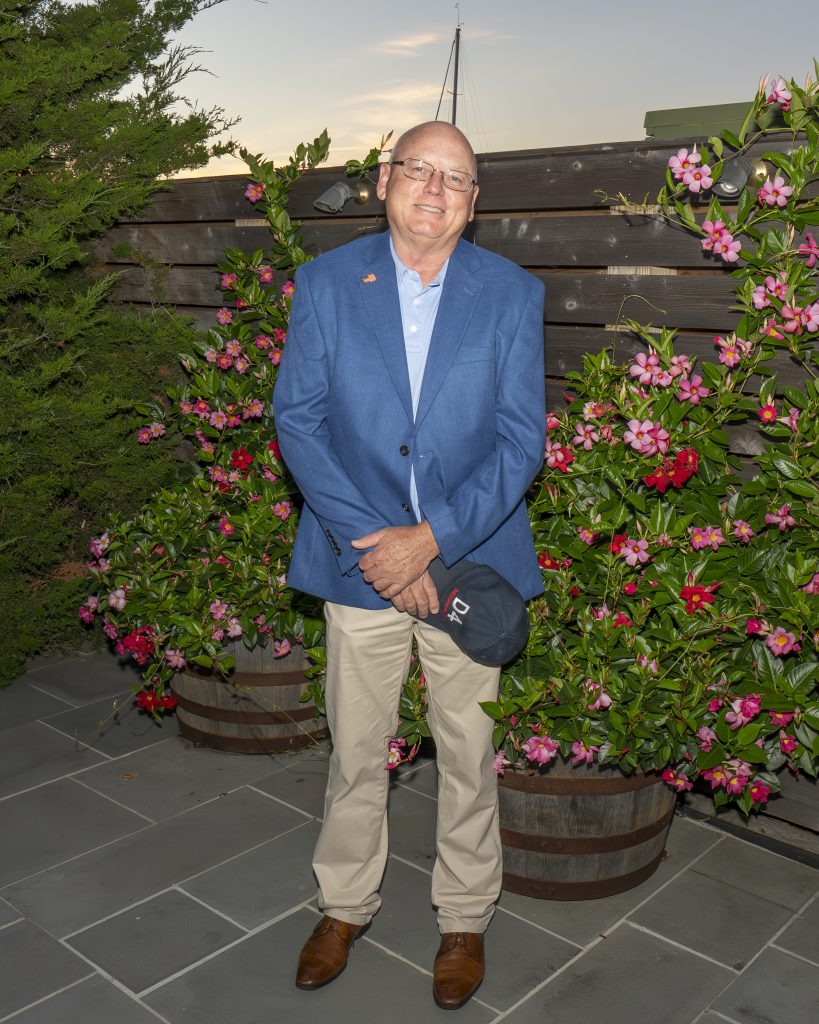
Carl Boyanton has spent 40 years close enough to America’s food supply to know that what ends up on a supermarket shelf is only the final chapter of a much bigger story.
The self-made entrepreneur and agricultural pioneer has worked the warehouse floor, built produce businesses, imported and exported food, dealt with transportation and food safety, and watched entire agricultural movements rise from the margins. He was getting involved in organic produce in the 1980s, long before organic became a fixture in American supermarkets. Today, his attention is focused on what he believes could be the next major shift in agriculture: regenerative farming. “I believe that’s part of the future,” he says.
Boyanton is featured in “Rejuvenation Nation,” a documentary project examining regenerative agriculture, soil health, nutrition, and the future of how America grows its food. Unlike someone discovering the movement from the outside, Boyanton approaches it with decades of experience in the industry and a farm of his own where he is putting the ideas to the test.
He Has Seen Agricultural Trends Come and Go
Boyanton grew up in Picayune, Mississippi, and began his career as a warehouse laborer at Charlie’s Produce. He eventually moved into leadership and built businesses of his own, gaining experience across the produce industry. “My company was among the early companies getting into organic back in the 1980s, and it took about 15 years before it became mainstream,” he said.
He sees regenerative agriculture facing a similar test, although he believes the transition could be even harder. Organic agriculture primarily changed what farmers produced and what consumers purchased. Regenerative agriculture requires farmers to change how they actually work the land. “Traditionally, you till the soil,” he said. “When you till the soil, carbon and nitrogen are released, and then you need fertilizer to replenish the soil.” Regenerative farming takes an entirely different approach, seeking to reduce soil disturbance and rebuild the health of the land. For someone who has spent decades thinking about agriculture commercially, that distinction is significant.
The Soil is the Story
Boyanton uses romaine lettuce to explain why. “Some farmers rotate crops like romaine with other tilled crops such as broccoli or cauliflower. This rotation prevents one crop from depleting all the soil’s nutrients. However, other farmers replant the same crop repeatedly, causing disease to show up and weakening the crop. A lot of the land used for lettuce and romaine has been used for the same crop for years or decades. Every growing area is also different; crops are grown all over the US and Mexico. In Yuma, for example, they alternate with wheat or soybeans.”
He dives deeper into these key practices in “Rejuvenation Nation,” which examines the relationship between soil, farming, food and human health, following experts working to develop agricultural practices that can be productive without continually exhausting the resource at the foundation of the entire system. For Boyanton, the question was ultimately practical: Can it work?

He Bought a Farm to Find Out
A few years ago, Boyanton bought a farm in Mississippi and turned it into his own testing ground. “I want to determine what we can grow commercially in Mississippi,” he said. The property is less about producing a particular crop than figuring out what is possible using regenerative methods, particularly crops that are heavily produced in other parts of the country. “We need to diversify where we grow our food,” he said. “California isn’t going to be able to supply everything forever.”
He believes Mississippi has far more agricultural potential than it gets credit for. “We can grow just about anything here,” Boyanton said. “It’s a matter of figuring out the process.” He plans to give away the produce from the farm, allowing the property to function primarily as a research operation.
From Healthy Soil to Safer Food
Boyanton’s interest doesn’t stop when a crop leaves the field. His background in produce has also drawn him toward food safety and shelf life. He is involved with a patented water-based technology intended to address pathogens including E. coli, salmonella, and listeria while remaining food safe. He is also examining its potential to extend the shelf life of produce.
One experiment involved zucchini. Boyanton treated the vegetable, placed it in a Ziploc bag and put it in his refrigerator. Then he forgot about it. “Forty-one days later, I took it out, cut it up and ate it,” he said. It is the kind of hands-on test that captures Boyanton’s approach. He wants to see what happens in the real world, not simply discuss what might happen in theory.
His interest in food also extends to nutrition. Through a charitable organization, he has worked on providing healthy foods to people dealing with chronic diseases, including medically tailored boxes of fruits and vegetables designed around conditions such as diabetes and high cholesterol. For Boyanton, these subjects are connected. The health of the soil affects the crops. The crops become food. And food ultimately affects people.
The Next Chapter
Boyanton knows that changing agriculture will not happen overnight. “I’ve been in produce for so long, though, I know this is a long process,” he said. But he also knows what it looks like when an idea that once seemed unconventional becomes part of the mainstream. That is what drives him to take a stand in “Rejuvenation Nation.”
Author

Written by
Recent Posts
Carole Crist, The Former First Lady of Florida is Digging Deep With Rejuvenation Nation
Carl Boyanton Has Spent 40 Years Watching America’s Food System Change
Citymeals Hamptons Bash: Inside Lizzie and Jonathan Tisch’s Bridgehampton Soirée

Velvet Rope Wars: Inside Manhattan’s Billionaire Battle for the City’s Most Exclusive Members-Only Clubs

Rejected: The Secret Committees Deciding Who Gets Into Manhattan’s Private Clubs
Categories
- Art
- Articles
- Business of Luxury
- Celebrities
- Culture
- Entertainment
- Events
- Faces of Summer 2026
- Fashion
- Fashion & Style
- Featured
- Finance
- Food, Spirits, Wine
- Hamptons
- Hamptons Celebrities
- Health
- Health & Beauty
- Lifestyle
- Luxury Lifestyle
- Press
- Profiles
- Real Estate
- Technology
- The Chronicles
- Travel
- Uncategorized
- Weddings