

Tom Ripley does not want justice. He wants the shirts.


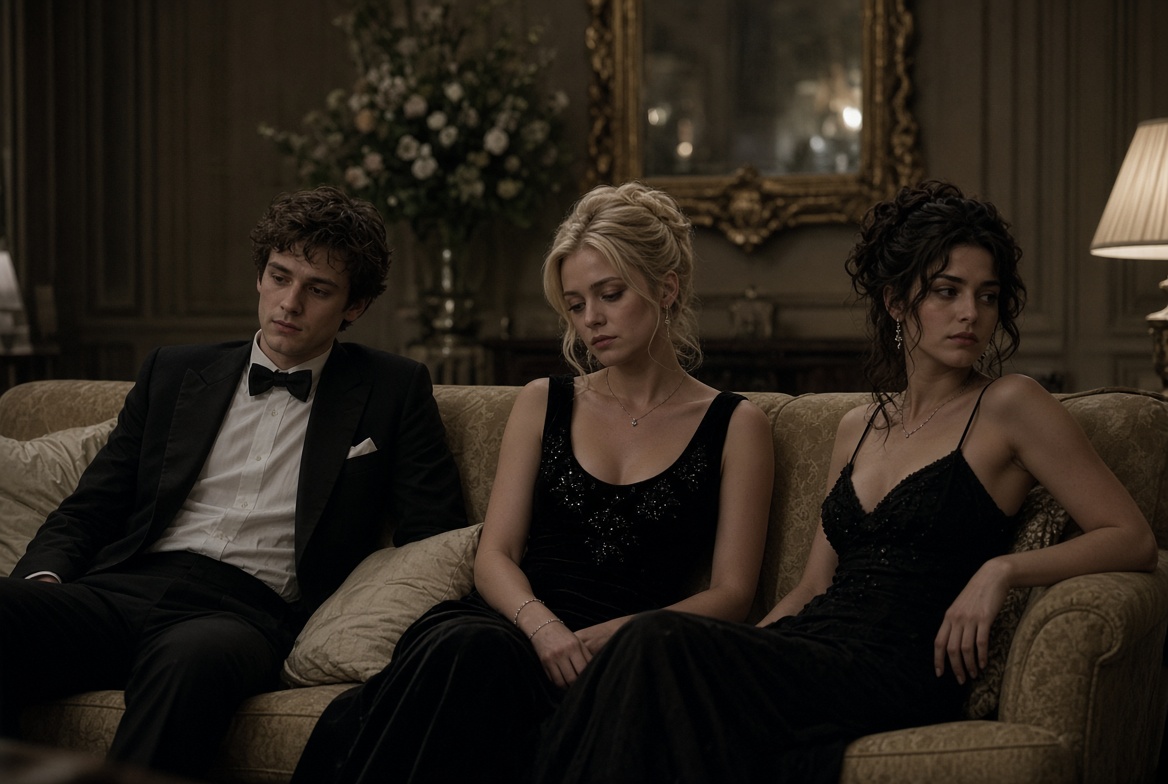

Anthony Minghella understood the skill eat-the-rich cinema later decorated and called a hunt. Study the voice. Study the jacket. Borrow the light in Italy. Become the person the room already agreed to like. That is not a wedding-night chase across a lawn. That is networking with the safety off.
That is why the 1999 film opens Move Through It on the Prestige Watchlist. Status can be learned, stolen, or sold. The picture should show the technique. This one does.
What the picture actually is
Patricia Highsmith published the novel in 1955. Minghella wrote and directed the adaptation. Paramount released it on Christmas Day 1999. Budget: $40 million. Worldwide gross: about $129–138 million depending on the tally. Matt Damon is Tom. Jude Law is Dickie Greenleaf. Gwyneth Paltrow is Marge. Philip Seymour Hoffman is Freddie Miles, the only person in the movie who can smell a fake in the first minute.
Five Oscar nominations followed, including Law for supporting actor. The culture kept the stills of the boat and the palazzo. Operators should keep the scenes where Tom practices Dickie’s signature in a cheap room.
Herbert Greenleaf pays Tom to go to Italy and retrieve a son who will not come home. The errand is a job. Tom turns it into an apprenticeship. Then he turns the apprenticeship into a substitution. The talent in the title is not murder. Murder is what happens when the apprenticeship runs out of room.
The scorecard the Amalfi hides
| Player | What they have | What Tom takes | Steal this — then stop |
|---|---|---|---|
| Tom Ripley | Ear, hunger, a practiced shame | The life | Study is not the same as replacement |
| Dickie Greenleaf | Trust fund, boat, ease | Nothing on purpose | Ease is the hardest thing to fake for long |
| Marge Sherwood | Taste, loyalty, the written record | Her certainty | The partner who writes things down is dangerous |
| Freddie Miles | Instant class radar | His patience | Every room has one Freddie. Do not amuse him. |
| Meredith Logue | A name Tom can borrow | A door | Borrowed introductions expire |
| Herbert Greenleaf | The check that starts the plot | A son-shaped story | The client is not your friend |
Minghella’s own house is already on this site through Max — the son who grew up on those sets, later walked into Industry, and knew what a room costs. The father’s film is the primer. The son’s show is the conveyor belt after the yacht.
The talent is attention
Ripley’s first skill is not violence. It is noticing what the rich do not bother to hide because they assume you cannot use it.
Dickie leaves a jacket on a chair. Tom tries it on when the room is empty. Dickie plays jazz like a hobby. Tom learns it like a language. Dickie signs a check without looking. Tom practices the hand.
That is the useful half. Every ambitious guest on a polo Saturday is running a softer version. You listen for the host’s stories. You match the table’s volume. You do not correct the name of the beach.
The film’s warning is the second half. When noticing becomes inhabiting, you are no longer networking. You are erasing someone. Highsmith was not writing a career guide. Minghella was not either. The spoke exists because the first hour is the most precise study of status fluency American prestige cinema has.
Steal this: copy the homework, not the identity. Fluency is legal. Substitution is the plot.
Freddie Miles is the exam
Hoffman plays the friend who cannot be charmed because he was born inside the joke. Freddie looks at Tom and sees a crease in the wrong place. That look is the whole East End in August. New money can buy the cabana. It cannot buy the pause before Freddie speaks.
Working Girl is the daylight twin. Tess has the idea. The boss has the office. Credit moves when the idea is spoken a second time. Ripley is what happens if Tess decided the only way to keep the idea was to become the boss in the dark.
Wall Street hires you with competence. Ripley hires you with belonging. Industry is the honest sequel: the twenty-three-year-old who does not know which end of the phone to use, trying not to become Tom while learning Dickie’s manners on a trading floor.
What the film refuses
It refuses to make Italy the villain. The light is innocent. The boat is innocent. Dickie is careless, not a system.
It refuses to make poverty a sermon. Tom’s hunger is specific. He wants this life, not a fairer distribution of lives.
It refuses the souvenir ending. There is no moral credit in watching a palazzo. There is a technique, and then a body.
That is why this spoke does not live on the eat-the-rich pillar. Saltburn wants you to feel the house. Ripley wants you to hear how a laugh is copied.
Hamptons residue
A guest who studies the host’s table the way Tom studies Dickie’s jackets is either a future partner or a problem. The tell is whether they start speaking in the host’s stories by Sunday.
Polo weekend is a mobility machine if you treat it like Working Girl. It becomes Ripley when someone leaves wearing another person’s season.
Freddie is already on the lawn. He will not announce himself. He will ask one question about last August and wait to see if your answer has a crease.
Decoder: watch it like a guest who plans to leave as himself
1. What is Tom actually good at in hour one?
Attention. If you skip to the boat murder, you missed the class.
2. Who cannot be fooled?
Freddie. Locate that person in every room you enter.
3. What is being borrowed?
Voice, jacket, name, light. Name the object. Borrowing a name is different from borrowing a laugh.
4. Where does study become substitution?
The signature. When you can sign as them, you have left networking.
5. Monday move.
After the next dinner, write down three things you noticed and zero things you performed. If the list is inverted, you are already in Italy.
How this spoke sits in the cluster
Watch order inside Move Through It: Working Girl, then Ripley, then Wall Street. Daylight channel. Dark channel. Recruitment spell. Glengarry is the floor. Catch Me If You Can is the uniform.
Make It is the legal version of ambition — percentages on paper. Ripley never asks for equity. He asks for a life. That is why he does not belong in Hub A.
FAQ
Is this a how-to?
No. It is a diagram of a skill that becomes a crime when it does not stop.
Book or film first?
Film for the jackets and Hoffman. Book if you want Highsmith’s colder engine.
Why Damon?
He can play hunger without announcing it. The Damon ledger is about the checks he did not take. Ripley is about the life he could not buy.
**What about the Netflix Ripley?**
Different camera, same homework. This spoke is Minghella because the cluster is theatrical and Hoffman is the exam.
What should I watch next?
Working Girl. Then stop dressing like Dickie.
Author

Written by
Recent Posts

World Cup Injury Attorney for Vancouver Events
What a 3-Carat Engagement Ring Actually Costs in 2026: The Real Numbers
The Skincare Habits That Make a Real Difference Over Time
Hamptons-Ready Beauty: Polished Makeup for Long Summer Days
Is Now a Good Time to Sell a Home in NJ?
Categories
- Art
- Articles
- Business of Luxury
- Celebrities
- Culture
- Entertainment
- Events
- Faces of Summer 2026
- Fashion
- Fashion & Style
- Featured
- Finance
- Food, Spirits, Wine
- Hamptons
- Hamptons Celebrities
- Health
- Health & Beauty
- Lifestyle
- Luxury Lifestyle
- Press
- Profiles
- Real Estate
- Technology
- The Chronicles
- Travel
- Uncategorized
- Weddings