
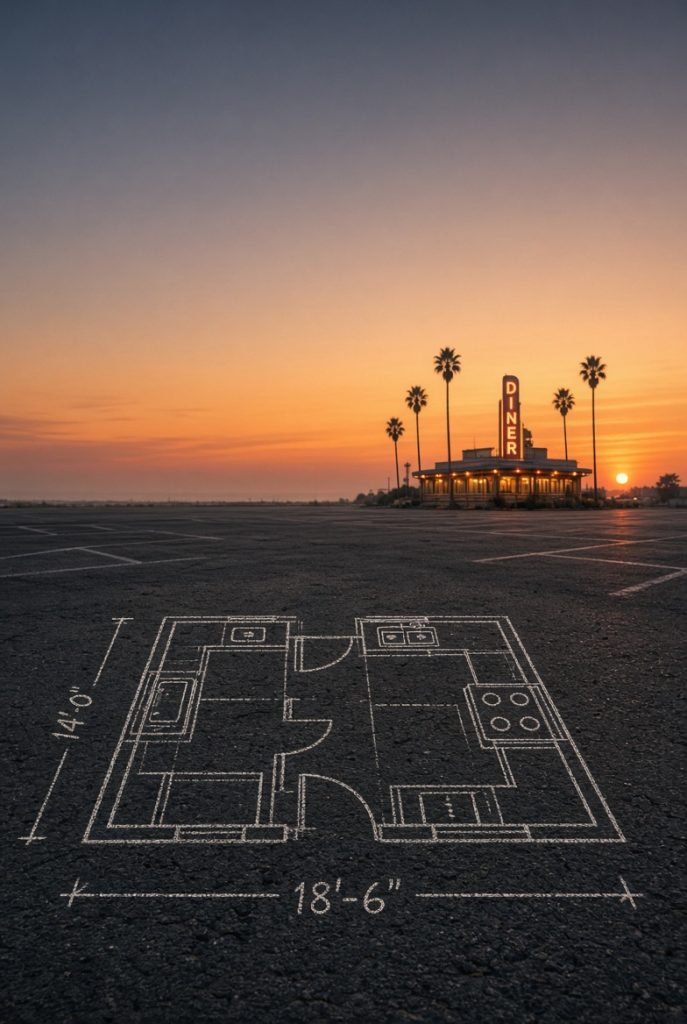
The useful scene in The Founder is not the first bite of a hamburger. It is a kitchen floor used as a chalkboard.


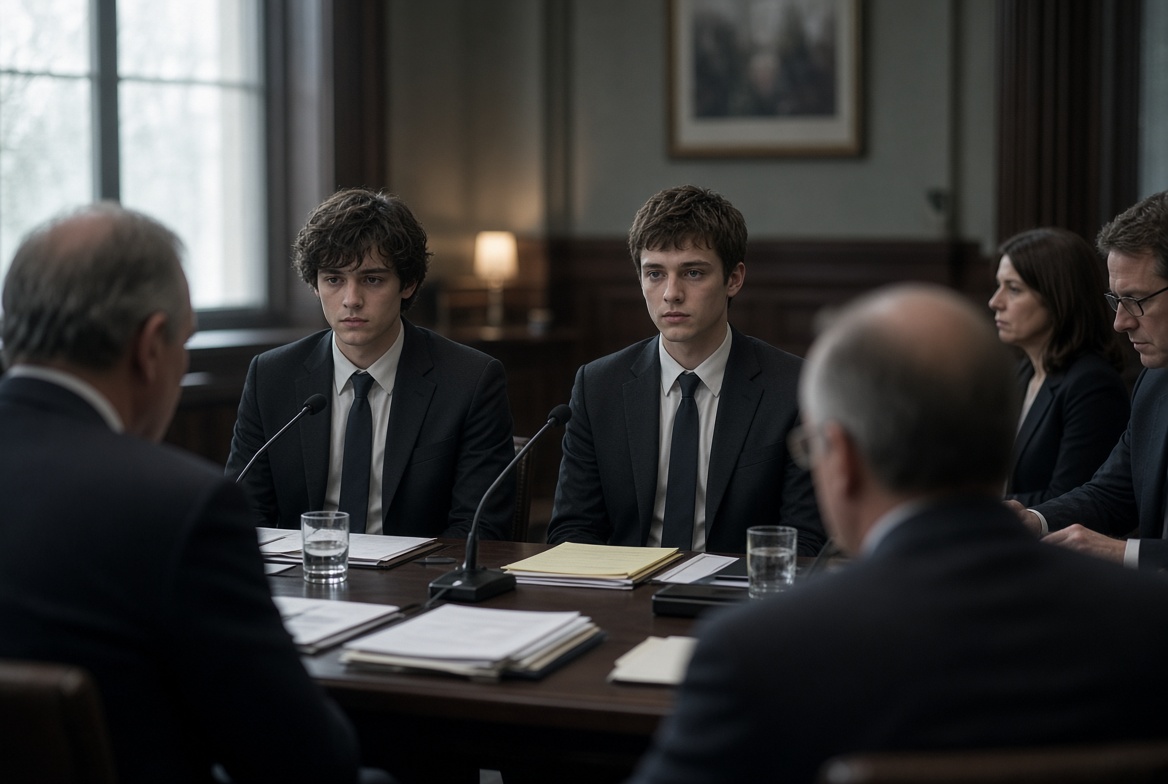
Mac and Dick McDonald chalk the Speedy Service System on asphalt in San Bernardino. Stations. Seconds. No carhops. A restaurant that works like a factory. Ray Kroc, a 52-year-old milkshake-machine salesman, watches it the way a hungry man watches a lock click open.
He does not invent the lock. He franchises the key. Then he changes the locks.
That is why John Lee Hancock’s 2016 film sits in Make It on the Prestige Watchlist, directly after The Social Network. One movie is a cap table. This one is a contract. Same lesson. Worse food.
The title is the joke. The brothers founded the thing. Kroc founded the company that got to keep the name.
What the picture actually is
Robert Siegel wrote it. Michael Keaton plays Kroc as a salesman who has already died a few times on the road. Nick Offerman and John Carroll Lynch play the brothers as craftsmen who think quality is a clause. The Weinstein Company released it wide on January 20, 2017. Common budget figure: $15 million (published ranges run $7–25 million). Worldwide gross: $24.1 million. No Oscar nominations. The culture kept it anyway because operators recognized the document.
Kroc wants to scale San Bernardino. The brothers want to protect the kitchen. He becomes their franchise agent. He signs what they hand him. Then he meets Harry Sonneborn, who tells him the sentence that relocates the whole picture: you are not in the hamburger business. You are in the real-estate business.
From there the movie is a tutorial in how a middleman becomes a landlord of the brand. New entity. Land under the stores. Leverage against the original contract. A buyout. The number the film lands on is $2.7 million. The handshake royalty the brothers thought they had does not survive the paper.
The scorecard the arches hide
| Player | What they brought | What the paper did | Steal this |
|---|---|---|---|
| Mac & Dick McDonald | Speedy Service, the name, the first store | Invented the system; sold the company | A perfect kitchen is not anti-dilution |
| Ray Kroc | Territory, stamina, the will to scale | Became “founder” in the public record | Persistence plus a lawyer beats a recipe |
| Harry Sonneborn | The land model | Moved the profit off the burger | Ask what business you are actually in |
| Joan Smith / later Joan Kroc | Taste, later capital and cover | The personal merger | The room changes when the marriage does |
| Franchisees | Local cash and labor | Paid rent to the new structure | Owning a store is not owning the system |
| The handshake royalty | A spoken 1% | Not in the contract | If it is not written, it is dialogue |
Our restaurant-wealth file already says the quiet part: dining rooms rarely make the chef rich. The Founder is the chain-scale version. The kitchen is the craft. The land and the license are the fortune.
Origin stories are marketing
McDonald’s still sells a barn and two brothers when it needs warmth. That is branding. Kroc’s autobiography sold a salesman of destiny. That is branding too. The film is useful because it lets both myths sit on the table and then watches the contract eat one of them.
Ralph Lauren understood the same split from the other direction. The Bronx tie salesman did not inherit polo. He licensed the feeling and kept the label. Origin can be a costume. The trademark is the firm.
The Social Network rhymes line for line. Eduardo brings checks. The twins bring a club. Mark keeps the thing. Here the brothers bring the system. Kroc keeps the name. In both pictures the person who “was there first” learns that first is a story you tell after the closing.
Steal this: if your value is “I had the idea,” you are already the McDonald brothers in act two. Put the idea in a document that pays when someone else scales it.
You are not in the burger business
Sonneborn’s line is the decoder for half the East End.
A polo weekend thinks it is a sport. It is a hospitality and sponsorship machine. A magazine thinks it is pages. It is a list, a rate card, and twelve peak weekends. A designer showhouse thinks it is taste. It is a catalog that brands cannot leave.
Kroc wins when he stops selling mixers and starts collecting rent on the ground under other people’s labor. That is the empire path versus the career path in a paper hat. Fees cap. Ownership compounds.
The milkshake machine is not a quirk. It is working capital dressed as product. Kroc uses equipment debt the way a later founder uses a priced round: to change who has to say yes.
What the film gets loud
Keaton makes Kroc watchable, which is dangerous. Salesmen photograph better than brothers who want to go home at night. Hancock lets you feel the scale as virtue until the buyout. Then the virtue is just speed.
Do not confuse that heat with a recommendation. The spoke is not “be Kroc.” The spoke is “see the paper Kroc used.” The brothers’ fatal courtesy was treating a handshake like a ratchet. Saverin made a version of the same mistake in a deposition room.
Hamptons residue
Two partners open a season. One designed the guest experience — the kitchen, the staff week, the way the house photographs. The other sold the weekends and wants more dates, more sponsors, a third couple in September.
If the operating agreement still says “we started this together,” you are San Bernardino in 1954. If it already says who can add dates, who owns the list, and what happens when a sponsor wants a new class of membership, you are Sonneborn.
Trade fixtures for magazine pages only works if the pages are not a handshake. The feature has to live in a rate card. Otherwise you are the brothers taking a verbal 1% and smiling for the brand film.
Decoder: watch it like a partner
1. Who built the kitchen?
The brothers. Write their names down. Then watch who keeps the arches.
2. Where does the money actually sit?
Not in the patty. In the land and the license.
3. What was promised off-paper?
The royalty. Treat every off-paper promise in your own deals as already dead.
4. When does the title change meaning?
The word “founder” moves from inventor to owner. Notice the move.
5. Monday move.
Open the last partnership. Circle the assignment clause, the exclusive-agent language, and the buyout formula. If any of those is missing, you are in San Bernardino.
How this spoke sits in the cluster
Watch order inside Make It: The Social Network, then The Founder, then Moneyball. First the cap table. Then the contract. Then the hiring model that ignores pedigree. Air and Jerry Maguire are the backend pair after that.
Keep It is the sequel Kroc never filmed: what a family does once the name is an asset. Signal It is what the arches became — taste as a mark the whole country can read at 70 miles an hour.
FAQ
Is the $2.7 million figure real?
It is the buyout number the film uses for the brothers’ sale. Treat it as the movie’s ledger line, then go read the corporate histories if you are writing a contract off this page.
Did Kroc “steal” McDonald’s?
He scaled it and out-lawyered the inventors. Theft is a moral word. The paper is a technical one. This spoke is about the paper.
Why did the movie flop?
$24.1 million worldwide on a mid-teen budget, dumped into a January weekend against Split and Hidden Figures, Weinstein calendar chaos. The audience that needed it was not buying tickets. They were in franchise meetings.
Is this anti-franchise?
No. It is anti-handshake.
What should I watch next?
The Social Network if you have not. Moneyball if you already know who kept Facebook.
Author

Written by
Recent Posts
What a 3-Carat Engagement Ring Actually Costs in 2026: The Real Numbers
The Skincare Habits That Make a Real Difference Over Time
Hamptons-Ready Beauty: Polished Makeup for Long Summer Days
Is Now a Good Time to Sell a Home in NJ?

The Hidden Work Behind a Seamless Hotel Weekend
Categories
- Art
- Articles
- Business of Luxury
- Celebrities
- Culture
- Entertainment
- Events
- Faces of Summer 2026
- Fashion
- Fashion & Style
- Featured
- Finance
- Food, Spirits, Wine
- Hamptons
- Hamptons Celebrities
- Health
- Health & Beauty
- Lifestyle
- Luxury Lifestyle
- Press
- Profiles
- Real Estate
- Technology
- The Chronicles
- Travel
- Uncategorized
- Weddings