
By Social Life Magazine | Hamptons Entertaining
You’ve invested in quality caviar. Now comes the part that separates memorable experiences from disappointing ones: the service. How you present, store, and serve caviar matters as much as what you bought. Get it wrong, and even exceptional roe becomes ordinary. Get it right, and you create moments guests remember for years.
After covering countless Hamptons events where caviar service ranges from impeccable to cringe-worthy, we’ve compiled everything you need to know. This guide covers proper storage, ideal serving temperatures, traditional accompaniments, and the etiquette that signals you actually know what you’re doing.
Storing Caviar Before Service
Proper storage begins the moment caviar arrives and continues until the tin opens. Mistakes during this phase compromise quality before service even begins.
Temperature Requirements
Caviar requires colder storage than standard refrigeration provides. The ideal range falls between 28-32°F (-2 to 0°C), which is colder than most home refrigerators maintain. Consequently, store caviar in the coldest part of your refrigerator, typically the back of the lowest shelf.
Some serious enthusiasts maintain dedicated caviar refrigerators set to proper temperatures. While this level of commitment isn’t necessary for occasional consumption, it explains why estate kitchens often include specialized storage. Additionally, placing the tin on ice inside the refrigerator helps maintain optimal temperature in standard units.
Unopened Shelf Life
Quality caviar typically remains fresh for 4-6 weeks when properly refrigerated and unopened. However, fresher is always better. The tin’s packaging date or “best by” indication provides guidance, though sourcing from reputable suppliers who rotate inventory matters more than printed dates.
Never freeze caviar intended for direct consumption. Freezing ruptures the delicate egg membranes, destroying the texture that defines the experience. Thawed caviar becomes mushy and loses its characteristic pop. If you must store caviar long-term, accept that frozen product suits cooking applications only.
Once Opened
After opening, caviar’s clock accelerates dramatically. Consume opened tins within 2-3 days maximum, ideally within 24-48 hours. Air exposure oxidizes the eggs and degrades flavor rapidly. Furthermore, temperature fluctuations from repeated refrigerator access compound the deterioration.
If you can’t finish an opened tin immediately, press plastic wrap directly onto the caviar surface before resealing. This minimizes air contact. Nevertheless, plan your portions to avoid significant leftovers whenever possible.
Preparing Caviar for Service
The transition from refrigerator to table requires careful timing and technique.
Tempering the Caviar
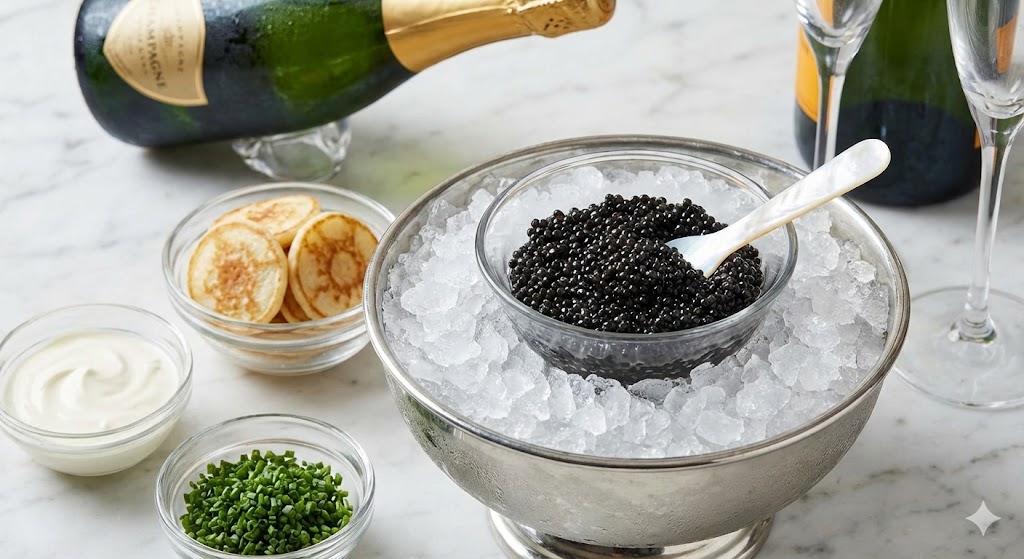
Remove caviar from refrigeration 10-15 minutes before serving. This brief tempering allows the eggs to warm slightly, releasing aromatic compounds that cold temperatures suppress. However, don’t let caviar reach room temperature entirely or sit out for extended periods.
The goal is subtle warming, not actual warmth. Caviar should feel cool when it hits your palate, not cold. This nuance distinguishes thoughtful service from careless presentation. Similarly, serving caviar directly from the refrigerator mutes flavors that proper tempering reveals.
Opening the Tin
Open caviar tins carefully to avoid damaging the eggs near the lid seal. Use the key or opener provided, or a butter knife inserted under the rim. Gentle, even pressure prevents the sudden pop that can scatter eggs or dent the delicate pearls beneath the lid.
Once open, inspect the caviar briefly. Quality product should glisten with individual eggs clearly visible and intact. Any pooled liquid, crushed eggs, or off-odors indicate problems. Trust your senses before serving questionable product to guests.
The Proper Serving Setup
Traditional caviar service follows conventions developed over centuries for good reasons. These practices preserve quality and enhance the experience.

The Ice Presentation
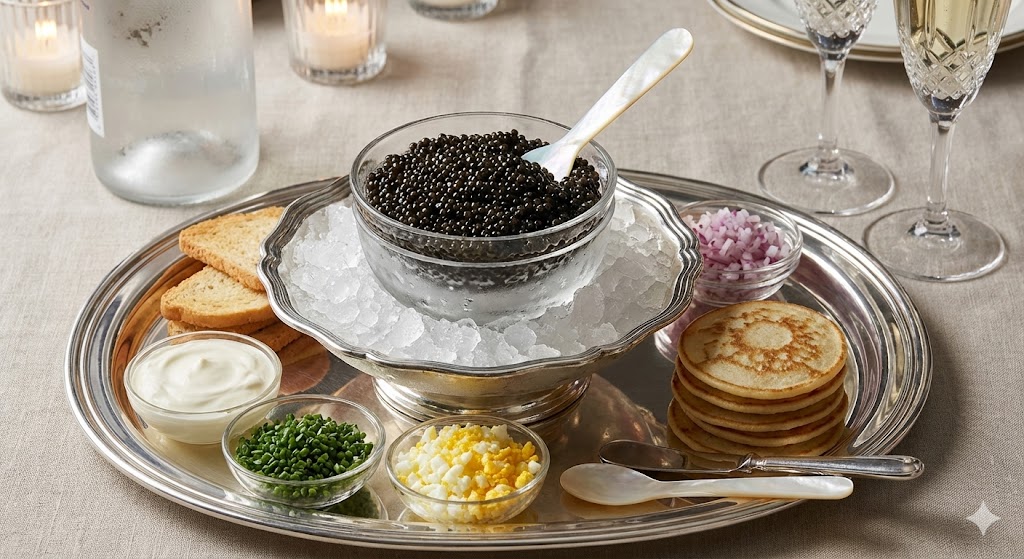
Serve caviar nested in crushed ice to maintain temperature throughout consumption. The tin or a small serving bowl sits in a larger vessel filled with ice. This arrangement keeps eggs cold while allowing the top layer to temper slightly for optimal flavor release.
Crushed or shaved ice works better than cubes because it conforms to the serving vessel’s shape. Additionally, crushed ice melts more slowly in small quantities. Avoid letting melted water contact the caviar directly by using a bowl or plate between ice and tin.
Serving Vessels
Glass, crystal, mother-of-pearl, horn, and ceramic all work beautifully for caviar service. Metal vessels, however, should be avoided entirely. Reactive metals can impart off-flavors and accelerate oxidation. Even silver, while traditional in some contexts, risks flavor contamination with extended contact.
For elegant presentation, purpose-made caviar servers featuring ice compartments and non-reactive bowls represent the ideal. These range from simple functional designs to elaborate crystal pieces. Whatever vessel you choose, ensure it’s thoroughly chilled before adding caviar.
The Utensil Question
Mother-of-pearl spoons remain the gold standard for caviar service. They’re non-reactive, temperature-neutral, and appropriately delicate for handling fragile eggs. Furthermore, their lustrous appearance complements the occasion’s elegance.
Acceptable alternatives include bone, horn, wood, gold, and food-safe plastic. What matters is avoiding reactive metals that oxidize eggs and impart metallic tastes. If mother-of-pearl isn’t available, a simple plastic spoon serves better than grandmother’s silver.
Size matters too. Small spoons encourage appropriately modest portions that allow proper tasting. Oversized serving utensils promote the heaping spoonfuls that overwhelm palates and waste precious product.
Traditional Accompaniments
While purists argue quality caviar needs nothing else, traditional accompaniments have earned their place through generations of refinement.
Blinis: The Classic Platform
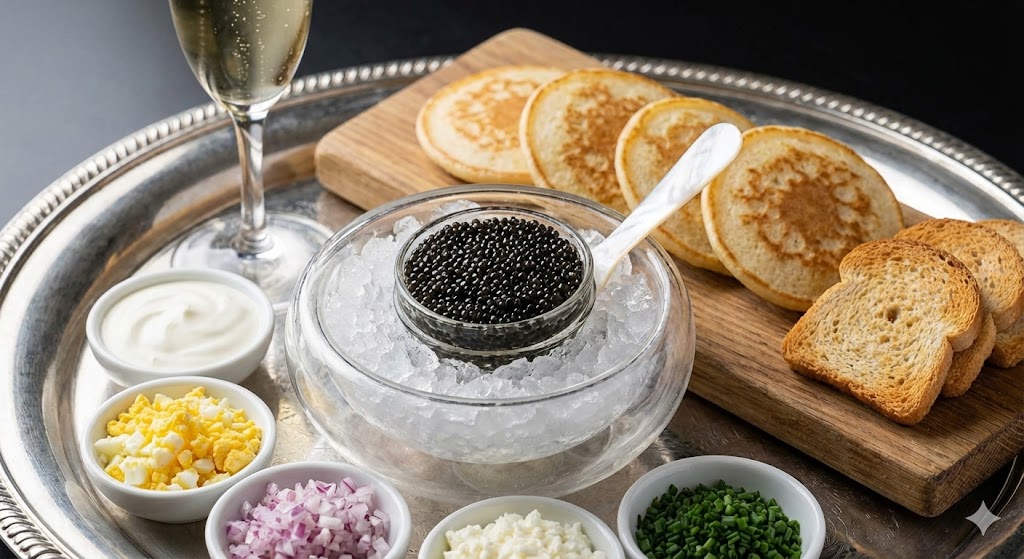
Small buckwheat pancakes called blinis provide the traditional caviar vehicle. Their subtle nuttiness complements without competing, while their soft texture contrasts with the eggs’ pop. Serve blinis warm but not hot, as excessive heat can damage caviar placed on top.
Making blinis from scratch elevates the experience, though quality frozen options exist for convenience. Whatever source you use, warm them gently in a low oven before service. Cold blinis feel institutional; warm ones feel intentional.
Crème Fraîche
A small dollop of crème fraîche adds richness and provides a creamy bridge between blini and caviar. Use restraint here. Too much cream overwhelms the eggs’ delicate flavor. A quarter-teaspoon per blini suffices.
Quality matters with crème fraîche as with everything in caviar service. Full-fat, cultured cream from good dairies tastes dramatically different from industrial alternatives. This seemingly minor component affects the overall impression significantly.
Other Traditional Garnishes
Finely minced chives add color and subtle onion notes without overwhelming. Minced hard-boiled egg (whites and yolks separated) appears in Russian tradition, though this addition remains controversial among purists. Thinly sliced shallots or red onion occasionally appear but risk dominating the caviar.
Lemon wedges traditionally accompany caviar service, though their actual use is debated. A squeeze of lemon can mask inferior caviar’s flaws but also diminishes quality product’s nuances. Offering lemon allows guests to choose, but hosts confident in their caviar often omit it entirely.
Toast Points and Alternatives
Thin, crisp toast points provide textural contrast and neutral flavor platforms. Cut crustless white bread into triangles and toast until just golden. The toast should be sturdy enough to hold caviar without being so crisp it shatters.
Potato-based accompaniments work beautifully with caviar. Thin, crispy potato chips offer delicate crunch. Warm, small boiled potatoes provide creamy contrast. Even a single potato blini combines the starch element with appropriate scale.
Beverage Pairings
What you pour alongside caviar affects the experience as much as the accompaniments.
Champagne: The Iconic Choice
Champagne remains the definitive caviar pairing for excellent reasons. The wine’s acidity cuts through richness, while effervescence cleanses the palate between bites. Brut or extra brut styles work best because residual sugar competes with caviar’s delicate salinity.
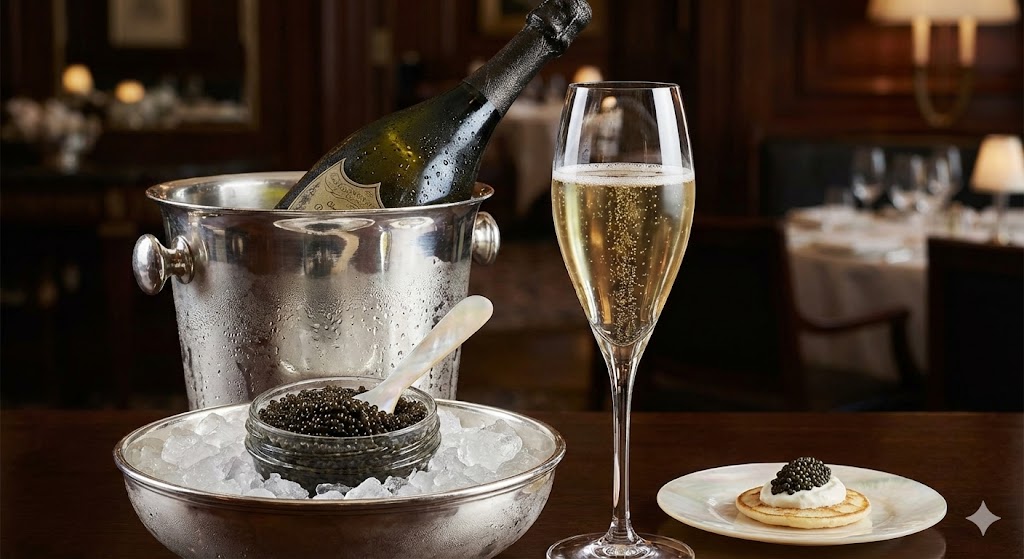
Quality Champagne elevates the occasion, but you needn’t serve prestige cuvées. Solid grower Champagnes and quality non-vintage options pair beautifully without excessive expenditure. What matters is choosing bone-dry styles with sufficient acidity and fine bubbles.
Vodka: The Traditional Pairing
Ice-cold vodka represents the traditional Russian and Eastern European pairing. Serve premium vodka directly from the freezer in small glasses meant for sipping. The spirit’s neutral character cleanses without competing, while its cold temperature matches caviar’s optimal serving conditions.
Avoid flavored vodkas entirely. Their added aromatics clash with caviar’s nuanced flavors rather than complementing them. Similarly, skip vodkas with harsh finishes that fight against the eggs’ delicacy. Smooth, clean, ice-cold premium vodka serves the purpose.
Other Wine Options
Beyond Champagne, certain still wines pair successfully with caviar. Bone-dry Muscadet, Chablis, and quality Albariño offer acidity and minerality without overwhelming. These options suit situations where bubbles feel excessive or guests prefer still wine.
Avoid oaked whites, which clash with caviar’s brininess. Similarly, skip reds entirely unless you’re deliberately experimenting. The tannins and fruit in red wine create unfortunate flavor collisions with delicate roe.
Service Etiquette and Flow
How you orchestrate caviar service affects guest experience beyond the food itself.
Timing Within the Event
Serve caviar as a dedicated first course or stand-alone appetizer, not as part of a cluttered hors d’oeuvres spread. The ingredient deserves focused attention that competing foods prevent. Furthermore, caviar’s cost and quality merit ceremonial treatment rather than casual grazing.
Avoid serving caviar too early when guests are arriving and distracted, or too late when palates are fatigued. The sweet spot falls after initial arrivals settle but before appetite-dulling substantial courses. This positioning ensures attention and appreciation.
Portion Control
Provide roughly one ounce (28 grams) per guest for appetizer service, more for caviar-focused tastings. Pre-portioning onto individual plates ensures equitable distribution and prevents the awkwardness of guests navigating a shared tin.
Alternatively, serve caviar at a dedicated station with an attendant who portions appropriately. This approach controls consumption while adding theatrical elegance. The attendant can also guide unfamiliar guests through proper tasting technique.
Guiding Inexperienced Guests
Not everyone knows how to eat caviar properly. Discreet guidance helps novices enjoy the experience without embarrassment. A simple verbal cue (“Take small bites to appreciate the texture”) or demonstrated technique lets guests follow your lead.
Avoid lecturing or making guests feel ignorant. The goal is inclusion, not performance. Those who know caviar will appreciate your setup; those who don’t will learn by observation and gentle guidance.
The Tasting Technique
How guests actually eat caviar affects their experience more than most realize.
The Traditional Method
Place a small amount of caviar on the back of your hand between thumb and forefinger. This method warms eggs slightly using body heat while avoiding utensil interference. Then bring the caviar to your mouth, letting eggs roll onto your tongue.
Press gently against the roof of your mouth rather than immediately chewing. This pressure releases the liquid centers gradually, allowing flavors to develop across your palate. Notice the initial taste, the pop of individual eggs, and the finish that lingers after swallowing.
The Spoon Method
Alternatively, take caviar directly from a mother-of-pearl spoon. Small portions—a quarter to half teaspoon—allow proper appreciation without overwhelming. Let the eggs rest on your tongue briefly before gently pressing them against your palate.
Either method works when executed mindfully. What matters is slowing down enough to actually taste what you’re eating. Rushed consumption wastes caviar’s potential regardless of technique.
With Accompaniments
When using blinis, spread a thin layer of crème fraîche first, then top with caviar. Take small bites that include all components in each mouthful. The combination should harmonize, with no single element dominating.
Avoid piling excessive caviar onto accompaniments. The eggs should complement the vehicle, not bury it. Restraint demonstrates sophistication; excess suggests unfamiliarity with proper appreciation.
Common Service Mistakes
Avoid these frequent errors that undermine even quality caviar.
Temperature Failures
Serving caviar too cold suppresses flavor; too warm accelerates degradation. Either extreme compromises what you’ve paid for. The proper service temperature—cool but not ice-cold—requires attention that busy hosts sometimes neglect.
Leaving caviar on display without ice during long events represents another common failure. The eggs warm past optimal temperature, then deteriorate rapidly. Better to refresh the ice regularly or serve in smaller timed portions.
Metal Contact
Using metal serving utensils remains the most common rookie mistake. Even brief metal contact can oxidize eggs and introduce off-flavors. Providing proper utensils prevents guests from improvising with available silverware.
Overwhelming Accompaniments
Piling caviar with raw onions, excessive cream, lemon juice, and multiple garnishes masks the main ingredient. These additions exist to complement, not compensate. If you need to hide your caviar’s flavor, you’ve bought the wrong caviar.
Neglecting the Experience
Treating caviar casually—serving it in a crowded spread, skipping proper vessels, allowing distracted grazing—fails the ingredient and the occasion. Caviar rewards ceremony and attention. Casual service yields casual appreciation.
Scaling for Different Events
Service approaches should adapt to event size and formality.
Intimate Dinners (4-8 guests)
For small gatherings, present caviar family-style with the tin on ice at center table. Provide individual mother-of-pearl spoons for each guest. Pass accompaniments separately, allowing guests to build their own portions.
This intimate approach encourages conversation about the caviar itself. Guests can compare impressions, ask questions, and develop appreciation together. The shared experience becomes part of the evening’s fabric.
Cocktail Parties (20-50 guests)
Larger events require stationed service for quality control and portion management. Set up a dedicated caviar station with an attendant who portions servings, answers questions, and ensures proper handling throughout.
Pre-assembled blinis with caviar can circulate on trays for convenience, though quality degrades faster than stationed service. If using passed service, prepare small batches frequently rather than large quantities that sit.
Major Events (50+ guests)
Very large events make individual caviar service impractical. Consider multiple stations, tasting portions rather than full servings, or limiting caviar to VIP areas within the larger event. Quality maintenance becomes challenging at scale.
Alternatively, feature caviar in prepared dishes where portioning and temperature control are handled in the kitchen. Caviar-topped canapés, deviled eggs with caviar, or potato bites allow efficient service without compromising the ingredient.
After Service
What happens post-service affects whether remaining caviar can be enjoyed later.
Handling Leftovers
If caviar remains after service, assess its condition honestly. Eggs that have been at room temperature for over an hour belong in the trash, not back in the refrigerator. Salvageable leftovers should be pressed with plastic wrap and refrigerated immediately.
Plan to use refrigerated leftovers within 24 hours, maximum 48. Quality continues declining even under optimal storage. Better to incorporate into another dish than serve diminished caviar as a standalone.
Creative Uses for Leftovers
Remaining caviar elevates many dishes where it needn’t star alone. Scrambled eggs with caviar feel luxurious. Pasta with cream sauce topped with caviar impresses. Deviled eggs with caviar garnish stretch small quantities elegantly.
These applications accommodate slightly degraded texture that wouldn’t pass muster in pure tasting. The surrounding ingredients provide context that forgives minor quality decline while still delivering caviar’s distinctive flavor.
The Complete Service Checklist
Before your next caviar service, confirm these essentials:
Storage: Caviar stored at 28-32°F, unopened until service day, no freezing
Preparation: Removed from refrigerator 10-15 minutes before serving, opened carefully, inspected for quality
Presentation: Non-reactive serving vessel on crushed ice, mother-of-pearl or appropriate utensils, properly sized portions
Accompaniments: Warm blinis, quality crème fraîche, minimal garnishes, restraint over abundance
Beverages: Chilled brut Champagne or ice-cold premium vodka, glasses ready
Service: Dedicated timing, guest guidance available, temperature maintained throughout
Master these elements, and your caviar service will match what guests experience at the finest Hamptons estates. For more on understanding caviar’s flavor profile, what quality caviar costs, and its remarkable health benefits, explore our complete caviar guide series.
For questions about caviar or to place a special order, contact contributor Lisa Singer at lisachristinesinger@gmail.com or message her on Instagram @laboutiqueducaviar
Experience the Hamptons Lifestyle
Social Life Magazine has covered Hamptons entertaining, culture, and cuisine for over two decades. For exclusive access to the events, people, and lifestyle that define East End sophistication, subscribe to our print edition or join our email list for weekly insider updates.
Join us at Polo Hamptons this summer. Where service is always impeccable and the caviar is always properly chilled.
Related Reading: Is Caviar the Ultimate Superfood? | The Insider’s Guide to Hamptons Fine Dining
Support independent Hamptons journalism. Contribute $5 to keep our coverage free.
Author

Written by
Recent Posts

Cynthia Erivo Net Worth: The Voice That Was Always There

Inside Out 2, Wicked, and the Emotional Blockbuster That Ate 2024
7 Mindful Meal Prep Tips for Stop Food Waste Day

Rebecca Ferguson Net Worth: The Advantage of Not Being the Lead
What Makes a Dinner Party Truly Unforgettable (Hint: It’s Not the Food)
Categories
- Art
- Articles
- Beauty & Skincare
- Celebrities
- Celebrities|Entertainment
- Celebrities|Television
- Celebrities|The Chronicles
- celebrities|the-archive
- Chronicles
- Entertainment|Culture
- Event Photos
- Events
- Fashion
- Fashion & Style
- Featured
- Food & Beverage
- Food, Spirits, Wine
- Hamptons
- Hamptons Celebrities
- Hamptons Celebrities|Celebrities|The Chronicles
- Health
- Health & Beauty
- Lifestyle
- Luxury Lifestyle
- Movies
- Press
- Profiles
- Real Estate
- Technology
- The Chronicles
- Travel
- Uncategorized
- Weddings