
By Social Life Magazine | Hamptons Food & Culture
The first time most people try caviar, they’re doing it wrong. A catered event. Cheap roe masquerading as the real thing. Too much piled on a cracker that overpowers everything. Consequently, they walk away thinking caviar tastes like salty fish paste and wondering what all the fuss is about.
Here’s the truth: properly sourced and served caviar tastes like almost nothing else in the culinary world. The experience involves texture as much as flavor, temperature as much as taste, and ritual as much as eating. Understanding what caviar actually tastes like requires understanding why it tastes that way and how to experience it properly.
After two decades covering Hamptons dining culture, we’ve tasted caviar at the world’s finest tables and watched first-timers discover what they’ve been missing. This guide covers everything from basic flavor profiles to the nuances that separate adequate caviar from transcendent experiences.
The Basic Flavor Profile: What to Expect
Quality caviar delivers a complex flavor that unfolds in stages. Initially, you’ll notice a clean, briny taste reminiscent of ocean air rather than fishiness. Next comes a subtle butteriness that coats the palate. Finally, there’s a lingering finish that can range from nutty to mineral depending on the variety.
Importantly, caviar should never taste aggressively fishy. If it does, you’re eating low-quality product or roe that’s past its prime. Fresh sturgeon caviar has a refined, almost delicate salinity balanced by rich, creamy notes. Think of the difference between cheap table salt and high-quality sea salt. Both are salty, but one offers complexity while the other just tastes harsh.
The Texture Component
Flavor tells only half the story. Texture defines the caviar experience as much as taste does. Quality eggs should be firm, distinct, and slightly resistant before popping on your palate. That pop releases the liquid center, flooding your mouth with concentrated flavor.
Mushy, broken, or overly soft eggs indicate poor handling or age. Conversely, eggs that are too hard suggest over-processing or improper storage. The ideal texture falls precisely between these extremes: pearls that hold their shape until gentle pressure releases their contents.
Temperature affects texture significantly as well. Caviar served too cold mutes both flavor and the characteristic pop. Slightly below room temperature allows the eggs to express their full textural potential while keeping the product fresh.
Caviar Varieties: How Flavor Differs by Type
Not all caviar tastes the same. Sturgeon species, farming conditions, processing methods, and aging all influence the final flavor profile. Understanding these differences helps you find varieties that match your preferences.
Beluga: The Legendary Choice
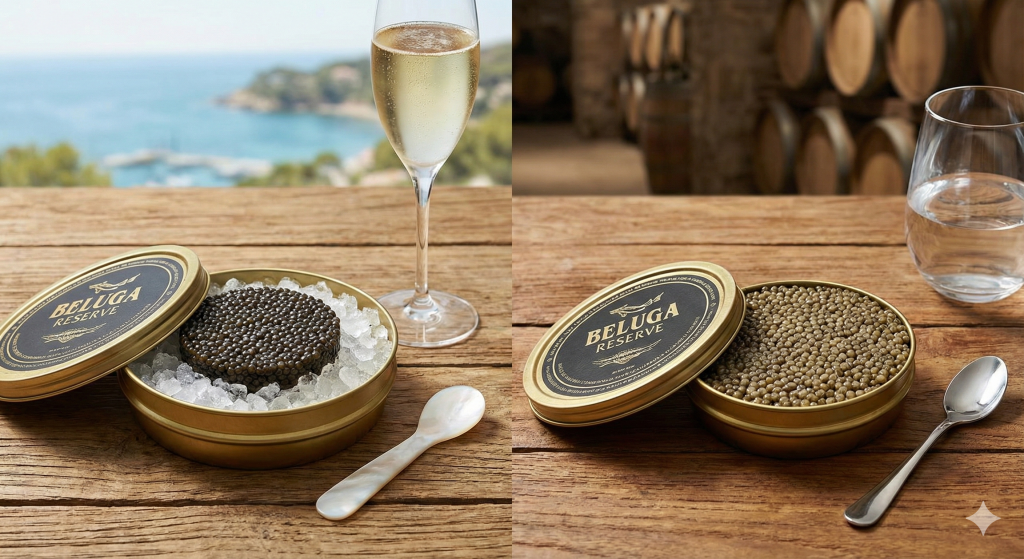
Beluga caviar comes from the largest sturgeon species and produces the biggest eggs. The flavor tends toward buttery and creamy with less salinity than smaller-egg varieties. Additionally, Beluga offers a remarkably smooth, almost silky texture that melts on the tongue.
True Beluga remains rare and expensive due to the fish’s long maturation period (up to 25 years). Consequently, what’s sold as “Beluga” sometimes comes from hybrid species. When you do find authentic Beluga, expect subtle, refined flavors rather than bold intensity. The experience is understated luxury, not aggressive impact.
Osetra: The Connoisseur’s Favorite
Many caviar aficionados consider Osetra the most complex and interesting variety. The medium-sized eggs range in color from golden to dark brown, with flavor profiles varying significantly based on the sturgeon’s diet and environment.
Typically, Osetra delivers nutty, briny notes with a firmer texture than Beluga. Some batches develop distinctly walnut-like flavors, while others trend more toward the sea. This variability makes Osetra particularly interesting for developing your palate. Furthermore, Osetra generally offers better value than Beluga while delivering comparable quality.
Sevruga: Bold and Intense
Sevruga comes from the smallest caviar-producing sturgeon and features the smallest eggs. However, those small pearls pack concentrated flavor. Expect bolder, more pronounced brininess with earthy undertones and a slightly more assertive finish.
For first-timers, Sevruga’s intensity can be overwhelming. Nevertheless, experienced caviar lovers often appreciate how its bold character stands up to accompaniments and champagne. If you prefer subtle flavors, start elsewhere. If you want caviar that announces itself, Sevruga delivers.
Kaluga and Other Varieties
Kaluga hybrid caviar has gained popularity as a Beluga alternative. The large eggs offer creamy, buttery profiles similar to Beluga at more accessible price points. Meanwhile, American sturgeon varieties like Hackleback and Paddlefish provide entry points for exploring caviar without significant investment.
Each variety rewards attention. Rather than declaring one “best,” experienced tasters develop preferences based on occasion, pairing, and mood. Building your caviar vocabulary requires sampling widely and noting what resonates with your palate.
What Affects Caviar Taste: Beyond the Species
Two tins of the same caviar variety can taste remarkably different. Several factors beyond species influence the final flavor experience.
Salt Content and Malossol
Traditionally, salt preserves caviar and develops its flavor. The term “malossol” means “little salt” in Russian, indicating minimal salt processing. Malossol caviar tastes fresher and more delicate than heavily salted versions, though it requires careful refrigeration and shorter shelf life.
Cheaper caviar often uses more salt to extend shelf life and mask inferior egg quality. As a result, it tastes predominantly salty rather than complex. Quality producers use just enough salt to preserve and enhance, never to cover flaws.
Freshness and Storage
Caviar is a living product that continues evolving after harvest. Fresh caviar tastes cleaner and more vibrant than aged product. While some aging can develop complexity, too much degrades the eggs into fishy, off-putting territory.
Proper storage matters enormously. Caviar should remain refrigerated at 28-32°F, colder than standard refrigerator temperature. Many estate kitchens maintain dedicated caviar refrigerators for this reason. Improperly stored caviar develops off-flavors regardless of initial quality.
The Sturgeon’s Environment
Wild sturgeon feeding on natural diets produce different-tasting caviar than farm-raised fish eating processed feed. Similarly, water quality, temperature, and mineral content influence egg development. This explains why caviar from different farms or regions within the same species can taste distinct.
Some producers intentionally manipulate environment to achieve desired flavor profiles. Others let terroir express itself naturally. Neither approach is inherently superior, but both affect what ends up on your palate.
The Proper Tasting Experience
How you taste caviar matters as much as what you taste. Rushed consumption at a crowded party differs fundamentally from mindful tasting in proper conditions.
Temperature Considerations
Remove caviar from refrigeration 10-15 minutes before serving. This allows the eggs to warm slightly, releasing aromatic compounds that cold temperatures suppress. However, never let caviar reach room temperature entirely or sit out for extended periods.
Traditional service presents caviar on ice to maintain temperature during consumption. The tin or bowl nestles into crushed ice, keeping eggs cold while allowing individual portions to warm briefly on the palate before eating.
The Right Utensils
Metal spoons can oxidize caviar and impart metallic flavors. Mother-of-pearl spoons remain the gold standard because they’re non-reactive, temperature-neutral, and appropriately delicate. Bone, horn, and gold spoons also work well. If these aren’t available, use a clean plastic spoon rather than metal.
The spoon size matters too. Small portions allow you to appreciate individual bites rather than overwhelming your palate. A quarter teaspoon per taste is plenty for evaluation purposes.
The Tasting Method
Place a small amount of caviar on the back of your hand between thumb and forefinger. This traditional method warms the eggs slightly using body heat while avoiding utensil interference entirely. Then bring the caviar to your mouth, letting the eggs roll onto your tongue.
Press the eggs gently against the roof of your mouth rather than immediately chewing. This pressure releases the liquid centers gradually, allowing flavors to develop. Notice the initial taste, the texture of the pop, the evolving mid-palate flavors, and the finish that lingers after swallowing.
Alternatively, take caviar directly from a mother-of-pearl spoon to your mouth. Either method works when done mindfully. What matters is slowing down enough to actually taste what you’re eating.
Classic Pairings: What to Serve with Caviar
Purists argue that quality caviar needs no accompaniment. The eggs themselves provide complete flavor experience. Nevertheless, traditional pairings have developed because they genuinely complement caviar’s characteristics.
Champagne and Sparkling Wine
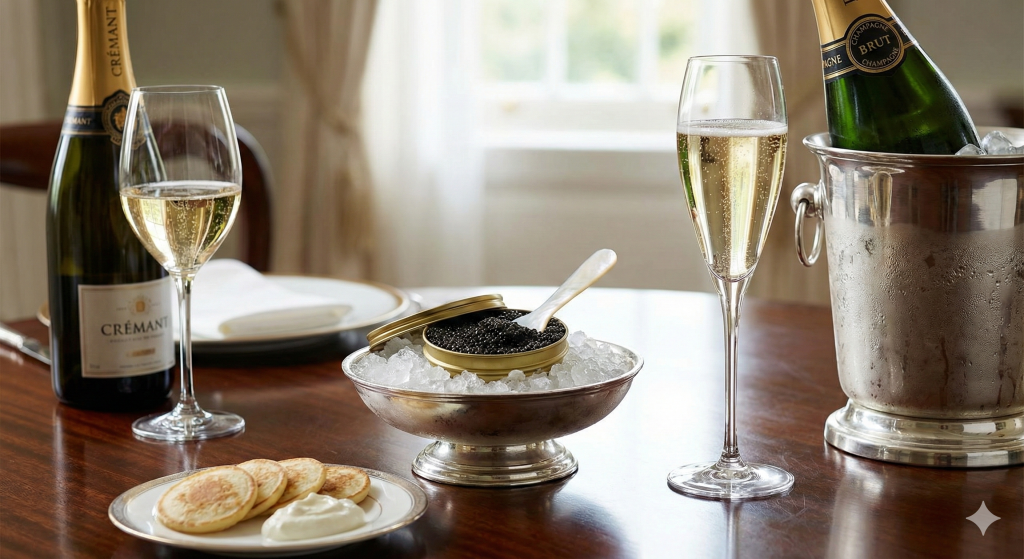
Champagne remains the iconic caviar pairing for good reason. The wine’s acidity cuts through caviar’s richness, while effervescence cleanses the palate between bites. Brut or extra brut styles work best because residual sugar competes with caviar’s delicate flavors.
Beyond Champagne, quality Crémant, Cava, or American sparkling wines pair beautifully at lower price points. The key is choosing bone-dry options with enough acidity to refresh the palate. Avoid sweet or fruity sparklers entirely.
Vodka: The Traditional Choice
Russian and Eastern European traditions pair caviar with ice-cold vodka. The neutral spirit cleanses without competing, while cold temperature matches caviar’s optimal serving conditions. Additionally, vodka’s slight viscosity coats the palate pleasantly between bites.
Quality matters here too. Premium vodka’s smoothness complements caviar’s refinement. Harsh, cheap vodka fights against the experience rather than enhancing it. Serve vodka from the freezer in small glasses meant for sipping, not shooting.
Blinis and Traditional Accompaniments
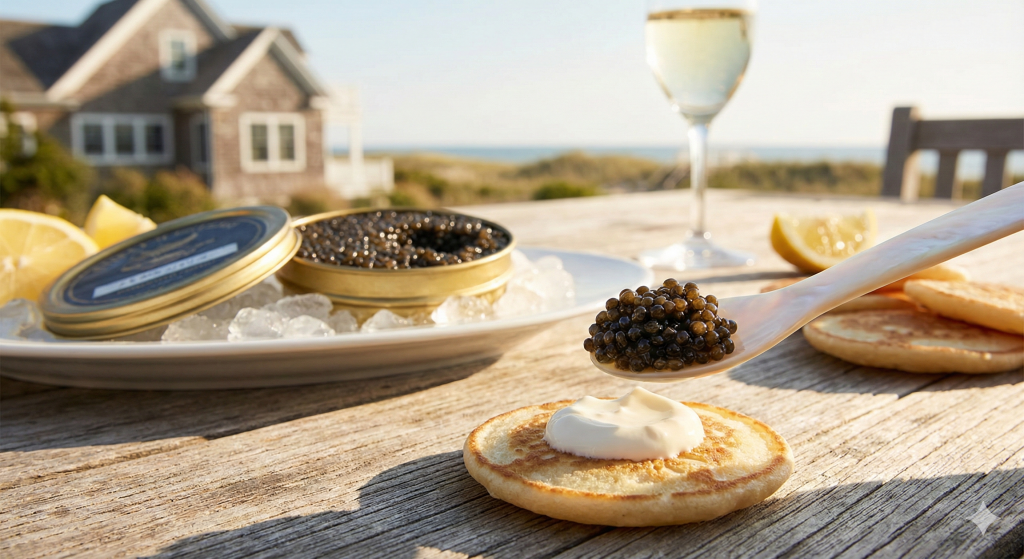
Small buckwheat pancakes called blinis provide neutral platforms for caviar. Their subtle nuttiness complements rather than competes with the eggs. A small dollop of crème fraîche adds richness without overwhelming. Perhaps add a few chive strands for color and mild onion notes.
Toast points, quality crackers, and even warm boiled potatoes serve as caviar vehicles. The goal is providing texture contrast while letting caviar remain the star. Avoid strongly flavored bread or crackers that compete for attention.
What to Avoid
Skip raw onion, which overwhelms caviar’s delicate flavors. Lemon juice, though sometimes traditional, can mask quality and primarily serves to cover flaws in inferior product. Strongly flavored accompaniments suggest the host doesn’t trust the caviar to stand alone.
When you’ve invested in quality caviar, let it speak for itself. Minimal accompaniments demonstrate confidence in your sourcing. Heavy garnishing suggests something to hide.
Common Mistakes That Ruin the Experience
Even quality caviar disappoints when handled improperly. Avoid these frequent errors that sabotage what should be exceptional experiences.
Buying Cheap Imitations
Grocery store “caviar” often consists of lumpfish, paddlefish, or salmon roe dyed to look like sturgeon caviar. While these products have their place, they taste fundamentally different from genuine sturgeon caviar. Basing your opinion on cheap imitations is like judging wine by box varieties.
For true caviar experience, invest in actual sturgeon roe from reputable suppliers. The price difference reflects genuine quality differences, not merely branding. Starting with quality product costs more but delivers the experience that built caviar’s reputation.
Serving on Metal
As noted earlier, metal oxidizes caviar and imparts off-flavors. Beyond spoons, avoid metal serving bowls, metal trays beneath the ice, and even metal jewelry that contacts the caviar during eating. Glass, ceramic, mother-of-pearl, and certain plastics work fine.
Letting It Sit Out
Caviar degrades quickly at room temperature. Once opened, consume within an hour or return to proper refrigeration. Party hosts who leave caviar on display for hours serve deteriorating product that no longer represents what they purchased.
Overwhelming Portions
More isn’t better with caviar. Large spoonfuls overwhelm the palate and prevent appreciation of nuance. Small tastes reveal complexity that quantity obscures. Additionally, treating caviar as an indulgence rather than sustenance maintains its proper psychological positioning.
Why Caviar Tastes Different Than You Expected
First-time tasters often expect something more dramatic. They’ve built up caviar in their minds as intensely flavored, perhaps challenging, certainly worth the price in obvious impact. Then they taste it and wonder what they’re missing.
Here’s the recalibration: caviar rewards attention rather than demanding it. Unlike bold flavors that announce themselves immediately, caviar reveals itself gradually to those paying attention. The complexity exists, but you must be present to perceive it.
This is why rushed party consumption fails. Caviar eaten while distracted, piled on crackers with competing flavors, gulped while networking, cannot deliver its potential. The same eggs, tasted mindfully in proper conditions, become transcendent. The difference isn’t the caviar. It’s your attention.
As we explored in our guide to caviar’s superfood properties, these tiny eggs also deliver remarkable nutritional benefits. Beyond taste, caviar provides concentrated omega-3 fatty acids that support fertility, reduce inflammation, and outperform fish oil supplements for omega-3 delivery. The experience is both pleasurable and functional.
Building Your Caviar Palate
Appreciation develops through exposure. Nobody fully understands wine from a single glass, and caviar works similarly. Building genuine palate sophistication requires tasting multiple varieties, comparing quality levels, and developing personal preferences.
Start with Quality
Resist the temptation to “work up” from cheap products. Starting with inferior caviar teaches you nothing useful about what quality tastes like. Instead, invest in legitimate Osetra or similar mid-range sturgeon caviar for your introduction. This establishes accurate reference points for future exploration.
Taste Comparatively
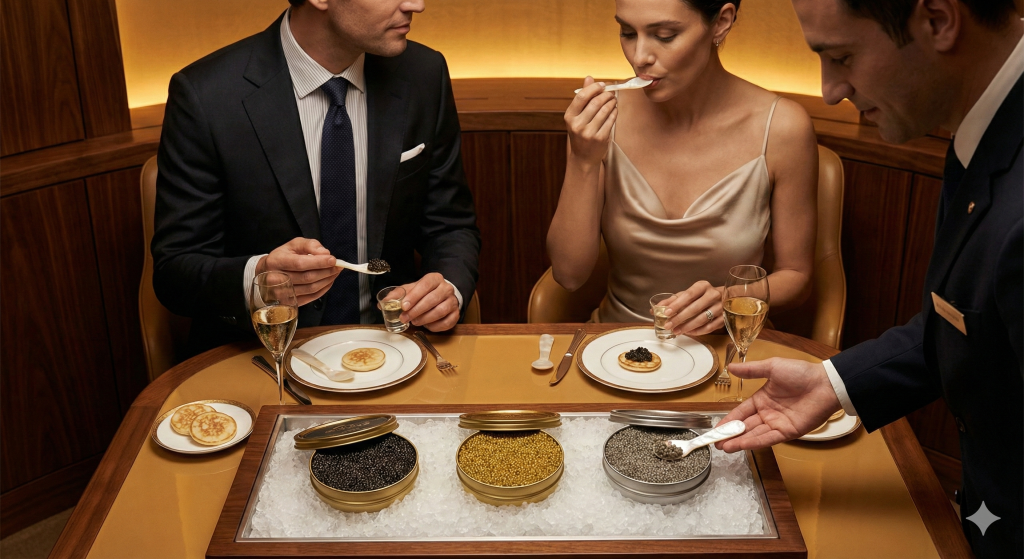
When possible, taste multiple varieties side by side. This comparison reveals differences that single-variety tasting obscures. Even comparing two tins of the same variety from different producers proves educational. Side-by-side tasting accelerates palate development dramatically.
Take Notes
Serious tasters record their impressions. What did you notice about texture? How would you describe the salt level? What flavors emerged on the finish? Notes help you remember and track preference development over time. They also make future purchasing decisions easier.
Develop Opinions
Ultimately, your palate is yours. General guidelines about what “good” caviar tastes like provide starting points, not absolute truths. Perhaps you prefer bolder Sevruga to subtle Beluga. Maybe you like more salt than Malossol traditionalists recommend. These preferences are valid once you’ve developed them through genuine exploration.
The Social Dimension of Caviar
Caviar has always been a social food. Its expense and perishability mean sharing with others rather than hoarding alone. The ritual of proper service creates a ceremony that ordinary eating lacks. Opening a tin signals occasion, celebration, and connection.
At Hamptons gatherings, caviar marks moments worth marking. Deal closings. Engagements. Season openings. The taste intertwines with memory, creating associations that transcend mere flavor. Years later, you remember not just what the caviar tasted like but who you shared it with and what you were celebrating.
This social dimension explains why caviar maintains appeal despite alternatives that cost less. The experience isn’t just consumption. It’s communion. Sharing something precious with people who matter creates value that no nutritional analysis captures.
For questions about caviar or to place a special order, contact contributor Lisa Singer at lisachristinesinger@gmail.com or message her on Instagram @laboutiqueducaviar
Experience the Hamptons Lifestyle
Social Life Magazine has covered Hamptons culture, cuisine, and celebration for over two decades. For exclusive access to the events, people, and lifestyle that define East End sophistication, subscribe to our print edition or join our email list for weekly insider updates.
Join us at Polo Hamptons this summer. Where the caviar is properly served and the company is worth sharing it with.
Related Reading: Is Caviar the Ultimate Superfood? | The Insider’s Guide to Hamptons Fine Dining
Support independent Hamptons journalism. Contribute $5 to keep our coverage free.
Author

Written by
Recent Posts

Tobey Maguire Net Worth: The Power of Disappearing

Andrew Garfield Net Worth: The Career Got Better After Getting Fired

Tom Holland Net Worth: The Question the Franchise Can’t Answer

Spider-Man No Way Home Marvel: The Night the Multiverse Ate Itself

Emily Blunt Net Worth: How Competence Built an $80M Fortune
Categories
- Art
- Articles
- Beauty & Skincare
- Celebrities
- Celebrities|Entertainment
- Celebrities|Television
- Celebrities|The Chronicles
- celebrities|the-archive
- Chronicles
- Entertainment|Culture
- Event Photos
- Events
- Fashion
- Fashion & Style
- Featured
- Food & Beverage
- Food, Spirits, Wine
- Hamptons
- Hamptons Celebrities
- Hamptons Celebrities|Celebrities|The Chronicles
- Health
- Health & Beauty
- Lifestyle
- Luxury Lifestyle
- Movies
- Press
- Profiles
- Real Estate
- Technology
- The Chronicles
- Travel
- Uncategorized
- Weddings