
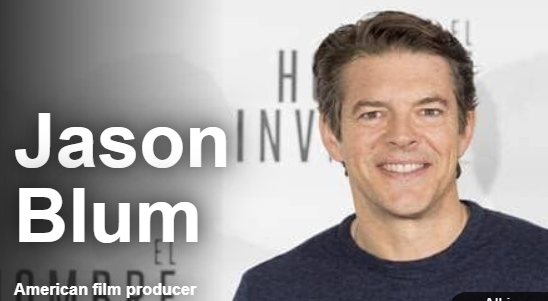
The boy slept on his father’s couch beneath thirty-two Campbell’s Soup Cans. Andy Warhol had painted them. Irving Blum had sold them. And young Jason, shuttling between divorced parents, between his mother’s modest home in Dobbs Ferry and his father’s Upper East Side apartment hung with masterpieces, learned something about value that would make him $100 million.
He learned that the most expensive thing in the room isn’t always the most interesting. Sometimes the can of soup beats the Picasso.
The Wound: Between Two Worlds
Jason Ferus Blum was born February 20, 1969, in Los Angeles to parents who inhabited parallel artistic universes. His father Irving ran the legendary Ferus Gallery, the space that gave Warhol his first West Coast show. His mother Shirley was an art historian and professor. They split when Jason was four.
The arrangement meant Jason lived a double life. During school years, he stayed with his mother in Westchester County, navigating the unremarkable suburban existence of middle-class America. Summers and holidays belonged to his father’s world of artists, galleries, and the kind of money that hangs priceless paintings in living rooms.
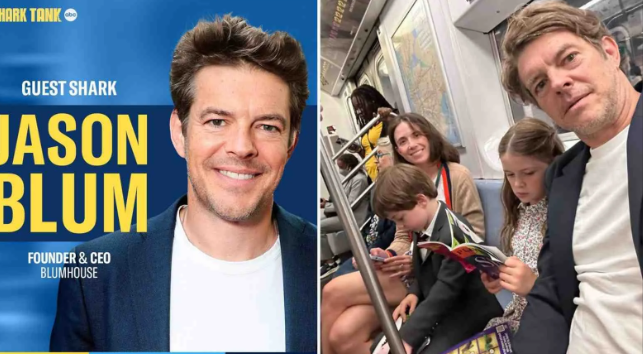
The Art World Education
Roy Lichtenstein taught him chess in Southampton when he was ten. Ellsworth Kelly, Donald Sultan, and Bryan Hunt moved through his childhood like visiting professors. Dennis Hopper’s daughter babysat him. Jasper Johns gave him watercolors at birth that still hang in his Los Angeles apartment.
Yet his mother remembers it differently. She has noted that Jason was raised by a single working mother in Dobbs Ferry, and that the artist encounters were holiday interludes, not his actual childhood. His real world was Stranger Things territory, not art gallery openings.
Halloween Obsession Takes Root
What Shirley does remember: her son was obsessed with Halloween. The holiday. The costumes. The scares. While other children of art dealers might have gravitated toward painting or sculpture, Jason kept returning to fear as his medium of choice.
The gap between his two lives created something useful. He understood both luxury and limitation. He could speak the language of high culture while remaining fluent in the vernacular of ordinary fear.
The Chip: Betting on Himself
Irving Blum was famously a risk-taker. He had no money when he started, but he bet everything on artists no one else would touch. Jason absorbed this philosophy, though he would apply it to an entirely different canvas.
At Vassar College, where he roomed with future filmmaker Noah Baumbach, Jason studied art history like his mother. He joined Ethan Hawke’s Malaparte theater company. He worked at Miramax under the Weinstein brothers. The path seemed set toward respectable independent film.
The Steve Martin Letter Hustle
His first producer credit came through pure nerve. Needing financing for Baumbach’s debut Kicking and Screaming, Blum asked family friend Steve Martin to read the script. Martin loved it and wrote an endorsement letter. Blum then did something characteristic: he replaced the title page of every script he sent to executives with a copy of Martin’s letter.
The film got made. The technique revealed something essential about Blum. He understood that in a business built on perception, borrowed credibility beats no credibility. The hustle was elegant because it was honest—Martin really did like the script.
The Rise: Pennies Into Billions
In 2000, Blum founded Blumhouse Productions with a radical premise: make movies cheap enough that they almost can’t fail. The model reversed Hollywood’s bloated logic. Instead of spending $200 million hoping for $400 million, spend $5 million and anything above $10 million is profit.
The formula crystallized in 2007 with Paranormal Activity. Budget: $15,000. Gross: nearly $200 million. Bloomberg News would later praise Blum for making blockbusters for pennies. NPR’s Planet Money called him the business genius behind Get Out.
The Rules of Constraint
Blum’s production rules read like a manifesto for artistic poverty as liberation. Limit speaking parts because actors with lines cost more. Stick to one location. Pay actors minimum but offer profit participation. Never exceed budget—solve problems creatively, not financially.
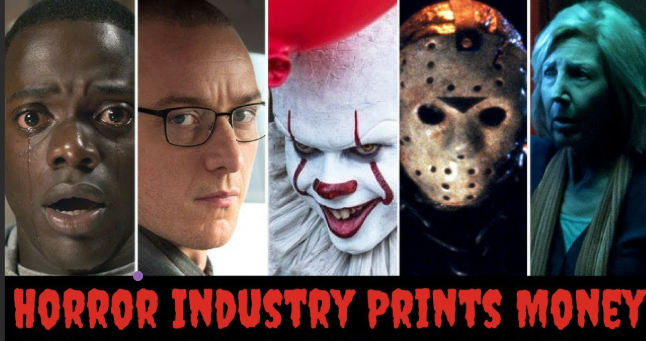
The approach attracts directors who want control more than money. James Wan made Insidious under Blumhouse constraints. Jordan Peele transformed Get Out from a script nobody would touch into an Oscar-winning phenomenon. Damien Chazelle used Blumhouse to make Whiplash before La La Land made him expensive.
The Oscar Track Record
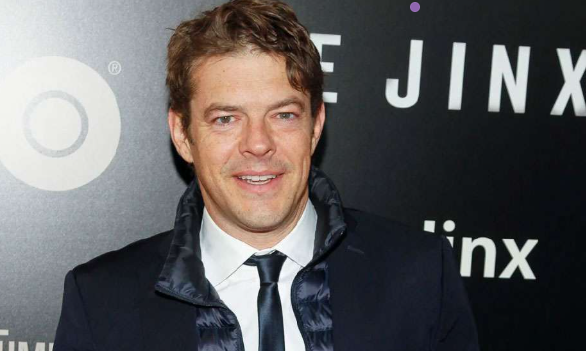
Three Best Picture nominations—Whiplash, Get Out, BlacKkKlansman—plus Emmy wins for The Normal Heart and The Jinx. The kid who slept beneath Warhols now produces art that hangs in a different kind of collection: the cultural consciousness of millions who’ve watched his horror films between their fingers.
The Tell: Fear Never Left
At 55, Blum still returns to horror like a compulsion. His company has produced The Purge, Insidious, Sinister, Happy Death Day, M3GAN, and Five Nights at Freddy’s, building franchises that keep printing money while critics keep underestimating them.
He told interviewers that horror reaches audiences who might not think about politics daily. The Purge made them think about gun control. Get Out forced conversations about race that prestige dramas couldn’t engineer. The genre his mother noticed he loved as a child became his vehicle for smuggling serious ideas into multiplexes.

The Location Connection: Downtown Los Angeles
Blum and his wife Lauren Schuker, a Wall Street Journal reporter, sold their Hollywood Hills bachelor pad after their daughter Roxy was born. They moved to a high-rise downtown, close enough that Blum can walk to a multiplex.
The choice is revealing. Not Malibu oceanfront. Not Beverly Hills gates. A functional urban apartment where art by Jasper Johns and Adam McEwen shares space with the life of a working producer who still needs to see what audiences see.
Jason Blum’s $100 million net worth represents something his art dealer father might appreciate: proof that constraint can be more valuable than abundance, that the $15,000 movie can generate more cultural impact than the $200 million spectacle.
The Ongoing Legacy
He donated $10 million to Vassar in 2022—the largest gift ever from a male alumnus—serves on the board of the Academy Museum, and keeps making horror films that cost almost nothing and earn almost everything.
The boy who shuttled between worlds never fully chose one. He built an empire in the gap between high art and low genre, between his father’s Warhols and his mother’s suburban practicality. The soup cans won.
Related Articles
- The Producers’ Table Net Worth 2025: Inside Hollywood’s $950 Million Power Players
- Kathleen Kennedy Net Worth 2025: The Most Powerful Woman in Film
- Brian Grazer Net Worth 2025: The Curious Mind Behind a $400 Million Empire
Connect With Social Life Magazine
For features, advertising, and partnership inquiries: sociallifemagazine.com/contact
Polo Hamptons tickets and sponsorships: polohamptons.com
Subscribe to our email newsletter for exclusive content. Order a print subscription and support independent journalism.
Author

Written by
Recent Posts
The Financial Habits Every Successful Entrepreneur Swears By
What Happens If You Delay Hemorrhoid Treatment in New York City
James Franco Net Worth — A $30 Million Career Interrupted

Selena Gomez Net Worth — How a Disney Kid Built a $1.3 Billion Empire
Spring Breakers A24 Cast Net Worth — Disney Kids Gone Dangerous
Categories
- Art
- Articles
- Beauty & Skincare
- Celebrities
- Celebrities|Movies
- Celebrities|The Chronicles
- Chronicles
- Culture|Television
- Entertainment|Culture
- Event Photos
- Events
- Fashion
- Fashion & Style
- Featured
- Food & Beverage
- Food, Spirits, Wine
- Hamptons
- Hamptons Celebrities
- Hamptons Celebrities|Celebrities|The Chronicles
- Health
- Health & Beauty
- Lifestyle
- Luxury Lifestyle
- Movies
- Movies|Culture
- Movies|Hamptons Lifestyle
- Press
- Profiles
- Real Estate
- Technology
- The Chronicles
- Travel
- Uncategorized
- Weddings