
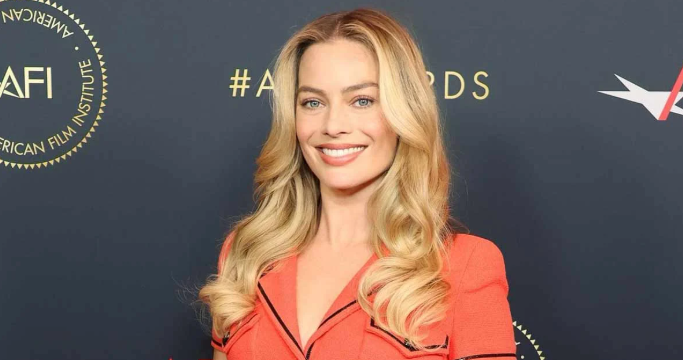
That morning in Dalby, Queensland, something crystallized in the little girl who would one day become the highest-paid actress in Hollywood. She would spend her childhood on a farm, hunting wild pigs with her siblings, surfing before school, and watching her mother work two jobs to hold four children together. By sixteen, she was working three jobs herself. By thirty-three, she would be worth an estimated $80 million.
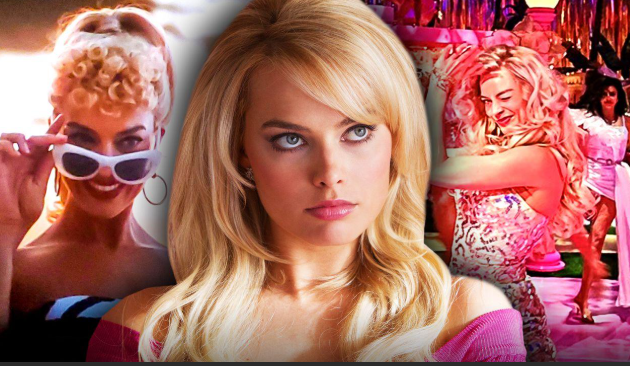
The Wound: A Farm Girl Without a Father
The Gold Coast hinterland isn’t Hollywood. It’s cattle country, eucalyptus and red dust, the kind of place where kids learn to drive tractors before cars. Margot Elise Robbie grew up here on her grandparents’ farm in Currumbin Valley, raised by a single mother who stretched every dollar while working as a physiotherapist.
Doug Robbie, her father, had been a sugarcane tycoon before the family fell apart. He left when Margot was five, and the distance between them grew into something permanent. In interviews, she speaks of him rarely and carefully. “Awful” is the word she chose, stark and final, when describing him to journalists. It’s the kind of economy that speaks volumes.
The Scrappy Childhood
Her mother, Sarie Kessler, held things together through sheer force of will. Margot has recalled that she and her three siblings “didn’t make life easy” for their single mother, and that Sarie had to be “a very strong woman to hold things together.” The kids fought. Money was tight. Yet there was something else forming in that chaotic household: a scrappy resilience that would later define her career.
This wasn’t a childhood designed to produce movie stars. Margot went boar hunting. She surfed. She worked the farm alongside her siblings, developing calluses and sunburns. “All my fondest memories are outdoors,” she once told Vogue. “Playing outside, making cubbies, going out to the farm.” It was, she noted, “an upbringing you’d never expect to lead anyone into acting.”

The Chip: Drama Queen With a Business Plan
Yet even as a child, she was performing. Her family called her “dramatic,” though she prefers to see it as entrepreneurial. “I was always very dramatic as a child,” she has said, “always putting on performances, making everyone come watch, and pay to watch. I was very business-savvy as a child.”
Notice the detail: she charged admission. Even then, she understood that attention had value, that performance was currency. The abandoned farm girl was already learning to monetize her talents, to transform pain into profit.
Three Jobs at Sixteen
At sixteen, while her peers worried about homecoming, Margot was working three jobs simultaneously to help support her family. She juggled shifts at Subway, at a surf shop, and cleaning houses. The work ethic wasn’t optional; it was survival. Yet it also forged something in her that would later separate her from countless other beautiful blondes chasing Hollywood dreams.
She graduated from Somerset College in Mudgeeraba and immediately moved to Melbourne, alone at seventeen, to pursue acting. No connections. No safety net. Just a grandmother’s farm in her rearview mirror and something to prove.
The Rise: $347,000 to $50 Million
Her first break came on Neighbours, the Australian soap opera that has launched everyone from Kylie Minogue to Russell Crowe. For three years, she played Donna Freedman, earning two Logie Award nominations and enough money to buy a plane ticket to Los Angeles.
Then Martin Scorsese called.
The Wolf of Wall Street Breakthrough
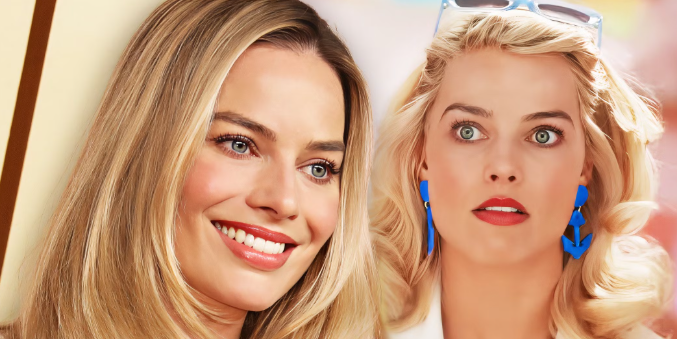
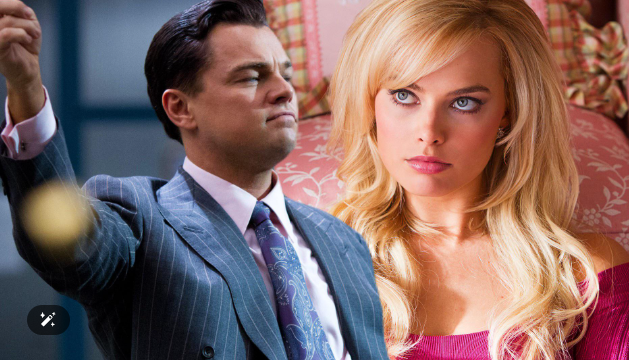
For The Wolf of Wall Street, the farm girl from Queensland earned a reported $347,000, according to The Hollywood Reporter. It was a fraction of what Leonardo DiCaprio made, but it was enough. More importantly, it introduced her to the world as Naomi Lapaglia, the Brooklyn bombshell who could match DiCaprio scene for scene. Scorsese’s set became her graduate school.
What followed was a masterclass in career construction. Rather than chase the highest-paying roles, she took risks: the tragic Tonya Harding in I, Tonya (her first Oscar nomination), the psychotic Harley Quinn in Suicide Squad (her first billion-dollar franchise), and eventually Barbie.
Building LuckyChap Entertainment
In 2014, while still a relative unknown, Robbie made a move that would transform her entire financial trajectory. She co-founded LuckyChap Entertainment with her now-husband Tom Ackerley and two friends, Sophia Kerr and Josey McNamara. “There’s only so much you can do as an actor,” she told Marie Claire Australia. “As a producer you get to be a part of the conversations about who is being hired and in what roles and how much they’re getting paid.”
This wasn’t just ambition. This was the sixteen-year-old who worked three jobs, all grown up and still diversifying. LuckyChap would go on to produce I, Tonya, Promising Young Woman (which won the Academy Award for Best Original Screenplay), and eventually the film that would rewrite her entire financial story.
The Tell: Still Charging Admission
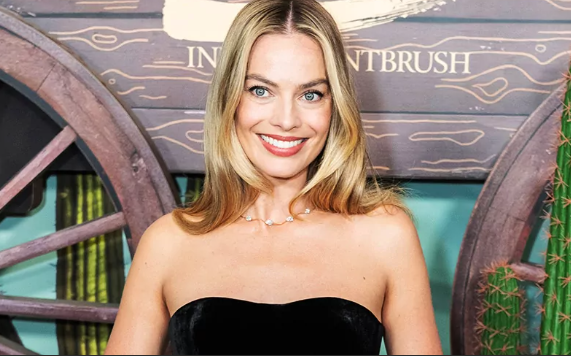
When Barbie earned over $1.44 billion worldwide in 2023, Robbie didn’t just cash an acting check. As both star and producer, she had negotiated a backend deal, meaning she received a percentage of the profits. According to Variety, her total earnings from Barbie reached approximately $50 million, combining her $12.5 million base salary with profit participation.
That’s the farm girl who charged family members to watch her childhood plays, now charging Warner Bros. a cut of every ticket sold worldwide. The wound became fuel. The chip became strategy.
The Control Imperative
There’s a pattern in her choices that traces back to that dusty Queensland road. When you grow up watching your mother hold together a family that someone else abandoned, you learn the value of control. Robbie doesn’t just act in movies; she produces them. She doesn’t just sign contracts; she negotiates backend points. She refused to lose weight for The Legend of Tarzan, telling reporters she’d “rather focus on being healthy than being skinny.”
The woman who had no control over whether her father stayed now controls her own billion-dollar franchises.

The Location Connection: Venice Beach and Beyond
Today, Robbie splits her time between Los Angeles and Australia, maintaining properties in both. She married Tom Ackerley in 2016 in a private ceremony in Byron Bay, not far from the Gold Coast hinterland where she grew up. The choice feels deliberate: success hasn’t erased her origins. It has validated them.
Her $80 million net worth, as estimated by Celebrity Net Worth and industry sources including Forbes, represents more than financial security. It represents the complete inversion of her childhood circumstances. The girl whose father left, whose mother worked two jobs, who herself worked three, now employs hundreds through her production company. She creates jobs rather than scrambling to find them.
The Paradox of the Barbie Dream
There’s a beautiful irony in Margot Robbie becoming the definitive Barbie. Here is a woman who grew up hunting wild pigs on an Australian farm, who learned to work before she learned to drive, who built an empire brick by brick after being abandoned by the man who should have protected her. And she became the world’s most famous plastic doll, a symbol of perfection.
But look closer at the Barbie she played: a doll having an existential crisis, questioning whether perfection is worth pursuing. It’s almost too fitting. The hurt child who became the Hollywood mogul, worth $80 million and still, somewhere, charging admission to watch her perform.
Want more insider profiles of Hollywood’s rising power players?
Author

Written by
Recent Posts
Behind the Scenes of Weddings Involving Long-Distance Relationships
Why Karaoke Is the Ultimate Entertainment Choice for a Hen Party
Easy Recipes That Feed A Crowd Without The Stress
The Influence Of Social Media On Interior Style Trends
Where Can You Find the Best Made-to-Measure Bespoke Suits in NYC
Categories
- Art
- Articles
- Beauty & Skincare
- Celebrities
- Celebrities|Movies
- Celebrities|The Chronicles
- Chronicles
- Entertainment|Culture
- Event Photos
- Events
- Fashion
- Fashion & Style
- Featured
- Food & Beverage
- Food, Spirits, Wine
- Hamptons
- Hamptons Celebrities
- Hamptons Celebrities|Celebrities|The Chronicles
- Health
- Health & Beauty
- Lifestyle
- Luxury Lifestyle
- Movies|Culture
- Movies|Hamptons Lifestyle
- Press
- Profiles
- Real Estate
- Technology
- The Chronicles
- Travel
- Uncategorized
- Weddings