
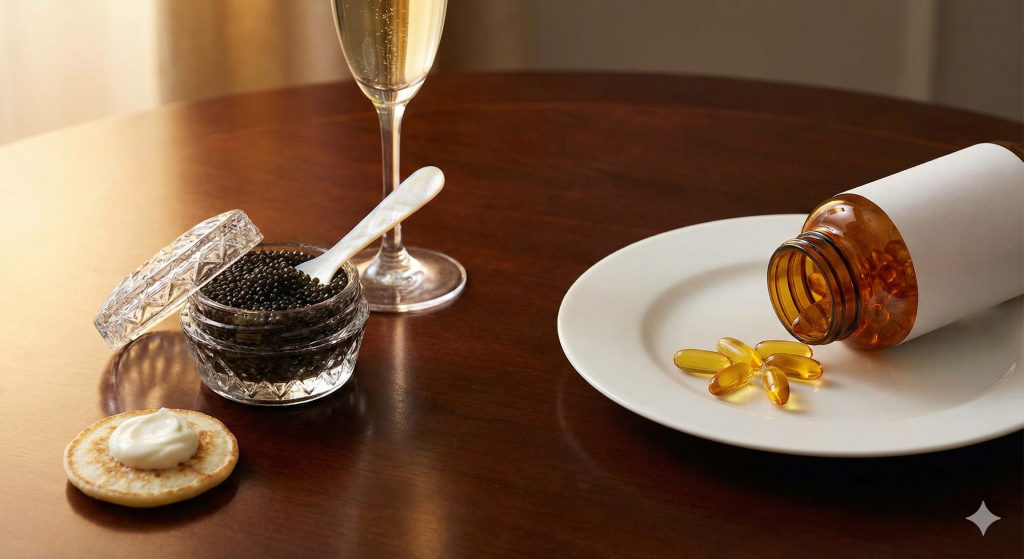
By Social Life Magazine | Hamptons Health & Wellness
You’ve made it. The house in Sagaponack. The membership at Maidstone. The portfolio that lets you sleep at night. And every morning, you’re still choking down fish oil capsules like it’s 2007.
There’s a disconnect here. You wouldn’t drink boxed wine at a dinner party. You wouldn’t fly coach to St. Barts. Yet when it comes to omega-3 supplementation, you’re still using the same delivery mechanism as everyone else in the pharmacy aisle.
Caviar versus fish oil isn’t really a fair comparison. One is a refined pleasure that’s been served at the world’s finest tables for centuries. The other is an industrial extract that burps back at you during conference calls. But since we’re talking about health outcomes, let’s examine what the science actually says about these two omega-3 sources and why the upgrade might be worth considering.
The Omega-3 Basics: What You’re Actually Trying to Get
Before comparing delivery methods, let’s clarify what we’re after. Omega-3 fatty acids come in three main forms: ALA (from plants), EPA (eicosapentaenoic acid), and DHA (docosahexaenoic acid). Your body needs EPA and DHA for everything from brain function to cardiovascular health. ALA requires conversion to be useful, and that process is inefficient.
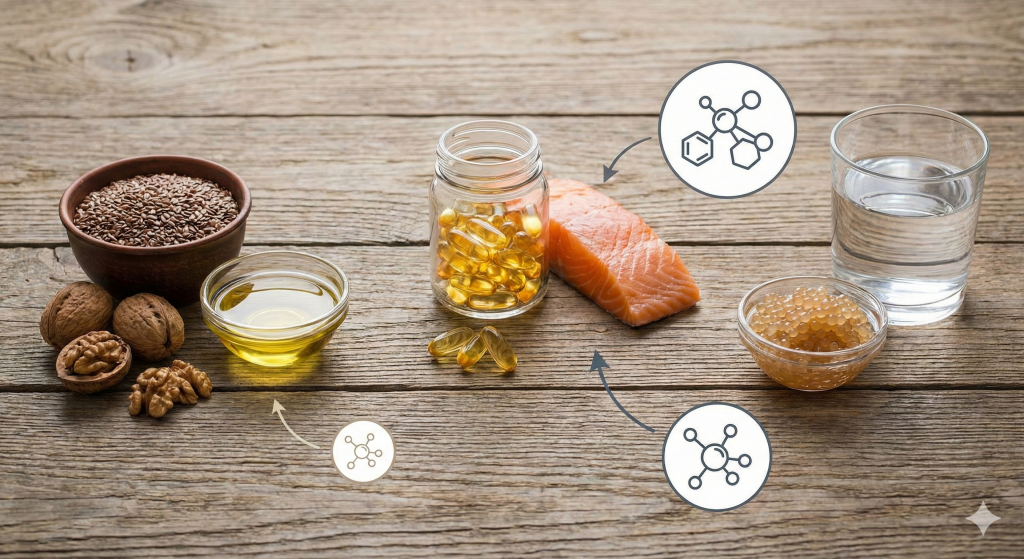
Fish oil supplements exist because most people don’t eat enough fatty fish. The capsules concentrate EPA and DHA from fish tissue, giving you therapeutic doses without the cooking. It’s a practical solution. It’s also the nutritional equivalent of taking your coffee intravenously instead of enjoying an espresso in Positano.
Caviar delivers the same omega-3s but in their original biological context. The fats come packaged with phospholipids, proteins, vitamins, and minerals that evolved together. Your body recognizes this as food, not an isolated pharmaceutical compound. The difference matters more than supplement marketers want you to believe.
Concentration: The Numbers Don’t Lie
Let’s talk dosing. A standard fish oil capsule contains about 300mg of combined EPA and DHA. Most health guidelines suggest 1,000-2,000mg daily for cardiovascular benefits. That means swallowing three to six capsules every day, indefinitely.
One tablespoon of quality sturgeon caviar delivers over 1,000mg of EPA and DHA. One tablespoon. You’re getting your therapeutic dose in a single, pleasurable serving rather than a handful of gelatin capsules that smell like a fishing pier.
The Concentration Advantage of Roe
Here’s something the supplement industry doesn’t advertise: fish eggs contain approximately three times more omega-3 fatty acids than fish flesh. Evolution concentrated the good stuff in the reproductive cells. When you eat caviar, you’re accessing the most nutrient-dense part of the fish.
This concentration efficiency explains why traditional cultures from Russia to Japan prized fish roe long before anyone understood fatty acid biochemistry. They knew it made them feel better. Now we know why.
Bioavailability: The Absorption Question
Getting omega-3s into your mouth is one thing. Getting them into your cells is another. Bioavailability refers to how much of a nutrient your body actually absorbs and uses. This is where caviar pulls ahead decisively.
Phospholipid vs. Triglyceride Forms
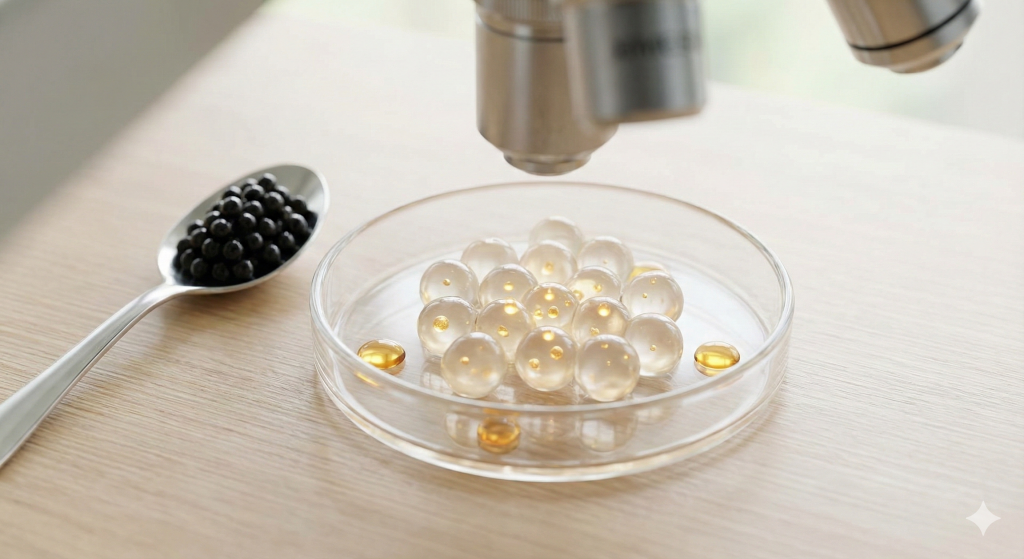
Most fish oil supplements deliver omega-3s bound to triglycerides. This is the storage form found in fish tissue. Your body can absorb it, but the process requires bile salts and multiple digestive steps.
Caviar delivers omega-3s bound to phospholipids, the same form found in human cell membranes. Research suggests phospholipid-bound omega-3s absorb more efficiently and integrate more readily into tissues. One study found that phospholipid omega-3s achieved higher blood levels than equivalent triglyceride doses.
You’re not just getting more omega-3s per serving. You’re getting omega-3s in a form your body handles more effectively. The premium price starts making biological sense.
The Whole Food Matrix
Caviar comes with its complete nutritional entourage: vitamin B12 (236% of daily value per serving), selenium, iron, magnesium, vitamin A, vitamin D, and high-quality protein. These nutrients work synergistically. The selenium may enhance omega-3 incorporation into tissues. The B12 supports the methylation pathways that omega-3s influence.
Fish oil capsules give you isolated fatty acids. Caviar gives you a nutritional symphony. Which approach sounds more aligned with how you handle everything else in your life?
The Side Effect Reality
Let’s address the fish oil experience honestly. The burping. The fishy aftertaste that surfaces mid-meeting. The occasional digestive upset. The capsules that stick in your throat. These aren’t dealbreakers for everyone, but they’re real friction points that reduce compliance.
The Capsule Problem
Many people take fish oil inconsistently because the experience is unpleasant. They buy a bottle with good intentions, take it for two weeks, then forget about it until finding the expired capsules during a cabinet cleanout. Intermittent supplementation doesn’t deliver the sustained benefits research demonstrates.
Caviar creates the opposite dynamic. It’s something you look forward to eating. The ritual of proper service, the sensory pleasure, the social dimension of sharing with someone you care about. Compliance isn’t an issue when the intervention is inherently enjoyable.
Oxidation and Freshness
Fish oil oxidizes. Those capsules sitting in your medicine cabinet are slowly degrading, becoming less effective and potentially producing harmful compounds. The omega-3s that made the product valuable are breaking down with each passing month.
Quality caviar comes fresh and refrigerated, consumed within weeks of production. You’re eating omega-3s at their peak potency, not hoping last year’s Costco purchase still works. The cold chain matters, which is why reputable suppliers like those serving Hamptons fine dining establishments maintain strict quality control.
The Cost Analysis: Reframing the Investment
The objection surfaces immediately: caviar costs more than fish oil. True. But let’s examine the actual numbers.
What Fish Oil Really Costs
A quality fish oil supplement runs $30-60 for a month’s supply at therapeutic doses. That’s $360-720 annually. Cheaper options exist, but they often use inferior sourcing, lower concentrations, or questionable purity testing. You get what you pay for.
Add the hidden costs: the compliance failures that mean you’re not actually taking it, the oxidation that reduces effectiveness, the digestive issues that affect your quality of life. The true cost of fish oil supplementation isn’t just the purchase price.
What Caviar Actually Costs
Quality Osetra caviar runs $80-150 per ounce. At the recommended serving of one tablespoon (roughly half an ounce) three times weekly, you’re looking at $120-225 per week. Call it $500-900 monthly. Annually, that’s $6,000-11,000.
Yes, that’s more expensive. Significantly more. But consider what else you spend $6,000-11,000 annually on. Golf club dues. Wine purchases. A single piece of jewelry. Two nights at the right hotel. The question isn’t whether caviar costs more than fish oil. It’s whether the experience, the bioavailability advantage, and the pleasure justify the premium.
The Value Equation

People who’ve achieved financial success understand that value isn’t just about price. It’s about what you receive relative to what you pay. A $15 wine might be acceptable. A $150 wine might deliver ten times the pleasure for ten times the price. That’s not overpaying. That’s appropriate allocation.
If caviar delivers superior omega-3 absorption, eliminates supplement compliance issues, provides additional nutrients, and transforms a medical chore into a sensory pleasure, the value equation shifts considerably. You’re not comparing fish oil to caviar. You’re comparing a pharmaceutical experience to a culinary one.
Health Outcomes: What the Research Shows
Both fish oil and caviar deliver omega-3s. Both can improve your health markers. But the research increasingly suggests that whole food sources outperform isolated supplements for several outcomes.
Cardiovascular Benefits
Fish oil supplements have shown mixed results in large cardiovascular trials. Some studies demonstrate benefit. Others show no effect compared to placebo. The inconsistency has puzzled researchers.
Whole food omega-3 sources, including fish and fish roe, show more consistent cardiovascular benefits in population studies. The difference may relate to bioavailability, the presence of co-factors, or the displacement of less healthy foods when you’re eating caviar instead of something else.
Anti-Inflammatory Effects
Research from Tufts University demonstrated that EPA and DHA work through different anti-inflammatory mechanisms. DHA showed stronger direct anti-inflammatory effects, lowering expression of multiple pro-inflammatory proteins. EPA better balanced the overall inflammatory response.
Caviar provides both in their natural ratio, as evolution intended. Supplements often emphasize one or the other based on manufacturing considerations rather than biological optimization.
Brain and Mood Benefits
DHA comprises a significant portion of brain cell membranes. Adequate intake supports cognitive function, memory, and mood regulation. Studies link higher omega-3 levels to lower rates of depression and cognitive decline.
The phospholipid-bound DHA in caviar may cross the blood-brain barrier more efficiently than triglyceride-bound DHA from supplements. This could explain why traditional fish roe-consuming populations show strong cognitive health outcomes. As we explored in our guide to caviar’s superfood properties, the brain benefits extend beyond what supplements typically deliver.
The Lifestyle Integration Factor
Health interventions only work if you actually do them. This is where the comparison becomes almost unfair.
The Supplement Grind
Taking fish oil is a chore. You remember to do it, open the bottle, swallow the capsules, and go about your day. There’s no pleasure, no ritual, no social dimension. It’s pure obligation.
Over months and years, obligation wears thin. Life gets busy. The bottle gets pushed to the back of the cabinet. The health behavior that seemed so important gradually fades. This is the supplement industry’s dirty secret: most products are purchased with good intentions and abandoned within weeks.
The Caviar Ritual
Eating caviar is an event. You set out the proper service, use the right spoon, pair it with champagne or vodka or nothing at all, and savor each bite rather than gulping it down. Perhaps you share the experience with someone you love.
This ritual doesn’t require willpower. It’s something you anticipate. The health benefits arrive wrapped in pleasure rather than packaged as medicine. Compliance becomes automatic because you’re not complying with anything. You’re simply living well.
Social and Psychological Benefits
Stress damages health through multiple pathways, including increased inflammation. The relaxation and pleasure associated with enjoying fine food may itself confer health benefits. When your omega-3 supplementation doubles as stress reduction, you’re getting more than the label suggests.
The social connection that often accompanies caviar consumption matters too. Sharing a beautiful food with friends or partners strengthens relationships, which population research consistently links to health and longevity. Fish oil capsules don’t come with this bonus.
Making the Switch: Practical Considerations
If you’re considering transitioning from fish oil to caviar, here’s what to know.
Starting Protocol
Begin with one tablespoon of quality sturgeon caviar two to three times weekly. This delivers consistent omega-3 intake while allowing you to establish the habit. Some people gradually increase to daily consumption. Others maintain the twice-weekly ritual indefinitely.
You can stop your fish oil immediately or taper over a few weeks if you prefer. There’s no interaction concern. You’re simply replacing one omega-3 source with a superior one.
Sourcing Quality Product
Not all caviar is created equal. Grocery store “caviar” often consists of paddlefish or lumpfish roe, which lacks the omega-3 concentration of true sturgeon caviar. For health purposes, invest in genuine Osetra, Sevruga, or similar sturgeon varieties from reputable suppliers.
Look for caviar that’s been minimally processed, ideally just salt as preservative. Fresh product stored properly will smell clean and briny, never fishy. The eggs should be intact and glistening, not mushy or dull. Quality matters more here than with any supplement purchase.
Storage and Handling
Caviar requires refrigeration and should be consumed within a few weeks of opening. Store unopened tins in the coldest part of your refrigerator. Once opened, press plastic wrap directly onto the surface to minimize oxidation. Use a non-metallic spoon to serve.
This care may seem fussy compared to tossing fish oil capsules in a drawer. Consider it part of the upgrade. You’re treating your health investment with appropriate respect.
The Verdict: Who Should Make This Upgrade
Caviar doesn’t make sense for everyone. If you’re counting every dollar, fish oil remains a cost-effective omega-3 source. It’s better than nothing, and millions of people benefit from it.
But if you’ve achieved financial success and you’re already investing in premium experiences across your life, the fish oil compromise looks increasingly incongruous. You’re drinking good wine, driving a proper car, wearing quality clothes, and then swallowing industrial gelatin capsules like a multivitamin commercial.
The caviar upgrade aligns your health practice with your lifestyle standards. It delivers omega-3s more effectively, in a more bioavailable form, with additional nutritional benefits, zero unpleasant side effects, and genuine pleasure attached. It costs more because it provides more.
For those who can afford it, the question isn’t whether caviar beats fish oil. The question is why you’re still reaching for that bottle when something so much better exists.
For questions about caviar or to place a special order, contact contributor Lisa Singer at lisachristinesinger@gmail.com or message her on Instagram @laboutiqueducaviar
Experience the Hamptons Lifestyle
Social Life Magazine has covered Hamptons health, wellness, and luxury living for over two decades. For exclusive access to the events, people, and lifestyle that define East End sophistication, subscribe to our print edition or join our email list for weekly insider updates.
Join us at Polo Hamptons this summer. Where the caviar flows and the connections matter.
Related Reading: Is Caviar the Ultimate Superfood? | Caviar for Fertility: The $200 Solution
Support independent Hamptons journalism. Contribute $5 to keep our coverage free.
Author

Written by
Recent Posts

Tobey Maguire Net Worth: The Power of Disappearing

Andrew Garfield Net Worth: The Career Got Better After Getting Fired

Tom Holland Net Worth: The Question the Franchise Can’t Answer

Spider-Man No Way Home Marvel: The Night the Multiverse Ate Itself

Emily Blunt Net Worth: How Competence Built an $80M Fortune
Categories
- Art
- Articles
- Beauty & Skincare
- Celebrities
- Celebrities|Entertainment
- Celebrities|Television
- Celebrities|The Chronicles
- celebrities|the-archive
- Chronicles
- Entertainment|Culture
- Event Photos
- Events
- Fashion
- Fashion & Style
- Featured
- Food & Beverage
- Food, Spirits, Wine
- Hamptons
- Hamptons Celebrities
- Hamptons Celebrities|Celebrities|The Chronicles
- Health
- Health & Beauty
- Lifestyle
- Luxury Lifestyle
- Movies
- Press
- Profiles
- Real Estate
- Technology
- The Chronicles
- Travel
- Uncategorized
- Weddings