
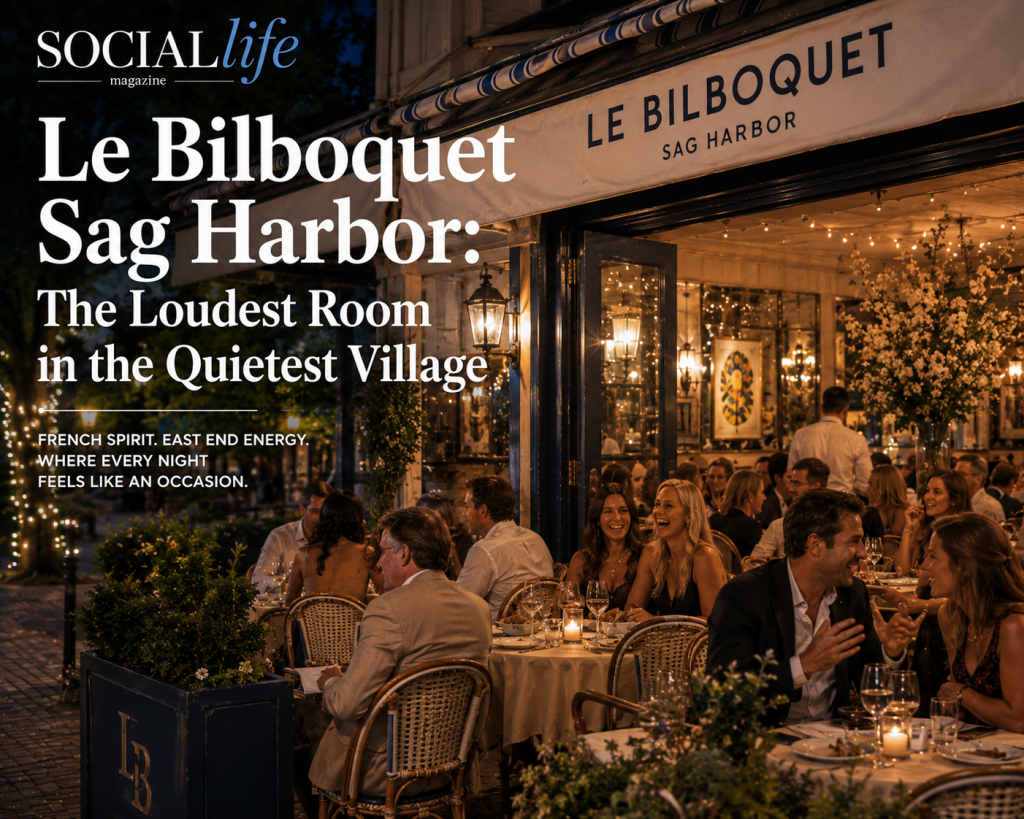
The Origin: 450 Square Feet and a Bicycle
Philippe Delgrange opened the original Le Bilboquet in 1986 on East 63rd Street on the Upper East Side of Manhattan with approximately 450 square feet. In addition, 35 seats, no liquor license. However, .A bicycle he used to transport wine from the nearest liquor store because he couldn’t afford a delivery service. . As a result, the restaurant couldn’t function without wine and a French restaurateur will solve a logistics problem with physical labor before he will solve it by lowering his standards.
The microscopic kitchen produced dishes based on whatever Delgrange could fit inside it. . In addition, this is how the Cajun Chicken was invented: not through culinary strategy or menu engineering or the systematic development of a signature dish. . However, through necessity, through the improvisation that happens when a man with taste and no resources combines what he has with what he knows and produces something that 38 years later still defines a restaurant empire spanning New York. Meanwhile, sag Harbor, Palm Beach, Atlanta, Dallas, Miami, and Washington D.C.
The Cajun Chicken Is Not
The Cajun Chicken is not a complicated dish. As a result, it is chicken, seasoned with Cajun spices, prepared correctly. Furthermore, for instance, its power as a cultural artifact resides not in its recipe but in its context: ordering the Cajun Chicken at Le Bilboquet communicates that you have been here before. In particular, that you understand what this room is for. Meanwhile, .That you do not need to study the menu because you are not a tourist in this social environment. Similarly, the tuna tartare performs a similar function. In contrast, these dishes are not food. Consequently, they are shibboleths. Furthermore, they sort the room into people who belong and people who are visiting. In particular, .The distinction between those two categories is the engine that has powered Le Bilboquet for nearly four decades.
The Sag Harbor Contradiction
In June 2017, Delgrange opened Le Bilboquet on Long Wharf in Sag Harbor. By contrast, on the water, overlooking the marina, and the village changed.
Not gradually. Hardly subtly. By contrast, not in the way that most restaurants change a dining ecosystem by adding a new option and letting the market adjust. After all, le Bilboquet arrived in Sag Harbor the way a detonation arrives in a quiet room: it reorganized every social particle in its radius. In fact, practically overnight, Long Wharf transformed from a pleasant stretch of dock-adjacent real estate into one of the most sought-after social stages in the Hamptons.
The ownership structure tells you who wanted this to happen. Ultimately, delgrange, the restaurateur with the taste and the operations. Essentially, ron Perelman, the billionaire who understood the relationship between social infrastructure and real estate value. Accordingly, steven Witkoff, the real estate magnate who understood the same thing from a different angle. Moreover, these are not men who open restaurants because they enjoy the hospitality industry. Nevertheless, they are men who open restaurants because they understand that a restaurant, positioned correctly. Functions as a social utility: it creates a venue where the people you want to be near gather voluntarily and pay for the privilege of proximity.
She arrives at 8:30 on a Friday in July with reservations she made three weeks ago. . The specific anxiety of a woman who has been told by four different people that Le Bilboquet is the only place that matters this summer and who has internalized this claim without examining it. . Specifically, this is because examining it would require her to articulate why a French restaurant on a marina in a village that prides itself on understatement has become the gravitational center of a social system that theoretically values the opposite of everything Le Bilboquet represents. On the other hand, she’s wearing a dress she bought for this dinner. However, not for the dinner, exactly. For the entrance. In addition, for the three seconds between the sidewalk and the table when the room decides whether she belongs. As a result, the maître d’ smiles. She’s in. For instance, the anxiety dissolves into something warmer: the specific pleasure of having been selected. Meanwhile, she will remember this feeling longer than she remembers the food, which is the point. Similarly, .Delgrange knows it, and that knowledge is the difference between a chef and a restaurateur.
The Celebrity Sightings Are Documented A
The celebrity sightings are documented and numerous and beside the point. Tom Brady. Emily Blunt. Hugh Jackman. In contrast, these people do not come to Le Bilboquet because the Cajun Chicken is unavailable elsewhere. Consequently, they come because Le Bilboquet provides an atmosphere in which being recognized is neither intrusive nor avoidable. A calibrated social environment where fame is acknowledged through proximity rather than confrontation. . Here, the horseshoe-shaped bar creates a physical architecture that makes it impossible not to see and be seen. Furthermore, .Where the DJ on weekends adds a sonic layer that transforms dinner service into something closer to a private event at which you happen to be eating.
The Horseshoe Bar: Status Amphitheater
The bar at Le Bilboquet Sag Harbor is horseshoe-shaped. . In particular, this is a design decision that communicates more about the restaurant’s social philosophy than any mission statement or press release.
A linear bar creates a hierarchy: end seats are inferior to center seats. By contrast, .Everyone faces the bartender, which means the social orientation is toward service rather than toward each other. After all, a horseshoe bar eliminates this hierarchy and replaces it with a theater-in-the-round arrangement where every seat faces every other seat. . The bartender operates in the center like a conductor. In fact, the result is that everyone at the bar can see everyone else at the bar. . Ultimately, this produces a social physics where anonymity is impossible and visibility is the price of a drink.
This is by design. Delgrange has described Le Bilboquet’s social model as “table hopping,” actively encouraging guests to move between conversations, to circulate. To treat dinner not as a static seated experience but as an ongoing social event where the connections you make between courses matter as much as the courses themselves. The horseshoe bar is the physical manifestation of this philosophy: a piece of furniture designed to prevent you from sitting quietly with your drink and instead compel you to engage with the room.
For The Newly Arrived Hamptonite
For the newly arrived Hamptonite who is still learning the social geography of the East End. The horseshoe bar is a sorting mechanism. Sit there on a Friday night and within forty-five minutes you will have a functional map of who matters in this particular ecosystem. Who is performing mattering, who actually matters and is pretending not to. .Who is genuinely just here for the tuna tartare. These categories overlap significantly, which is itself a useful piece of social intelligence.
The Dress Code as Philosophy
Here is where Le Bilboquet departs from every other establishment in Sag Harbor and enters territory that requires DFW-grade sociological attention.
The flip-flop story. The Louboutin woman turned away. . The restaurant “wanted more of a Hamptons look.” The dress code that is never formally published but always enforced, communicated through the specific language of a pointed finger or an unanswered greeting or the subtle redirection of a host who has decided, in the three seconds between your arrival and your seating, that you do not belong in this room tonight.
In a village where the American Hotel seats anyone who can appreciate its wine list and Murf’s dissolves status at the door and Page welcomes the accomplished without interrogating their accessories, Le Bilboquet’s door policy introduces a variable. . The rest of Sag Harbor has systematically eliminated: aesthetic judgment as access control.
“Is there anything wrong with being a little bit elegant?”
The question is rhetorical, but the answer is genuinely complicated. Moreover, .The complication is this: Sag Harbor’s identity is built on the proposition that substance matters more than surface. The whaling captains who built Main Street earned their wealth through risk and labor. John Steinbeck walked his dog to the deli in clothes that suggested a man who considered fashion irrelevant to literature. Lanford Wilson tended his garden on Suffolk Street in whatever he was wearing. The village’s cultural DNA encodes a preference for interior value over exterior presentation.
Le Bilboquet Inverts This Hierarchy. It
Le Bilboquet inverts this hierarchy. It says: presentation matters. How you look when you arrive communicates something about how seriously you take this room, this evening, this version of yourself. And the restaurant reserves the right to decide whether your self-presentation meets its standard. . This is not a published standard but an aesthetic one, administered by human judgment at the door. . This means it is subjective, inconsistent. .Occasionally unjust, and which means that being admitted feels like an achievement and being rejected feels like a verdict.
This is not how Sag Harbor is supposed to work. And it is also, undeniably, why Le Bilboquet is the most talked-about restaurant on the East End.
Saturday Night: The Full Performance
A complete Le Bilboquet Saturday night operates on a three-act structure that nobody publishes but everyone who has attended can reconstruct from memory.
Act One (7:00 to 9:00 PM): The Dinner. The outdoor dockside dining area fills first. Teak floors. Pastel table décor. The marina behind you, boats bobbing in the evening light with the specific rhythm of expensive things at rest. The food is French in the way that Delgrange’s food has always been French: classically rooted, generously proportioned, uninterested in the performance of innovation. Cajun Chicken. Tuna tartare. Steak frites. The raw bar. A rosé consumption rate that would concern a vineyard if the vineyard weren’t profiting from it so handsomely. Conversations at dinner tables are conducted at a volume that allows the adjacent table to overhear. . This is not an acoustic failure but a social feature.
Act Two (9:00 to 11:00 PM): The Bar. Dinner guests who have finished eating migrate to the horseshoe bar. New arrivals who came specifically for the bar scene arrive and crowd the perimeter. The DJ begins playing something that transforms the room’s energy from restaurant to event. The table hopping begins in earnest. People move between groups with the specific fluidity of a social environment where movement is encouraged and stillness reads as either shyness or disapproval, neither of which is tolerated. The rosé accelerates.
Act Three (11:00 PM to Close): The After. By this point, the room has achieved what Delgrange has spent 38 years engineering: a state of collective social elevation where everyone present feels that they are in the right place at the right time with the right people. .The rightness of all three variables produces an emotional high that no individual restaurant experience, however excellent the food, can generate. This is not a dining experience. It is a social experience that includes dining. The distinction is the brand.
He’s been in Sag Harbor for three summers. He’s attended Bay Street and read Steinbeck’s cottage plaque and sat on a bench at the Whaling Museum and eaten quietly at Dopo and drunk without pretense at Murf’s. He has, over three years, constructed an identity as a person who values Sag Harbor for its restraint. Tonight he’s at Le Bilboquet and he’s dancing at midnight at the horseshoe bar with a glass of rosé in his hand and he is, he realizes with a clarity that the village’s quieter institutions never prompted, having more fun than he’s had since closing the deal. Not more meaningful fun. Not more intellectually nourishing fun. More fun. The kind of fun that exists without justification, without cultural credential, without the need to explain to himself why he’s enjoying it. Tomorrow he’ll have coffee at Jack’s and read a book at Canio’s and walk the marina in silence. Tonight he’s at Bilboquet. The village holds both. That is the village’s genius.
What Le Bilboquet Means for the Sag Harbor Cluster
Every village needs its contradiction. Without one, the portrait becomes propaganda.
The previous six spokes in this cluster establish Sag Harbor as a village of restraint. Intellect, historical depth, cultural investment, and social democracy. All of this is true. None of it is complete without Le Bilboquet. . This proves that the same village that saved its cinema for $20 million and protects a dive bar from 1792 also sustains a French restaurant where a man was turned away for wearing flip-flops and a woman was dismissed. . The host wanted “more of a Hamptons look.”
The coexistence is not hypocrisy. It is range. And range, in a village, is what separates a living community from a curated brand.
Le Bilboquet’s contribution to Sag Harbor is the energy that the village’s quieter institutions need but cannot produce. The restaurants on Main Street are excellent. They are also, by design, calm. Le Bilboquet is not calm. It is alive in a way that involves volume and movement. . The specific vibration of a room full of people who have decided that tonight is the night they stop being understated. Tomorrow they’ll return to understatement. Sag Harbor will be there for them. But tonight, the DJ is playing and the marina lights are reflecting on the water. . The horseshoe bar is full and nobody in this room is pretending to be less than they are.
Delgrange Understood Something When He C
Delgrange understood something when he chose Sag Harbor for his East End outpost. . The village’s self-image doesn’t fully acknowledge: restraint is a performance too. It’s a more socially prestigious performance than extravagance, and Sag Harbor performs it brilliantly. But it is still a performance. Le Bilboquet offers the counter-performance: the night when the costume comes off and something louder and less controlled takes its place. .The village absorbs it the way it has absorbed every contradiction since the whaling days. When captains and sailors shared the same harbor and lived by different rules but needed each other to function.
Social Life Magazine published a feature-length profile of Le Bilboquet that traces Delgrange’s journey from a 450-square-foot UES boîte with a bicycle wine-delivery service to a global empire with a Sag Harbor outpost that makes St. Tropez feel like a reasonable comparison. Pick up the current issue at any distribution point in the village. You’ll find Le Bilboquet coverage alongside Bay Street Theater reviews and Murf’s history and real estate analysis. . This is because the magazine covers the full spectrum, not just the frequency the village prefers to broadcast.
The Practical Details
Address: 1 Long Wharf, Sag Harbor
Web: lebilboquetsag.com
Reservations: Call directly. Not on OpenTable. Plan weeks ahead in season. Signature dishes: Cajun Chicken, tuna tartare, steak frites, raw bar
The bar: Horseshoe-shaped. Weekend DJ. The social center of the East End from 9 PM onward. Dress code: Unwritten but enforced. “Is there anything wrong with being a little bit elegant?”
Events: Full buy-outs and large events available (weddings, private dinners). Contact [email protected]. Vibe: French Riviera transposed to a whaling village marina. The loudest room in the quietest village.
Where the Conversation Continues
Le Bilboquet and Murf’s Backstreet Tavern are four blocks apart. One enforces a dress code. The other has a ring game from the whaling days and a ghost who disapproves of drinking. One charges a premium for proximity to celebrity. The other once served JFK Jr. next to a plumber and nobody cared. Both are Sag Harbor. Both are real. The village that contains both is more interesting than a village that contains only one.
Social Life Magazine has covered every point on this spectrum for twenty-three years. The gala and the dive bar. In addition, the Cajun Chicken and the grilled cheese. The dress code and the ring game. If your brand understands that the East End audience isn’t one demographic but a community with range, then a paid feature in Social Life Magazine positions you inside a publication that reflects that range with the credibility of two decades of coverage. Explore paid features here.
Polo Hamptons 2026 runs July 18 and 25 at 900 Lumber Lane, Bridgehampton. BMW North America is the title sponsor. Le Bilboquet’s Saturday night crowd is Polo Hamptons’ Sunday afternoon crowd. Same social physics, different field. Cabanas, VIP tables, and sponsorship packages available. polohamptons.com
Subscribe. Join here.
Order the Cajun Chicken. It’s been the right order since 1986. Wear something elegant. Philippe insists.
Author

Written by
Recent Posts
Get Panama Residency in 30 Days — A Simple Look at Mercan’s Easy Program Process
How to Choose a Stay for a Multigenerational Resort Trip
How Family Property Disputes Can Affect Relationships and Long-Term Plans

Choosing a Reformer for the Life You Already Have

Artful Living: Unique Gifts With A Creative Edge
Categories
- Art
- Articles
- Business of Luxury
- Celebrities
- Culture
- Entertainment
- Events
- Faces of Summer 2026
- Fashion
- Fashion & Style
- Featured
- Finance
- Food, Spirits, Wine
- Hamptons
- Hamptons Celebrities
- Health
- Health & Beauty
- Lifestyle
- Luxury Lifestyle
- Press
- Profiles
- Real Estate
- Technology
- The Chronicles
- Travel
- Uncategorized
- Weddings