
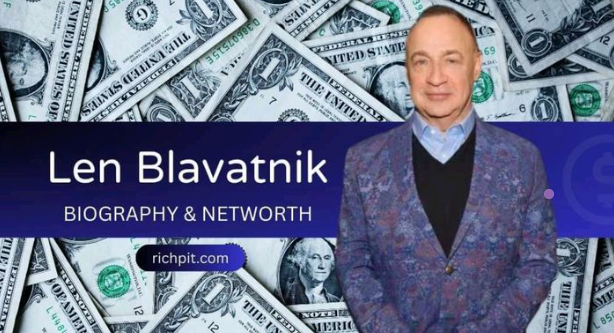
The Soviet Union of 1978 didn’t let young Jewish men attend prestigious universities. Strict quotas limited their access to elite institutions regardless of intellect or ambition. So Leonard Blavatnik, twenty-one years old, son of two university professors, packed his family’s belongings and emigrated to America. They landed in Brooklyn, where waves of Soviet Jews were building new lives. His father had been a professor. His mother had been a professor. In Brooklyn, they were just immigrants starting over.
Forty-seven years later, Blavatnik paid $115 million for an 8.5-acre oceanfront estate on Further Lane in East Hampton, setting a new record for the highest price ever paid for a single residential parcel in Hamptons history. Len Blavatnik net worth 2025 stands at approximately $39 billion according to Forbes, making him one of the fifty richest people on earth. The journey from Soviet quota victim to Hamptons record-setter passes through Russian aluminum wars, British Petroleum joint ventures, Warner Music Group, and philanthropic gifts that bear his name at Oxford and Harvard. Understanding the fortune requires understanding the wound that fueled it.
Len Blavatnik Net Worth 2025: The Odesa Origins of a Global Empire
Born June 14, 1957, in Odesa, then part of the Ukrainian Soviet Socialist Republic, Blavatnik grew up in a household that valued education above all else. His parents were academics, university professors operating within a system that simultaneously celebrated intellectual achievement and discriminated against Jews. When the family relocated to Yaroslavl, a provincial Russian city north of Moscow, young Len experienced the constraints of Soviet antisemitism firsthand.
The Quotas That Shaped Ambition
At the Moscow State University of Railway Engineering, Blavatnik studied transport engineering, a field that didn’t require the connections or Communist Party membership that elite programs demanded. He became close friends with Viktor Vekselberg, another Ukrainian Jew navigating the same restrictions. That friendship would later produce billions. But in the 1970s, it was simply survival. Two smart young men denied access to better paths found each other in an institution that would accept them.
In 1978, when Soviet emigration policies briefly loosened for Jews, the Blavatnik family left for America. They settled in Brooklyn, starting the immigrant journey that has defined so many American success stories. Len enrolled at Columbia University, earning a master’s degree in computer science in 1981. He worked in IT at Mount Sinai School of Medicine, developing pattern-recognition software that helped catch cheating students. He worked at Arthur Andersen consulting and at Macy’s, becoming director of information services. Then Harvard Business School came calling, and he graduated with an MBA in 1989.
Access Industries: Building the Foundation
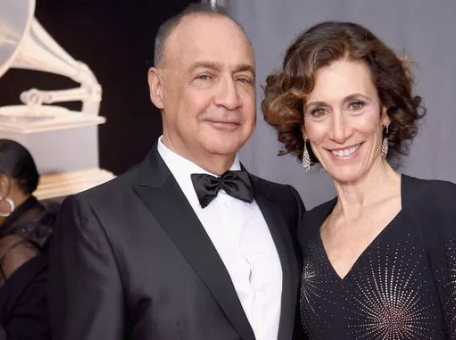
In 1986, three years before finishing his MBA, Blavatnik incorporated Access Industries as a holding company. The timing proved perfect. When the Soviet Union collapsed in 1991, former state assets flooded the market at fire-sale prices. Blavatnik and his old friend Vekselberg reunited to capitalize on the chaos. They bought aluminum smelters when metals were cheap. They formed AAR (Alfa, Access, Renova) with Mikhail Fridman’s Alfa Group. They acquired 40% of struggling oil producer Tyumen Oil for $800 million.
TNK-BP and the $7 Billion Exit
The oil play made Blavatnik truly rich. When British Petroleum acquired TNK in 2003 for $8 billion, forming TNK-BP, Blavatnik and his partners held half the joint venture. Over the next decade, they collected $19 billion in dividends while the company produced oil from West Siberian fields. In 2013, Russian state oil company Rosneft paid AAR $28 billion in cash for its 50% stake. Blavatnik’s personal take from the deal: approximately $7 billion. The immigrant who had arrived in Brooklyn with nothing had become one of the largest beneficiaries of Russian privatization.
Critics would later question how those fortunes were made. The “aluminum wars” of the 1990s involved organized crime, hostile takeovers, and allegations that sometimes spilled into violence. A 2001 lawsuit alleged that militia members representing Blavatnik and his partners had forced their way into company offices wearing fatigues and carrying guns. Blavatnik’s representatives denied this. The murkiness of post-Soviet capitalism clings to his reputation even as his philanthropy burnishes it.
Warner Music and the Pivot to Entertainment
In 2011, Blavatnik acquired Warner Music Group for $3.3 billion. The music industry was dying, or so the conventional wisdom held. Digital piracy had cratered album sales. Streaming was nascent. But Blavatnik saw that content was king and distribution was changing. Under his ownership, Warner Music adapted to Spotify and Apple Music, signed new artists, and rode the streaming revolution to profitability.
The 2020 IPO That Quadrupled His Investment
When Warner Music went public in June 2020, the company’s valuation exceeded $15 billion, more than four times what Blavatnik had paid nine years earlier. The IPO represented one of the most successful media investments of the decade. Blavatnik retained majority control while cashing out billions. Artists like Ed Sheeran, Bruno Mars, and Cardi B now make money for the Brooklyn immigrant who once worked in Macy’s IT department.
Beyond Warner Music, Access Industries holds a 20% stake in LyondellBasell, the world’s largest producer of polymer compounds. Blavatnik owns majority stakes in DAZN, a global sports streaming platform. Through Access Technology Ventures, he’s invested in Opendoor Technologies, Digital Ocean, and various biotech companies. The portfolio sprawls across chemicals, entertainment, technology, real estate, and healthcare. The connecting thread is Blavatnik’s ability to spot undervalued assets and hold them through turbulent periods.
The $115 Million Hamptons Purchase: Why Further Lane
In July 2025, Blavatnik closed on 408 Further Lane in East Hampton, paying $115 million for the 8.5-acre oceanfront estate. The deal set a new record for a single residential parcel in Hamptons history. Combined parcels had sold for more, such as Barry Rosenstein’s $147 million purchase of three contiguous lots in 2014. But for a single property, Blavatnik’s purchase stands alone.
The Terry Semel Connection
The seller was Terry Semel, former chairman of both Yahoo! and Warner Bros. Semel had purchased the property from Blackstone’s Stephen Schwarzman in 2005 for $43 million. In the two decades since, Semel converted a five-bedroom cottage into a guesthouse and built modern structures designed by the late architect Charles Gwathmey. The property stretches from Further Lane to the dune-protected beach. Neighbors include Jerry Seinfeld, Lorne Michaels, and Larry Gagosian.
The sale closed off-market, without public listings or bidding wars. The buyer was identified only as “Brise Lontaine LLC” until sources confirmed Blavatnik’s involvement. For a man who holds British and American citizenship, a knighthood from Queen Elizabeth, and residences in Kensington Palace Gardens and a $77.5 million Fifth Avenue co-op, the Hamptons purchase adds another trophy to an already spectacular real estate portfolio.
The Tell: Philanthropy and the Fight Over “Oligarch”
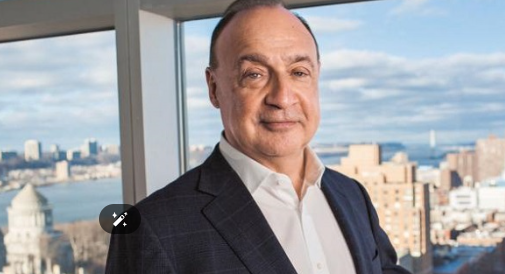
Blavatnik has given away over $1.3 billion through the Blavatnik Family Foundation, funding scientific research, higher education, and cultural preservation. The Blavatnik School of Government at Oxford University, endowed with $128 million, trains future public leaders in a building that rises into the skyline. The Semel Institute for Neuroscience at UCLA, which Terry Semel endowed years ago, shares a similar institutional ambition. Blavatnik has funded biomedical research at Yale, Harvard Medical School, and dozens of other institutions. The Blavatnik Awards for Young Scientists celebrate early-career researchers.
The Label He Can’t Escape
Yet controversy follows the fortune. Media coverage frequently identifies Blavatnik as a “Russian oligarch,” a label he rejects. He was born in Ukraine, not Russia. He holds American and British citizenship. His Russian business interests represented less than 10% of his portfolio by 2022. He fully divested from Rusal, Russia’s aluminum giant, in May 2023. When Russia invaded Ukraine in 2022, Blavatnik’s past associations became radioactive. Ukrainian President Volodymyr Zelensky imposed personal sanctions against him in December 2023, citing his historical Russian commercial ties.
Blavatnik’s defenders note that he left the Soviet Union as a young man seeking opportunity, built his American fortune through legitimate investments, and has never been accused of Kremlin ties by U.S. or British regulators. His critics argue that Russian privatization fortunes carry inherent ethical baggage, that philanthropy cannot launder reputation, and that his associations with sanctioned individuals like Viktor Vekselberg raise questions. The truth likely resides in the ambiguity that defines all post-Soviet wealth.
The Paradox of the Immigrant Billionaire
Len Blavatnik net worth 2025 at approximately $39 billion represents a particular kind of American story, complicated by Russian chapters. The young man denied admission to Soviet elite universities now endows schools at Oxford and Harvard. The immigrant who arrived in Brooklyn with nothing now owns the most expensive single-parcel estate in Hamptons history. The success is undeniable. The questions persist.
At 68, Blavatnik continues to expand Access Industries’ portfolio while fighting the “oligarch” label in media coverage and court filings. His Hamptons purchase places him among the East End’s wealthiest summer residents, neighbors with entertainment and finance titans who built their fortunes without passing through Russian aluminum wars. Whether they’ll welcome him at cocktail parties or whisper about his past remains to be seen. The Hamptons have always been better at accepting money than explaining where it came from.
The Further Lane estate sits on 8.5 acres of oceanfront property, surrounded by some of the most valuable residential real estate in America. Len Blavatnik will presumably build something spectacular there, adding to the architectural history of a lane that has housed Seinfelds and Schwarzmans and Gagosians. The Soviet emigrant who learned to write pattern-recognition software at Mount Sinai now owns a piece of American aristocracy. The quota victim became the record-setter. What comes next is up to him.
Related Articles:
- Terry Semel Net Worth 2025: Yahoo’s Peak Power, Hollywood Money, and Hamptons Legacy
- Ann Tenenbaum Net Worth 2025: Venture Capital, Philanthropy, and a $120M Hamptons Exit
- Matthew Karch Net Worth 2025: The Video Game Mogul Buying the Hamptons
For features, advertising, or partnership inquiries, visit sociallifemagazine.com/contact. Experience the Hamptons at Polo Hamptons. Subscribe to our print edition or support independent Hamptons journalism.
Author
Written by
Recent Posts
Where Can You Find the Best Made-to-Measure Bespoke Suits in NYC
The Financial Habits Every Successful Entrepreneur Swears By
What Happens If You Delay Hemorrhoid Treatment in New York City
James Franco Net Worth — A $30 Million Career Interrupted
Selena Gomez Net Worth — How a Disney Kid Built a $1.3 Billion Empire
Categories
- Art
- Articles
- Beauty & Skincare
- Celebrities
- Celebrities|Movies
- Celebrities|The Chronicles
- Chronicles
- Culture|Television
- Entertainment|Culture
- Event Photos
- Events
- Fashion
- Fashion & Style
- Featured
- Food & Beverage
- Food, Spirits, Wine
- Hamptons
- Hamptons Celebrities
- Hamptons Celebrities|Celebrities|The Chronicles
- Health
- Health & Beauty
- Lifestyle
- Luxury Lifestyle
- Movies
- Movies|Culture
- Movies|Hamptons Lifestyle
- Press
- Profiles
- Real Estate
- Technology
- The Chronicles
- Travel
- Uncategorized
- Weddings