
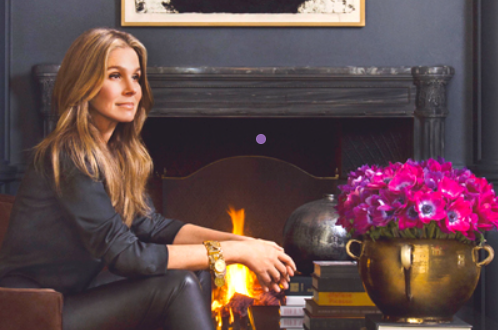
The letter hangs in a golden frame above her bedside table. In her grandmother’s distinctive handwriting, it states that upon Estée’s death, the house in Wainscott will belong to Aerin. She was perhaps ten years old when Estée wrote it. She didn’t understand then that her grandmother was bequeathing not just property but expectation—the assumption that this granddaughter would carry forward something essential about Lauder taste, Lauder style, Lauder relentlessness.
Decades later, Aerin Lauder Zinterhofer’s estimated net worth exceeds $3.3 billion. She owns more than 16 million shares of Estée Lauder Companies stock. Yet her grandmother’s bequest created a peculiar burden: how does one inherit taste? How does one prove that aesthetic sensibility isn’t just DNA but earned? Her father Ronald Lauder faced a similar challenge, ultimately building his own empire through diplomacy and art.
The Wound: The Weight of Perfect Beauty
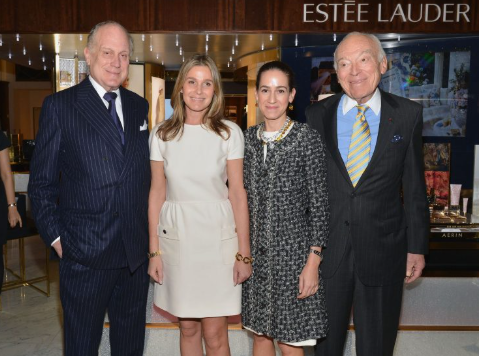
Aerin Rebecca Lauder was born April 23, 1970, into a family where beauty wasn’t merely appreciated but manufactured, marketed, and monetized. Her father Ronald served as U.S. Ambassador to Austria. Her grandfather Joseph had built the company alongside Estée. Every dinner conversation included business strategy. Every family gathering was also, in some sense, a board meeting.
Growing Up Lauder
The Hamptons summers of her childhood centered on her grandmother’s house—the same Greek Revival property she now owns. Aerin and her sister Jane would spend nights there, walking over from their parents’ nearby estate. Estée took them to the local diner for frankfurters and ice cream milkshakes. Subsequently, she’d teach them about flowers, about fabrics, about the precise shade of turquoise that would become the company’s signature packaging color.
These weren’t innocent grandmotherly indulgences. Estée Lauder didn’t do innocent. Every lesson carried subtext: this is how you see, this is how you choose, this is what separates excellence from adequacy. The woman who’d talked her way into Saks Fifth Avenue, who’d invented the “gift with purchase” concept, who’d built a billion-dollar company from face cream cooked on kitchen stoves—she was training her granddaughters whether they realized it or not.
The Education of an Eye
Aerin attended the University of Pennsylvania, then the Annenberg School for Communication. She joined Estée Lauder Companies immediately after graduation, working summers during college and full-time thereafter. The path seemed predetermined. However, predetermined paths create their own anxieties. How would anyone know if her success reflected talent or merely access?
The Chip: Proving Taste Can’t Be Inherited
The question haunted her early career. She rose through the company ranks, eventually becoming Style and Image Director—a title that sounds impressive but could easily describe ceremonial duties for a well-connected heir. Aerin needed to prove otherwise.
Creating the AERIN Brand
The opportunity arrived unexpectedly. As press coverage of her homes—the Manhattan apartment, the East Hampton house, the Aspen retreat—accumulated, readers began asking specific questions. Where did she find that light fixture? What was the paint color on those walls? Where could they buy that rug?
In 2012, Aerin launched AERIN, a lifestyle brand bearing her name. The venture represented significant risk. She was staking her personal identity on products that would be judged against her family’s legacy. Failure would confirm the skeptics: just another heiress playing businesswoman.
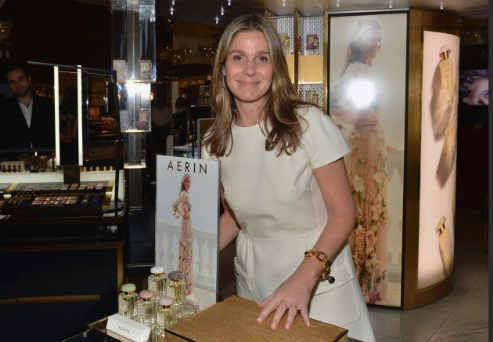
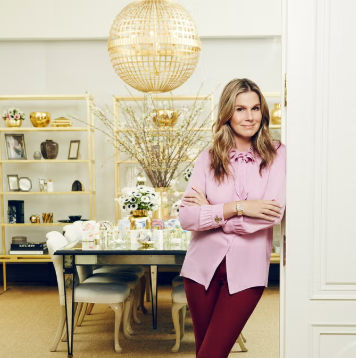
The brand succeeded. AERIN now encompasses beauty products, fragrances, fashion accessories, furniture, and home décor. Its aesthetic—what Aerin calls “effortless style”—reflects her grandmother’s maxim that beauty should feel natural, never labored. When she launches a lipstick collection, there aren’t twenty options but ten. The edit itself becomes the statement. Understanding the full Lauder family legacy helps explain why this precision matters so deeply.
The Rise: Building Beyond the Family Name
Forbes ranked Aerin 319th on its 400 list of richest Americans, with an estimated net worth of $2.7 billion in 2019. That figure has grown substantially since. Her wealth derives primarily from Estée Lauder Companies stock, but her influence extends far beyond shareholding.
The Dual Role
Aerin maintains her position as Style and Image Director for Estée Lauder while simultaneously running her own brand. The arrangement creates interesting tensions. She oversees how the parent company presents itself in retail locations worldwide—the counter designs, the visual merchandising, the overall aesthetic experience. Meanwhile, AERIN operates as its own entity within the portfolio, with flagship stores in the Hamptons, Palm Beach, and Southampton.
The Selfridge’s collaboration exemplified her approach. Challenged to create something unprecedented for the London department store, she drew inspiration from her grandmother’s love of hand-painted Gracie wallpaper panels—the same style that adorns her Manhattan dressing room. The resulting installation brought private domestic beauty into public commercial space.
Literary Ventures
Her books—”Beauty at Home” (2013), “Veranda: The Romance of Flowers” (2015), “Aspen Style” (2017), and “Palm Beach” (2019)—codify her aesthetic philosophy. They’re not merely coffee table decoration. They’re brand extensions that establish Aerin as an authority on taste, not just an inheritor of it.
The Tell: Where Estée Still Lives
Visit Aerin’s East Hampton house and you’ll find rooms exactly as her grandmother left them. Estée’s bedroom remains upholstered in Pierre Frey’s Toile de Nantes. The mantle holds her collection of blue and white ginger jars. The Chinese and Japanese porcelain still fills the living room where Mark Hampton’s original design endures.
The Color That Defines Her
“Blue and white is part of my decorating DNA,” Aerin has said. “I love it in any way, shape, or form.” The preference isn’t arbitrary. It connects to her grandmother’s Hungarian heritage, to delft pottery traditions, to the way certain combinations feel both classic and fresh. When she chose pale blue paint with white moldings for her kitchen, she was simultaneously honoring Estée and asserting her own vision.
The same tension appears in her fragrance work. Jasmine White Moss, her third Private Collection scent, began as an unfinished formula Estée developed in the 1980s. Aerin completed it, applying modern technology and her own intuition. The result belongs to both of them—grandmother’s foundation, granddaughter’s finishing touch.
The Location: Wainscott as Inheritance and Invention
The house in Wainscott represents everything complicated about inherited wealth and earned identity. Aerin and her husband Eric Zinterhofer, an investment banker she met at Penn, added a wing to accommodate their sons Jack and Will. Daniel Romualdez updated certain interiors. Yet the bones of Estée’s original vision remain.
The Jewel Box in the Dunes
Hurricane Sandy destroyed a small family cottage on the property in 2012. Rather than simply rebuild, the Lauders commissioned something entirely new—a beach pavilion perched at dune level, cantilevered above the sand, with 360-degree views from a glass-paneled roof deck. Aerin calls it “a jewel box in the dunes.”
The structure serves as guesthouse and casual gathering space. Its contemporary design contrasts with the Greek Revival main house. Together, they capture Aerin’s approach: respect tradition, but don’t be imprisoned by it. Her cousin William P. Lauder takes a similar approach to corporate stewardship—honoring the family’s legacy while driving innovation.
A Summer Life
Her dogs—Disco, Biscuit, and Shatzi—run through the house, occasionally dripping pool water on furniture. Her nieces visit frequently. The gardens, designed by Perry Guillot, bloom with white roses, peonies, and hydrangeas. Aerin personally cuts flowers for arrangements throughout the house, maintaining her grandmother’s practice.
“To me, this is like paradise,” she’s said. Among her residences—Manhattan, Aspen, and the Pacific coast of Panama—the Hamptons remains her favorite. It’s where she married Eric, where she spent childhood summers, where Estée’s presence still permeates every room.
Closing Reflection: The Inheritance Completed
Estée Lauder spent her childhood in Queens ashamed of her parents’ immigrant ways, dreaming of becoming “100 percent American.” She built a company worth billions, yet never fully escaped the hunger that drove her. Her granddaughter inherited the opposite problem: born into everything her grandmother craved, Aerin needed to prove she belonged.
The $3.3 billion net worth suggests she succeeded. More telling is the AERIN brand itself—a statement that taste, properly developed, becomes its own form of capital. The grandmother who couldn’t stop selling passed something to the granddaughter: not just money, not just property, but the relentless need to prove that what you’ve built belongs entirely to you.
Discover more about the Lauder family’s Hamptons influence at sociallifemagazine.com/contact. Experience exclusive events at polohamptons.com, and stay connected through our email newsletter or print subscription.
Related Articles
Author

Written by
Recent Posts

The New York Women’s Foundation’s 2026 Neighborhood Dinner

Marco Maranghello
The Baker House 1650
MvVO ART Show
Casita Maria Center for Arts and Education
Categories
- Art
- Articles
- Business of Luxury
- Celebrities
- Culture
- Entertainment
- Events
- Faces of Summer 2026
- Fashion
- Fashion & Style
- Featured
- Finance
- Food, Spirits, Wine
- Hamptons
- Hamptons Celebrities
- Health
- Health & Beauty
- Lifestyle
- Luxury Lifestyle
- Press
- Profiles
- Real Estate
- Technology
- The Chronicles
- Travel
- Uncategorized
- Weddings