

The pregnancy test was positive. She was seventeen years old.
Carol Klein—not yet Carole King—sat in her parents’ Brooklyn home with the news that would derail every plan she’d made. Queens College, the music degree, the careful ascent through New York’s recording industry. All of it suddenly rearranged by biology and a boy named Gerry Goffin.
What nobody could have predicted: that shotgun marriage would produce not just two daughters, but 118 songs on the Billboard Hot 100 and the best-selling album by a female artist in history.
The Wound: A Prodigy in the Firefighter’s House
Carol Joan Klein arrived on February 9, 1942, in Manhattan. Her father Sidney worked as a firefighter; her mother Eugenia taught school. They were middle-class Brooklyn Jews, the children of immigrants from Russia and Poland whose surname had been mistranscribed at Ellis Island. “Klein” was an accident of bureaucracy that would take her five decades to appreciate.
Music announced itself early and loudly. At three, Carol was already climbing onto the piano bench. By four, her parents discovered something remarkable: she had absolute pitch. Her father loved showing off this party trick to visitors, naming notes while his daughter identified them instantly. Meanwhile, her mother began formal lessons, sitting beside Carol as she learned theory and technique.
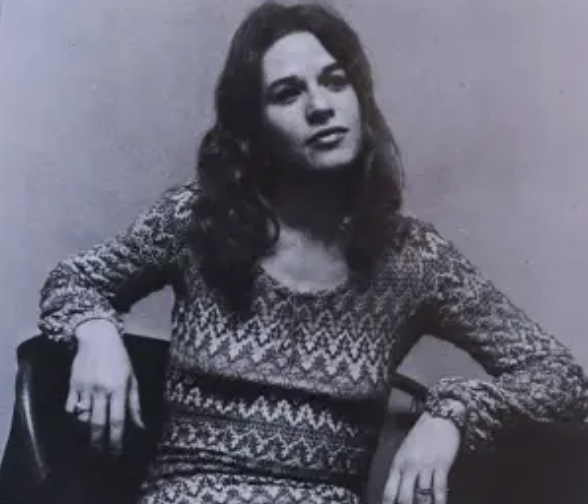
“My mother never forced me to practice,” King later wrote in her memoir. “She didn’t have to. I wanted so much to master the popular songs that poured out of the radio.”
The precocity extended beyond music. Carol started kindergarten at four and was promoted directly to second grade. According to McKinsey’s research on early talent development, children who demonstrate exceptional ability in multiple domains often face unique psychological pressures. For Carol, the pressure came from an unexpected direction.
When she was nine, her younger brother Richard was born deaf and severely disabled. In 1951, the family made the agonizing decision to place him in an institution. The household that had celebrated Carol’s gifts now carried a permanent undercurrent of grief. She never forgot. However, she channeled that emotional complexity into something productive: songs.
The Chip: Cubicles and Competition
By fifteen, Carol had changed her name to Carole King and was walking into record company offices with her songbook under her arm. ABC Paramount signed her. At James Madison High School, she formed a band called the Co-Sines and made demo records with a skinny kid named Paul Simon. The talent was obvious. The discipline was relentless.
At Queens College, she met Gerry Goffin. He was twenty, an assistant chemist with a gift for lyrics. She was seventeen, a composer who could turn his words into melodies. Their creative chemistry ignited immediately. So did their physical chemistry.
The pregnancy changed everything.
They married in a Jewish ceremony on Long Island in August 1959. Both dropped out of college. Gerry took a day job at a chemical company; Carole became a secretary. They rented a basement apartment in Flatbush, Brooklyn. After work, after dinner, after their daughter Louise went to sleep, they wrote songs together in the evening.
According to Harvard Business Review’s analysis of creativity under constraint, limitation often produces innovation. The Goffin-King partnership had nothing but limitations: no time, no money, no space. What they had was talent and desperation.
Don Kirshner at Aldon Music hired them to write professionally. The operation worked out of 1650 Broadway, across from the legendary Brill Building. Kirshner ran it like a hit factory, pitting songwriting teams against each other in adjacent cubicles. As Carole later recalled: “We each had a little cubby hole with just enough room for a piano, a bench, and maybe a chair for the lyricist. You’d sit there and write and you could hear someone in the next cubby hole composing a song exactly like yours.”
The pressure was brutal. The results were extraordinary.
The Rise: From Basement to Billboard
In late 1960, Goffin and King wrote a song for the Shirelles, four Black teenagers from Passaic, New Jersey. “Will You Love Me Tomorrow” reached #1 on the Billboard Hot 100 in January 1961—the first chart-topper by an all-female African American group. Carole King was eighteen years old.
The hits kept coming. “The Loco-Motion” for their babysitter Little Eva. “Up on the Roof” for the Drifters. “One Fine Day” for the Chiffons. “(You Make Me Feel Like) A Natural Woman” for Aretha Franklin. In total, Goffin and King wrote over fifty Top 40 hits during the 1960s. By the time she turned twenty-five, Carole had helped define the sound of American pop music—without ever stepping onstage herself.
The marriage, however, was crumbling.
Gerry’s infidelities accumulated. His LSD use escalated into mental health crises requiring hospitalization. “I wanted to be a hippie,” he later admitted. “And then I started taking LSD and mescaline. And Carole and I began to grow apart because she felt that she had to say things herself. She had to be her own lyricist.”
They divorced in 1968. Carole packed up their daughters and moved to Laurel Canyon, Los Angeles. She was twenty-six, a decorated songwriter who had never found success as a performer—partly because severe stage fright made touring impossible.
In California, she met James Taylor and Joni Mitchell. They became neighbors, collaborators, friends. Taylor encouraged her to sing her own songs. Subsequently, she pushed through her fear and released Writer in 1970. It peaked at #84.
Then came Tapestry.
The Breakthrough: Fifteen Weeks at Number One
Released on February 10, 1971, Tapestry spent fifteen consecutive weeks at #1 on the Billboard album chart. It remained on the charts for nearly six years—313 weeks total. Over 30 million copies sold worldwide. Four Grammy Awards, including Album of the Year. Carole King became the first woman to win Song of the Year (for “You’ve Got a Friend”) and the first solo female artist to win Record of the Year.
The album’s cover photograph captured something essential: Carole sitting on a window seat in her Laurel Canyon home, wearing old jeans and a sweater. Her feet bare. Her cat Telemachus in the foreground. She was doing needlepoint. This was not glamour—this was authenticity.
According to BCG’s analysis of music industry transformation, Tapestry represented a paradigm shift. The woman who had written hits for others could now sing them herself—and the intimate, confessional style resonated with millions who had never connected with Brill Building polish.
“Carole spoke from her heart, and she happened to be in tune with the mass psyche,” said fellow songwriter Cynthia Weil. Historian Kirk Silsbee noted the crucial difference: “The Shirelles sang ‘Will You Love Me Tomorrow’ like girls. Carole sang it as a woman.”
The Dark Chapter: Rick Evers
Success did not bring stability. Carole married bassist Charles Larkey in 1970; they divorced in 1976. Then came Rick Evers.
She met the struggling musician at a party thrown by Don Henley. They fell in love fast, moved to a remote Idaho cabin without electricity or running water. Carole milked goats, homeschooled her children, discovered a passion for environmental activism. It seemed idyllic.
It was a nightmare.
“I had always been judgmental about women who stayed in abusive relationships,” she wrote in her 2012 memoir. “I’d always thought, if I found myself with a man like that, the first time he struck me I’d be out of there in a New York minute. I would never stay with an abuser. Until I did.”
Evers hit her without warning three months into their relationship. “He hit me hard, as if he were in a boxing ring, except he wasn’t wearing gloves, and he wasn’t in a boxing ring.” The abuse continued. She made excuses. She stayed.
Finally, she spotted blood drops on the bathroom floor—evidence of cocaine injection. Carole woke her children, flew to Hawaii. Days later, Evers was found dead in a Los Angeles shooting gallery. Drug overdose. She was a widow at thirty-six.
“If there’s any women out there, or for that matter men—there are some men in relationships being abused—you don’t deserve it,” she later said. “Get help.”
The Fortune: $100 Million in Royalties
Carole King’s net worth in 2025 stands at approximately $100 million. The fortune flows from an almost incomprehensibly deep catalog:
- 118 songs charted on the Billboard Hot 100
- 61 songs charted in the UK
- Over 400 songs written or co-written
- More than 1,000 artists have recorded her compositions
- Tapestry certified 14x Platinum by RIAA
- Annual royalty income estimated at $5-8 million
According to Financial Times coverage of music publishing valuations, legacy songwriters from the 1970s are experiencing unprecedented catalog appreciation. Every time “You’ve Got a Friend” plays on streaming services, every Heinz ketchup commercial using “Anticipation” (written by Carly Simon, but King’s model), every revival of Beautiful: The Carole King Musical—royalties accumulate.
The 2010 Troubadour Reunion Tour with James Taylor grossed over $59 million. In 2021, she was inducted into the Rock and Roll Hall of Fame as a performer—her second induction, having been honored as a songwriter in 1990. She received the Gershwin Prize from the Library of Congress in 2013, becoming its first female recipient. President Obama presented it at a White House gala.
The Sanctuary: Idaho and Environmental Activism
Carole King lives in Idaho now. The state that brought her Rick Evers also brought her purpose beyond music. Since 1990, she has worked with the Alliance for the Wild Rockies toward passage of the Northern Rockies Ecosystem Protection Act. She has testified before Congress three times on behalf of environmental causes.
The girl who wrote songs in a Brooklyn basement cubicle found peace in wilderness. The woman who couldn’t perform live due to stage fright eventually played Tapestry in its entirety at Hyde Park in 2016. According to Social Life Magazine’s coverage of legendary artists, King represents a rare category: the songwriter who outlasted her own hits.
She married one more time—carpenter Rick Sorenson in 1982, divorced 1987—and then stopped. Four marriages, four children, four Grammys, one Broadway musical about her life. The numbers tell a story, but not the whole story.
The Legacy: What Natural Women Taught Us
Carole King’s $100 million fortune began with a positive pregnancy test and a basement apartment. It grew through Brill Building pressure cookers and California confessionals. It survived infidelity, abuse, and widowhood.
The song that inspired “You’ve Got a Friend” was James Taylor’s “Fire and Rain,” which contains the line: “I’ve seen lonely times when I could not find a friend.” Carole heard that line and wrote a response. The response became her signature song—not because she planned it, but because she felt it.
“The song was as close to pure inspiration as I’ve ever experienced,” she said. “The song wrote itself. It was written by something outside myself, through me.”
That’s the secret behind the $100 million. Not calculation. Not strategy. Just a woman at a piano, translating pain into melody, trusting that others felt lonely too. The pregnant teenager in the Brooklyn basement was right. They did.
Explore more legendary songwriters and their journeys. Contact our editorial team for features and partnerships. Experience Polo Hamptons for exclusive cultural events. Subscribe to our print edition or support independent arts journalism with a $5 donation.
Related Reading:
Author

Written by
Recent Posts
Getting the Size Right on a Valley Dreams Zip Hoodie
The Traffic Patterns Hiding Inside the Accident Data
The Smart Way to Give Your Unused Jewelry a Second Life
Katsuya Brentwood and Haute Living Honor NBA Star Kawhi Leonard at Private Dinner

The Accountability System Quietly Protecting Your Parents’ Care
Categories
- Art
- Articles
- Business of Luxury
- Celebrities
- Culture
- Entertainment
- Events
- Faces of Summer 2026
- Fashion
- Fashion & Style
- Featured
- Finance
- Food, Spirits, Wine
- Hamptons
- Hamptons Celebrities
- Health
- Health & Beauty
- Lifestyle
- Luxury Lifestyle
- Press
- Profiles
- Real Estate
- Technology
- The Chronicles
- Travel
- Uncategorized
- Weddings