

The phone rang in Melbourne on a Tuesday afternoon in 1982. Cate Blanchett was ten years old. Her father Robert, a Texas-born advertising executive who’d transplanted his family to Australia, had suffered a massive heart attack at his desk. He was dead before the ambulance arrived. The girl who would become the highest-paid Australian actress in history stood in the kitchen while her mother June absorbed the news. In that moment, something fundamental shifted. The child who’d spent her early years performing for her father’s approval suddenly lost her only audience.
Today, Cate Blanchett’s net worth stands at approximately $95 million. However, this fortune represents something more complex than career earnings. It reflects a lifetime of strategic choices made by someone who learned early that presence is temporary, performance is permanent, and the safest place to exist is inside someone else’s skin.

The Wound: When the Audience Disappeared Forever
Robert Blanchett had been the performer in the family before his daughter claimed the title. He was the American with the big personality, the advertising man who could sell anything, including himself. Young Catherine grew up watching him command rooms. She learned early that attention was currency, that charisma could be manufactured, that a well-timed line delivery made people lean in.
A Childhood Divided by Loss
Then he was gone. Just like that. No final performance, no curtain call, no chance to show him who she might become. June Blanchett was left to raise three children alone in Melbourne, working as a property developer while Cate retreated into something her drama teachers would later recognize as extraordinary: the ability to vanish completely into another person.
Friends from Methodist Ladies’ College remember a girl who seemed to transform physically when performing. “She didn’t just act,” one classmate told Australian media years later. “She literally became someone else. It was almost disturbing how complete the transformation was.” What they witnessed wasn’t mere talent. It was survival strategy. A fatherless girl had discovered that becoming other people meant never having to be the one who lost everything.
The Melbourne Years
Meanwhile, June Blanchett’s real estate work exposed young Cate to something else that would shape her future: the language of value, of positioning, of understanding what makes a property worth more than its materials suggest. Her mother didn’t just sell houses. She understood that presentation transforms perception, that the right staging justifies premium pricing. The future actress absorbed these lessons about the economics of perception without realizing she was being trained.
The Chip: Becoming Everyone to Avoid Being Nobody
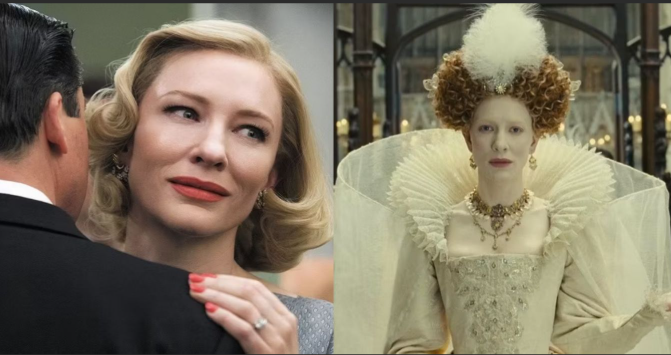
At the National Institute of Dramatic Art in Sydney, Blanchett’s professors encountered something unusual. Most acting students struggle to shed their own personalities. Blanchett had the opposite problem. Subsequently, she could disappear so completely into characters that teachers worried she had no stable self to return to. Her graduation showcased a range that left industry professionals confused about what “type” she was. She was all types, no type, whatever the role required.
Strategic Invisibility
This wasn’t limitation but rather liberation. In an industry that demanded actors stay in their lane, Blanchett had no lane because she had no fixed identity to constrain her. Therefore, the fatherless girl who’d learned to vanish had transformed her survival mechanism into a competitive advantage that would eventually prove worth tens of millions.
Her early Australian stage work confirmed the pattern. Directors cast her in everything from Ibsen to contemporary Australian drama. Moreover, she moved between Hedda Gabler and modern suburban wives with equal conviction. Critics praised her “chameleon quality” without understanding its origins. She wasn’t just versatile. She was fundamentally ungrasped, unfixable, impossible to pin down because pinning down meant staying still, and staying still meant being the girl whose father died without warning.
The Currency of Transformation
The prestige player strategy emerged organically from this psychological architecture. While other actors of her generation chased blockbusters or settled into comfortable genres, Blanchett pursued a different calculus. Each role had to offer transformation. Each character had to allow complete disappearance. The money would follow the craft, or it wouldn’t. Either way, she would keep vanishing.

The Rise: How Disappearance Became an Empire
Elizabeth arrived in 1998 and announced Blanchett’s strategy to the world. She didn’t play the Tudor queen. She transmuted into her. The BAFTA win that followed was validation from an industry that rewards this kind of total commitment. Subsequently, Hollywood came calling with the question that would define her career: what else can you become?
The Lord of the Rings Investment
The Lord of the Rings trilogy offered Blanchett something most actors would have rejected: a supporting role with limited screen time but unlimited mystique. As Galadriel, she appeared in perhaps twenty minutes across three films totaling eleven hours. The pay was modest by blockbuster standards. Nevertheless, the positioning was masterful. She chose to be the most memorable presence in the highest-grossing trilogy of its era rather than the lead in a dozen forgotten films. Prestige over volume. Impact over screen time.
The mathematics proved prophetic. Those brief appearances cemented her as an actor who elevated everything she touched. Consequently, directors began seeking her specifically for the “Blanchett effect”: the phenomenon where her mere presence signals to audiences that a film should be taken seriously.
Oscar Architecture
The Aviator in 2004 brought her first Academy Award for playing Katharine Hepburn. Consider the meta-levels at work: an Australian actress famous for disappearing into roles won Hollywood’s highest honor for disappearing into an American actress famous for refusing to disappear. She played Hepburn’s dominance while embodying her own strategic invisibility. Therefore, the role was a hall of mirrors reflecting the psychology that had driven Blanchett since Melbourne.
Blue Jasmine in 2013 delivered her second Oscar, this time for playing a woman whose carefully constructed identity collapses into madness. Woody Allen handed her the role of someone losing their grip on the self they’d invented. She played it with the expertise of someone who’d spent a lifetime understanding that constructed identities are the only kind available. The Hollywood Reporter noted her “terrifying authenticity” in the role.
The Tell: Where the Original Wound Still Shows
In interviews, Blanchett consistently deflects personal questions by discussing craft. Ask about her childhood and she’ll explain technique. Mention her father and she’ll pivot to discussing a character’s father. The pattern reveals itself through its consistency. Furthermore, she has built an entire public persona around the refusal to be personally known.
The Privacy Fortress
“I’ve never understood actors who want to be themselves,” she told the Guardian in a rare candid moment. “The whole point is to be someone else.” She frames this as artistic philosophy, but the psychology is transparent to anyone paying attention. The girl whose father died has spent forty years ensuring she’ll never be caught being herself when the next loss arrives.
Her marriage to playwright Andrew Upton since 1997 follows similar logic. He writes the words that other people perform. She speaks words that other people wrote. They meet in the middle ground of constructed identity, two people who make their living creating surfaces for public consumption while keeping their private selves strategically obscured. Additionally, their four children have been raised almost entirely out of public view.

The Location: From Melbourne to the World
Blanchett’s real estate portfolio tells the story of someone who never quite lands anywhere. The family moved from Sydney to England when she co-ran the Sydney Theatre Company. They’ve maintained homes in multiple countries. Indeed, there’s always somewhere else to be, another place to become someone new.
The Symbolism of Impermanence
Her $8 million East Sussex estate sits in countryside that looks nothing like Melbourne. Nevertheless, the property represents the same understanding her mother June instilled decades ago: real estate is about positioning, about perception, about the stories we tell through the spaces we occupy. The prestige address signals arrival while the rural setting signals retreat. She can be found and unfound simultaneously.
The Hamptons properties she’s been linked to follow similar logic. These aren’t permanent statements but strategic positions. A place to be seen when visibility serves her purposes. A place to vanish when privacy serves them better. At $95 million net worth, she can afford to be anywhere. Therefore, she chooses to be everywhere and nowhere, still running the same calculations her mother taught her about value, presentation, and the art of being whatever the moment requires.

The Paradox of the Prestige Player
Cate Blanchett at 55 has achieved something rare: critical respect and commercial success maintained across three decades without ever letting anyone know who she actually is. The $95 million fortune is the quantified result of a psychological strategy that began in a Melbourne kitchen when a ten-year-old girl learned that the people you love can vanish without warning.
Somewhere inside the Academy Award winner, the BAFTA honoree, the international star of unforgettable red carpet moments, lives a child still waiting for her father to come home from work. She found the safest possible response: if everyone leaves, become someone new before they go. If presence is temporary, make the performance permanent. If the audience disappears, become the kind of artist that every audience wants to find.
The wound healed into a weapon. The weapon built an empire. The empire of strategic Hollywood real estate will continue generating returns long after she’s moved on to the next character, the next disappearance, the next transformation that keeps her exactly where she’s always felt safest: inside someone else’s story, collecting payment for the privilege of never having to be herself.
Related Articles
- Kate Winslet Net Worth 2025: From British Council Estate to Titanic Fortune
- Joaquin Phoenix Net Worth 2025: The Commune Kid in River’s Shadow
- Frances McDormand Net Worth 2025: From Fargo to Nomadland’s Anti-Hollywood Fortune
Want to be featured in Social Life Magazine? Contact our editorial team to discuss coverage opportunities. For Polo Hamptons tickets and sponsorship information, visit polohamptons.com. Subscribe to our newsletter for exclusive Hamptons lifestyle content, or order a print subscription delivered to your door. Support independent luxury journalism with a $5 contribution.
Author

Written by
Recent Posts

House Closing Process: What Sellers Should Expect From Start to Finish
What to Know Before Buying a Home in Brantford
When Does Using a Travel Advisor Make the Biggest Difference
What to Look for When Choosing Your First Red Light Therapy Panel

Experience the luxury of exploring Aruba’s coast by private yacht
Categories
- Art
- Articles
- Business of Luxury
- Celebrities
- Culture
- Entertainment
- Events
- Faces of Summer 2026
- Fashion
- Fashion & Style
- Featured
- Finance
- Food, Spirits, Wine
- Hamptons
- Hamptons Celebrities
- Health
- Health & Beauty
- Lifestyle
- Luxury Lifestyle
- Press
- Profiles
- Real Estate
- Technology
- The Chronicles
- Travel
- Uncategorized
- Weddings